
The ethics of looking at a mother
Katherine Hubbard’s The Great Room has the makings of a modern classic, and its presentation at Vienna’s Secession marks the artist’s first institutional solo exhibition outside the U.S. Joining Hubbard and her circle on the opening night, Peter Watkins finds something stranger and less settled than a documentary about dementia, caregiving or the ethics of consent. Staged photographs, mirrors, bodily contact prints, and reconstructed rooms show a mother and daughter continually remaking their roles, testing who looks, who holds power, and what it costs to make grief public.
Peter Watkins | Exhibition Review | 23 July 2026
Join us on Patreon
En route to Vienna’s Secession, I thought I understood the terms and conditions Katherine Hubbard was working in. My own project, The Unforgetting, grew from losing my mother as a child and watching my grandmother’s slow slide into dementia during the years the project was reaching its apex, until those two losses became, for me, almost indistinguishable. I assumed this thematic and familial overlap would make Hubbard’s photographs familiar territory. I was mistaken. I spoke with Hubbard for over an hour before her public talk, working through ideas I recognised as my own without either of us quite naming that recognition. But our conversation changed how I saw the show. It wasn’t that I was necessarily wrong about her approach or the subject; rather, I had assumed the project reached a certain clarity that the exhibition, to its credit, deftly refused.
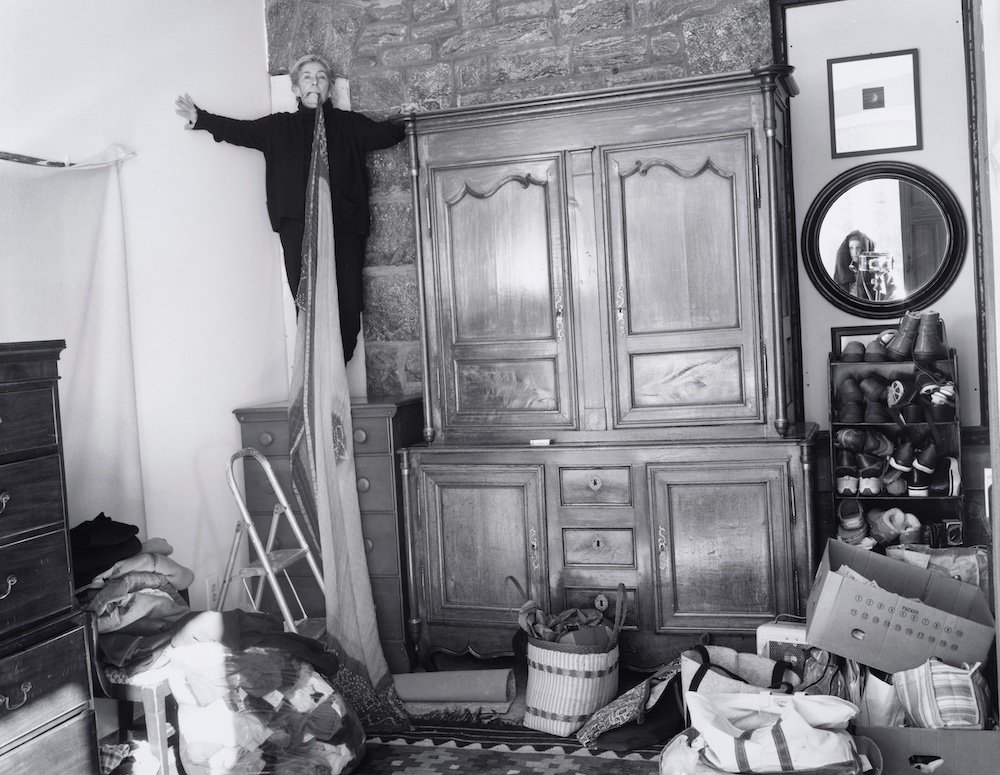
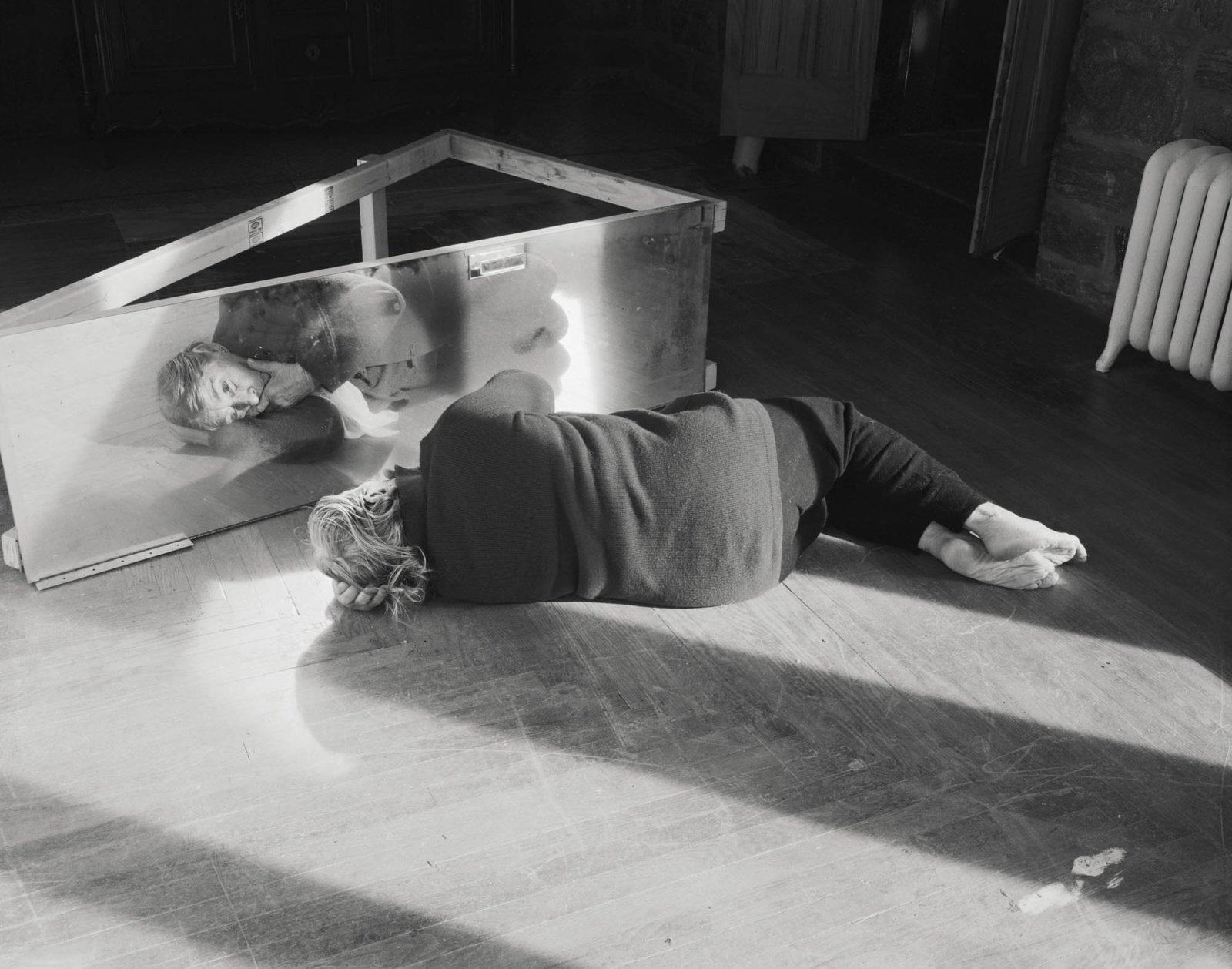
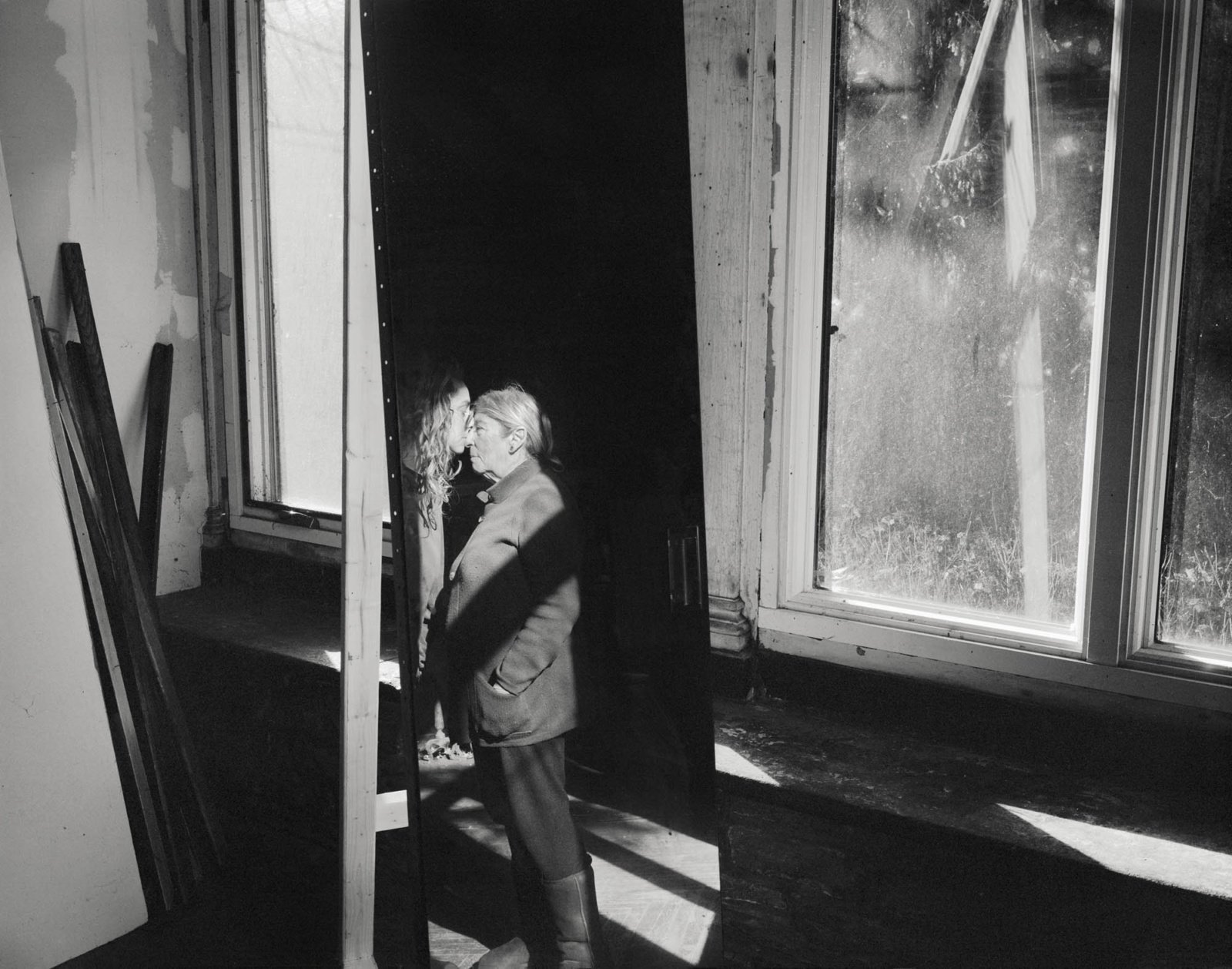
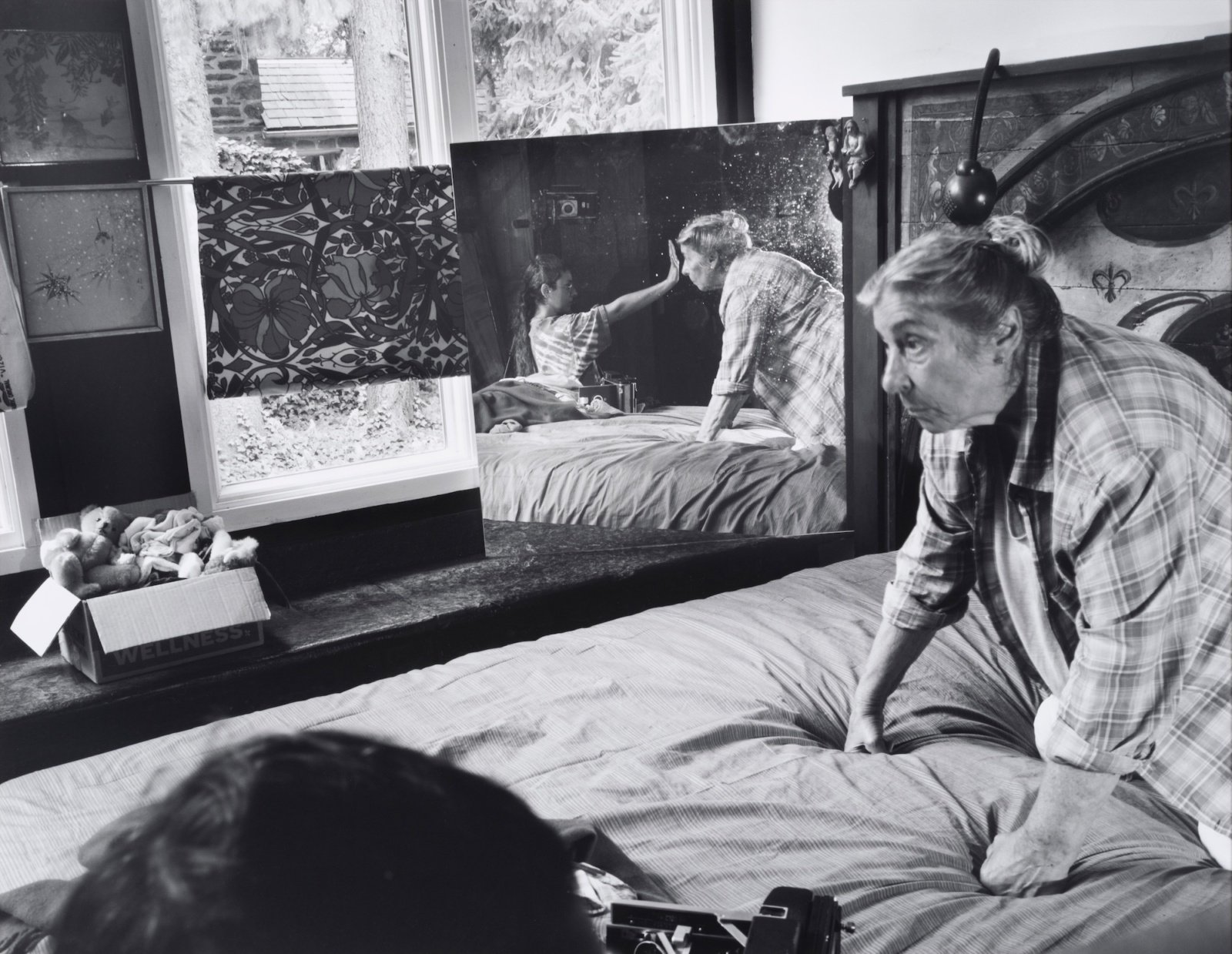
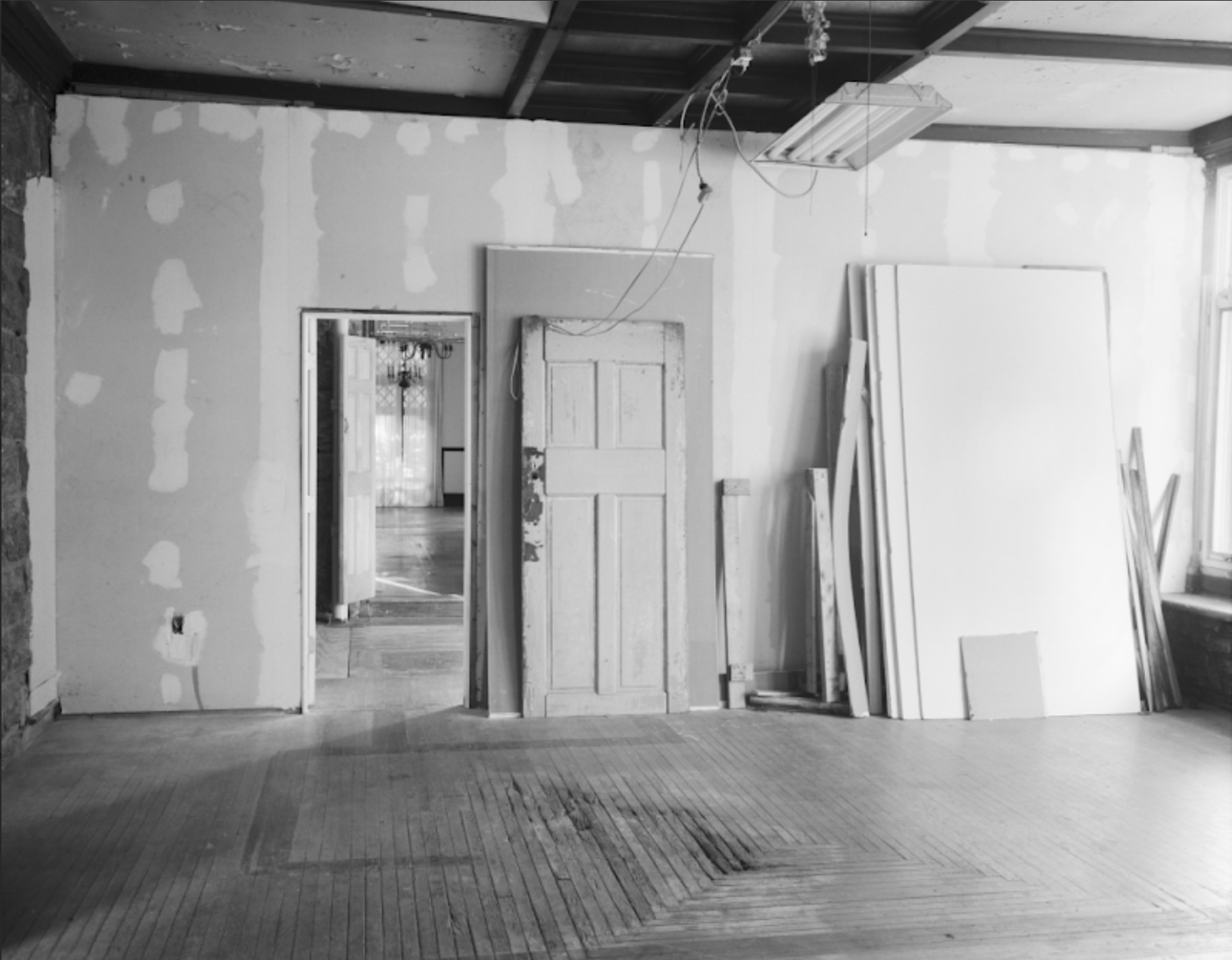
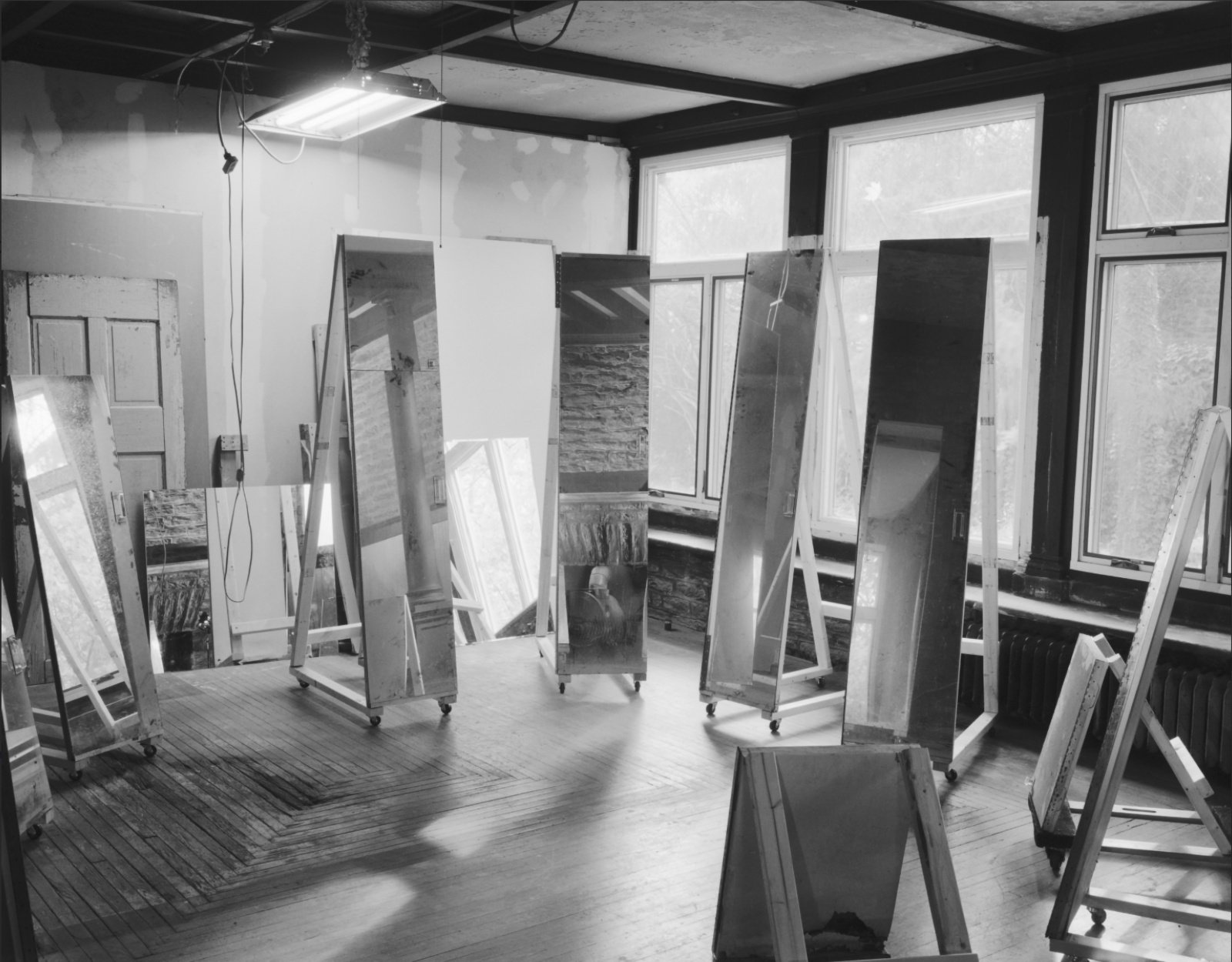
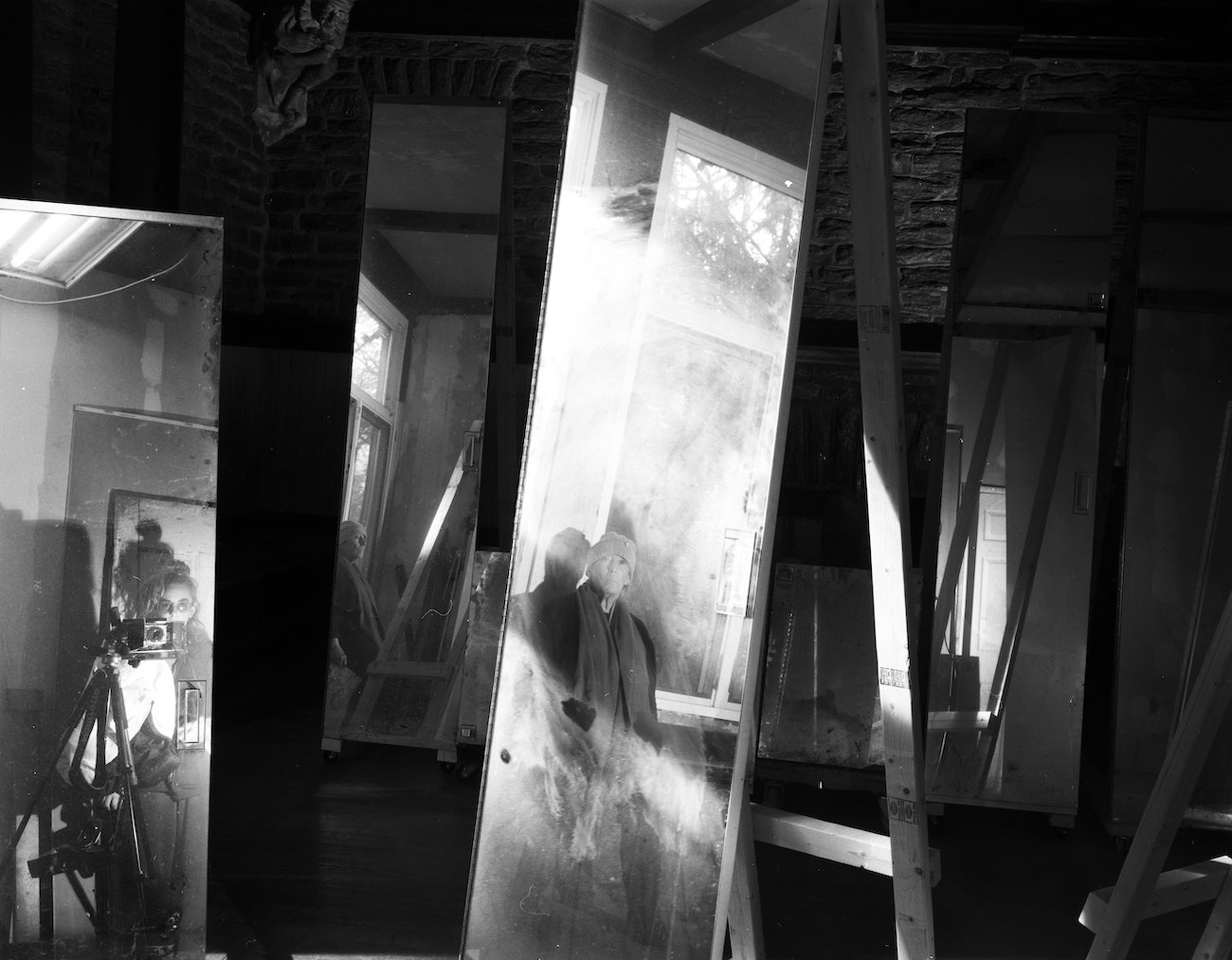
The Great Room documents five years Hubbard spent photographing her mother, Antonette Berger, in Berger’s Philadelphia home – a project that began in 2020 and continued through Berger’s diagnosis with LATE, a relatively recently characterised brain disease whose symptoms can resemble those of Alzheimer’s. Two kinds of images make up the exhibition. The first are large-format, black-and-white photographs taken in the house itself: mother and daughter staged in doorways, the mother’s bed, surrounded by an accumulation that can only be described as “things”, boxes and clutter, in various states of order/disorder. As we move through the exhibition, the apartment seemingly begins to shed the weight of its contents, and the photographs increasingly lean on the use of mirrors as props. These photographs work to dissect the space, tear it apart, and transform our visual register.
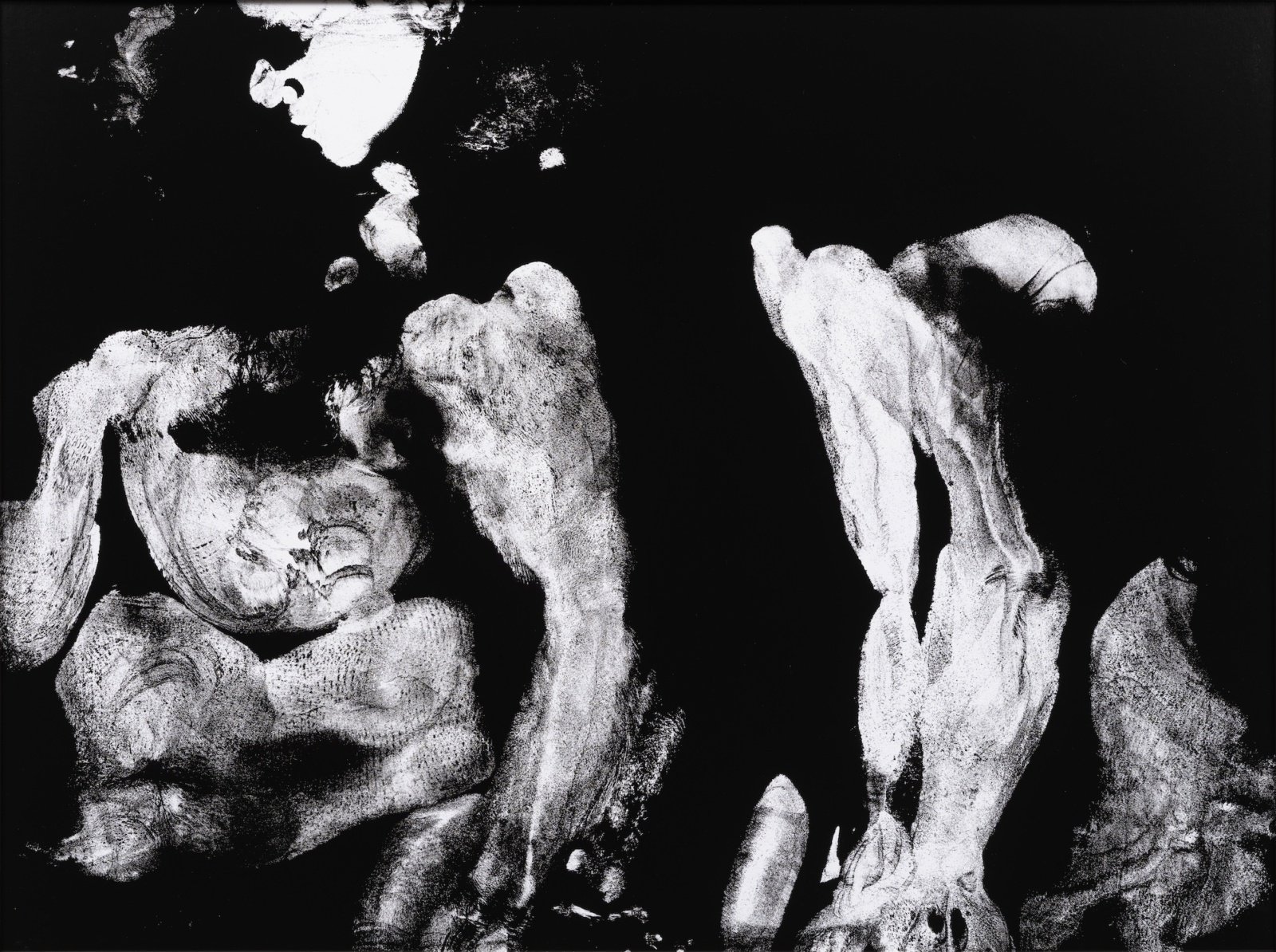
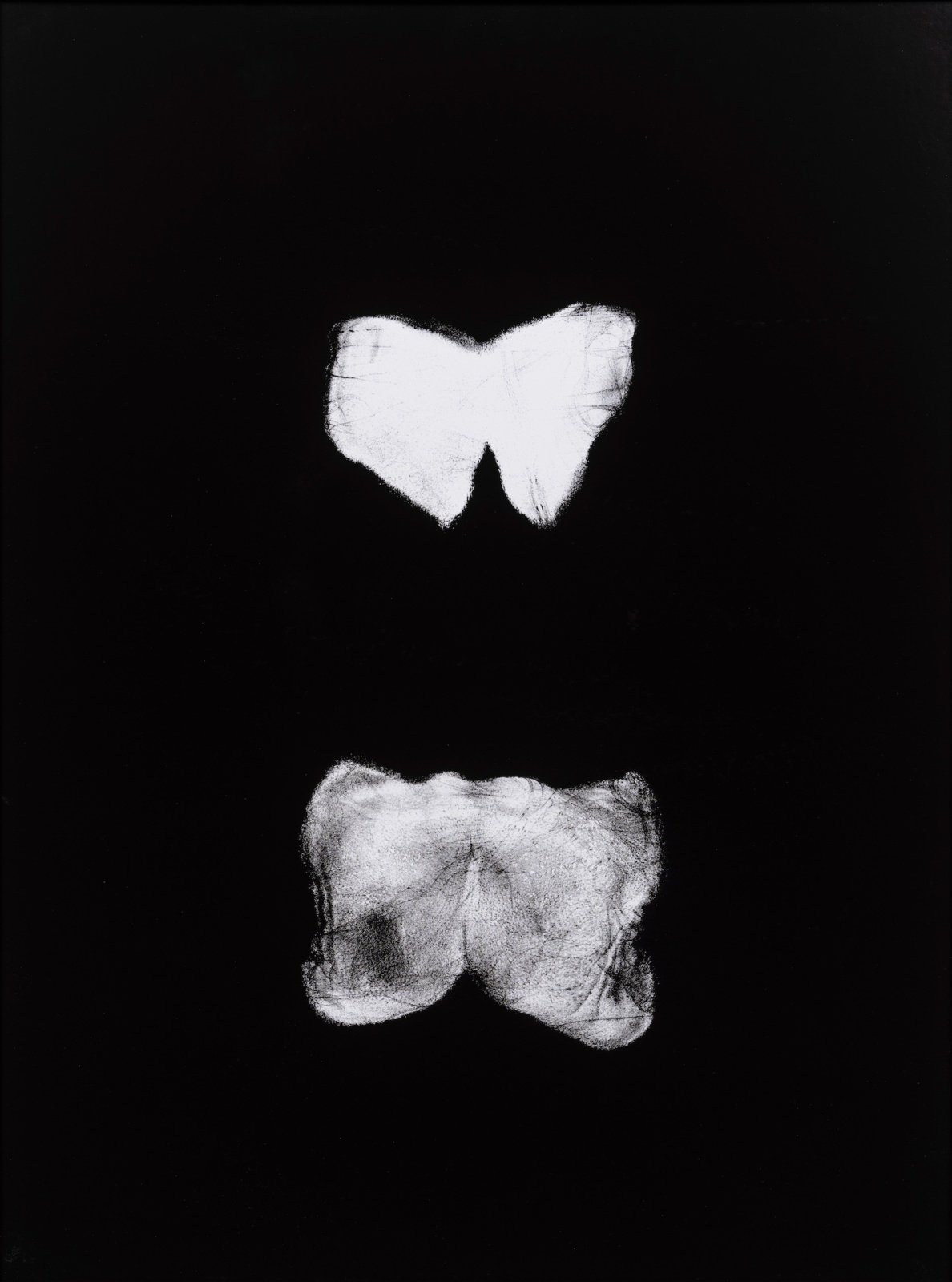
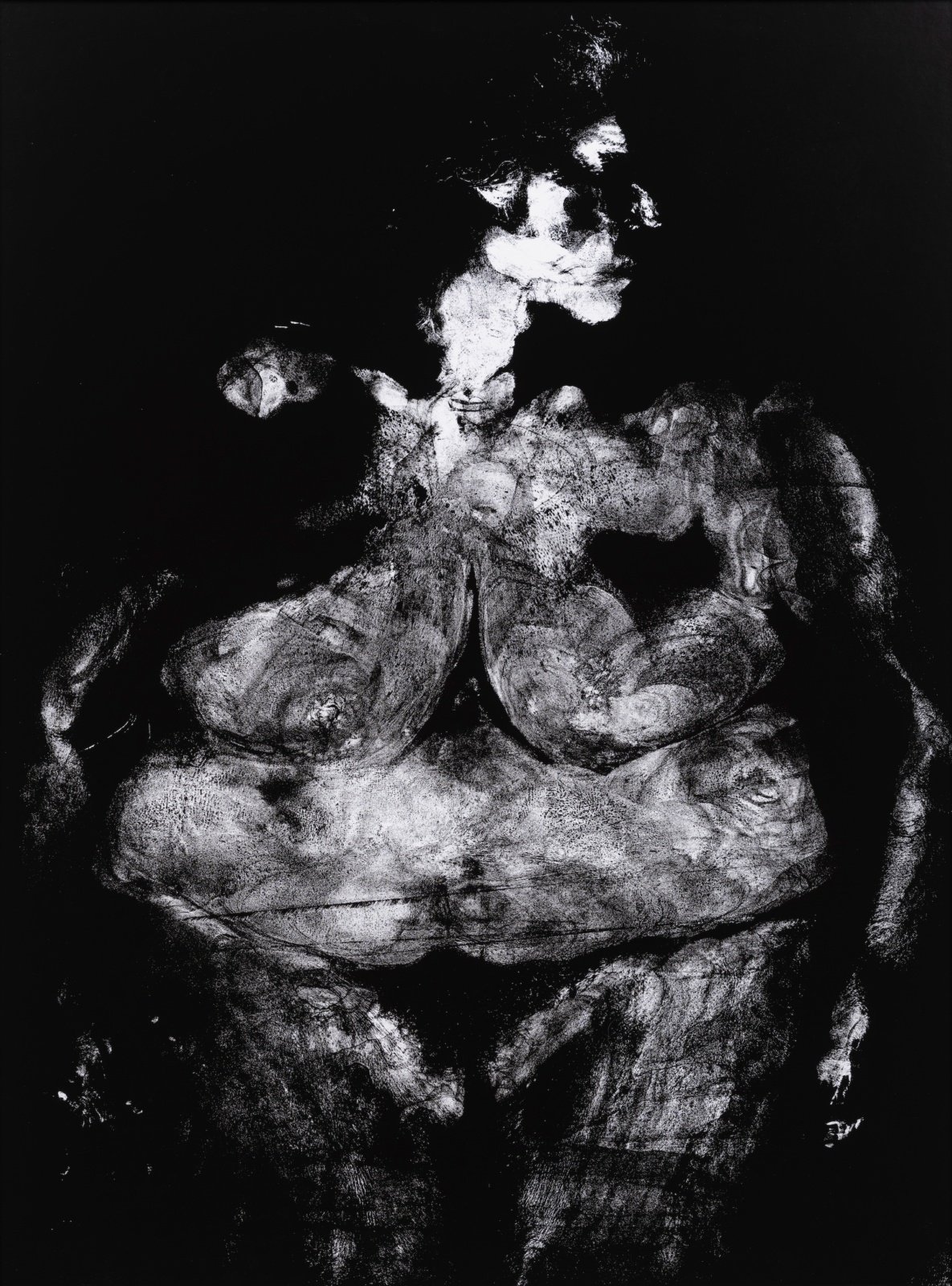
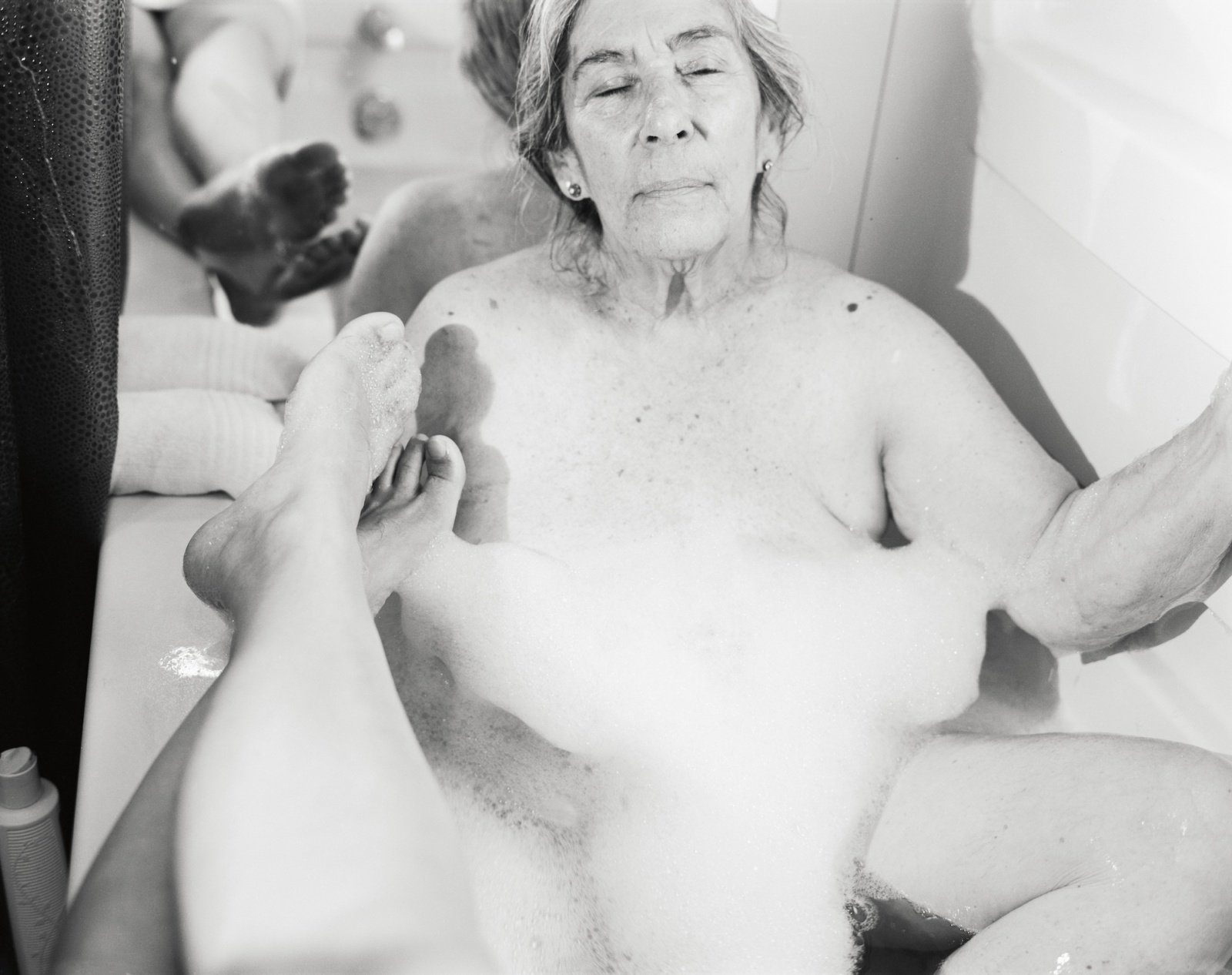
Some of the more straightforward photographs show the ordinary tasks of care, and mother-daughter exchange, moving between what felt like genuine moments of recognition between the two women, to something more staged, theatrical and ethereal. The power of the portrait of Berger in the bath – her concentrated, intelligent gaze directed at the camera – has stayed with me ever since. The second are darkroom body prints, made without a camera at all: Hubbard’s mother, covered in Vaseline, pressed directly onto photographic paper, a cameraless contact print. Where the other photographs are sustained by an umbilical tether that links the body to the gaze, these prints collapse that distance entirely; the cord becomes literal, skin against paper.
At Secession, the domestic architecture of Antonette Berger’s house is structurally imported, at least in gesture. A dividing wall that once harshly split her mother’s “great room” between the bedroom and living room is reconstituted in the gallery, its bare studwork exposed and doing double duty as an armature for the photographs themselves. The room that once served a grander, representative function is represented as a place of abundant accumulation, improvised storage, objects in transition from purpose to obsolescence, waiting for their inevitable removal from the home. The skeletal structure, in the context of the exhibition, becomes a kind of Frankenstein version of the curious addition to the Victorian room that Hubbard herself confessed to hating: unfinished and practical rather than sensitive to its architectural surroundings.
The photographs register a circling, almost ritualistic movement through the interior. Hubbard and Berger loop repeatedly through the apartment with two 4×5 cameras, tripods, mirrors and props, staging images alongside the mundane routines of bathing, dressing, sorting possessions. Hubbard has called the camera, in this context, a “structuring presence”: it inserts pauses into the grind of care work, carving out time outside the realm of medical necessity. As the circuits through the house tighten – drawing, in Hubbard’s words, “smaller and smaller concentric circles” around the false wall – the work tracks the gradual constriction of Berger’s cognitive world without ever settling into a documentary account of decline.
Mirrors recur throughout, notably capturing Hubbard herself, tripod and all, in the act of looking – a refusal of the invisible, omniscient viewpoint that photography usually assumes. In a diptych of photographs, the roles invert outright, and Hubbard photographs her mother while her mother photographs her back. It would be tempting to call this collaboration, but Hubbard resists the word. Hubbard has said she wanted to give her mother “all the power” assumed by the person behind the camera – which means the inversion is something she designed, a fiction built for her mother to inhabit, not a symmetry that simply existed between them. This somehow makes the work more precise, more real, and more reflective of what this period of their relationship perhaps looked like.
Hubbard has also spoken of not wanting the viewer to mistake themselves for standing where she once stood with her camera; by keeping herself visible in the frame, she resists the fantasy that her mother is a passive object of scrutiny. The fiction of “Antonette the photographer” runs through the whole project as a playful counter-current, insisting on respect for a woman whose social image could otherwise easily flatten into that of patient, elderly, demented.
I had expected, before Vienna, that the ethics of this project would rest on consent – on whether a mother with declining cognition could meaningfully agree to being photographed nude, at her most exposed. That question doesn’t disappear. But meeting Hubbard reframed it. Her method, she says, is “homeopathic”: rather than smoothing over what is uncomfortable in her mother’s house, she uses the image to amplify it. When she felt her mother was no longer cognitively able to maintain the photographic rituals they had instilled in their relationship, they immediately stopped the work.
Hubbard has said she has come to loathe the framework in which she is “mothering her own mother,” and wonders instead whether something closer to a theory of queer mothering is at stake: a relation that doesn’t run one direction, that keeps swapping who holds the camera and who is held by it. At the end of her talk before the exhibition opening, when the conversation circled back, inevitably, to the word “collaboration,” her interviewer offered something more apt: perhaps the role Antonette took on was simply that of mother – the unbounded, non-judgmental love that overlooks everything for the sake of a daughter. They left it there, and it felt right to leave it there too.
Carol Mavor, writing through her own mother’s Alzheimer’s in Black and Blue, opens with a sentence I have carried with me since long before I met Hubbard: “My mother has lost herself. My mother has forgotten herself.” I recognise the flatness of that sentence, its bruising straightforwardness. It is close to how I once described my grandmother, in her last years, to people who asked about her wellbeing. Elsewhere, writing on Barthes and the photographic image, Mavor calls the maternal “a cord (unsevered)” – and that, I think, is the truer description of what Hubbard’s photographs insist on.
During the opening, as crowds gathered below, a handful of us – Hubbard, her partner, the artist A.K. Burns, a few of her friends, the curator Bettina Spörr, and I – were let up onto the Secession’s roof to visit the cupola. The setting sun reflected off Olbrich’s 3000 gilded wrought-iron laurel leaves, long ago nicknamed the golden cabbage. Hubbard stood apart, and for a moment the composure she had held all evening seemed to loosen. A friend embraced her. Brief as it was, I recognised in that moment the sincerity and difficulty of undertaking such a project, the toll exacted in its making, and the personal cost of rendering this kind of grief so public.♦
All images courtesy of the artist and Company Gallery, New York.
Katherine Hubbard: The Great Room runs at Secession, Vienna until 30 August 2026.
—
Peter Watkins is an artist and educator based in Prague, Czech Republic. Watkins received his MA in Photography at the Royal College of Art in 2014, and has since exhibited his work internationally, receiving several awards for his ongoing practice. His work is held in the collections of the Victoria & Albert Museum, London, and Fotomuseum Winterthur, Switzerland. His book The Unforgetting was published by Skinnerboox in 2020. He is currently teaching at FAMU, Prague.
Images:
1-Katherine Hubbard, one fifty one, 2021.
2-Katherine Hubbard, one fifty one (hand to face), 2021.
3-Katherine Hubbard, one fifty one (after all), 2025.
4-Katherine Hubbard, one fifty one (s), 2025.
5-Katherine Hubbard, body print, hawk, mother, 2023.
6-Katherine Hubbard, body print, rear pressure point, 2023.
7-Katherine Hubbard, body print, my chin on your shoulder from behind, 2023.
8-Katherine Hubbard, one fifty one (pendulum left), 2025.
9-Katherine Hubbard, one fifty one (untitled), 2025.
10-Katherine Hubbard, one fifty one (Antonette), 2022.
11-Katherine Hubbard, one fifty one (snap), 2025.
1000 Words favourites
• Renée Mussai on exhibitions as sites of dialogue, critique and activism
• Roxana Marcoci navigates curatorial practice in the digital age
• Tanvi Mishra reviews Felipe Romero Beltrán’s Dialect
• Discover London’s top five photography galleries
• Tim Clark in conversation with Hayward Gallery’s Ralph Rugoff on Hiroshi Sugimoto
• Academic rigour and essayistic freedom as told by Taous Dahmani
• Shana Lopes reviews Agnieszka Sosnowska’s För
• Valentina Abenavoli discusses photobooks and community
• Michael Grieve considers Ute Mahler and Werner Mahler’s posthumous collaboration with their late family member
• Elisa Medde on Taysir Batniji’s images of glitched video calls from Gaza
Join us on Patreon today and be part of shaping the future of photographic discourse


