
Between pose and presence: on Farren van Wyk’s Mixedness is My Mythology
Farren van Wyk’s first solo museum exhibition, at Fotomuseum Den Haag, turns the camera towards her own family while drawing on the visual histories of anthropological photography, portraiture and colonial representation. Born to a South African mother and Dutch father, Van Wyk was classified as ‘coloured’ before moving to the Netherlands at the age of six. In Mixedness is My Mythology, made with her parents and brothers on the family farm in Putten, her carefully staged analogue photographs explore how identity is shaped through pose, performance and the act of representation itself. Bas Blaasse writes about a body of work that examines how photography negotiates the terms of visibility, revealing how family, history and belonging are not only recorded but constructed through images.
Bas Blaasse | Exhibition review | 30 July 2026
Join us on Patreon
In her first solo museum exhibition at the Fotomuseum Den Haag, photographer Farren van Wyk turns to the intimate terrain of her own family while tracing the broader histories that shape it. Mixedness is My Mythology, presented in the museum’s lower gallery, brings together a series of staged black-and-white photographs made in collaboration with her parents and her brothers – Alexander, Marck-Anthony and Benjamin – on the family’s farm in Putten. Rooted in a biography that moves between South Africa and the Netherlands, the series engages with questions of migration, racial classification, identity, and representation, in a documentary register that remains carefully orchestrated.
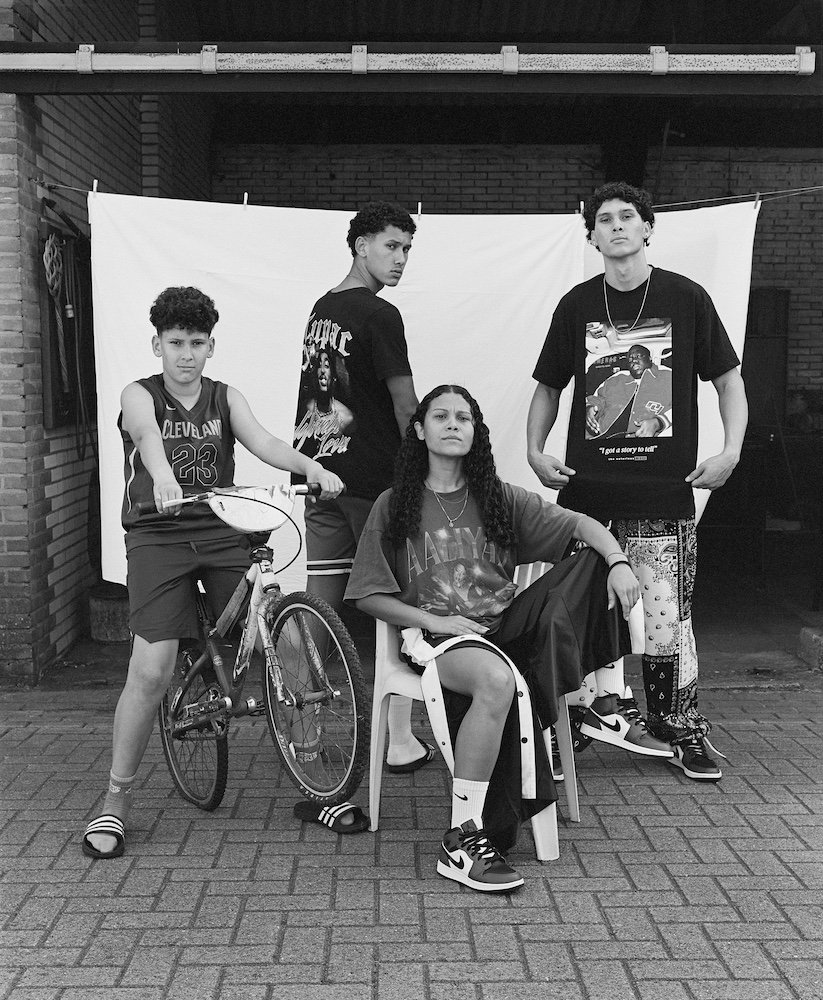
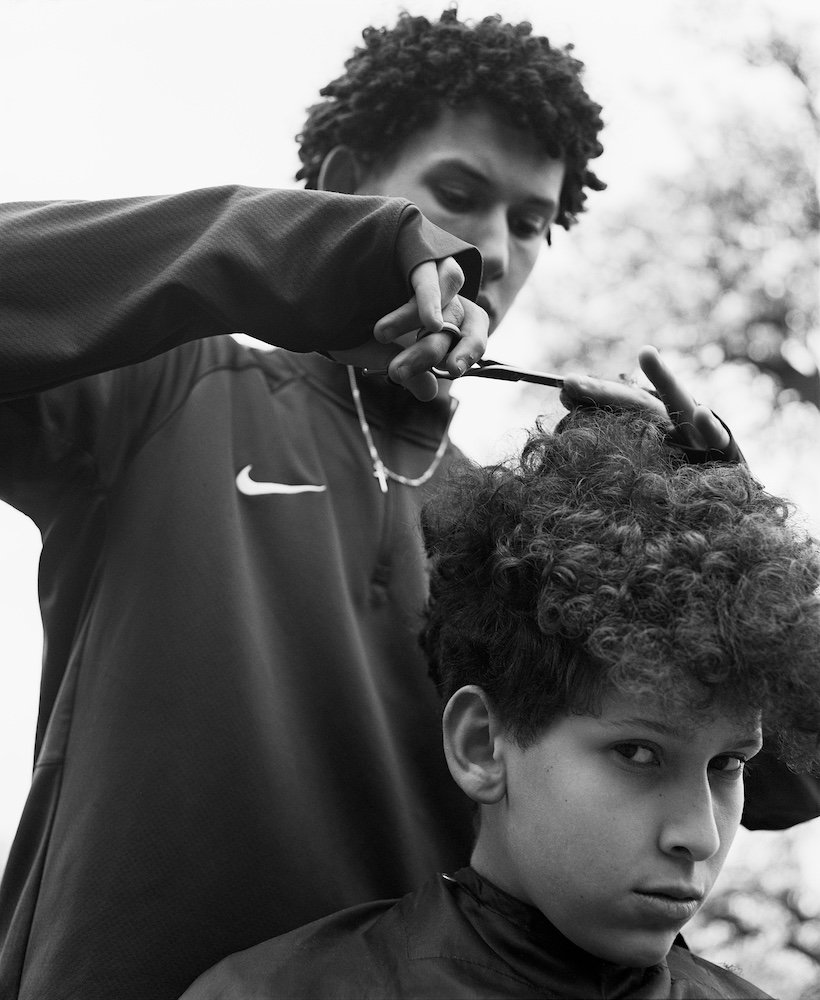
The exhibition is installed in a single, restrained space. The large photographs, evenly spaced, are hung at eye level. At first glance, they appear almost disarmingly direct, depicting a family in a rural environment, in a set of scenes that feel recognisable. For a moment, the work seems to lean toward the idea of a family archive. We see siblings together in shared moments, recurring settings and a sense of familiarity.
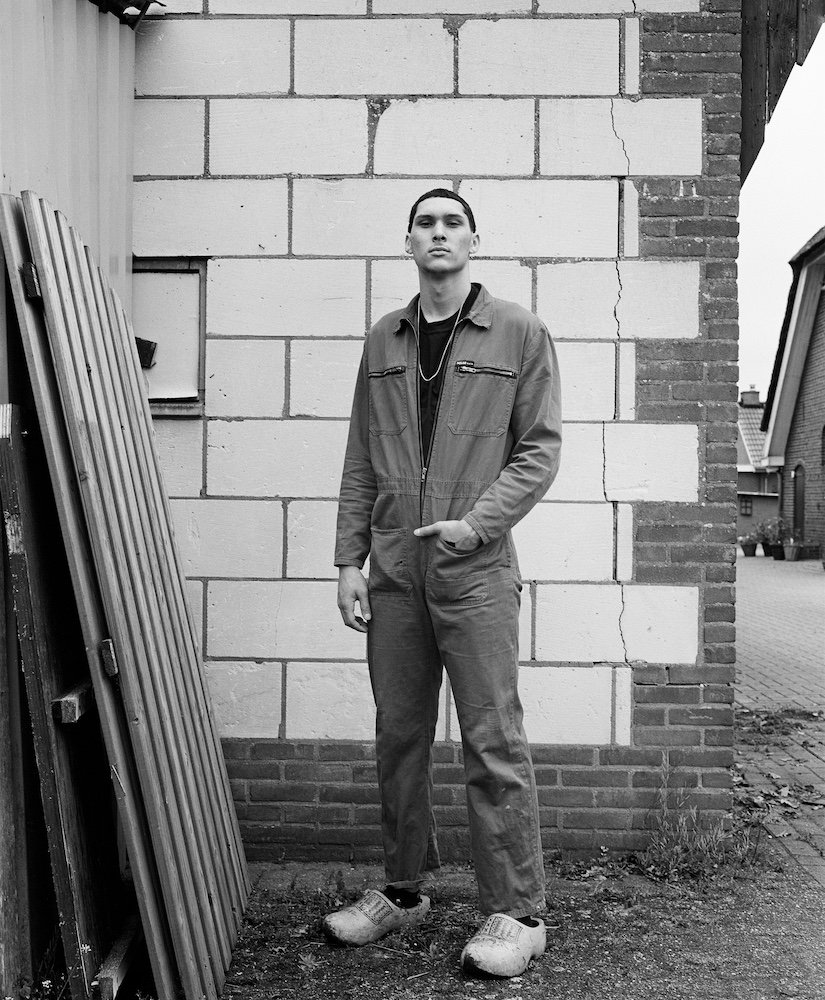
But that impression doesn’t quite hold. No one is caught off guard. Their poses are thoughtfully composed or reserved, their gazes neutral, attentive, solemn. These are not spontaneous images, and they do not pretend to be. Instead, they propose a persistent tension between appearing natural and being carefully arranged, between intimacy and its construction. The photographs make clear that those depicted are involved in shaping how they are seen, even as the limits of that control remain open.
This approach builds on Van Wyk’s broader practice, which engages with identities shaped by apartheid, migration and mixed heritage by reworking historical modes of representation. Here, Van Wyk brings that photographic questioning into the space of her own family.
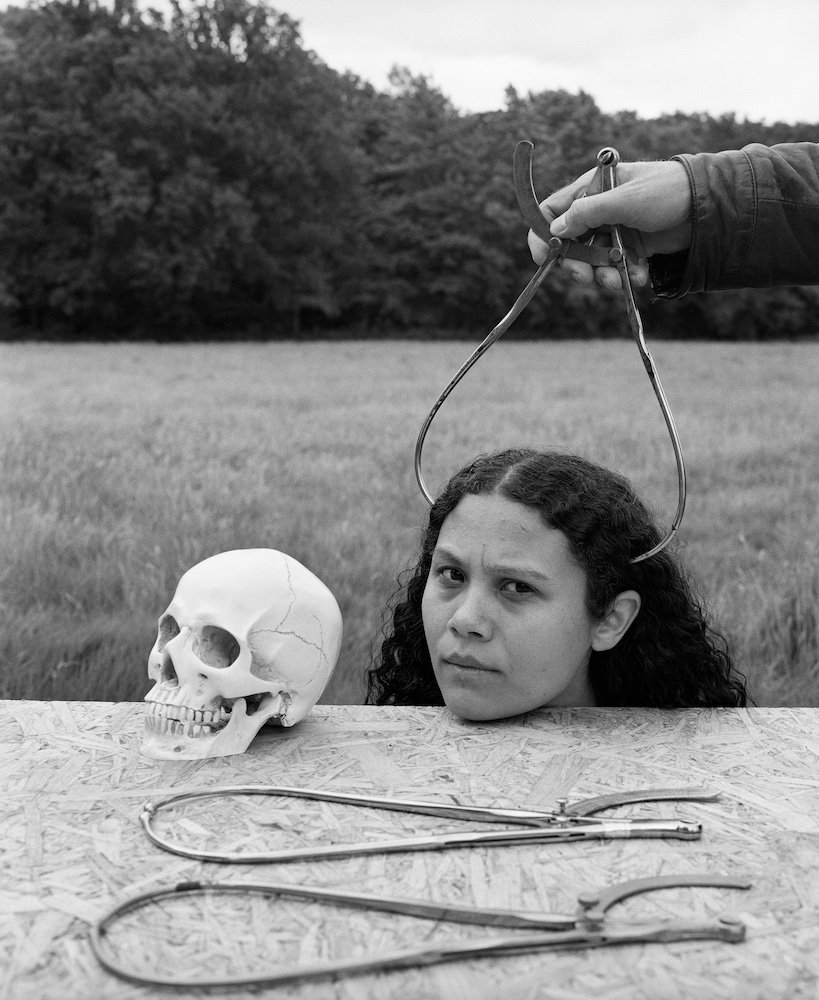
In the series, titles play a crucial role. Some anchor the images in kinship, naming siblings or relationships. Yet just as many introduce a more loaded register, drawing on cultural, theoretical, historical, or mythological references. The photographs themselves often adopt familiar visual formats such as portraits, group portraits and frontal compositions, but never quite land comfortably in them. Instead, they hover somewhere in between. They’re recognisable, but slightly off. The tension between what is shown and what is named opens up a space in which different frameworks – scientific, political, mythic – briefly overlap without fully aligning.
In Our Anthropological Golden Era (2021), for instance, the family is arranged in a way that recalls ethnographic photography: frontal, ordered, almost typological. Yet the contemporary clothing and relaxed posture subtly undo that framing. The image is legible as ‘anthropological,’ but only just. What it exposes is the construction behind that legibility. Something similar happens in The Whole Picture (2021), where the siblings are gathered in a quasi-heroic formation, holding tools that evoke labour and land. The title promises completeness, but the scene feels too composed to deliver on that promise. The ‘whole picture’ materialises, but only as something staged.
Other works push this tension further. In The Black Panthers meet Nelson Mandela (2024), Van Wyk is seated centrally, flanked symmetrically by her brothers. The composition borders on being ceremonial. The title invokes political histories and imagined affiliations, while symbolic elements in the scene, such as animal imagery, posture and setting, echo visual traditions of display and authority. Elsewhere, rifles, animal skins and assertive stances recall the language of hunting photography. These references evidently carry weight: associations with power, ownership and historically charged relationships to land and animals deeply embedded in European and colonial traditions. The images seem to move within these traditions while also testing them, without fully determining where they stand.
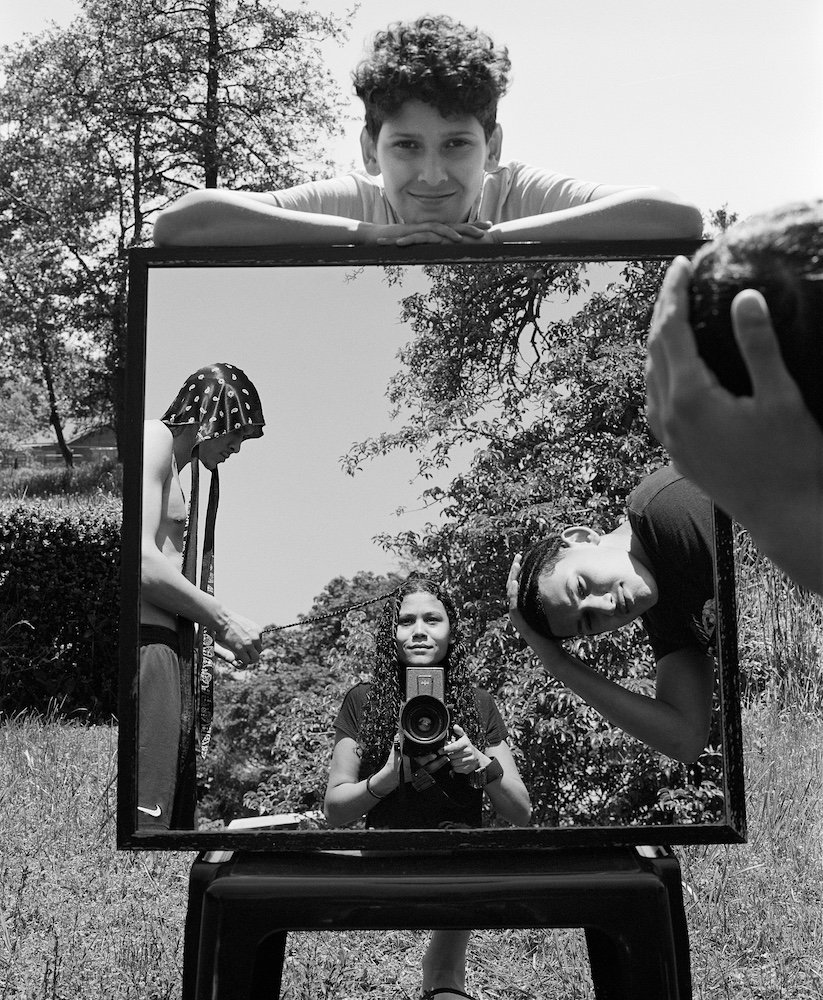
One of the most remarkable, if not revealing, photos is Home (2021). The four siblings gather around a mirror, in which Van Wyk herself appears in the centre, holding the camera. The act of photographing is folded, as it were, into the image. It’s a simple gesture, but it slightly contrasts with the otherwise measured tone of the series. For a moment, the composition loosens. Benjamin’s broad smile introduces something more open, almost casual. At first glance, the title seems to frame ‘home’ as a constructed scene, aligned more with family ties than with place. Yet the mirror complicates that reading somewhat. It also hints at identity as something mediated, as formed in relation to others, appearing before a gaze that frames and potentially judges. The photograph embodies how the entire series holds together both the pose and the possibility of slipping out of it.
Seen from this angle, the exhibition is less about presenting a fixed identity than about following how identity takes shape in images. And repetition plays a central role in doing so: similar poses, recurring gestures, repeated encounters with the camera. Identity, if it emerges at all, does so gradually, through these iterations, rather than as something stable or given. The use of black and white reinforces the ambiguity. In a body of work concerned with ‘mixedness’, the absence of colour does not neutralise difference, but shifts attention to form, contrast and the cultural weight of the image itself.
This also raises a more basic question: what does it mean to produce an image of a family together, rather than to document one? The collaborative setup suggests a shared investment in how the family appears, while the precision of the staging also introduces a certain – critical – distance. These are intimate scenes, but they are also clearly arranged, held in place for a viewer. They don’t so much define a life between South Africa and the Netherlands as explore how such a life can be made visible at all.
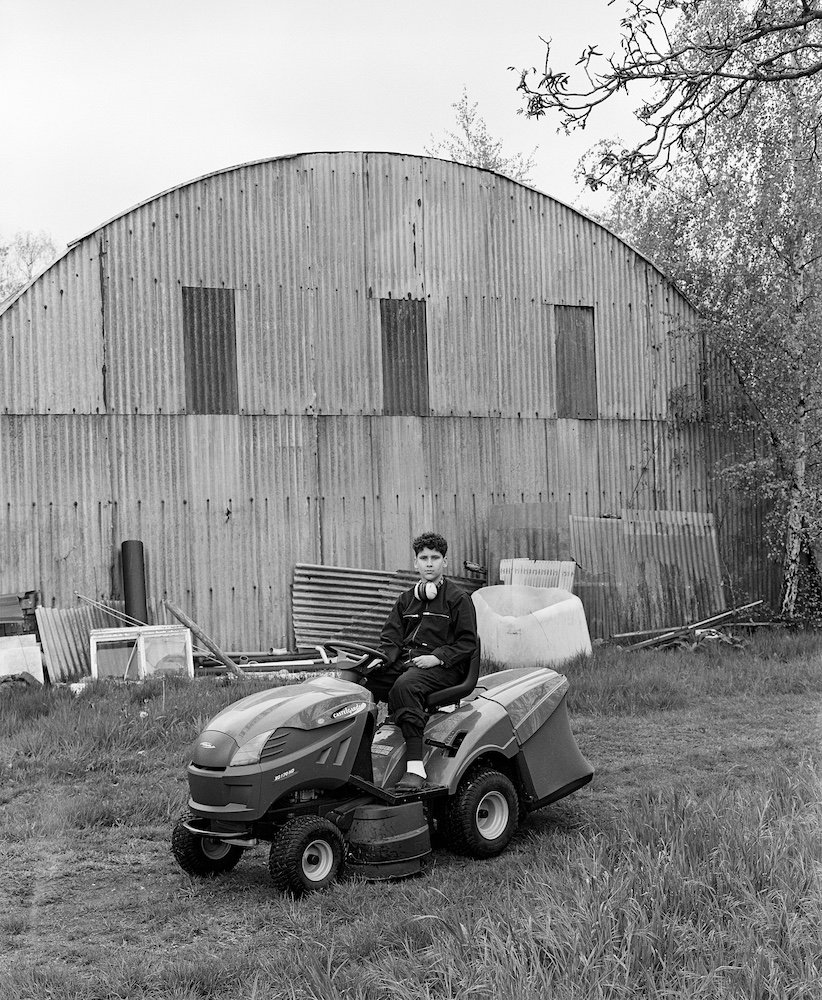
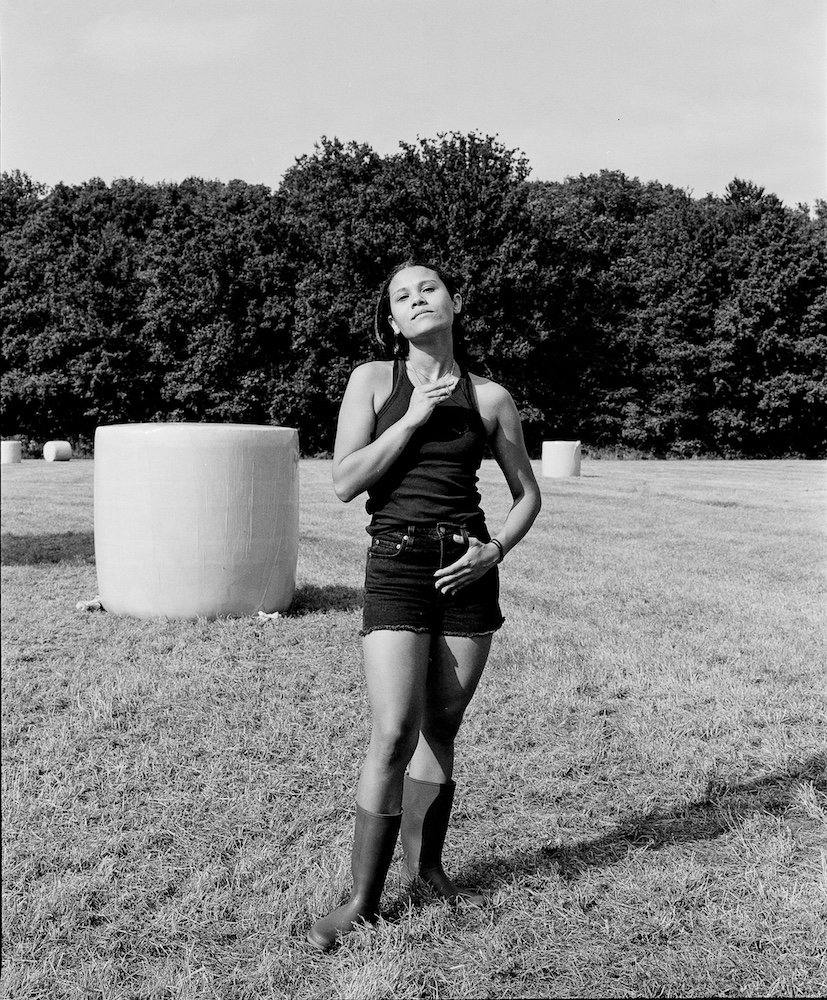
The unremarkable setting in Putten helps sharpen the project’s tensions. The landscape of fields, barn and stretches of grass carries the familiar tone of a Dutch rural calm. But that calm feels provisional. The landscape is less a backdrop than a surface against which the family positions itself, bringing together, if only temporarily, different histories, references and ways of seeing.♦
All images courtesy Fotomuseum Den Haag and the artist.
Mixedness is my Mythology runs at Fotomuseum Den Haag, Netherlands, until 23 August 2026.
—
Bas Blaasse is a Brussels-based writer, editor and researcher focusing on photography, contemporary art and visual culture. His work examines how images and artistic practices engage with questions of nature, landscape, and collective experience. Trained in philosophy and in photography, he received the 2023 C/O Berlin Talent Award in Theory.
Images:
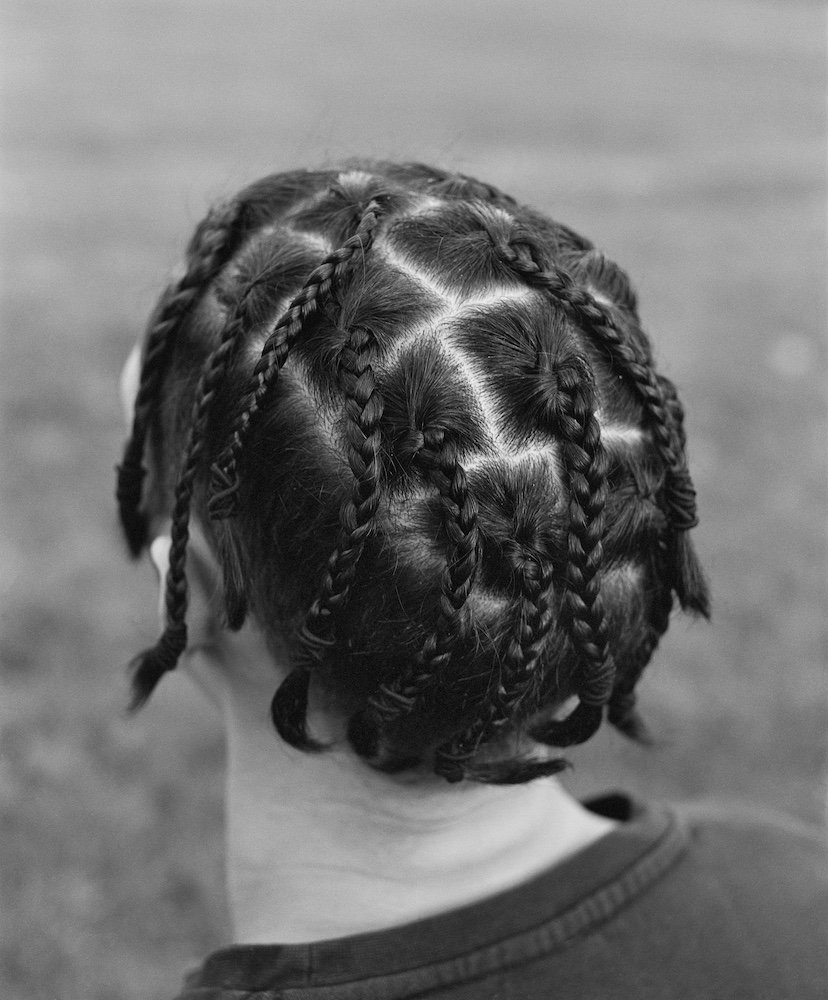
1-Farren van Wyk, Craniometry Study, Mixedness is my Mythology, 2021.
2-Farren van Wyk, Home, Mixedness is my Mythology, 2021.
3-Farren van Wyk, Benjamin, Mixedness is my Mythology, 2021.
4-Farren van Wyk, The Rebirth of Venus, Mixedness is my Mythology, 2021.
5-Farren van Wyk, Alexander’s Braids, Mixedness is my Mythology, 2021.
6-Farren van Wyk, Our Anthropological Golden Era, Mixedness is my Mythology, 2021.
7-Farren van Wyk, Marck-Anthony & Benjamin, Mixedness is my Mythology, 2022.
8-Farren van Wyk, Alexander, Mixedness is my Mythology, 2021.
1000 Words favourites
• Renée Mussai on exhibitions as sites of dialogue, critique and activism
• Roxana Marcoci navigates curatorial practice in the digital age
• Tanvi Mishra reviews Felipe Romero Beltrán’s Dialect
• Discover London’s top five photography galleries
• Tim Clark in conversation with Hayward Gallery’s Ralph Rugoff on Hiroshi Sugimoto
• Academic rigour and essayistic freedom as told by Taous Dahmani
• Shana Lopes reviews Agnieszka Sosnowska’s För
• Valentina Abenavoli discusses photobooks and community
• Michael Grieve considers Ute Mahler and Werner Mahler’s posthumous collaboration with their late family member
• Elisa Medde on Taysir Batniji’s images of glitched video calls from Gaza
Join us on Patreon today and be part of shaping the future of photographic discourse


