Arles 2025: staging radicality within safe limits?

Is the art world willing to take real political risks, or does it perform radicality within safe limits? What to make of aesthetic gestures of dissent without institutional accountability and without any attempts at broader movement building? Peter Watkins probes these questions and more in the context of Les Rencontres d’Arles 2025, arguing that a familiar absence remains despite this year’s theme of ‘disobedient’ images. Elsewhere, festival highlights include Nan Goldin’s recurring interventions, intergenerational collaboration between Carol Newhouse and Carmen Winant, a guerilla poster campaign by NO-PHOTO, and the deeply personal work of Diana Markosian.


Peter Watkins | Festival report | 24 July 2025
Join us on Patreon

The notion that images and their makers can be ‘disobedient’ implies that they hold the power to disrupt, to rebel and to resist the status quo. It suggests that they might serve as an outlet towards a more progressive politics – a means of confronting and reflecting on the systems of power that shape both cultural and political life, and a means to propose critical and aesthetic alternatives in response to the world around us.

In this moment of collective urgency, when the systems that govern us are becoming increasingly repressive and authoritarian, the idea of disobedience takes on an increased importance and risk. The current climate in Europe and the United States is marked by the widespread institutional cancellations of artists, slashing of cultural budgets, silencing of academics and student protests, increased state violence, and the suppression of free and open political and creative expression. Against the rise of “nationalism, nihilism and environmental crises,” as the festival put it in their opening gambit, we might do well to ask how seriously Les Rencontres d’Arles takes the artistic and political freedoms of those presented in this year’s edition, and address what has been left unsaid in the process. 

In a statement issued during the 2022 edition, Les Rencontres d’Arles declared its unilateral support for the Ukrainian people in their “fight for freedom,” dedicating the opening week to honouring the “artists and photographers whose lives are threatened by Russia’s aggression.” Fast forward three years, and while the war in Ukraine rages on, this year’s edition includes neither mention nor representation of Ukrainian artists, institutions or direct geopolitical issues related to the region.

While this year is marked by the inclusion of historically marginalised communities, issues surrounding colonial legacies and is notable for its work of inclusion and politics of representation, there remains a colossal elephant in the room. For a festival – and an industry – that has spent years championing diversity, flirting with decolonial discourse and sexual politics, the absence of any tangible mention of the political realities we find ourselves in the present is both deeply disappointing and troubling.

It was left to Nan Goldin, once again – leveraging her considerable artistic and cultural influence – to say what the festival would not. To kick off proceedings, her film Memory Lost (2019-21), underscored by answering machine recordings, seminal photographs of her and her friends, and revolving around abuse, friendship, love, deprivation, and loss, was accompanied by a live piano performance by Eliza McCarthy. It played out to the vast imposing Théâtre Romain, which was full to the brim with approximately 2500 people, comprising those from every corner of  the photography community. Goldin was presented with the Women in Motion award, which she accepted graciously, joking that Les Rencontres had shown bravery in honouring her at such a politically charged moment, and promised the audience a surprise at the end.

In the conversation that followed, she chose to speak out against the growing repression of trans and LGBTQIA+ communities, particularly in the context of increasingly draconian policies in the United States that have eroded decades of progress in terms of policy and rights. This was accompanied by a slideshow depicting her early photographs of drag queens, starting out with a portrait of David Armstrong depicted here as a young man dressed as a woman. “He wasn’t a queen himself,” she reflected, “he was just so androgynous and beautiful that men would divorce their wives when they saw him.”

As the moon shone brightly in the night sky, a spotlit Nan Goldin told the audience that “we need silence now.” The word Gaza appeared across the screen. The film was composed of video clips compiled from social media. It started like this: Children playing, laughing, bustling food markets, panoramas of cosmopolitan life. People congregating, families on the beach, kids flying kites, a birthday party, a father throwing his child into the air. Then, plumes of smoke, citizens evacuating, explosions, dead bodies, a man shaking uncontrollably with fear, people running, people dying, neighbourhoods reduced to rubble, dead journalists surrounded by living journalists, a man comforting a child. A child holding the head of a dead parent. And the unmistakable look of horror in the eyes of the children. Towards the end we see desperate unarmed Palestinians running for aid. A child no older than eight years old says: “we are tired of this darkness. We are tired of this life.” 

The video was silent, there was no audio, but for the wind catching the giant projection screen. What followed was a powerful speech by Goldin standing alongside writer Edouard Louis who shared the burden. At 71 years old, Goldin struggled at some points to stand, but her voice remained steady and erudite. Some of the audience left in a steady stream, but most stayed, and when one woman heckled passionately screaming about hostages, the palpable tension that had filled the air bubbled over, with Goldin moving off script, and addressing the woman directly, but keeping her cool. Free Palestine chants rang out in solidarity and Goldin completed what she had come to say. When she returned to her seat near to where I was sitting, she said in typical Nan Goldin style: “get me outta here,” to her youthful entourage. 

A wide range of UN bodies, the International Court of Justice, judicial panels, investigation committees as well as most major human rights NGO’s and experts, have characterised Israel’s military campaign in Gaza as Genocide, warning that it meets the criteria as defined by the Genocide Convention. More than 50,000 children have been killed or injured by one of the most sophisticated war machines on the planet. Food and aid is being used as a weapon of war. Genocide is occurring in Gaza, but also in Sudan, in Myanmar, in Congo. Our complicity in the West and in our industry is marked by the silence of our institutions, and the gatekeepers at their helms, prioritising corporate sponsorship above moral clarity. 

Change can only occur through lifting this silence, practicing disobedience and risking something of ourselves in what we believe in. It should not have to fall squarely on the shoulders of Nan Goldin to be the mouthpiece for an industry’s failures. We speak of care, inclusivity, decolonialism and progress, yet this festival has been unable to acknowledge the horrors of the present moment, nor create any tangible platform for them to be discussed. We have a collective duty to do more, and we must do so much more. 

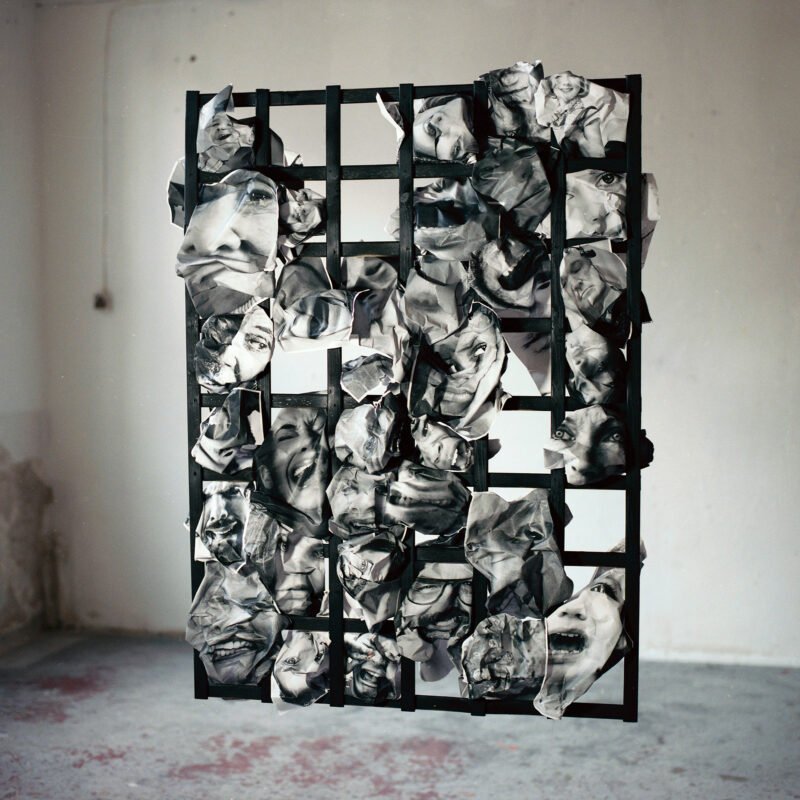
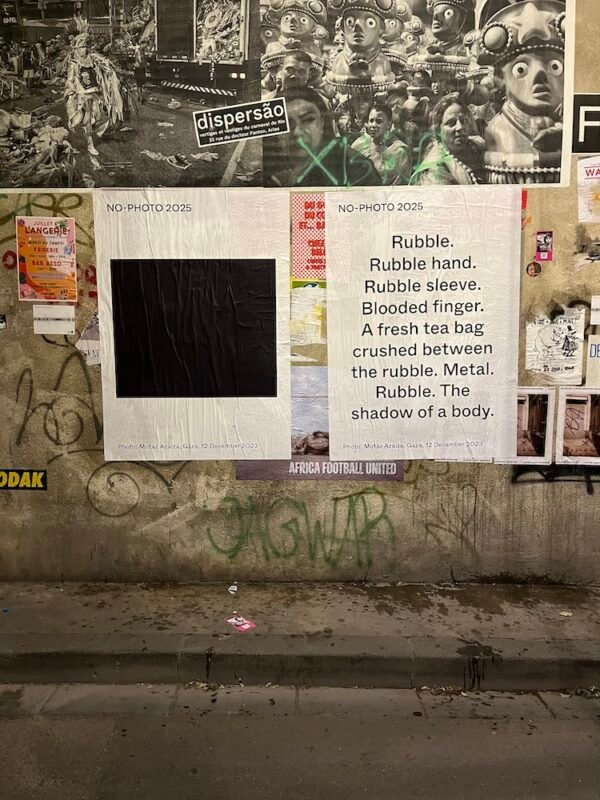
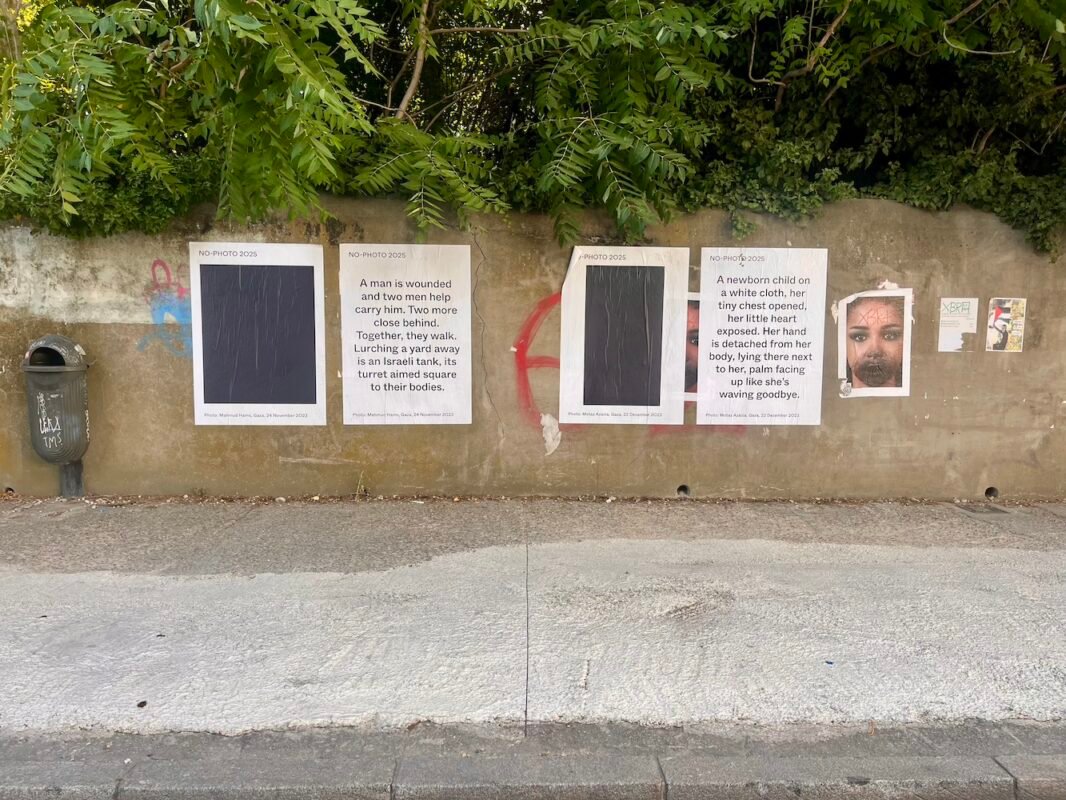
NO-PHOTO, a collective of artists and activists, were notable for their powerful campaign of posters plastered up on walls around Arles. Made up of textual descriptions of photographs from Gaza, the collective called for “cultural institutions to align their visual language with ethical clarity and action.” The power of these political works lies in their conceptual premise: a deliberate refusal to include photography. The image is replaced by a void, a black rectangle, representing a conscious rejection of resharing photographs of Palestinian suffering as tokens to evoke compassion, but rather referring back to the ubiquity of those images through their absence.

An accompanying newsprint featuring an essay from 2023 by Ariella Aïsha Azoulay argues that genocide cannot be captured in a single image, but must be traced across a body of images and actions over time. It asserts that Israel is a settler colonial regime built on the systematic displacement and elimination of Palestinians, using strategies such as expulsion, incarceration and militarised control, especially in Gaza. She talks about how the normalisation of Palestinian suffering through images frames their lives as disposable. She concludes by stating that we must acknowledge this genocide, our complicity, not only for the sake of the Palestinian cause, but for the sake of humanity, pluralism and justice. 

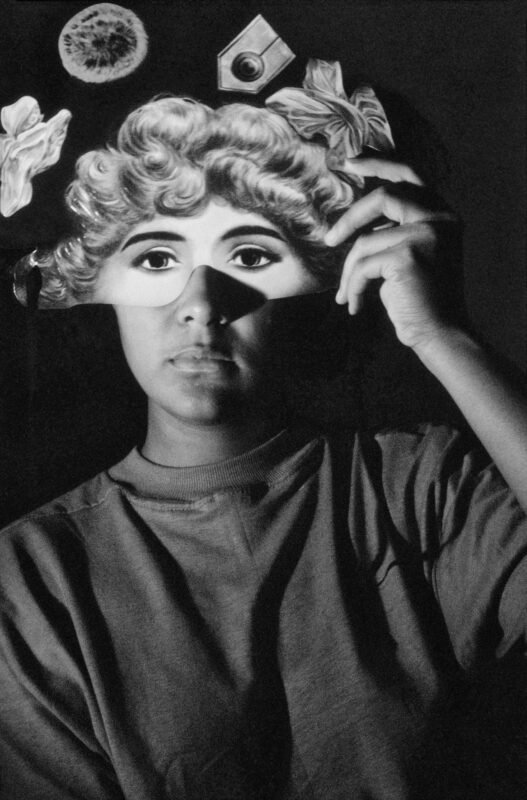
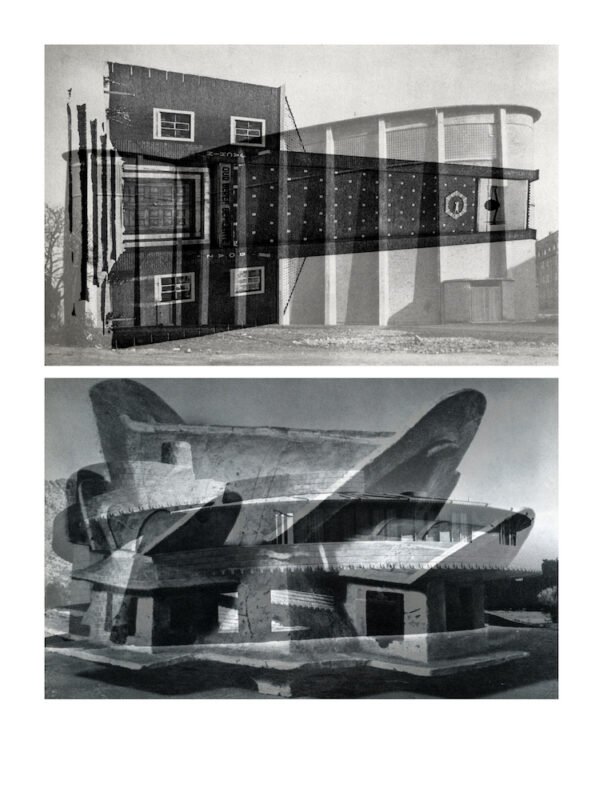
Carole Newhouse and Carmen Winant’s collaborative exhibition simply titled Double was quietly one of the highlights of the festival. Thoughtful, tender, their collaboration marks an intergenerational feminist alliance which looks to reclaim and amplify feminist strategies from the past and bring them to the present. Through the simple gesture of double-exposure, the two women collaborated on a series of works that were an aesthetic pleasure to behold. The exhibition invites us to consider the transformative potential of a radical reinvention and reclamation of the self. Neatly curated by Nina Strand, it is well executed, intelligent work.

Meanwhile the skyline dominating LUMA presents the work of late photographer David Armstrong, with a retrospective exhibition handled with the utmost care and precision by artist Wade Guyton and curator Matthieu Humery. Two rooms separate black and white and colour, with vast vitrines of contact sheets quietly footnoting the first room. Armstrong’s signature devil-may-care portraits of friends, lovers and fellow artists predominantly from the East Village in New York in the 1970’s through to the 90’s seduce with effortless cool and sexiness. He was a life-long friend of Nan Goldin, photographing people such as Cookie Mueller, Greer Lankton, Mark Morrisroe, and other members of the queer scene. The exhibition is handled beautifully, allowing for a kind of escapism from the visual noise dominating Arles over the opening week. 

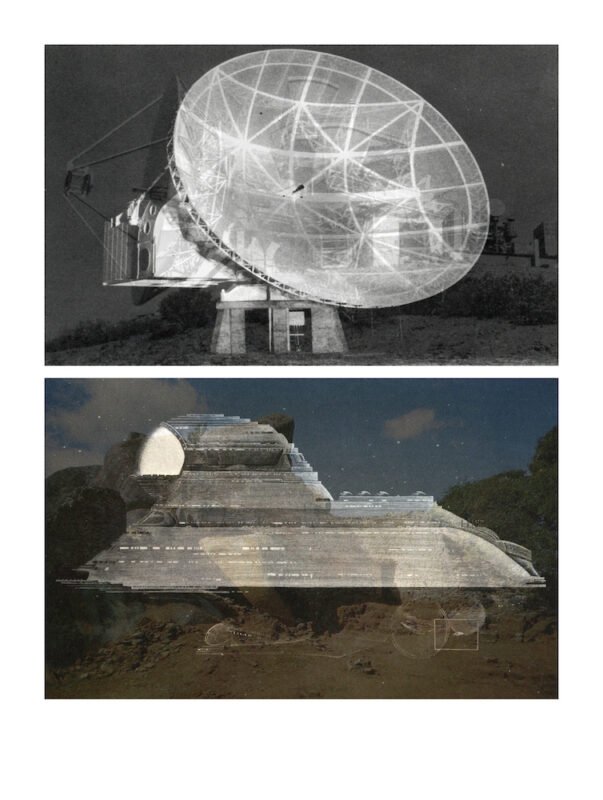
Escaping the midday heat of the festival, Batia Suter’s exhibition Octahydra curated by Francesca Marcaccio Hitzeman took us beneath the ancient Forum, into the Cryptoportiques and the bowels of the earth. In the cool, damp air, and dripping wet walls, two powerful projectors face each other from opposite ends of the cavernous corridor, separated by sheer fabric projection screens and smaller intermediary screens that catch fragments of the images as they pass through. Moving between them, the images dissolve and recombine, decontextualising and abstracting the architectural typologies first presented on the main screens. This is very much a bodily and sensory experience, one that demonstrates both restraint and a precise response to the unique nature of the space. Her work, which I had only experienced in book form until now, translates wonderfully into exhibition form – creating a new register of experience. Many photographers and exhibiting artists at the festival could learn from this kind of thoughtful translation. Too often, the visual and material strategies on display relied on a too-similar, now-familiar material language which permeates the photography world as distinct from the contemporary art world, often resulting in a total flattening of affect and experience. I was left wondering just how many of these exhibitions might have taken another, more appropriate form. Just as not every body of work needs to become a book, not every body of work should become an exhibition.

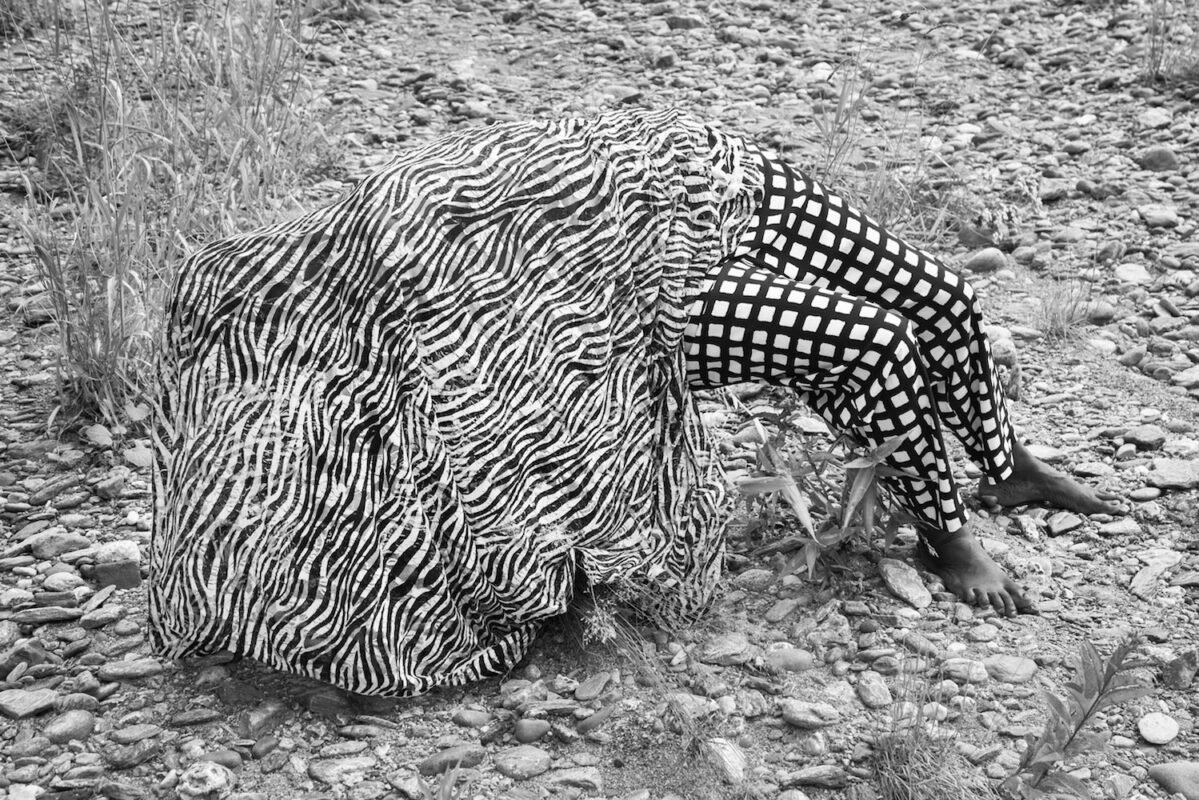
A notable mention goes to Keisha Scarville, whose work predominantly comprises self-portraiture, reappropriating and embodying the clothing and fabrics left behind by her late mother. We are told that she takes inspiration from Egúngún, also known as Ará Ọ̀run (‘The collective dead’), a masked or costumed figure, of the Yoruba people. Her work is playful, graphic, and working through the processes of grief and absence that so often permeate the material remains of the departed, but with the kind of energy that also takes the work outside of that register. She approximates the absence of the mother, through the positioning of herself in the frame, inhabiting the clothing of her mother, and moving between classical and more experimental forms. A pleasurably graphic mode of self-presentation and exploration.

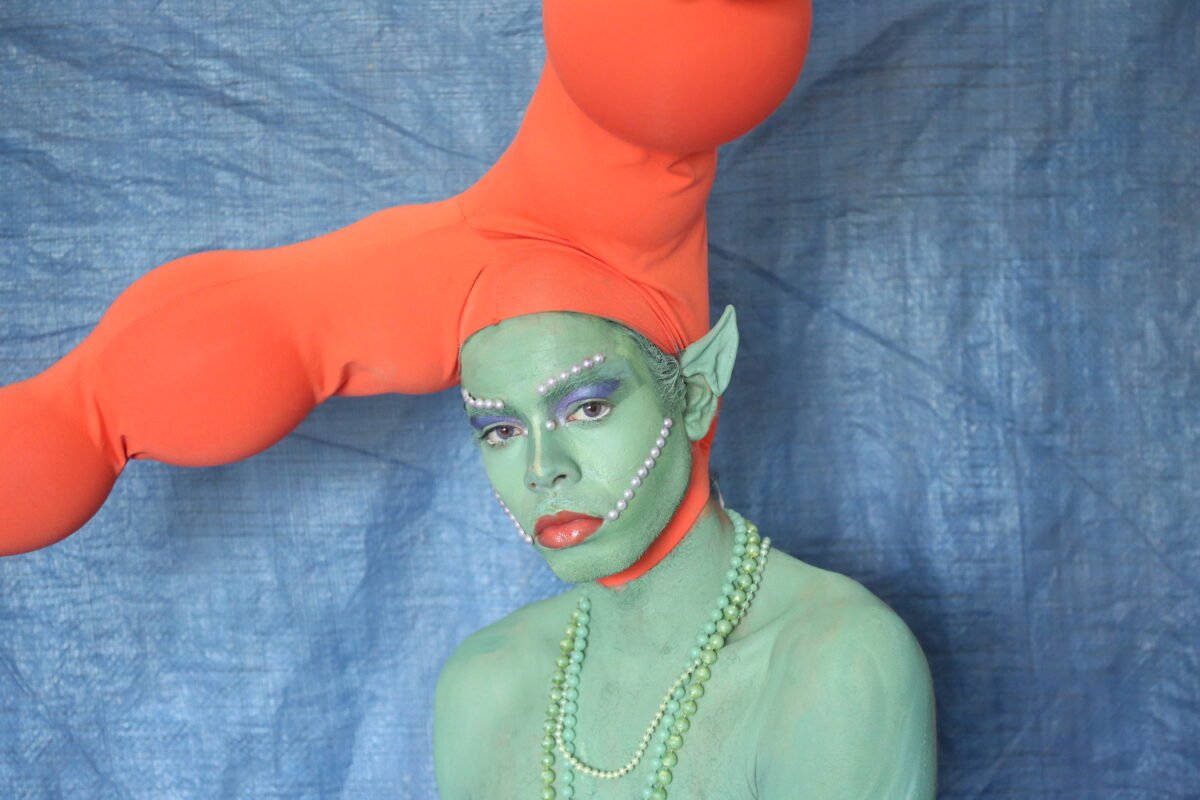
Meanwhile, Brandon Gercara’s exhibition draws on the volcanic landscape of La Réunion – specifically the Piton de la Fournaise – to forge a poetic and political language of resistance. Inspired by the geological formation of hyaloclastites, their art crystallises new, sustainable spaces for marginalised communities, particularly through the lens of Kwir identity, a Creole reimagining of ‘queer.’ In the films Playback de la pensée Kwir and Conversations and Lip sync de la pensée, Gercara uses drag to transmute personal and collective trauma into spectral, extraterrestrial figures that defy normative social structures. Their practice weaves together activism and art to expose and destabilise the lingering forces of colonialism – gender, racial and class-based oppression – suggesting an emancipatory territory rooted in intersectionality and resistance.

Finally, the talk of the town was undoubtedly Diana Markosian’s exhibition, tucked away upstairs in the Monoprix supermarket near the railway station. Markosian was just seven when her mother took her and her brother from Moscow to the United States in 1996, leaving their father behind without saying goodbye. He returned to an empty apartment and spent years searching for his missing children, desperately writing letters to authorities and strangers alike. In California, their mother cut him from family photographs, erasing his presence entirely. Markosian revisited this deeply personal history in her 2020 monograph Santa Barbara, which reconstructs their migration and her mother’s determination to start a new life. Fifteen years later, she travelled to Armenia in search of her father, an emotional reunion that became the foundation for Father, a project weaving together photography, archival documents and video to explore absence, reconciliation and the painful legacy of their estrangement. 

Markosian draws on every tool at her disposal to elicit an emotional response – at times, perhaps too insistently, as with the piano soundtrack that borders on instructive. But the music urges us to experience the work cinematically, inviting us to be swept up in the narrative and given space to dream. This cinematic quality makes the reunion feel as if it is both happening and not happening. On the day I saw it, like many others, I wept – moved by the simplicity of a black-and-white photograph of her father’s shirt, hanging in plastic after being laundered – perhaps reminded of my own photograph of my mother’s dress. There is a moment in the film where Markosian sits across from her father, and they briefly hold hands while staring into each other’s eyes. There is a flicker of pain and relief and love and awkwardness in the eyes of her father in this moment, and this felt direct, poignant and universal. This moment had me totally floored. 

When art and culture is at its very best it doesn’t rest on its laurels; it provokes us, it unsettles us, it carves out the space for renewal and reimagining, and it provides us with forms of collective empathy. Despite eternal precarity, art carries with it these responsibilities: to keep asking difficult questions, to do the hard work in the good times and the bad, and to offer a safe environment outside of the banalities and disappointments of everyday lived experience. 

That two of the most powerful moments at this year’s festival came not from the official programming – Nan Goldin after the award ceremony, and NO-PHOTO on the fringes – but from artists turning their work back onto the institution and the industry itself, is telling. It reveals the limits of representation without accountability, and of inclusion without political engagement. And yet, these moments also point towards a very different possibility – one where festivals like Les Rencontres d’Arles not only platform voices but also respond to the urgencies those voices name. A transformed festival would not just celebrate disobedience as a theme, but give more space to it as a practice: by refusing neutrality in the face of violence and divesting from oppressive structures, all the while creating meaningful space for dissent, dialogue and action.♦

Les Rencontres d’Arles runs until 5 October 2025.


Peter Watkins is an artist and educator based in Prague, Czech Republic. Watkins received his MA in Photography at the Royal College of Art in 2014, and has since exhibited his work internationally, receiving several awards for his ongoing practice. His work is held in the collections of the Victoria & Albert Museum, London, and Fotomuseum Winterthur, Switzerland. His book 
The Unforgetting was published by Skinnerboox in 2020. He is currently Associate Lecturer at Prague City University.

Images:

1-Nan Goldin. Young Love, 2024. Courtesy the artist and Gagosian.

2&3-NO-PHOTO 2025 poster campaign. Courtesy Double Dummy.

4-Carol Newhouse. Self-portrait made during an Art and Photography workshop, WomanShare, Summer 1975. Courtesy the artist.

5-Carol Newhouse and Carmen Winant, 2024. Courtesy the artists.

6-David Armstrong, Cookie at Bleecker St., NYC, 1977. Courtesy the estate of David Armstrong.

7-David Armstrong, George in the Water, Provincetown, 1977. Courtesy the estate of David Armstrong.

8&9-Installation views of David Armstrong, 2025, LUMA Arles. Courtesy the estate of David Armstrong. © Victor&Simon – Grégoire D’Ablon

10&11-Batia Suter, excerpt from Octahydra, video, 2024. Out of the Metropolis project, NŌUA, Bodø. Courtesy the artist.

12&13-Installation views of Batia Suter: Octahydra, 2025. Courtesy Out of the Metropolis.

14-Keisha Scarville, Untitled #18, Alma / Mama’s Clothes series, 2017. Courtesy the artist.

15-Brandon Gercara. Joseph 83; from the Conversations series, 2019. Courtesy the artist.

16-Diana Markosian, The Cut Out; from the Father series, 2014-24. Courtesy the artist.

17-Diana Markosian, Mornings with You; from the Father series, 2014-24. Courtesy the artist.


1000 Words favourites

• Renée Mussai on exhibitions as sites of dialogue, critique and activism

• Roxana Marcoci navigates curatorial practice in the digital age

• Tanvi Mishra reviews Felipe Romero Beltrán’s Dialect

• Discover London’s top five photography galleries

• Tim Clark in conversation with Hayward Gallery’s Ralph Rugoff on Hiroshi Sugimoto

• Academic rigour and essayistic freedom as told by Taous Dahmani

• Shana Lopes reviews Agnieszka Sosnowska’s För

• Valentina Abenavoli discusses photobooks and community

• Michael Grieve considers Ute Mahler and Werner Mahler’s posthumous collaboration with their late family member 

• Elisa Medde on Taysir Batniji’s images of glitched video calls from Gaza


Join us on Patreon today and be part of shaping the future of photographic discourse


Top 10 (+1)

Photobooks of 2024

Selected by Tim Clark and Thomas King

As the year draws to a close, an annual tribute to some of the exceptional photobook releases from 2024 – selected by Editor in Chief, Tim Clark, with words from Editorial Assistant, Thomas King.


Tim Clark and Thomas King | Top 10 photobooks of 2024 | 05 Dec 2024 | In association with MPB

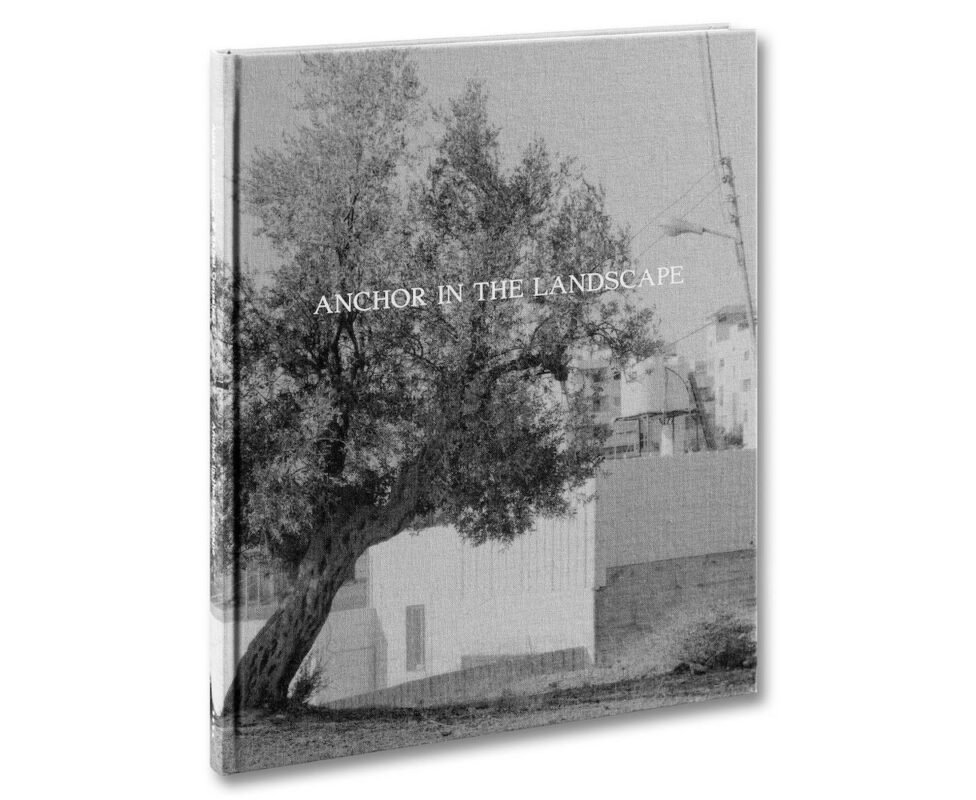
1. Adam Broomberg & Rafael Gonzalez, Anchor in the Landscape
MACK

Studied witnesses to the State of Israel’s attempt to erase a people and their history, Adam Broomberg and Rafael Gonzalez present a quiet yet forceful declaration of Palestinian resilience in Anchor in the Landscape. This striking series of 8×10 black-and-white photographs of olive trees, accompanied by a text from legal scholar and ethnographer Dr. Irus Braverman, made a bold statement at the 60th La Biennale di Venezia earlier this year. Each page of the book pairs a photograph with its precise geographical coordinates, where the olive tree – facing destruction and theft by settlers – anchors livelihoods, culture, and presence in a relentlessly seized and ravaged landscape. The result is a haunting yet beautiful rekindling of connection to Palestinian land in the occupied territories.

2. Karolina Spolniewski, Hotel of Eternal Light
BLOW UP Press

Winner of the 2022 BUP Book Award, Spolniewski’s seven-year multimedia project-turned-book – replete with holographic foil cover – details the psychological and physical scars of detention, drawing on Hannah Arendt’s writings on totalitarianism and isolation. At its heart is Hohenschönhausen, the notorious Stasi prison in East Berlin, dubbed the “Hotel of Eternal Light,” where unrelenting artificial lighting twisted inmates’ sense of time. Documentary photography, scans of physical traces, inmates’ belongings, portraits, X-rays, archival imagery, and fragments of memories from conversations with former prisoners are combined through the book’s design approach to enhance meaning, one that also speaks through the inmates: one page repeats ‘everlasting interrogations,’ while another chillingly declares, ‘Every three minutes you get… blinded by the lights.’

3. Agnieszka Sosnowska, För
Trespasser

Agnieszka Sosnowska’s debut monograph, För (meaning journey in Icelandic), takes readers on a raw, poetic journey through the artist’s life on a beautiful stretch of unmistable wilderness. Originally from Poland, she immigrated to the United States as a child, then as a young adult spontaneously visited Iceland, met her partner and built a life there. Where nature is both a solace and an ever-present force, Sosnowska’s photography – especially self-portraiture – charts the ongoing journey of self-discovery and belonging. Against the pulse of land and community, her images invite a deeper reading, culminating in a confident yet vulnerable self-portrait of the artist. But to what end? Sosnowska doesn’t just capture her subjects and surroundings; as SFMOMA’s Assistant Curator of Photography Shana Lopes recently writes in her review, Sosnowska invites us to reconsider how labour, heartbreak, death, landscape, and the quotidian shape our idea of home.

4. Carmen Winant, The Last Safe Abortion
Self Publish, Be Happy

Since the re-election of the man who played a key role in overturning Roe v. Wade, Carmen Winant’s sobering photo album-style work – winner of the Author Book Award at the 2024 Les Rencontres d’Arles Book Awards – feels more urgent than ever. Published by SPBH Editions and MACK and designed with a bold spiral binding, Winant’s contemplative exploration of care resists the relentless efforts of anti-abortion movements and the far right to control women’s bodies. Featuring images of health clinics, Planned Parenthood locations, and abortion clinic staff whose tireless commitment sustains this fight, the book spans 50 years – from 1973, when abortion rights were federally protected, to 2022, following their dissolution. Winant reframes the struggle for care and autonomy as a testament to courage, resistance, and hope – urgently needed qualities. Read Gem Fletcher’s review here.

5. Carla Williams, Tender
TBW Books

It’s often a posthumous exercise to uncover a hidden trove of photographs, but for Carla Williams, her artistic debut has thankfully arrived during her lifetime—adding a new chapter to her distinguished career as a photo historian. At 18, while studying photography at Princeton, Williams began creating black-and-white and colour portraits using Polaroid 35mm and 4×5 Type 55 film formats. Now published by TBW Books, Tender spans photographs taken between 1984 and 1999. The collection collapses time through a body of unapologetically vivid work – playful, provocative, and present. The intimate self-portraits reveal the evolution of her gaze, reclaiming, redefining, and becoming, charting her coming-of-age as an artist and a queer Black woman. Winner of the Paris Photo–Aperture Foundation First Photobook Prize and celebrated with a solo exhibition at Higher Pictures, Carla Williams: Circa 1985 marks the first time much of this work has been published or exhibited.

6. Magdalena Wywrot, Pestka
Deadbeat Club

When I look back on photos of myself as a child, they’re worlds apart from the grainy, high-contrast black-and-white images Magdalena Wywrot created in her project about her daughter, Barbara. These are far less sanitised and reflect the otherness of the universe Wywrot creates in Pestka – a name that means seed, shell, or kernel and is Barbara’s nickname. Accompanied by essays from David Campany and Barbara Rosemary, the series brims with a delicate intimacy yet hums with a raw, almost mystical energy. What began as a spontaneous act of documentation has become a richly layered work of magical realism and gothic narrative. Fragmentary and cinematic, the images possess a haunting poeticism that we might find in the avant-garde sensibilities of Vera Chytilová or Dušan Makavejev – full of the playful, subversive potential that Campany mentions in his text.

7. Johny Pitts, Afropean: A Journal
Mörel Books

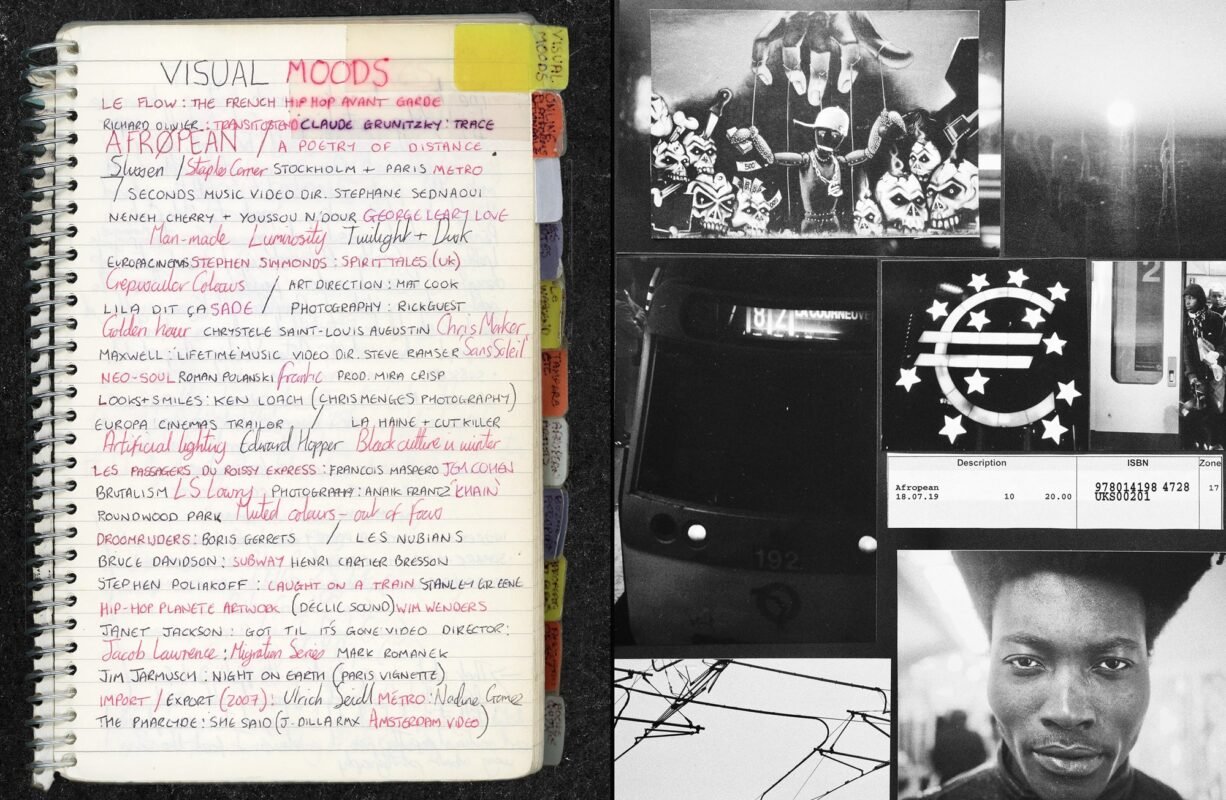
Johny Pitts, founder of afropean.com and author of Afropean: Notes from Black Europe (Penguin, 2020), unites his expansive work in this thoughtfully curated photobook tracing a five-month journey encompassing Paris, Berlin, Lisbon, Brussels, Amsterdam, and Stockholm. Pitts, in his search for a different side of the continent, collates an epic travelogue that blends striking photography with personal ephemera – tickets, diary notes, maps, postcards – offers a tactile, immersive book that flies in the face of rising populism and far-right politics across the continent. New essays by Pitts deepen the conversation on the Black European experience alongside a six-part podcast, a soundtrack, and three short films shot on location – a bold, multi-layered exploration of Afropean life.

8. Ute Mahler, Werner Mahler, Ludwig Schirmer, Ein Dorf 1950–2022
Hartmann Books

Michael Grieve writes, ‘time, of course, is the great force here,’ in Ein Dorf 1950–2022; that force brings ‘an arbitrary photographic topography brought to reason.’ The village of Berka, Germany, has been captured over seven decades by three remarkable photographers united by a family story – coincidental or not – that ties together personal history with the sweeping political shifts from state socialism to the reunification of a divided country. Alongside essays by Jenny Erpenbeck, Steffen Mau, and Gary Van Zante, the 220 black-and-white images glimpse the subtle yet seismic moments that have redefined the village, its people, and its evolving identity. Here is a rivetting perspective, as sociological as it is a documentary, on a place that has witnessed history, and its political reality unfolding in real-time. Since we published our review, Ute Mahler and Werner Mahler have deservedly been awarded the Order of Merit of the Federal Public of Germany (2024) for services to photography.

9. Olivia Arthur, Murmurings of the Skin
VOID

After gracing festivals, museums, and galleries worldwide, Murmurings of the Skin now emerges as a striking publication from the mighty VOID. Nealy eight years ago, Olivia Arthur began her work on physicality, capturing the energy flowing through bodies and the sensation of skin on skin. Sparked by her experience of pregnancy, the work blossomed into a vivid exploration of youth, sexuality, and touch – charged moments of intimacy. In the stillness of pandemic isolation, these themes gained new urgency. The result is a tactile, sensitive work that remedies the struggle of feeling at home in our skin.

10. Máté Bartha, Anima Mundi
The Eriskay Connection

“Our world right now operates in code. So, if we’re talking about code, isn’t everything about how the universe functions?” There’s no denying that Máté Bartha’s latest work, Anima Mundi, leans into the obscure. If we begin with the title’s translation, Anima Mundi means “world spirit,” a concept rooted in Platonic thought, reflecting an ancient idea of a universal organising principle that connects all beings. Divided into chapters exploring urban phenomena ranging from the microcosmic to the cosmic, Anima Mundi composes intricate patterns, layered grid structures, and cryptic visual codes. Its poetic and philosophical approach to the desperate act of seeking structure and meaning invites us to return to the question: how do we make sense of the universe and its code? How do we find sense in arbitrariness?

+1 Flashpoint! Protest Photography in Print, 1950-Present
10×10 Photobooks

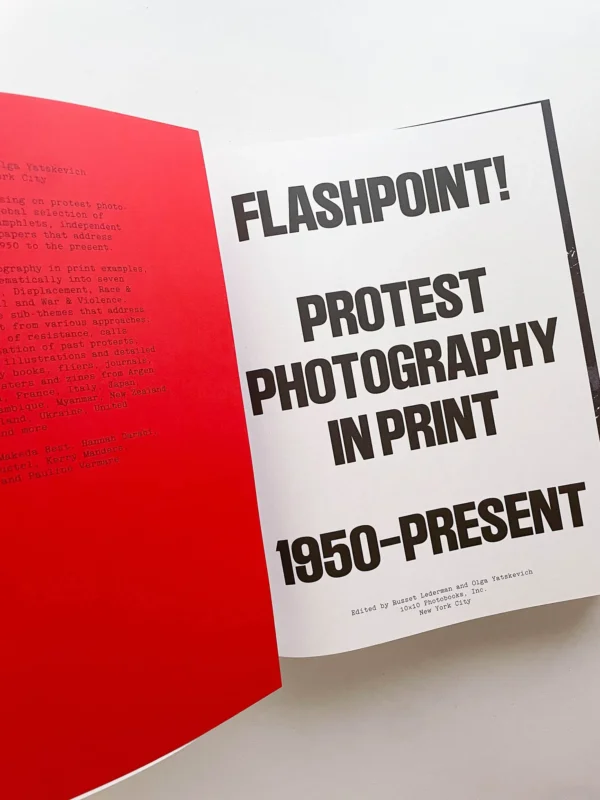
What is the relationship between visual culture and protest? Flashpoint!, both a powerful survey of activism and visual tour de force, is a meticulously curated, global collection of protest photography, zines, posters, pamphlets, and independent publications from the 1950s to the present. The latest offering from 10×10 Photobooks is born from the 2017 project AWAKE: Protest, Liberty, and Resistance collection, which organised protest photobooks by themes through an open call. Flashpoint! builds on this with seven expansive chapters, each containing multiple sub-themes. Across 500 pages, 750+ images, and a series of thought-provoking essays, the endlessly evocative collection reflects Arthur Fournier’s ‘aesthetic of urgency,’ contrasting the polished, institutional protest imagery with the raw, time-sensitive visuals of grassroots movements.♦


Thomas King is Editorial Assistant at 1000 Words and a student on BA (Hons) Culture, Criticism, Curation at Central Saint Martins, University of the Arts London.

Tim Clark is Editor in Chief at 1000 Words and Artistic Director for Fotografia Europea in Reggio Emilia, Italy, together with Walter Guadagnini and Luce Lebart. He also teaches at The Institute of Photography, Falmouth University.

Images:

1-Cover of Adam Broomberg & Rafael Gonzalez, Anchor in the Landscape (MACK, 2024). Courtesy MACK

2-Adam Broomberg & Rafael Gonzalez, Anchor in the Landscape (MACK, 2024). Courtesy MACK

3-Karolina Spolniewski, Hotel of Eternal Light (BLOW UP Press, 2024). Courtesy BLOW UP Press

4-Agnieszka Sosnowska, För (Trespasser, 2024). Courtesy Trespasser

5-Carmen Winant, The Last Safe Abortion (Self Publish, Be Happy, 2024). Courtesy Self Publish, Be Happy

6-Carla Williams, Tender (TBW Books, 2024). Courtesy TBW Books

7-Magdalena Wywrot, Pestka (Deadbeat Club, 2024). Courtesy Deadbeat Club

8-Johny Pitts, Afropean: A Journal (Mörel Books, 2024). Courtesy Mörel Books

9-Werner Mahler, Ein Dorf, 1977-78 in Ute Mahler, Werner Mahler, Ludwig Schirmer, Ein Dorf 1950–2022 (Hartmann Books, 2024). Courtesy Hartmann Books

10-Olivia Arthur, Murmurings of the Skin (VOID, 2024). Courtesy VOID

11-Máté Bartha, Anima Mundi (The Eriskay Collection, 2024). Courtesy The Eriskay Collection

12-Flashpoint! Protest Photography in Print, 1950-Present, edited by Russet Lederman and Olga Yatskevich (10×10 Photobooks, 2024). Courtesy 10×10 Photobooks


1000 Words favourites

• Renée Mussai on exhibitions as sites of dialogue, critique and activism

• Roxana Marcoci navigates curatorial practice in the digital age

• Tanvi Mishra reviews Felipe Romero Beltrán’s Dialect

• Discover London’s top five photography galleries

• Tim Clark in conversation with Hayward Gallery’s Ralph Rugoff on Hiroshi Sugimoto

• Academic rigour and essayistic freedom as told by Taous Dahmani

• Shana Lopes reviews Agnieszka Sosnowska’s För

• Valentina Abenavoli discusses photobooks and community

• Michael Grieve considers Ute Mahler and Werner Mahler’s posthumous collaboration with their late family member 

• Elisa Medde on Taysir Batniji’s images of glitched video calls from Gaza

1000 Words archive

15 Years, 15 Picks

Selected by Lucy Soutter

Marking 15 years of 1000 Words, Lucy Soutter takes us on a journey through our archive, offering a selection of features based on her own affinities across the magazine’s history. Capturing the richness of an archive and its ability to generate multiple routes through the material contained within, Soutter’s eclectic picks, as she writes, ‘celebrate the sweep of 1000 Words in embracing a range of 21st century photographic practices.’


Lucy Soutter | Archive highlights | 26 Sept 2024 | In association with MPB

I once spent a week time travelling to the 1960s. I was half-way through a PhD on photography in first-generation Conceptual Art when my supervisor sent me to the library to immerse myself in period art magazines – including Artforum for the avant-garde side of things, and Art in America for a mainstream view. She told me not to worry about reading every article (though I made some useful discoveries) but to skim every single page in chronological order, to immerse myself in the general culture of the time through the pictures, letters pages, ads, layout, etc. My week-long flashback to the decade of my birth gave me untold insights into the aesthetics, politics and general mood of the period. Magazines are traditionally classed as “ephemera,” cultural forms with fleeting significance, important primarily in the moment they are produced. That very topicality makes them an ideal form for studying the conscious and unconscious preoccupations of the time, whether the past or the near-present.

This assignment, to look back over 15 years of 1000 Words (particularly the last 12, as archived on the website) has taken me on a journey through my own past: exhibitions visited, books read, and articles shared in the classroom with students, as well as many important things I missed. At the same time, the exercise clarified trends that have emerged from the flow of visual and written materials. My selections are eclectic to celebrate the sweep of 1000 Words in embracing a range of 21st century photographic practices. I also want to draw attention to the ambition of the editorial teams over the years, led by Tim Clark, in extending the discussion of contemporary photography into new terrain. Although the pieces in this online magazine are short, they are bold in mobilising concepts from an array of academic and pop cultural contexts. The magazine has often been the first to publish emerging artists and writers, many of whom are now familiar names. Tracing the expansion of the field through evolving configurations of genres and presentation formats, it has also played a key role in promoting a broader range of practitioners.

Part of the richness of an archive is its capacity to generate multiple different routes through the material. This set of selections, loosely chronological, are based on my own affinities. I hope that they will invite you to dip in, whether to revisit familiar selections or make fresh discoveries.

1. Esther Teichmann, Drinking Air, and Mythologies
Interview by Brad Feuerhelm
Issue 14, 2012

When I started teaching at art schools in the early 2000s, the UK photography scene was dominated by documentary approaches. Contemporary photography is now so much more eclectic that it is hard to believe that a practice such as Esther Teichmann’s needed to take a stand against this orthodoxy to embrace symbolist themes, painterly gestures and mixed media installation. The images in this portfolio combine with the text to offer a rich field of possibility. Teichmann’s distinctive voice, her embrace of poetics, and the generosity of her approach are all evident in this interview. 1000 Words has provided a platform for a number of artists emerging in parallel expressive modes, including Tereza Zelenkova (28) and Joanna Piotrowska (30).

2. Daisuke Yokota, Back Yard
Essay by Peggy Sue Amison
Issue 15, 2012

‘There is a revolution going on in the work of emerging photographer Daisuke Yokota, a revolution that links the past with the future of Japanese photography.’ In a few deft paragraphs, Peggy Sue Amison provides several different points of entry for viewers seduced by Yokata’s evocative, mysterious images. She sketches in Yokata’s context in relation to the grainy, blurry aesthetic of the Provoke movement and describes how the photographer updates Japanese zine culture with collaborations and a participatory approach. Amison illuminates how his use of experimental processes such as solarisation and rephotographing combine with banal architecture, natural forms and faceless figures to create work that is distinctly Japanese and distinctly contemporary. As with Gordon Macdonald’s essay on Thomas Sauvin’s Beijing Silvermine project (15) or Sergio Valenzuela-Escobedo’s framing of Nadège Mazars’ Mama Coca (38) this concise piece provides essential context for interested readers to pursue further research into an important international practice.

3. Sara-Lena Maierhofer, Dear Clark, A Portrait of a Con Man
Interview by Natasha Christia
Issue 16, 2013

I confess that I was late to the photobook scene. It had been heating up for the first decade of the 2000s before I realised that this was not just a fad or nerdy subculture (though it has its fads and nerdy aspects) and that I needed to pay attention to it. 1000 Words was one of my go-to destinations for reading about new releases. I was so impressed by Natasha Christia’s interview with the author/artist/maker of Dear Clark that I ordered the book and looked with new eyes at its skilful combination of obsessive research, idiosyncratic reenactment and seductive, self-referential layout. As I have learned more about this aspect of contemporary photography culture, I have come to appreciate the extent to which the book reviewers for 1000 Words (variously photographers, writers, book-makers, curators and editors themselves) have contributed both to defining the photobook as a form with its own unique concerns, and to creating a canon-in-progress of its plural possibilities.

4. Julian Stallabrass, Memory of Fire: Images of War and the War of Images
Book Review by James McArdle
Issue 16, 2013

In 2008 – five years into a war that had seen the US, UK and allies invade and occupy Iraq – Julian Stallabrass curated the Brighton Photo Biennial as a searing critique of the uses of photography as a tool of pro-war propaganda, exploring the ways photographers past and present can work against the conventions of the genre to provoke other forms of understanding. How can war photography serve as a lesson or a warning rather than just pulling us into its quasi-pornographic thrall? James McArdle draws some of the key issues out of Stallabrass’ 2013 anthology of projects, essays, and interviews related to the festival, pointing to artists including Trevor Paglen, Adam Broomberg & Oliver Chanarin, and Coco Fusco, and writers including Sarah James and Stefaan Decostere.

5. Duane Michals, Storyteller: The Photographs of Duane Michals
Essay by Aaron Schuman
Issue 18, 2014

In this feature on Duane Michals, Aaron Schuman traces the historical roots of staged, narrative photography far beyond Cindy Sherman’s Untitled Film Stills to Victorian tableau photography. Schuman argues convincingly that in Michals’ hands the genre does not merely advance photography as an art form, but also grapples with aspects of experience that transcend ordinary vision. Although it may be difficult to identify the direct impact of Michals on contemporary photographers whose work, like his, is filmic (like Jeff Wall), fictive (like Gregory Crewdson) or constructed (like Matt Lipps), Schuman points out that the sophisticated use of series and sequence by photographers such as Paul Graham and Alec Soth owes a debt to Michals’ storytelling capabilities. (The final image in this portfolio, Michals’ This photograph is my proof is my all-time favourite image + text work).

6. Laura El-Tantawy, In the Shadow of the Pyramids
Book Review by Gerry Badger Issue 19, 2015
Matthew Connors, Fire in Cairo
Book Review by Max Houghton
Issue 20, 2015

It is difficult for a magazine, which in its previous format, only came out a couple of times a year to respond to current events or political crises like the Arab Spring, especially when photographic projects, like novels, sometimes take years to come to fruition*. Gerry Badger’s 2015 review of Laura El-Tantawy’s book In the Shadow of the Pyramids describes the artist’s response to the events in Tahir Square in 2011 in the context of her own life inside and outside Egypt. In response to this blend of document and personal archive, Badger provides a personal meditation on how we create photographic narratives out of the messy flow of life. Max Houghton’s review of Matthew Connors’ Fire in Cairo in the following issue is a more wrought, imagistic essay, a perfect fit for Connor’s disorienting, back-to-front combination of surreal images and fragmented fiction. Together, these two reviews open a space to consider how we see, remember and understand protest and its aftermath.

7. Saul Leiter Retrospective
Essay by Francis Hodgson
Issue 21, 2016

One of the important tasks of the critic is to return to older works and read them afresh in light of current developments. Events may be fixed in the past, but their importance for us shifts in significant ways that need to be acknowledged and articulated. This review illuminates one of the things we take for granted about contemporary photography – that most of it is in colour – and reminds us that it was not always so. Roving across Leiter’s street photography, fashion work and painterly ambitions, Hodgson’s essay and selection of images offer a celebration of Leiter’s glowing Kodachrome aesthetic and illuminate its contemporary appeal. 

8. Richard Mosse, Incoming
Essay by Duncan Wooldridge
Issue 25, 2017

1000 Words has provided a constructive platform for encountering 21st century social documentary photographers who use strategies from contemporary art. Photographers like Lisa Barnard (25), Salvatore Vitale (26) and Gideon Mendel (36) offer projects that are rigorously researched, visually and technically innovative, and presented in layered, imaginative forms designed to jolt us out of familiar understandings of social situations. Such work can be highly controversial. This essay by Duncan Wooldridge provides a response to a flurry of topical online debates (by writers including Daniel C. Blight, Lewis Bush and JM Colberg) around Richard Mosse’s exhibition at the Barbican Centre, London and book Incoming from 2017, and its controversial use of military-grade thermal imaging technology to create eerie, spectacular video and still imagery of migrants from the Middle East and Global South. Fiercely analytical and ethically engaged, Woodridge frames the project in the philosophy of Judith Butler and Giorgio Agamben, while keeping an eye on the economic and institutional dilemmas of being a (materially successful) political artist.

9. Lebohang Kganye, Dipina tsa Kganya
Interview with Sarah Allen
Issue 34, 2021

For centuries, self-portraiture has provided artists with a way to explore their own identity and self-presentation. A new generation of artist photographers including Arpita Shah (27) Kalen Na’il Roach (32) and Sheida Soleimani (38) are turning to archival imagery, family albums and strategies of montage to counter dominant colonial (and frequently racist) histories with imaginative autonarratives. In this interview with Sarah Allen, Lebohang Kganye (Deutsche Börse Photography Foundation Prize 2024 winner) explores the complexities of figuring her own identity within post-apartheid South Africa, and how the interweaving of family photography and performance gives her scope to recuperate personal, familial and tribal memory within the context of an exhibition in a Bristol slave owner’s 18th century home.

10. Curator Conversations #11: Alona Pardo Features, 2020

At their best, exhibitions can define practices and the ways they are understood, bringing new ideas into focus. To make this work happen, curators must embody various qualities: administrative, collaborative, critical and visionary. In her contribution to the Curator Conversations feature series, subsequently drawn together into a book, Alona Pardo discusses the layers of consideration that went into the exhibitions she curated at the Barbican before leaving to be Head of the Arts Council Collection. Her drive to facilitate spaces for creative discussion rather than promote her own point of view have led to a series of highly influential exhibitions including Masculinities: Liberation through Photography of 2020 and RE/SISTERS of 2023.

11. Stanley Wolukau-Wanambwa, One Wall a Web
Book Review by Taous R. Dahmani
Issue 30, 2019

Photographers are more likely than other kinds of artmakers to also be writers of non-fiction, fiction and/or criticism. This can sharpen the edges of the language they use in their work. In this review, Taous R. Dahmani looks at artist/writer/editor Stanley Wolukau-Wanambwa’s award-winning book One Wall a Web and describes the associative force of his filmic juxtapositions of text and image. Dahmani seeks precedents for his pointed appropriations in the scrapbooks of historical African Americans seeking to reclaim their own representation. On a related note, Dahmani’s response to questions provided by the 1000 Words feature series and book Writer Conversations (edited by myself and Duncan Wooldridge) convey a vivid sense that research and writing around photography are urgent and thrilling. She includes an inspiring list of classic and recent texts related to photography that made me want to run away on an extended reading retreat.

12. Cao Fei, Blueprints
Essay by Sergio Valenzuela-Escobedo Issue 34, 2021

While the cultures of contemporary art and photography share certain structures, there are ongoing disparities in their economic and cultural currency (one reason why many lens-based practitioners insist on being called “artists” rather than “photographers”). It is sometimes difficult for outsiders to decipher the coded language used to place a practice in one camp or the other, especially when some move fluidly between contexts. Sergio Valenzuela-Escobedo’s account of Cao Fei’s 2021 Deutsche Börse Photography Foundation Prize win provides a window into the world of a high-flying international artist, represented by mega-gallery Sprüth Magers and whose astonishingly polished, high-tech, multimedia work is more likely to be seen at Serpentine Gallery or the Venice Biennale than in a dedicated photography gallery. Escobedo’s essay explores the work’s push and pull between ironic simulation and fantastical techno-utopianism. The Chinese State’s role as a geopolitical and industrial superpower is never far out of the frame, but Fei’s relationship to it remains strategically ambiguous. As a productive counterpoint, this issue also features Fergus Heron’s exhibition review of Noémie Goudal’s Post Atlantica (34), a body of photographic and moving image installation work that sits firmly within a contemporary art sphere while also asking rich and probing questions about how photographs operate as documents, images and phantasms. For those interested in the representational politics of The Deusche Börse Photography Foundation Prize, the most prominent international art photography award, see Tim Clark’s impassioned 2020 editorial, ‘False signals and white regimes: an award in need of decolonisation.’

13. Laia Abril, On Rape: And Institutional Failure
Book Review by Jilke Golbach
Issue 36, 2022

1000 Words has devoted a significant number of its features to female experience and points of view, including the delirious layered portrait constructions of Dragana Jurišić (22), the intimate portraits of Yukuza women by Chloé Jafé (29) and Carmen Winant’s powerful lexicon of found images around abortion (43). Laia Abril’s On Rape is the middle piece of her trilogy of books On Misogyny, following On Abortion (2016) and leading towards On Mass Hysteria. Bodily harm, trauma, silence, guilt and victim-shaming weave through Jilke Golbach’s review, framing Abril’s investigative project with its evocative, visceral images in relation to the persistence of rape and its impacts in the contemporary world.

14. After the End of History: British Working Class Photography 1989–2024 Exhibition Review by Lillian Wilkie Issue 42, 2024

In photography, as in the rest of society, one of the anxieties about globalisation is that it will erode local cultures. At the same time, we live with the paradox that it is often in relation to each other’s intersectional differences that our own distinctive cultures come into focus. An important strand of 1000 Words essays and reviews has explored work by photographers from the UK and Ireland, well-known ones (like Brian Griffin, 20) and those deserving greater attention (Vanessa Winship, 16), those exploring private relationships (Matthew Finn, 25), those who record distinctive local places and material culture (Café Royal Books, 41), and those who explore the performance of Britishness (Simon Roberts, 27). In this review, Lillian Wilkie dives into Johnny Pitts’ unruly travelling exhibition of British photography since the fall of the Berlin Wall, her vivid language looping around the rich mix of photography to ask, as the exhibition does, how we might reimagine the cultural and creative force of the British working class after Thatcherism.

15. London City Guide
Tim Clark with Thomas King
Features, 2024

When I ask photography students to read magazines, it is to improve their knowledge of recent practices and debates, and to introduce them to the key figures, communities, activities, institutions and markets that make up the contemporary network. The intermittent city guides, festival highlights, annual photobook roundups and even obituaries provided by 1000 Words provide different angles on a scene that is growing, multifaceted and increasingly interconnected. The London City Guide sets the stage by providing an instructive analysis of the current crisis in UK arts and education funding before introducing a handful of the leading institutions, including the V&A, The Photographers’ Gallery and Autograph, as well as Flowers Gallery as a sample of a large commercial gallery, and Large Glass as an example of a smaller gallery making interesting propositions about photography within contemporary art. These features provide a vital way to trace flows of influence in the UK and internationally. They also fulfil one of the original key functions of art criticism: providing a pleasurable vicarious experience of things we may not be able to see in person. ♦


An artist, critic and art historian, Lucy Soutter is Reader in Photography at the University of Westminster where she is Course Leader of the Expanded Photography MA. She is author of
Why Art Photography? (2018) and co-editor with Duncan Wooldridge of Writer Conversations (2023) and The Routledge Companion to Global Photographies (2024).


1000 Words favourites

• Renée Mussai on exhibitions as sites of dialogue, critique and activism

• Roxana Marcoci navigates curatorial practice in the digital age

• Tanvi Mishra reviews Felipe Romero Beltrán’s Dialect

• Discover London’s top five photography galleries

• Tim Clark in conversation with Hayward Gallery’s Ralph Rugoff on Hiroshi Sugimoto

• Academic rigour and essayistic freedom as told by Taous Dahmani

• Shana Lopes reviews Agnieszka Sosnowska’s För

• Valentina Abenavoli discusses photobooks and community

• Michael Grieve considers Ute Mahler and Werner Mahler’s posthumous collaboration with their late family member 

• Elisa Medde on Taysir Batniji’s images of glitched video calls from Gaza

Carmen Winant’s fight for reproductive justice

Carmen Winant works to counter the ways anti-abortion movements and the far right have made punishing attempts to control and dominate women’s bodies and reproductive rights. The Last Safe Abortion, published by SPBH Editions and MACK, focuses on the near 50-year period in which abortion was legal in the US (1973–2022), and presents a selection of photographs that employ Winant’s signature strategies of proximity and volume with radical effect, Gem Fletcher writes.


Gem Fletcher | Book review | 6 June 2024

On 30 April 1965, Lennart Nilsson’s portrait of an 18-week-old human foetus appeared on the cover of Life Magazine in a story called “Drama of Life Before Birth”. Over 18 pages, the Swedish photographer, often credited as the first person to photograph embryos, presented a sequence of foetuses at various stages of development, floating in a constellation of amniotic fluid. The actual drama of this ‘unprecedented feat’ in photography was that Nilsson’s images were operating under the pretence that the foetuses were alive when, in fact, they were not. His foetal pictures, posed and backlit, were only made possible because the pregnancies had been terminated to save women’s lives. 

This irony is lost on the anti-abortion movement who, since the 1980s, has weaponised Nilsson’s photographs in our cultural imagination – not as feats of science as he intended, but as visual propaganda – pushing a fiction that embryos are autonomous entities, independent from the birthing bodies that made them. What is missing from both Nilsson’s images – the mothers likely never gave their permission for their lost children to be imaged or reproduced – and the visual tactics of the far right is care. In their punishing attempts to control and dominate, there is no care for ethics, no care for the truth, and most pertinently, no care for women.

It’s this visually inculcated misinformation campaign that Carmen Winant sought to interrogate in her new title, The Last Safe Abortion, published by SPBH Editions and MACK. Focusing on the near 50-year period in which abortion was legal in the US (1973–2022), the book presents care as an agent of change, told through the advocacy and community building of abortion providers across the American Midwest. Building upon similar strategies in her previous books, My Birth (2018), Notes on Fundamental Joy (2019) and A Brand New End: Survival and Its Pictures (2022), Winant intends to fill a void in our visual lexicon whilst inviting the viewer to think about how pictures can function, not as documents, but as tools for social change.

Winant is an artist who has had a stake in the fight for reproductive justice long before the overturning of Roe. As a teenager, she volunteered as a clinic escort, started a pro-choice club in high school and was an active agent in advocacy work in Philadelphia. Returning to the subject in her practice, the challenge was if and how she could transmute these political commitments into art-making. What did the intersection of photography and abortion care look like? And what potential could looking yield?

The project started slowly in Cleveland after Winant made the two-hour drive from her home in Ohio to Pre-Term, one of the longest abortion care providers in the state. Upon arrival, she discovered the clinic’s archive of photographs, slides and negatives living in banker boxes, piled high in cupboards and stacked on shelves. The images – many of which had gone undisturbed for decades – show clinic staff sterilising medical equipment, answering phones, re-enacting procedures and attending fundraising events. These women harnessed image-making as an educational tool to demystify reproductive health and put patients at ease with no step deemed too small or unworthy to photograph. After Pre-Term, the work began to expand as Winant interacted with dozens of personal, organisational and institutional archives across the Midwest, many of which she visited multiple times, building relationships with staff and tracing their histories. Between 2019 and 2023, she scanned and collected thousands of 4×6 images, each playing an incremental role in the struggle. In addition, for the first time in decades, Winant made pictures herself, determined that the inventory of care she was collating reflected the contemporary moment, as clinics fight to survive and serve their communities post-Roe. 

As an object, The Last Safe Abortion feels more akin to a family album than a typical photobook: spiral bound, softback and accessible. Images are mounted on bright coloured hues mimicking the vibrancy of community notice boards and the librarian’s preferred process of archival scanning. Whilst the material quality of the book is simple and pared back, proximity and volume – Winant’s signature strategies – are employed with radical effect. Over an abundant 170 pages, we experience an uninterrupted flow of this visual material, only sporadically breaking pace to present multiple frames of the same moment to slow the viewer down and encourage them to linger. The result is a disarming and profound encounter with care and solidarity en masse – a powerful antidote to the endless violence that dominates our visual lexicon. 

What does care look like? It’s a difficult question to answer because we feel it more than we see it, and care work is quiet and incremental. In the context of the abortion care work, care happens behind closed doors, in waiting rooms, on the phone, around the bed in the operating theatre and in the recovery room. It is remarkably undramatic and visually mundane, yet both life-changing and life-saving. This dissonance gives the project its potency, not just within its context of the women who have dedicated their lives to the work of reproductive justice but as a critical probing of photography and its values.

Unlike photography’s tradition of one revered author, the visuality of this work is the sum of many people, including but not limited to Francine, Chrisse, Sri, Colleen, Deb, Beth, Gayle, Tammi, Barb, Jackie, Carol, Theresa, Harriet, Marge, Jennifer, Karen, Adele, Sunita, Terel, Gina, and Brenda, Gwenne, Dorothy, Cynthia Doleres and Jean. Their unseen labour, made visible by Winant, builds upon a legacy of feminist movement strategy, disseminating information and care for women by women, made possible by a deep commitment to intergenerational interdependence. 

The role of artmaking as a political tool is something Winant makes clear she is still grappling with in her essay at the book’s close.  She writes: ‘It occurred to me that building relationships was the point of the work rather than its subject. What if my work was reciprocal rather than extractive?’ Like the body of work at large, these ruminations sound simple yet offer urgent perspectives about how pictures are made, who gets to make them and how we assign cultural value to photography. The Last Safe Abortion leaves you wondering what would the world look and feel like if the images of violence and trauma being circulated at great velocity were replaced with models of care, collaboration and tenderness? ♦

All images courtesy the artist, SPBH Editions and MACK. © Carmen Winant

The Last Safe Abortion is published by SPBH Editions and MACK.


Gem Fletcher
is a writer, consultant and podcaster. Her work has been published in Foam, Aperture, Dazed, Creative Review and The British Journal of Photography. She also hosts The Messy Truth podcast, a series of candid conversations that unpack the future of visual culture and what it means to be a photographer today.


1000 Words favourites

• Renée Mussai on exhibitions as sites of dialogue, critique, and activism.

• Roxana Marcoci navigates curatorial practice in the digital age.

• Tanvi Mishra reviews Felipe Romero Beltrán’s Dialect.

• Discover London’s top five photography galleries.

• Tim Clark in conversation with Hayward Gallery’s Ralph Rugoff on Hiroshi Sugimoto.

• Academic rigour and essayistic freedom as told by Taous R. Dahmani.

Challenging historical narratives of control and subjugation

Acts of Resistance, a collaborative exhibition by the South London Gallery and V&A Parasol Foundation for Women in Photography, confronts the systemic brutalisation and circumscription of women’s bodies worldwide — from persecution in Bangladesh, oppression in India to solidarity with Palestinian freedom. As Max Houghton writes, this is not a show for performative activists; it’s really doing the work — the exhibition fosters a reparative gaze, challenging historical narratives of control and subjugation, and calling for greater community involvement and institutional accountability. 


Max Houghton | Exhibition review | 4 Apr 2024

Even before entering Acts of Resistance: Photography, Feminism and the Art of Protest, a curatorial collaboration between South London Gallery and V&A Parasol Foundation for Women in Photography, the content guidance reveals the show’s necessity: ‘Artwork in this exhibition includes references to […] sexual violence, femicide, female genital mutilation, gender and sexuality-based discrimination, genocide and racism.’ This short institutional statement tells us precisely how the world is structured and how the bodies of women+ are circumscribed and brutalised, deliberately and systematically. Stepping in, the first visible work, suspended from the ceiling, takes gentle possession of the viewer, who is immediately enfolded into the plaited hair of young Iranian women. Three larger-than-life prints by Hoda Afshar are responding to Iran’s Women Life Freedom movement with the symbolism of unveiled hair, of the plait’s own revolutionary turn, or pichesh-e-moo, and of the dove’s flight between peace and martyrdom. The death of Mahasa Amini at the hands of Iran’s morality police weighs heavily, as does the courage of the women who protest, risking their own lives. My thoughts turn too to the immorality and illegality of the Metropolitan Police on this city’s streets; to the lives and legacies of Nicole Smallman and Bibaa Henry, of Sarah Everard, of Chris Kaba; and to what kind of imaging or imagining might bring justice to them.

The first message, then, of the show’s images is that they open a space within which such global ultraviolence can be considered, resisted and perhaps – rarely – extinguished. Two artists whose works are curated close by, Poulomi Basu and Sofia Karim, are committed activists, whose work has given rise to legal change. Basu’s multimedia work and its dissemination contributed to the banning of Chapaudi in Nepal, a practice which sees girls and women banished from society during menstruation; left to inhabit unlit, unsanitary temporary huts, at risk of assault in remote fields.

Karim’s activism was ignited by the political imprisonment and subsequent torture of her uncle, the renowned photojournalist Shahidul Alam, in Bangladesh. Like human rights activist G. N. Saibaba, for whom she has also campaigned through her exquisite drawings and letter exchange, Alam was eventually released. Karim’s work, Turbine Bagh (2020–ongoing), resonates in any setting, though in a night at the museum, it would surely leap off its designated shelf and populate a central artery through the space. Significantly, it is the only work in the show that foregrounds the art of other activists, which Karim has transferred onto samosa packets, conferring an increased sense of sociality and hospitality within these acts of resistance. For this show, whilst works centring women’s experience have been selected, in terms of anti-rape protests in Bangladesh or Muslim girls’ right to wear a hijab in Karnataka, India, Karim’s feminism also insists upon exposing the cruelties of the caste system via a Dalit protest in Una, and the Kerala Sisterhood’s support for Palestinian freedom. From her series Sisters of the Moon (2022), Basu’s futuristic self-portraits pool, siren-like, across the gallery walls, seducing the viewer into uncertain territory, incanting through their worldly knowledge the names of pain. The spectral image of Basu on a bed, uncannily placed at the shore’s edge, alongside water urns, invites questions of refuge, of sanctuary, of survival, and helped raise £5million for WaterAid.

This is not a show for performative activists; it’s really doing the work. Three major London institutions have curated feminist/activist shows in the past year; a welcome and vital taking up of art space by, for and with women+. This outpouring of activist-propelled art, in terms, for example, of the vast scale of Re/Sisters (2023) at the Barbican and Tate’s Women in Revolt! (2024), or the geographical breadth of Acts of Resistance, is indicative of the fact that such shows are long overdue, and we have so much to say. I say this in the year the Royal Academy offered its first ever solo show to a female artist, Marina Abramovic, in its 250-year history.[i]

This show has taken the idea of the “fourth wave” feminism of the last decade as its timeframe, which is at once necessary to fit the available space, ensures intersectional and expansive feminisms – a plurality noted in the show’s subtitle – and yet misses the chance to visually connect these present concerns through time. Such legacies are not, however, absent. The show’s first section, “Body as Battleground”, is essentially a dedication to Barbara Kruger, whose own solo show at the Serpentine took place earlier this year. The legacy of the Saint of Christopher Street gay liberation campaigner and trans activist Marsha P. Johnson is enshrined in Happy Birthday Marsha! (2018) by Tourmaline and Sasha Wortzel, which reimagines the night of the 1969 Stonewall uprising, when, yet again, the role of the police as guardians of the most vulnerable is found entirely wanting. The way Johnson inhabited her personal freedom was revolutionary; achingly beautifully rendered in this short film, in what Saidiya Hartman might call a ‘critical fabulation’, in which historical or archival omissions of a life are reconstructed. This work occupies the emotional heart of the show, along with that of Aida Silvestri’s Unsterile Clinic (2015). By any measure, this is an astonishingly visceral work, on a subject no one but no one wants to talk about, yet is transformed by the artist’s loving hands into artworks of such grace, they turn silence into speech. Drawing on her own experience of female genital mutilation, she has been able to work collaboratively with other similarly-affected women to visualise the different forms the procedure has taken, creating models, on display here in a vitrine, which are now used for identification – over 200 million women and girls are affected globally – by the NHS in the UK. The work also takes the form of a single, non-identifying self-portrait, in which the artist wears a wedding dress, embellished with razor blades in place of pearls, and embroidered red thread, flowing beyond the frame. The image pulsates with the injustice of the religious and social construct of virginity and every act of violence it has engendered.

I unite these two specific works in the strongest spirit of the right to self-determination – and its frequent absence – which courses throughout the exhibition. Of the two vital works on the subject of abortion, in this instance, I would have selected Winant’s The Last Safe Abortion (2023) for the light it sheds on the recent overturning of Roe v. Wade in the US, and invited Laia Abril to show her work On Rape (2020–ongoing), or Femicides (2019–ongoing), as another bloody framing for the show as a whole. Yet, as always with her meticulously researched work, Abril’s situating of abortion as a global institutional failure bristles with eloquent rage. The last time I wrote about Nan Goldin’s Memory Lost, the V&A was still funded by Sackler, a position it reversed in 2022; the result of a sustained campaign by Goldin and PAIN, which included a die-in at the museum, indicting the creators of Oxycontin, the highly addictive opioid, for their life-destroying crimes. Goldin’s way of being in the (art) world – she has been called a “harm reductionist”, surely an aspirational epithet – is propelled by honesty, and, I can’t say it too often, by love. The wrong things, she says, are kept secret. They still are, and the shame that encircles such secrecy kills with the same violence as a blade or a gun.

Much of the work in this ground-breaking show pierces such shame with love, and Raphaela Rosella’s work HOMEtruths (2022) explodes with love and care for and with a First Nations community in New South Wales, Australia. This entirely unsentimental, joyful, heart-breaking, polyvocal three-screen film shows the effects of the incarceration of women on them and their families. Part of a wider work, You’ll Know It When You Feel It (2012–ongoing), Rosella’s co-creational approach resists, intervenes in and often completely overturns juridical and bureaucratic representation and replaces it with rich familial bonds in a form of justice, both aesthetic and restorative, which is exceptionally deeply felt.

In terms of the photographic image, these artists are pushing the discipline forward, far from its histories of control and subjugation. In their hands, we encounter sculptural, filmic, archival, collaged and embroidered forms, which make for multi-sensory ways of seeing, decentring the camera’s power; a reparative gaze. Questions for the next shows foregrounding women+, no doubt already in production, include how to understand the gallery as even more of a forum, involving more community groups and building on existing links with brilliant but underfunded and therefore precarious local resources. How can the institutions that fail us, that maim, that kill, be further held publicly accountable via image-led or art-based discussion? How can artists whose practice isn’t defined within the confines of socially engaged practice in and of itself expand the social purpose of their work in a gallery space? And how can the white Western female curatorial approach, expansive and assiduous as it surely is, in terms of Sarah Allen and Fiona Rogers, as well as Alona Pardo and Linsey Young – brava to all – continue to find ways to share its considerable power ever more effectively? Not because it isn’t showing us the most pertinent, mind-expanding, courageous work, not because it isn’t taking great care of the people who make it, but because of what it – and I – just can’t see.♦

All images courtesy South London Gallery

Acts of Resistance: Photography, Feminism and the Art of Protest, with a public programme curated by Lola Olufemi, runs at South London Gallery until 9 June 2024.


Max Houghton is a writer, curator and editor working with the photographic image as it intersects with politics and law. She runs the MA in Photojournalism and Documentary Photography at London College of Communication, University of the Arts London, where she is also co-founder of the research hub Visible Justice. Her writing appears in publications by The Photographers’ Gallery and Barbican Centre, as well press such as Granta, The Eyes, Foam, 1000 Words, British Journal of Photography and Photoworks. She is co-author, with Fiona Rogers, of Firecrackers: Female Photographers Now (Thames and Hudson, 2017) and her latest monograph essay appears in Mary Ellen Mark: Ward 81 Voices (Steidl, 2023). She is undertaking doctoral research into the image and law at University College London and is the 2023 recipient of the Royal Photographic Society award for education. 

References:

[i] I say this in a year when the police force with responsibility for London remains institutionally sexist, racist and homophobic. I say this when two women this week, as every week, will be killed in the UK by the hands of their partner or former partner. I say this on a day when the US abstained from the UN vote for a ceasefire in Gaza, where sexual violence is being frequently reported as a weapon of war.

Images:

1-Hoda Afshar, Untitled #14 from the series In Turn, 2023. © Hoda Afshar. Image courtesy the artist and Milani Gallery, Meeanjin / Brisbane.

2-Sethembile Msezane, Chapungu – The Day Rhodes Fell, 2015. Photo: Courtesy the artist

3-Tourmaline and Sasha Wortzel, Happy Birthday Marsha!, 2018. Courtesy the artists and Chapter NY, New York.

4-Poulomi Basu, from the series Sisters of the Moon, 2022. Courtesy the artist, TJ Boulting and JAPC.

5-Guerrilla Girls, History of Wealth & Power, 2016. © Guerrilla Girls, courtesy guerrillagirls.com

6-Mari Katayama, just one of those things #002, 2021. © Mari Katayama

7-Zanele Muholi, Bester, New York, 2019. © Zanele Muholi. Courtesy Yancey Richardson, New York.

8-Sheida Soleimani, Delara, 2015. © Sheida Soleimani. Courtesy Edel Assanti.

Top 10

Photobooks of 2022

Selected by Alex Merola

As the year draws to a close, an annual tribute to some of the exceptional photobook releases that caught our eye during 2022 – selected by Assistant Editor, Alex Merola.

1. Carmen Winant, Arrangements
Self Publish, Be Happy / Images Vevey

The book – as both medium and as subject – is probed to its expansive potential in Carmen Winant’s latest. Large, elegant but always “DIY” in feel, with its rough, naked spine, Arrangements is one of those books that is both specific and sweeping at the same time. For the once discrete and disparate tearsheets that bound it together – depicting Bikram yoga classes, beauty pageants, moonwalks, childbirth, tantric sex and the young Malcolm X – have been decontextualised to conjure wonderfully capacious constellations which, as a whole, wrestle with, and trouble, the notion of “theme”. Most admirable is Winant’s insistence on labour; inherent not only in the (ever-visible) tears of each page, but also in the collaborative networks that enable the making and sharing of a book, foregrounded through the detailing of the designer, printer, distributor and, of course, publishers Self Publish, Be Happy and Images Vevey on the graceful front-cover. Whilst this is a book that could have been subject to an infinite number of rearrangements still, the strength of the “arrangement” Winant lies in its courage: the courage to put something out into the world; something confounding and generous in equal measure.

2. Collier Schorr, August
MACK

As strong as the taboos it touches, Collier Schorr’s third chapter in the Forests and Fields series is over a decade in the making and well worth the wait. Her many revisions have resulted in an unnerving book, extending Schorr’s investigations into ancestral responsibility through the mythos of the small town of Schwäbisch Gmünd, a synecdoche for German history. A finely-calibrated blend of history and fiction, the sequencing moves through Polaroids picturing crucifixes, flora and androgynous boys, at their moment of ripening, in and out of Nazi uniform. Invoking the performative history of fetishism and uniform – with references to Liliana Cavani’s The Night Porter (1974) as well as August Sander’s portrait of Hitler’s guard – Schorr is clearly working with the reactions the young men portray when they are confronted with artifacts of the Third Reich. Her anachronisms are provocative and transgressive, but also intimate and cathartic, resonating further given that Schorr is of Jewish descent, while most of her subjects are not. It is commendable how Schorr has sought to uncover the roots, estrangements and collective restraints of traumatic history, inherited and imagined. Ultimately, this book does not lose itself to nostalgia, even if it is hinged to it. For the fleeting Polaroid frames land on the now, shedding light a war whose ripple effects persist.

3. Zoe Leonard, Al río / To the River
Hatje Cantz

Intended as a companion, rather than a catalogue, to its coinciding exhibitions at Mudam Luxembourg and the Musée d’Art Moderne de Paris, Zoe Leonard’s Al río / To the River is a real tour de force and totally befitting of this most ambitious body of work. Comprised of 2,000 kilometres worth of photographs, the first volume follows the Rio Grande / Río Bravo along the US-Mexico border through a nuanced weave of abstractions of whirling water, iPhone shots of digital surveillance imagery and documents of Leonard’s own path. Countering the mass media’s sensationalist portrayals of a natural river that is made to perform a political task, all the while exposing the topographical indistinguishability of its demarcations, Leonard’s “half-pictures” inconspicuously shift through different ground-level vantage points, geographical times, tempos and tones. The arrangements of photographs – alternating between standalones to groups of two, four or more – invoke a multiplicity that is perfectly reverberated in the second volume, wherein writers, artists and other thinkers ruminate on the fraught history of the river from their respective fields. The book is an anti-monument, developed through its repetitions and refractions: its emphasis instead is on subjectivity and embodiment; on the notion that taking a photograph is taking a position. After all, Leonard’s preserved black frames do not carry the weight of the world, but the weight of her vision, which in turn becomes ours.

4. Kikuji Kawada, Vortex
Akaaka

Evidence of Kikuji Kawada’s ability to make a masterful book has increased spectacularly with his aptly-titled tome. There are clearly elements of his great opus The Map (1965) contained within the DNA of Vortex, not least for the cover’s chilling allusions to the scars of war left on urban environs. Yet, Kawada’s extractions of the zeitgeist carved into the depths of Tokyo have taken on a fundamentally twisted form here, resulting in surely one of the most bewildering books in some time. Spending time in its company is an intense experience; with extraordinary energy and stamina, the claustrophobic, seemingly never-ending full-bleeds, packed with immense colours, contrasts and textures, plunge us into a strange catastrophe. Pulled predominantly from his vast Instagram archive – which, as curator Pauline Vermare notes in her accompanying essay “Everything was Beautiful and Nothing Hurt”, feels like a “timeless conversation with a man of outstanding depth, soul and modernity” – Kawada’s visions have been augmented on matte paper, thereby summoning the impression of coming into contact with another’s memories – or indeed nightmares. The book feels like, in many ways, a culmination of Kawada’s lifelong mental-mapping, through which he has strived to find the “clues to the future and the whereabouts of my spirit.” Yet, one also feels his quest into the darkness of a sky from which the sun has fallen is but over yet.

5. Nan Goldin, This Will Not End Well
Steidl / Moderna Museet

There are few experiences as ecstatic as encountering a Nan Goldin slideshow in its intended form. With that said, since her breakthrough The Ballad of Sexual Dependency (1985), Goldin has produced several books-on-films which have both eschewed and embraced the artist’s original vision for her slideshows. This Will Not End Well is a stunning culmination of all of them, and the first time we can truly appreciate, in one place, the breadth and depth of her work as a filmmaker. The book’s exquisitely-paced sequences are true to their sources; flickering glimpses of light, sinking deeper into the night. Whilst its filmic debt is obviously strong, the black spaces of the pages also remind us that Goldin’s slideshows are, too, films made out of stills. The statis of each frame is heightened here on the page, the result being a reinforcement of the artist’s use of photography as memoir, as preservation, as a talisman against loss. And now, in place of the soundtracks, one hears whirring, whistling and voices. They are different voices, all telling the same story: of passages in and out of addiction; of families lost and found; of romantic obsession until death. There is much pain and heartache to be found here – but also, when it is most needed, love, tenderness and strength.

6. Sirkka-Liisa Konttinen, Byker
Dewi Lewis

Dewi Lewis’ republishing of Sirkka-Liisa Konttinen’s Byker (1983), a very distinct and authentic snapshot of British cultural life during the 1970s, feels timely in this moment of heightened social inequality and reflection. It is of course a testament to the incredible depth and power of this body of work, which documents the Finish photographer’s deeply-lived encounters with the terraced, working-class suburb of Newcastle; it was amongst the steep cobbled streets and smoking chimney pots that Konttinen found home. Whilst Byker was destined for redevelopment and eventually bulldozed (along with Konttinen’s own house) to make way for the Byker Wall estate, the photographs do not actively court the reader’s sentimental responses. Instead, they bear an intensity of living and loving, of struggle, resilience and, above all, community. The photographs have been handled with tremendous respect, exemplarily reproduced in tritones and re-sequenced alongside local anecdotes, many of which are published for the first time. Although Konttinen’s introductory text yields wonderful insightfulness, sensitivity and wit, it is her eye that exhibits the greatest empathy. It is perhaps an empathy that only photography, with its ability to, even decades later, relay and multiply a human consciousness, could elicit.

7. Sayuri Ichida, Absentee
the(M) éditions / IBASHO

Looking for the ties that connect the photographs contained within Sayuri Ichida’s Absentee is like groping for Ariadne’s mythical thread, until one realises that the seeking is essentially its point. Though oftentimes elaborate, the book does not feel overproduced or too precious; it is a consummate piece of bookmaking, ranking amongst the finest and most memorable of the collaborations between the(M) éditions and IBASHO. Ichida has reworked the traditional category of elegy (in this case, in honour of her mother) to impressive effect, inviting a variety of viewpoints which can only be gained through act – or process – of feeling. Feather-light in one’s palm, the book is comprised of multiple Japanese bound gatefolds that house four-image sequences. They reveal urban structures, scenes from nature and Ichida’s own body, inverted in silver inks on black matte paper, eliciting an elemental, even ritualistic, experience. For all of Ichida’s emphasis on touch and surface, the book’s dualities – between positive and negative, exteriority and interiority – seem to constantly point, in a very visceral way, to something much deeper. In the strange, tense symmetries of worlds Ichida has sketched, what really comes through is the power of their being in a book: frail but immovable.

8. Samuel Fosso, African Spirits
Sébastien Girard

The latest gem to emerge from the printing workshop of Sébastien Girard is African Spirits by Samuel Fosso, a most enigmatic artist who, since his early experimentations in performative self-portraiture in his Bangui studio in the 1970s, has never stood still. Although it is, in design terms, a comparatively restrained follow-up to the dashing Studio Photo Nationale (2021), Girard’s decision to print Fosso’s legendary series as a newspaper-format risograph publication is characteristically wise, for here is a work concerned with the media, celebrity and the history of representation. Fosso references and restages (or moreover parodies) famous photographs – including mugshots, press images and studio portraits – of prominent personalities of 20th century Black liberation movements, the most iconic of which is Carl Fischer’s 1968 Esquire cover showing Muhammad Ali impaled by arrows, martyred as St. Sebastian. We also find Fosso self-styled as Aimé Césaire and Léopold Sédar Senghor, two principal thinkers of Négritude. Indeed, the posture of revolt – a voice of raising up, a voice of freedom, a voice for the retrieved spirit – propels these performances. What’s more, through his extension of photography’s role in the construction of myths – this book only the latest chapter – Fosso reminds us that what’s past is always prologue.

9. JH Engström, The Frame
Pierre von Kleist

Believing in man today is complicated; what is left to admire, desire or envy? There has been no shortage of meditations on masculinity in recent years, but JH Engström’s, which is entitled The Frame, stands out for its scope and sincerity. The daunting exterior of this black, almost bible-like, book belies what lies inside: three-decades-worth of portraits of the men in Engström’s life; trans and cis, naked and bruised, desperate and vulnerable, sometimes violent but never fantasy (someone else’s, theirs, his). Divided into roughly-edged chapters, which either begin or end with a portrait of the artist himself, the rhythmic sequencing is, whilst skilfully sustained and indeed thematised, totally unconcerned with the language or logic of a single, sovereign gender. On the contrary, these broken faces find themselves mirrored by the frost-shattered, ice-aged rocks of Engström’s native region of Värmland in Sweden, which bracket – or frame – this book, which is really more like a refracted self-portrait. The effect is startlingly existential. What Engström invites us to find is the anima within. This is, after all, what makes us human.

10. Meghann Riepenhoff, Ice
Radius Books / Yossi Milo

Volatility, tactility, mercurial, the sublime: these are the words that come to mind when perusing Meghann Riepenhoff’s exquisite Ice. Although it is delivered with an immaculate blind debossed cover bearing frosted imprints, the imagery within is anything but. By producing cyanotypes through an unpredictable process of physically tracing ice – in varied temperature degrees, water types and crystalline structures – onto photographic paper, Riepenhoff has clearly conducted herself with great integrity, putting herself at the mercy of natural forces in an era when human urges to contain the environment have caused unprecedented destruction to our planet. Because her prints are left unfixed – in a state of flux from the point of their conception – their being reproduced on the page naturally limits their inherent drama. Nevertheless, it is by way of the book’s cumulative effect that Riepenhoff successfully evokes the fluidity in the frozen. These are the words which title the beautiful text by Rebecca Solnit, who writes: ‘… there was the yearning of blue, which is itself the colour of yearning because it is the colour of distant things…’ Riepenhoff reminds us that they are also the blues that kicked off the photobook in 1843: the blues of Anna Atkins. How wonderful it is to see her legacy live on in such spellbinding ways.♦


Alex Merola is Assistant Editor at 1000 Words. 

Images:

1-Cover of Carmen Winant, Arrangements (Self Publish, Be Happy/Images Vevey, 2022). Courtesy the artist, Self Publish, Be Happy and Images Vevey.

2-Tearsheet from Carmen Winant, Arrangements (Self Publish, Be Happy/Images Vevey, 2022). Courtesy the artist, Self Publish, Be Happy and Images Vevey.

3-‘Mattias. Study for The Night Porter (1974)’ from Collier Schorr, August (MACK, 2022). Courtesy the artist and MACK.

4-Detail from Zoe Leonard, Al río / To the River (Hatje Cantz, 2022). Courtesy the artist, Galerie Gisela Capitain and Hauser & Wirth.

5-From Kikuji Kawada, Vortex (Akaaka, 2022). Courtesy the artist and Akaaka.

6-From ‘The Other Side’ (1992–2021) in Nan Goldin, This Will Not End Well (Steidl/Moderna Museet, 2022). Courtesy the artist, Steidl and Moderna Museet.

7-‘Kids with Collected Junk Near Byker Bridge, Byker’ (1971) from Sirkka-Liisa Konttinen, Byker (Dewi Lewis, 2022). Courtesy the artist and Dewi Lewis.

8-‘#207’ (2021) from Sayuri Ichida, Absentee (the(M) éditions/IBASHO, 2022). Courtesy the artist, the(M) éditions and IBASHO.

9-‘Self-Portrait (Muhammad Ali)’ (2008) from Samuel Fosso, African Spirits (Sébastien Girard, 2022). Courtesy the artist and Sébastien Girard.

10-From JH Engström, The Frame (Pierre von Kleist, 2022). Courtesy the artist and Galerie Jean-Kenta Gauthier.

11-From Meghann Riepenhoff, Ice (Radius Books/Yossi Milo, 2022). Courtesy the artist, Radius Books and Yossi Milo.

Top 10

Photobooks of 2018

Selected by Tim Clark

An annual tribute to the most exceptional photo book releases from 2018 – selected by our Editor in Chief, Tim Clark.

In association with Spectrum.

1. Carmen Winant, My Birth
Self Publish, Be Happy Editions

My Birth by Carmen Winant is perhaps this year’s standout title from Bruno Ceschel’s famed Self Publish, Be Happy enterprise. Yet it is also utterly unlike any other. Deftly fusing image and text, the book – a facsimile of the artist’s own journal – combines photographs of Winant’s mother giving birth to her three children alongside found imagery of other, anonymous women undergoing the same experience. This visual strategy aims at “the flattening of cross-generational time and feeling”, while the title is a nod to Frida Kahlo’s 1932 painting of the same name. Immediate, precarious and utterly vulnerable, Winant’s project, which coincided with an on-site installation at MoMA’s Being: New Photography 2018, is also bold and fearless. Sensitive to the world, and to the world of images, My Birth asks probing questions that move beyond transgression to open up a space for considering childbirth and its representation as a political act.

2. Zanele Muholi, Somnyama Ngonyama, Hail the Dark Lioness
Aperture Foundation

What really matters now are the needs that art answers, and visual activist Zanele Muholi always delivers with great rigour. Having first emerged as a photographic spokesperson of members of the black queer community in South Africa and beyond, her long-awaited monograph sees Muholi turn the camera on herself to powerful effect. This arresting collection of more than 90 theatrical self-portraits first reclaim and then reimagine the black subject again in ways that resist, confront and challenge complacency to racism – both historic and contemporary. During these times when violence, misogyny and even white supremacy are rife, the photographs’ accumulative presence flies in the face of stereotypes and oppressive standards of beauty.

3. Raymond Meeks, Halfstory Halflife
Chose Commune

This is the kind of pleasurable photography that approaches something so eloquent yet understated but which we cannot altogether grasp. Master of the quiet photograph, Raymond Meeks is also a prolific photo book maker. Meeks’ current collaboration with Chose Commune bears all the hallmarks of his lyrical explorations; strong narrative and occasional riffs off poetry and short fiction, all the while concentrating on the symbiotic relationship between family, memory and a sense of place. Here, black and white photographs of young men, making their way through openings in hedgerow to access prime spots for river-jumping in the Catskill mountain region of New York, are both visceral and spontaneous. Their pale bodies fling themselves into the dark void, frozen as if mid-flight, pivoting from the point of view of an adult seemingly remembering a moment of fledgling sexuality and uncertain future.

4. Michael Schmelling, Your Blues
Skinnerboox and The Ice Plant

Taken between 2013 and 2014, and shot while on commission for the Museum of Contemporary Photography at Colombia College Chicago, Michael Schmelling’s photographs in Your Blues are our guide through the city’s vibrant and eclectic music scene, where “the dominant form is hybridity”. Musicians and revellers, parties and recording studios, lovers and strangers all collide, depicted through casual views and with feelings of familiarity. This then forms a ripe photographic account of the varying degrees of individualism within this community. Blues, punk, hip hop, psychedelic jazz, emo, hardcore and house music are all part of Chicago’s cultural inheritance and encompassed here via Schmelling’s vignettes and reflections on niche and local performers in unconventional venues. Akin to a novel of images, Your Blues provides a noteworthy contribution to this year’s offerings.

5. Max Pinckers, Margins of Excess
Self-Published

A response to the ‘post-truth’ era, Max Pinckers’ speculative documentary work revolves around the narratives of six protagonists who all momentarily achieved infamy in the US only to be ousted as fakes or frauds by the media. Such highly-idiosyncratic stories range from a self-invented love story set in a Nazi concentration camp to a man compulsively hijacking trains. With fever-dream urgency, Margins of Excess brings together fragments of these lives through staged photography, archival material, interviews and press clippings: the explicit folding of imagination into imaging “in which truths, half-truths, lies, fiction or entertainment are easily interchanged.” Pinckers’ take on embracing reality in all its complexity via this particular strand of storytelling offers an interesting reminder: that contemporary documentary practice might be more productively considered as small arguments, gestures or even critical methods.

6. Michelle Dizon and Việt Lê, White Gaze
Sming Sming Books

Readers of 1000 Words will recall the recent magazine feature on this gem of a photo book from collaborative duo Michelle Dizon and Việt Lê, which deserves much wider recognition in light of its poetry, playfulness, acuity and, most crucially, decolonising strategies. Intellectually energetic, White Gaze repurposes imagery from National Geographic to confront notions of white privilege and Western-centrism by reworking and negating image and text from the publication’s original pages. Countless uncomfortable truths hidden at the bottom of every lie, every act of denial or white complicity, come to bear through the interplay of the two languages, critiquing how meaning is constructed to administer imperialist narratives and racist histories.

7. Mimi Plumb, Landfall
TBW Books

As far as great discoveries go, the case of Mimi Plumb’s resurfaced archive has been a fairly recent but major breakthrough. Having taught photography throughout much of her career at San Jose State University and San Francisco Art Institute in the US, it has only been during the past five years that her work has really come to light following the 2014 exhibition of her Pictures from the Valley series. Now, a collection of images taken throughout the 1980s have been published by TBW Books under the title, Landfall, containing black and white photographs full of foreboding and unease, yet always delicate and beautiful in register. They appear to encapsulate a time when the world at large seemed out of kilter – with obvious parallels to our present moment. Stylistically, too, there’s a whiff of Robert Frank, Garry Winogrand and Henry Wessel to these images that certainly will not fade quickly.

8. Chloe Dewe Mathews, Caspian: The Elements
Aperture Foundation and Peabody Museum Press

It’s heartening to observe this renewed period for Aperture Foundation’s photo book publishing arm, albeit still very traditional in format. One of its many great, recent titles comes courtesy of British photographer and filmmaker Chloe Dewe Mathews who spent five years roaming the borderlands of the Caspian Sea, where Asia seamlessly merges into Europe, to come away with a compelling record of the region’s complex geopolitical trevails. Much of this of course is largely bound up in the singular importance of gas and oil reserves and the disparate economies of bordering countries – Russia, Iran, Azerbaijan, Kazakhstan and Turkmenistan – but it’s Mathews’ receptiveness and examination of the ties between people and the landscape, as well as the religious, artistic and therapeutic aspects of daily life, that are so intriguing.

9. Thomas Demand, The Complete Papers
MACK

While there is obviously no equivalent experience to viewing a Thomas Demand artwork at its intended size and scale, this new volume on the oeuvre of the acclaimed German artist more than makes up for it in scope, depth and scholarship. Edited by Christy Lange, and with texts from voices as diverse as the novelist Jeff Euginedes to curator Francesco Bonami, The Complete Papers provides a hugely comprehensive view of Demand’s past three decades of artistic production. Known for using pre-existing images culled from the media, routinely with political undertones, which he then recreates from cardboard and paper at 1:1 scale before photographing the assembled scene, admirers of the work will no doubt appreciate hitherto unseen pieces from the early 1990s when he first started making paper constructions for this sole purpose of photographing them. With the customary bibliography and full exhibitions listing, this is a researcher’s dream. A catalogue raisonné of the highest order.

10. Sunil Gupta, Christopher Street, 1976
Stanley/Barker

Sunil Gupta’s Christopher Street, 1976 performs an act of personal remembrance by bringing together photographs shot in in New York when the artist spent a year studying photography with Lisette Model in between cruising the city’s streets with his camera; part of a burgeoning, proud and public gay scene prior to ensuing AIDS epidemic that subsequently sent it underground. The photo book is minimally designed, presenting one black and white photograph on each right-hand page in a spiral-bound volume, marking the latest release in Stanley/Barker’s small but judicious selection of titles. It celebrates both a key moment in Gupta’s identity and the political value embedded in the struggle for LGBT liberation, the consequences of which were far-reaching.


Tim Clark is a curator, writer and since 2008, has been Editor in Chief and Director at 1000 Words.