
Why AI street photography fails
At Fotografiska Berlin, Phillip Toledano’s Edward Trevor: Never Seen the Light appeared to offer a photographic miracle: a lost family archive, a dead father, a box of negatives, and New York in the 1930s and 40s. But Edward Trevor was no forgotten street photographer; the archive was fiction, the images AI-generated. Taking that bait-and-switch as a serious critical provocation rather than a clever gimmick, Mark Durden asks what Toledano’s synthetic street scenes actually reveal about authorship, memory, beauty, deception, and the so called ‘post-photographic’ age. What they expose, he suggests, is not the richness of artificial imagination, but a frictionless, overdetermined street photography by numbers.
Mark Durden | Exhibition Review | 18 June 2026
Join us on Patreon
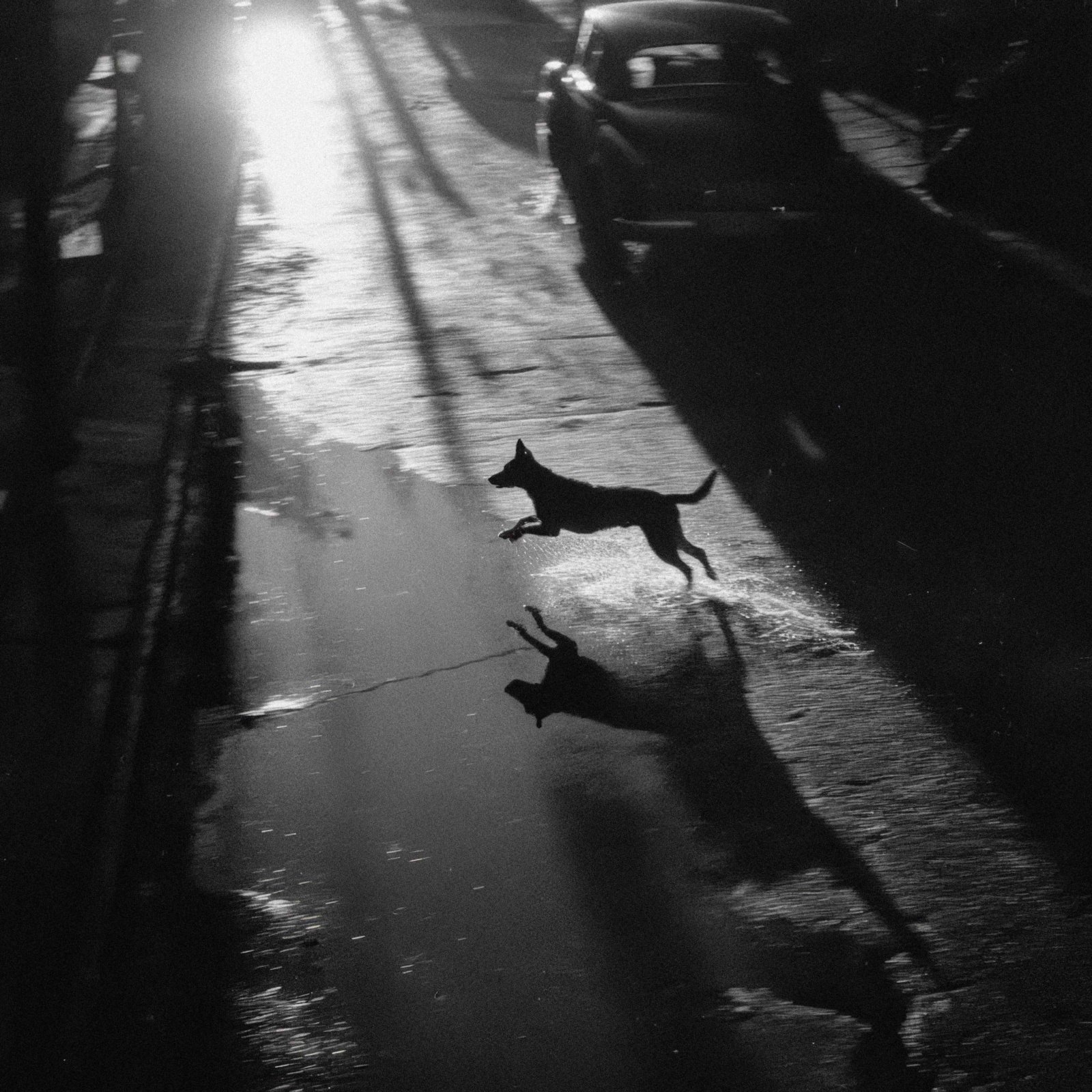
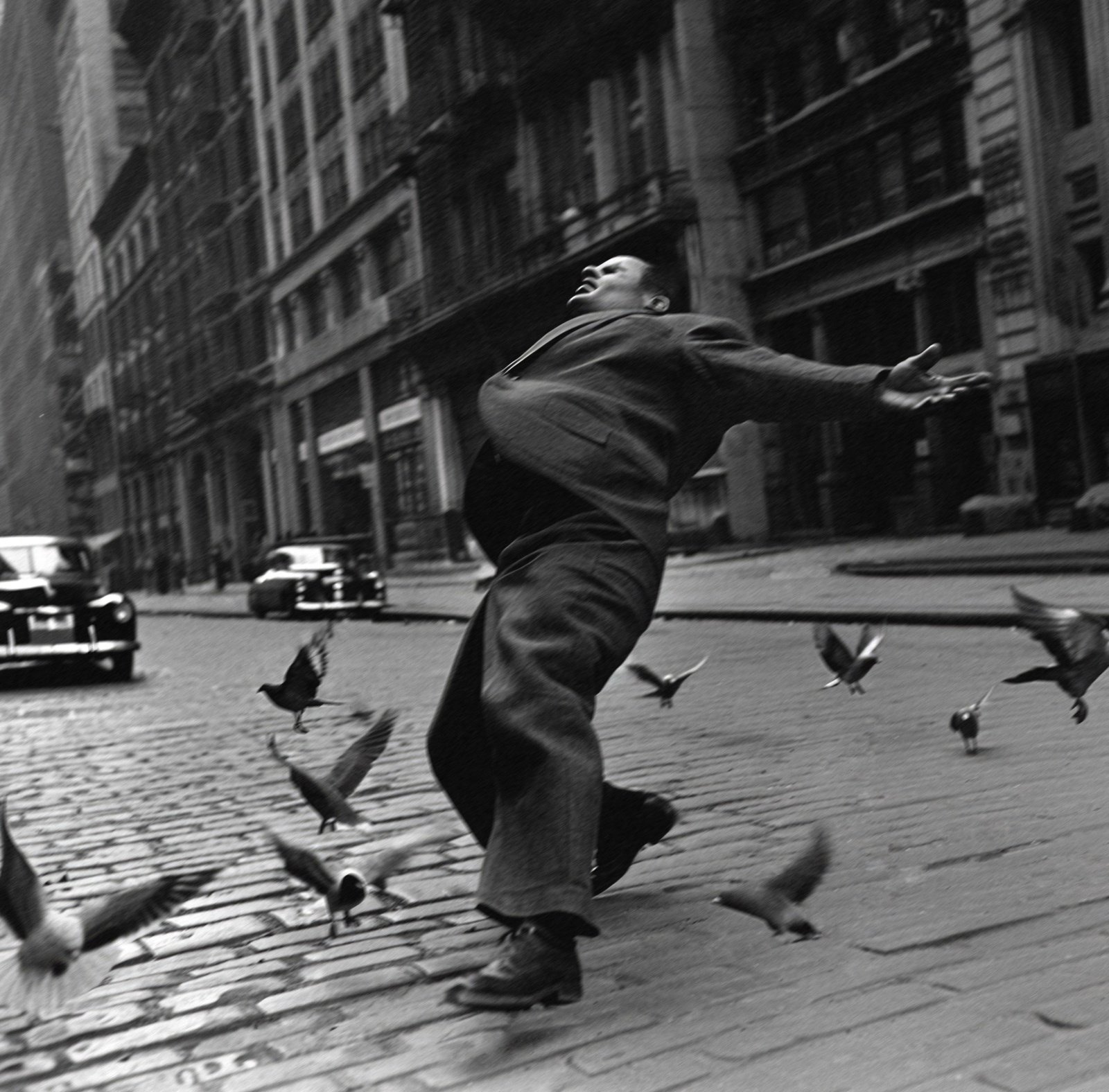
Phillip Toledano’s latest exhibition consists of 20 black and white photographs, matted and framed. They are accompanied by a text stating that the images were printed from a caché of negatives he recently discovered – all made by his late father, who was a painter and sculptor and worked as an actor under the stage name Edward Trevor. The pictures, so we are informed, were taken in New York and all dated in the 1930s and 40s. Here is another Vivian Maier-like discovery, of newly found images, and another artist to add to the roster of great street photographers. Only these pictures are not that interesting and they all rest upon a deceit. His father was not a photographer. The story is made up and the pictures were all generated by AI.
The reveal is given in a statement made by the artist on a video screen at the other end of this show. It also includes comments from people who had given feedback to the work, critical and astute, like this one: ‘By using AI you create an image that is based on images that were stolen from artists all over the world – since algorithms only replicate what they have been trained on.’
‘Frictionless’, ‘hollow’, ‘high resolution AI slop’ – these are not my words but were some of the words given to me by ChatGPT, when I asked it to write a critical review of this show. Since Toledano is making a name for himself by popularising and championing AI photography it seemed very apt to try and use ChatGPT to write a response. But of course I prompted the criticism, even introducing the word ‘slop’. I could quote more, because I also discovered AI had very likely scraped my texts and seemed to know about the kind of things I would say about photography in reviews like this. It also pointed out that because photo criticism has its reproducible patterns, even a review solely written without AI, could be deemed to be as it put it ‘AI adjacent.’
For Toledano the point of generating these images was to show how what is artificial and inhuman can still carry ‘beauty and emotion’. But what does such a show really say about AI and our supposed ‘age of synthetic imagery’ (the description is from the blurb for a recent Toledano talk)?
A key issue for AI and many of the anxieties and issues arising from its use return to romantic conceptions of creativity and authorship, premises that had been disavowed by much system-based, appropriative art practices from the 20th century to the present. Interestingly Toledano calls himself a conceptual artist. But his approach and use of AI allows him to return to a romantic conception of authorship and creativity. Unlike traditional photography, AI allows greater authorial control, more creative opportunities and possibilities than the more chancy process of trying to snatch pictures from the flux of life.
In what still remains one of the best essays written on the subject, James Agee refers to ‘the unimagined world’ that street photography can reveal. It was written for a book of Helen Levitt’s ‘lyrical’ photography from Harlem dating from the late 1930s to the 1940s, for a book that did not get published until 1965, after his death. For Agee, the photographic artist’s task was not ‘to alter the world as the eye sees it, but to perceive the aesthetic reality within the world.’
Agee’s idea of ‘the unimagined world’ speaks to the way Levitt’s work was receptive to pictorial possibilities from moments observed on the street: comedic, odd, beautiful, inexplicable, and surprising. The problem with much AI generated photography is that it presents not so much the wonders of the unimagined world, but the poverty of what has been imagined about that world.
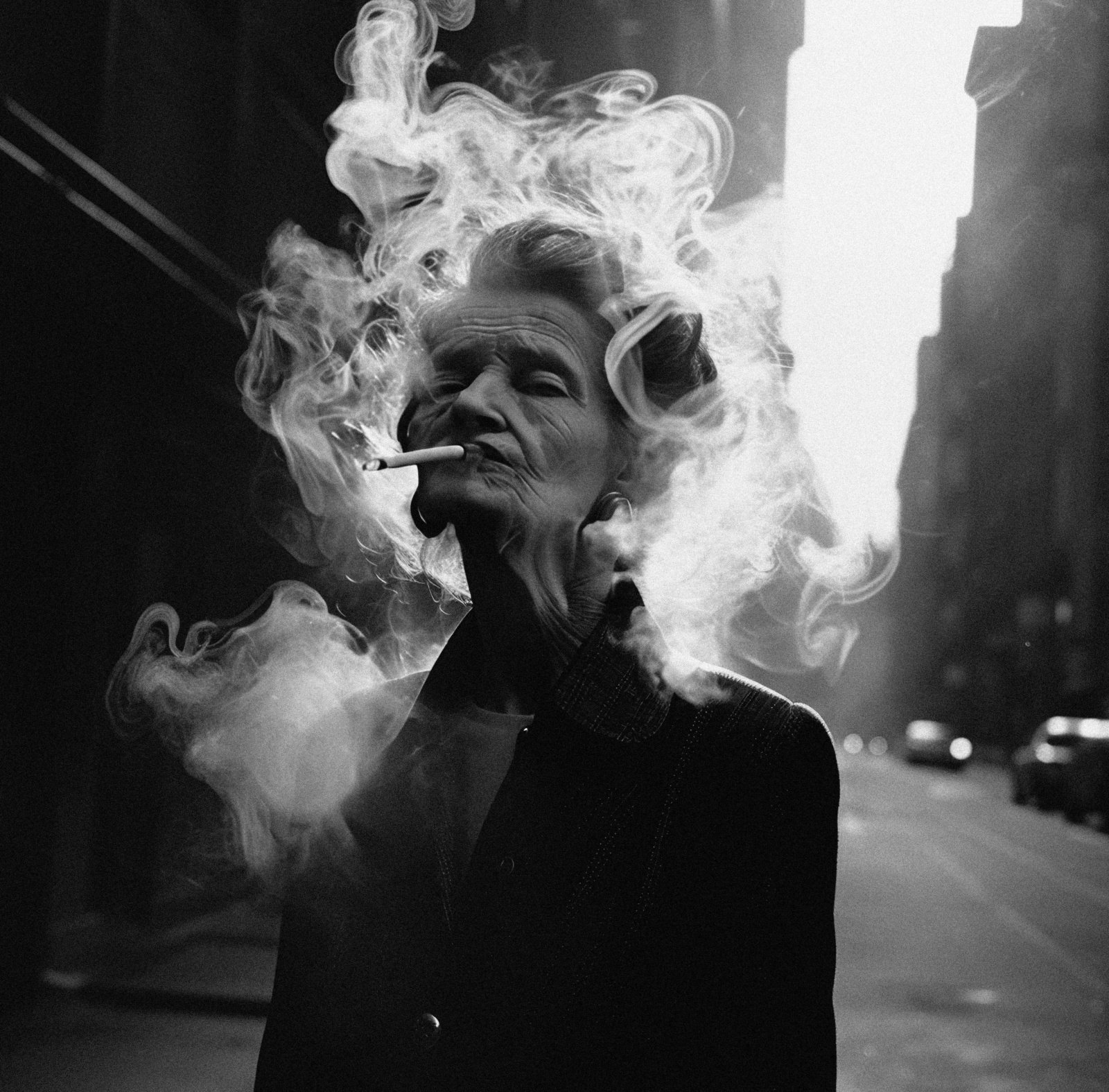
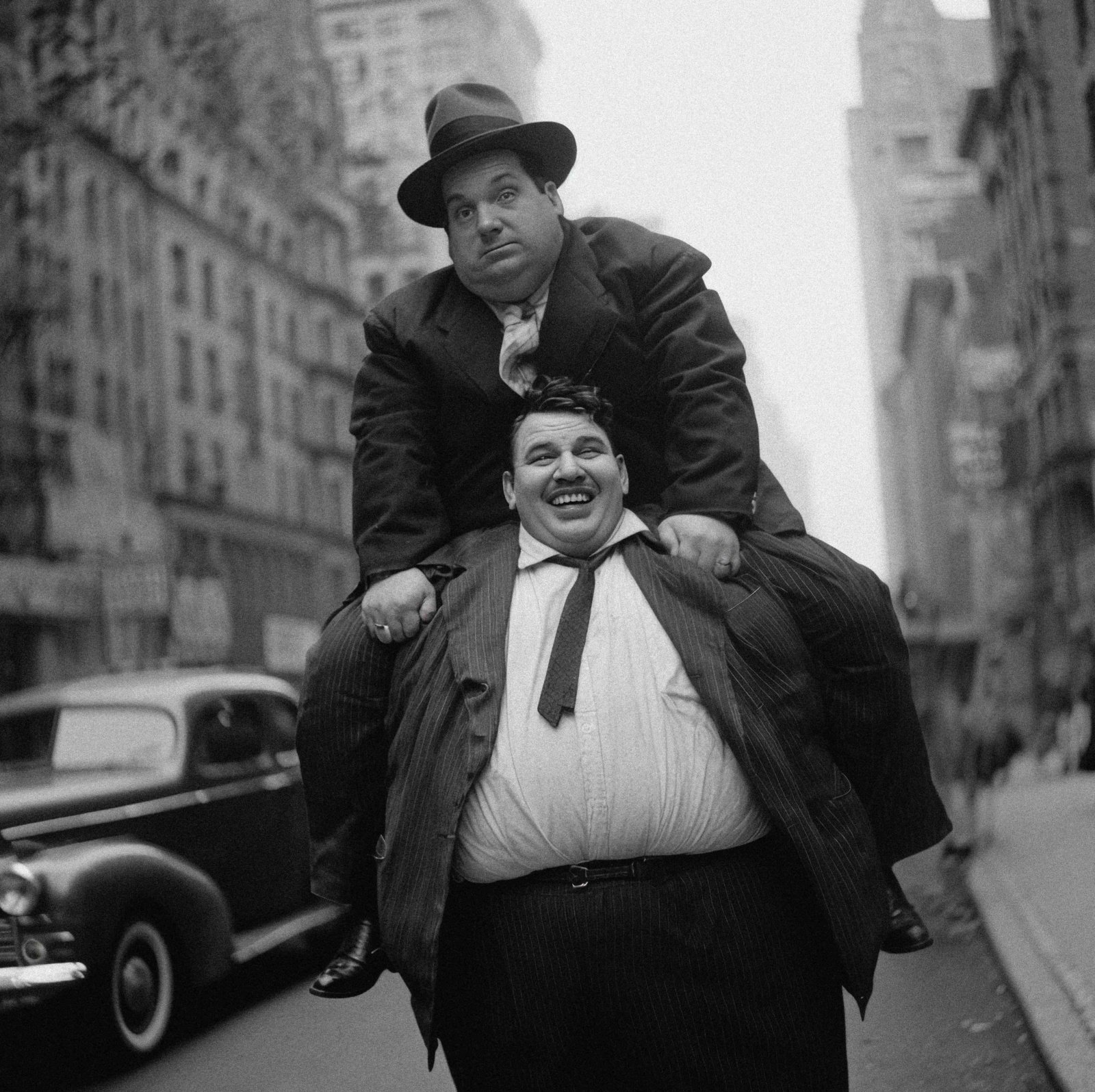
Street photography lies often with subtle details, of unexpected rhymes and correspondences, or comedic, slapstick moments, as in Levitt’s portrayal of a woman watering, pictured just at the moment she looks one way while the hosepipe she is holding spays water in the other direction. Toledano’s street photography is too hyperbolic, over insistent on oddballs and oddities, with everything signalling its strangeness to us. AI photography can tend to produce generic images because when data is summarised, classified, the most common is preserved and the exceptional ignored. Toledano might then be deliberating trying to counter this tendency in his over insistence on quirks and quirkiness. But then again, he tends to overwork things, pictorially that is. Take, for example, his picture of an elderly woman, a tough street-wise lady with a cigarette in her mouth. The swirling cigarette smoke encircling her head, illuminated from behind, is over spun.
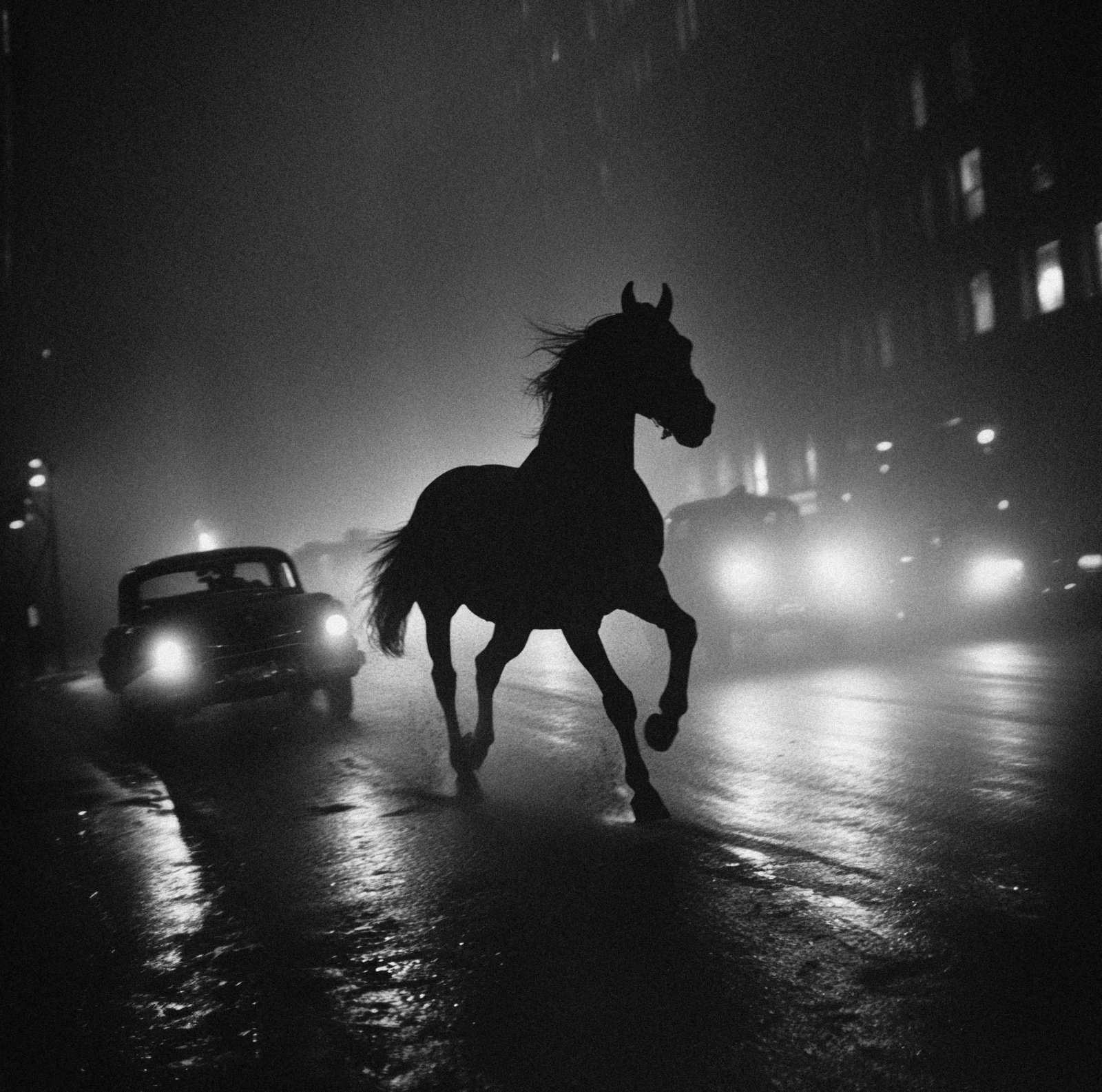
One of Toledano’s images shows a riderless black horse running at night on the road, ahead of the traffic. I wonder if this is how he sees AI, the liberation and creative freedom it entails – a freedom despite its obvious costs. In these ‘frictionless’ fictions we are not given any new or critical knowledge about AI. Nothing about the problems with the use of such technologies: the environmental costs, the obscene wealth accrued by tech oligarchs, the exploitation of labour in the tagging of data etc., as well as the ethics of image appropriation.
Toledano likens using AI to generate images to being a writer, creating new fictional worlds. But consider how Agee, who certainly was a great writer, responds to one of Levitt’s photographs. It depicts a young child on a street, barefoot, wet and fearful, at the moment she moves towards a smiling woman, beckoning her to come near. Children behind the girl have let off a fire hydrant and water is spraying everywhere. For Agee what is revealed in this photograph cannot be matched in the other arts: ‘No one could write, paint, act, dance or embody in music, the woman’s sheltering and magnanimous arm or tilt and voice of smiling head, or bearing or whole demeanour.’
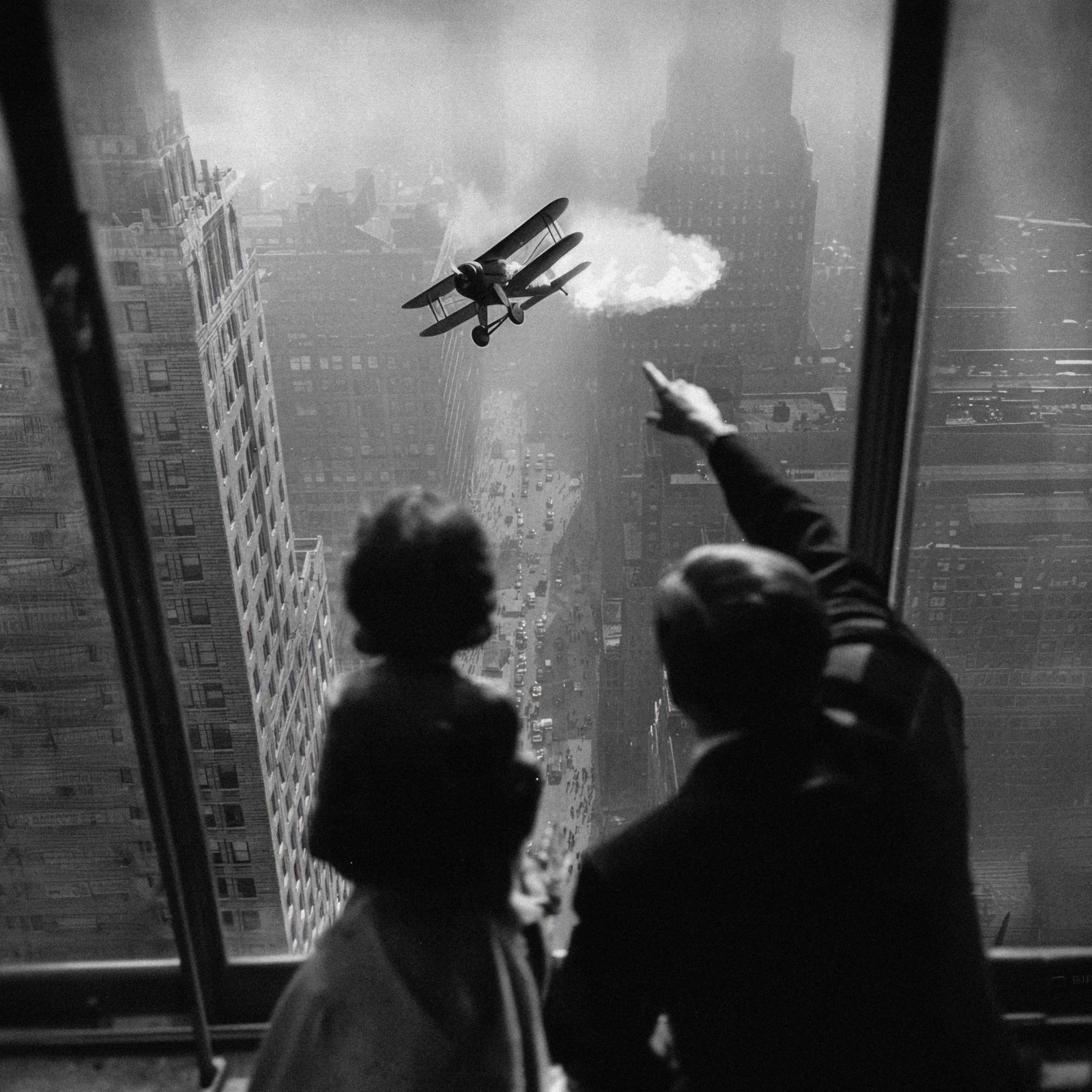
AI may well signal a greater valorisation of the document itself, a greater appreciation of traditional photography. Toledano’s joke is that he pretends to return those documentary qualities to us as precious, as a newly discovered family treasure. But in his simulated photography everything is over determined. Street photography is fundamentally perceptual – cut this out and we see the limits of an imagined world, a street photography by numbers, with caricatural figures.♦
Images: Phillip Toledano, Untitled, c. 1930-1940, New York City, USA, from Edward Trevor: Never Seen the Light, 2026 © Phillip Toledano
Edward Trevor: Never Seen the Light by Phillip Toledano ran at Fotografiska Berlin from 28 March – 31 May 2026.
—
Mark Durden is an academic, writer and artist. He is Professor of Photography and the Director of the European Centre for Documentary Research at the University of South Wales. He works collaboratively as part of the artist group Common Culture and, since 2017, with João Leal, has been photographing modernist architecture in Europe.
1000 Words favourites
• Renée Mussai on exhibitions as sites of dialogue, critique and activism
• Roxana Marcoci navigates curatorial practice in the digital age
• Tanvi Mishra reviews Felipe Romero Beltrán’s Dialect
• Discover London’s top five photography galleries
• Tim Clark in conversation with Hayward Gallery’s Ralph Rugoff on Hiroshi Sugimoto
• Academic rigour and essayistic freedom as told by Taous Dahmani
• Shana Lopes reviews Agnieszka Sosnowska’s För
• Valentina Abenavoli discusses photobooks and community
• Michael Grieve considers Ute Mahler and Werner Mahler’s posthumous collaboration with their late family member
• Elisa Medde on Taysir Batniji’s images of glitched video calls from Gaza
Join us on Patreon today and be part of shaping the future of photographic discourse


