
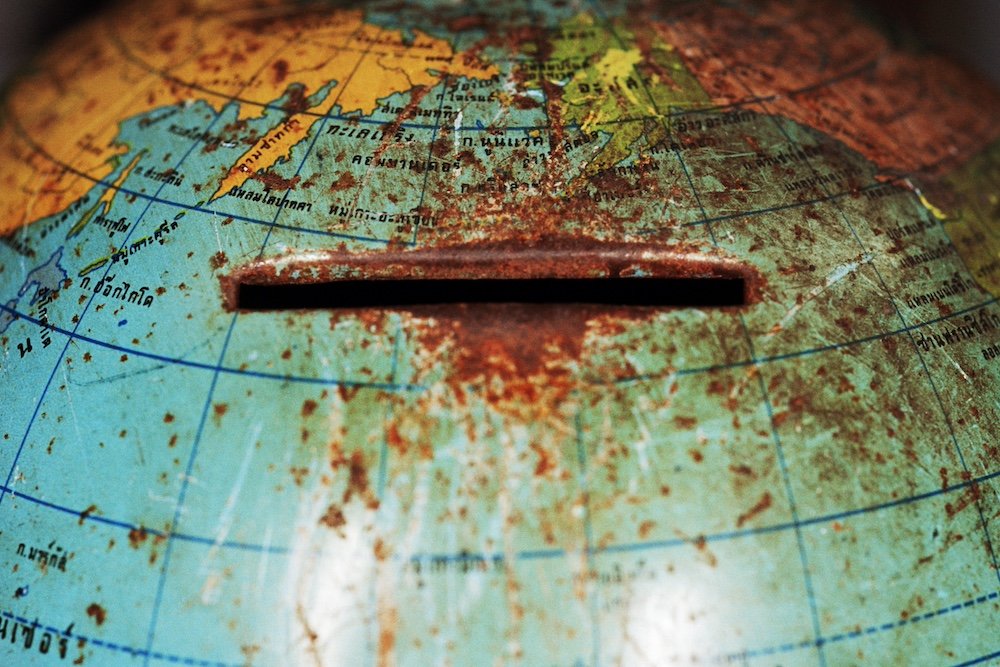
What is there still to learn from Martin Parr?
The late Martin Parr spent 50 years photographing the rituals of leisure, excess and consumption. A new retrospective at Jeu de Paume, following Parr’s passing last year, reveals a photographer whose corrosive humour and saturated colour made him both chronicler and critic of late capitalism. In his review, Mark Durden writes about Martin Parr’s abrasive approach, the laughable absurdities of our collective behaviour and the fleeting instances in which the comic mask slips.
Mark Durden | Exhibition review | 6 May 2026
Join us on Patreon
In France, news of Martin Parr’s death made the front page of Le Monde. A new exhibition at Jeu de Paume in Paris, punningly titled Global Warning, draws from his 50-year career to offer a fresh look at a photographer whose work, certainly in Britain, has in many senses not quite found its place. Parr’s emergence and subsequent populist success, through his embrace of kitsch and the tacky, his commercial savviness, led to him not being taken seriously, especially by those writers and practitioners who emerged through the photo theoretical schools of photography within the UK.
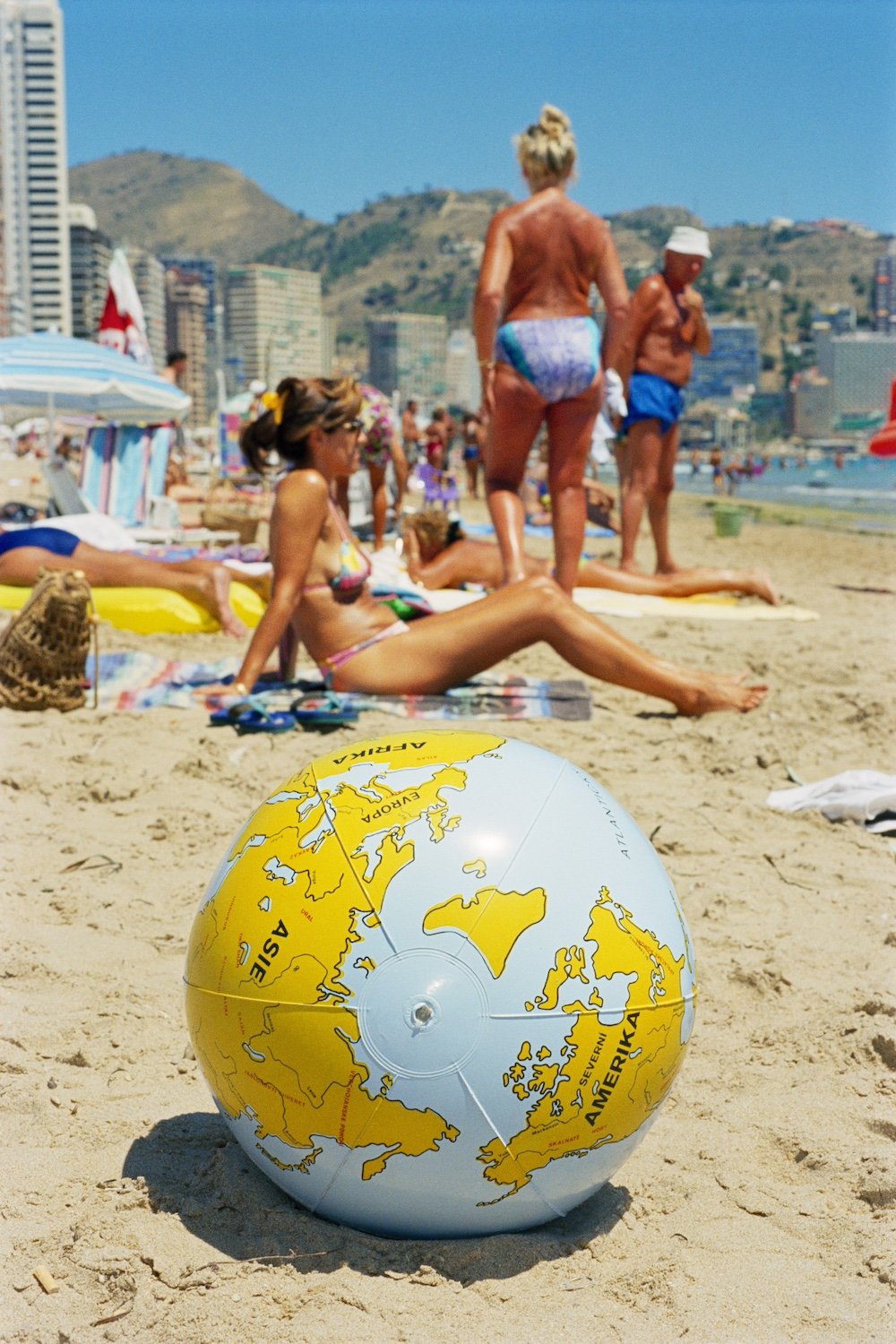
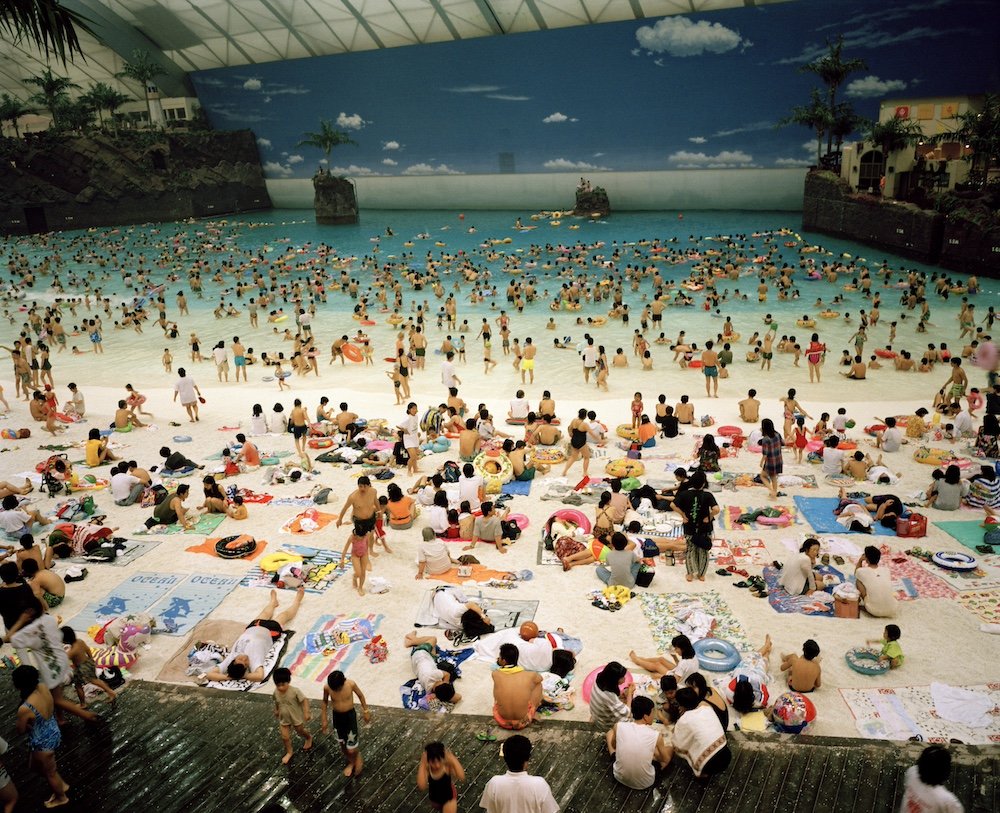
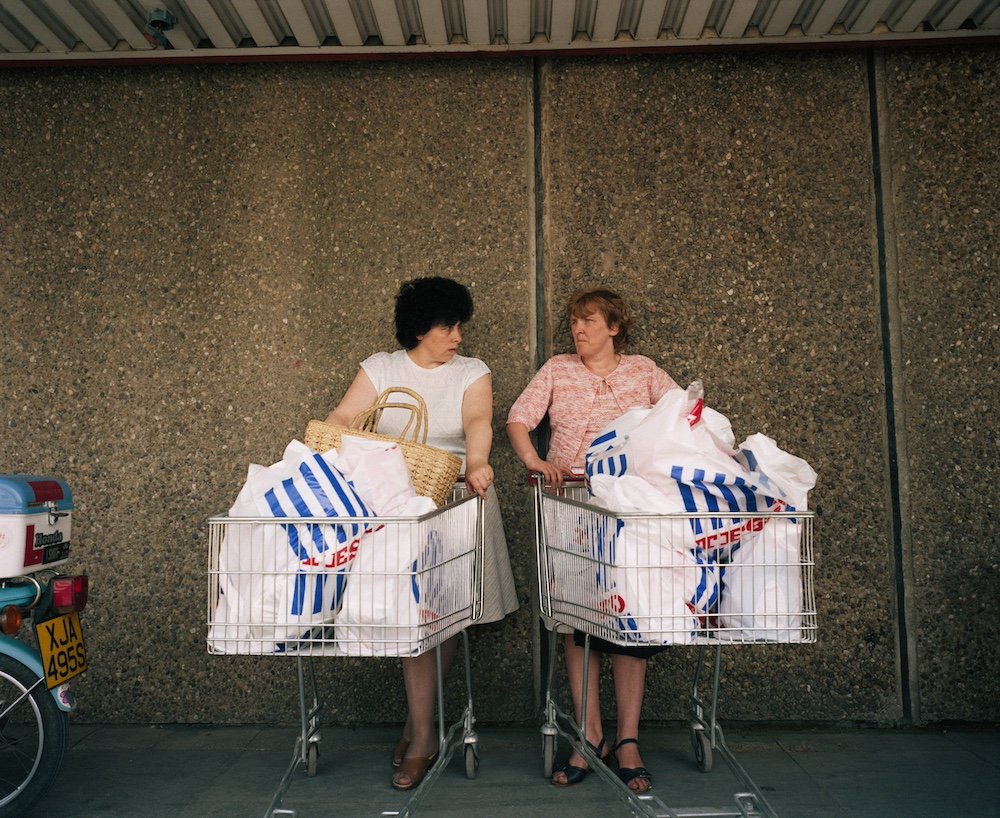
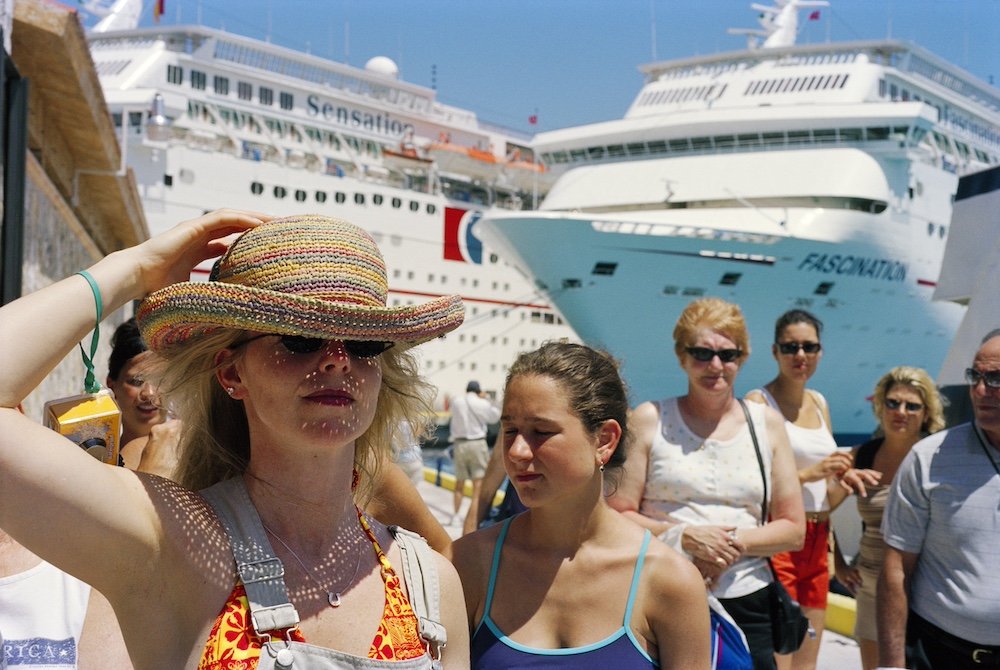
The show’s description of Parr’s work in terms of corrosive irony is very apt. It is his acerbic representation of the excesses of late capitalism that the exhibition focuses upon. Parr concentrated on times of leisure, of holiday making and shopping, not work. No sites of production but instead the global pleasure fields of consumption. Though with the mass hordes shown sightseeing and crowded on beaches, or scrapping for products, it does not always seem to be about pleasure. Parr’s vision of greed and over consumption also showed us its fall-out, both images of conspicuous display and heaps of waste.
This dialectic was hinted at in works from his first controversial colour series, The Last Resort, with its focus on working class holidaymakers in the northern Merseyside resort of New Brighton in the hot summers of the mid 1980s. The title puns on the idea of desperation, a final course of action. The context was the political neglect of the north under Thatcherism, which for Parr was evident in the overflowing bins and waste visible in a number of the images. But the litter also brought with it the more demeaning associations of slovenliness, with the people shown seemingly oblivious to the trash around them.
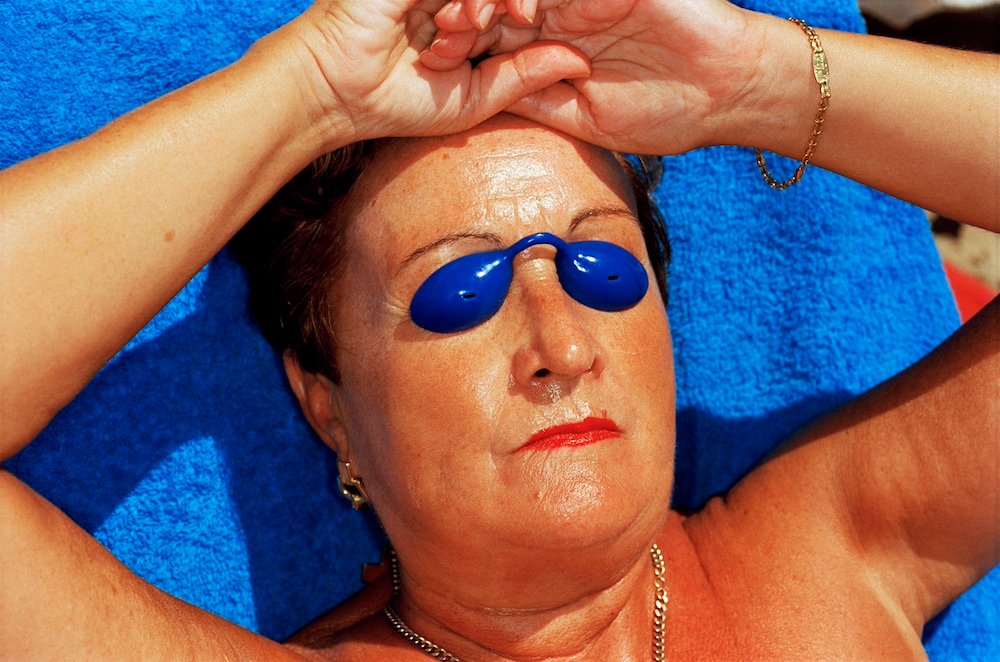
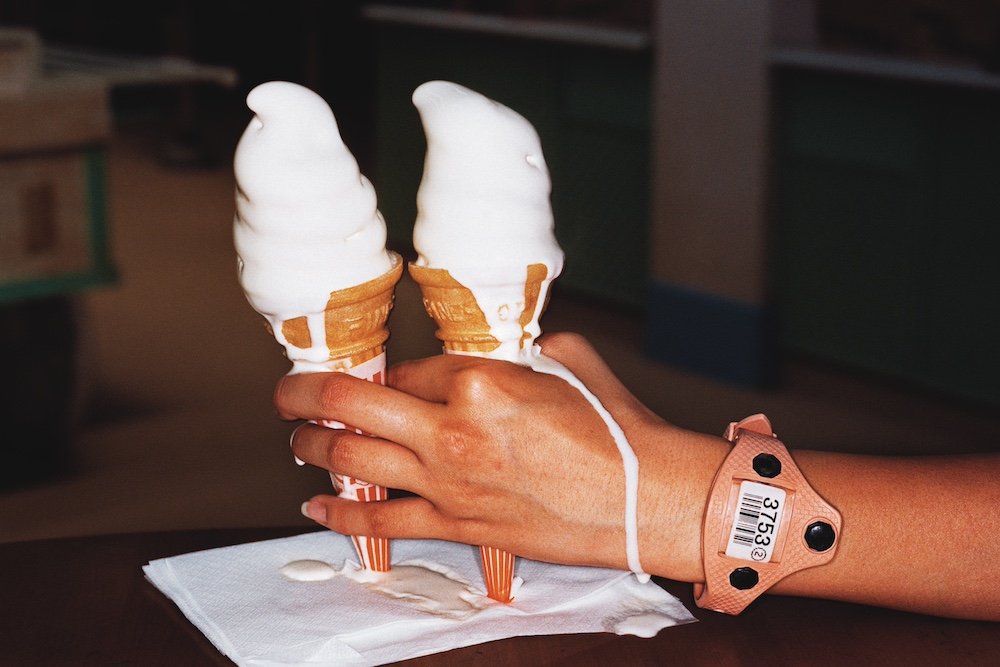
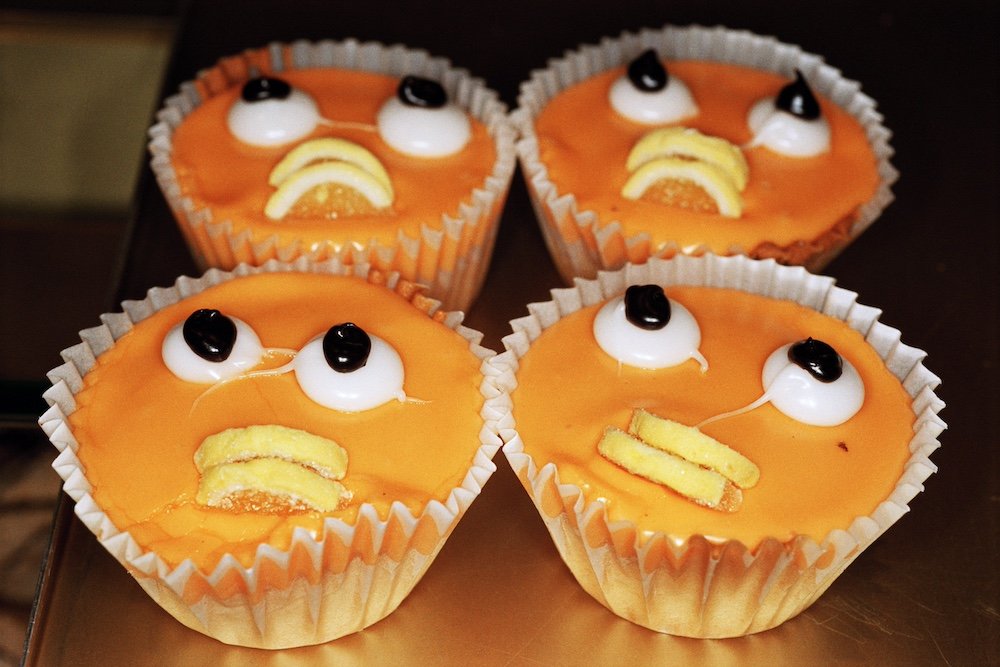
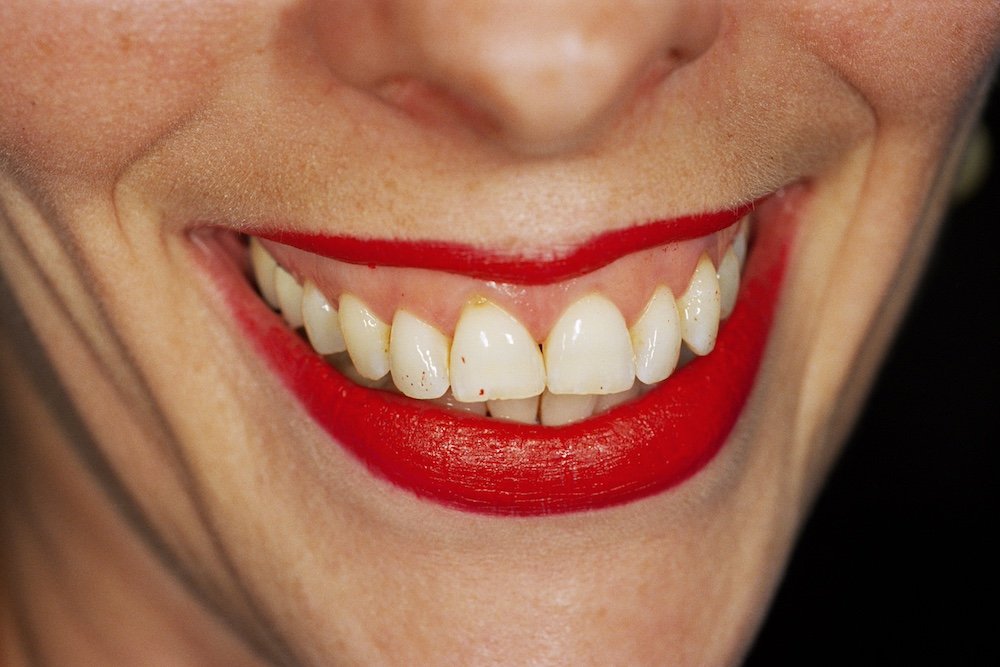
Thematically grouped, some 180 of his photographs are presented in colourful themed rooms. It is very much a poppy and lite presentation. We start with the beach, with a room entitled Leisure and Waste Lands and a commissioned picture of the face of a tanned older woman sunbathing in fancy Gucci sunglasses in Cannes. The vulgarity of luxurious excess is a reprisal of an earlier unstaged close-up of a woman adorned with blue eye protectors, taken in Benidorm, a holiday resort notorious for its association with working class Brits. The latter image is taken from his abrasive series and 1999 book Common Sense. In the following room, the thematic focus is on shopping, Last Chance to Buy. There is a gridded glut of images taken from Common Sense: a visceral and somewhat abject depiction through close-up details of base humanity and greed, of people shown stuffing their faces. A hundred dollar note hangs out of one woman’s mouth in a succinct underscoring of money as the driver of this gluttonous binge. There are some Carry-On comedy style innuendos and collisions, with images of cleavages and sausages, and among the views of dripping ice creams, smiley faces on sugary and colourful cakes, a display of wrapped plastic cock vibrators, the close-up of a sex doll’s open-mouthed face, as well as the detail of a Priest’s collar and religious trinkets and knick-knacks – nothing is sacrosanct. It’s a break from the rhythm of the overall show, a sudden flash of Parr’s associative mode of picture making, his scabrous stream of consciousness.
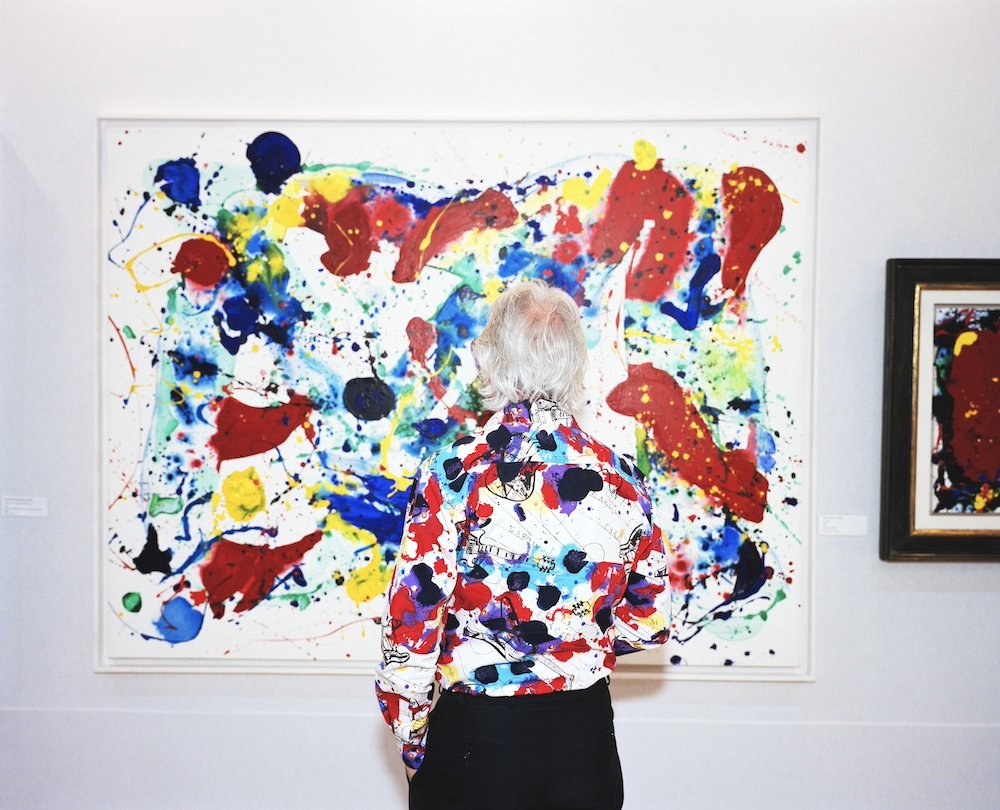
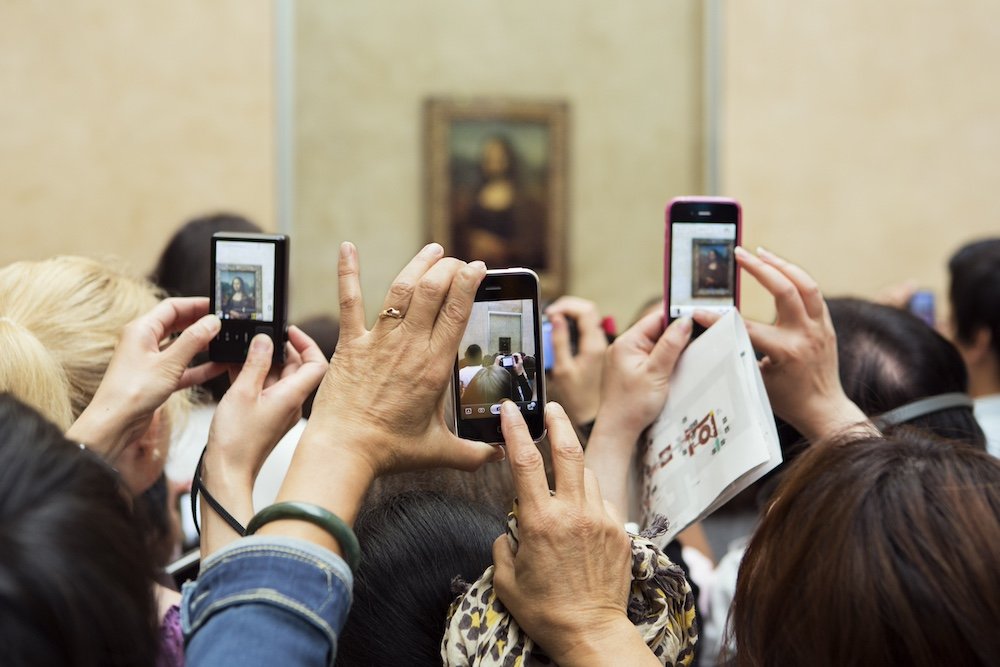
Taste is predominantly a point of humour, ironically enjoyed and consumed as wrong or bad. With their colour saturation, Parr’s photographs are loud. Just like that art consumer’s gaudy shirt, which matches the abstract painting they are viewing at a Gulf Art Fair in Dubai. Art itself is never Parr’s interest. Art is here a cue to a joke. His aesthetic is keyed into a more low-grade pop vernacular or kitsch – garish colour and clashes of colours and patterns recur in his photographs, they establish their own brash taste, which can take some adjusting to. In the Louvre, he focuses on the mediated images on mobile phones held aloft before the Mona Lisa. In this respect, Parr’s take is postmodern since the message seems to be that the sublimity of great art and culture can no longer be photographed. The Parthenon can only be depicted ironically, over the shoulder of another photographer depicting a party of tourists standing before the attraction.
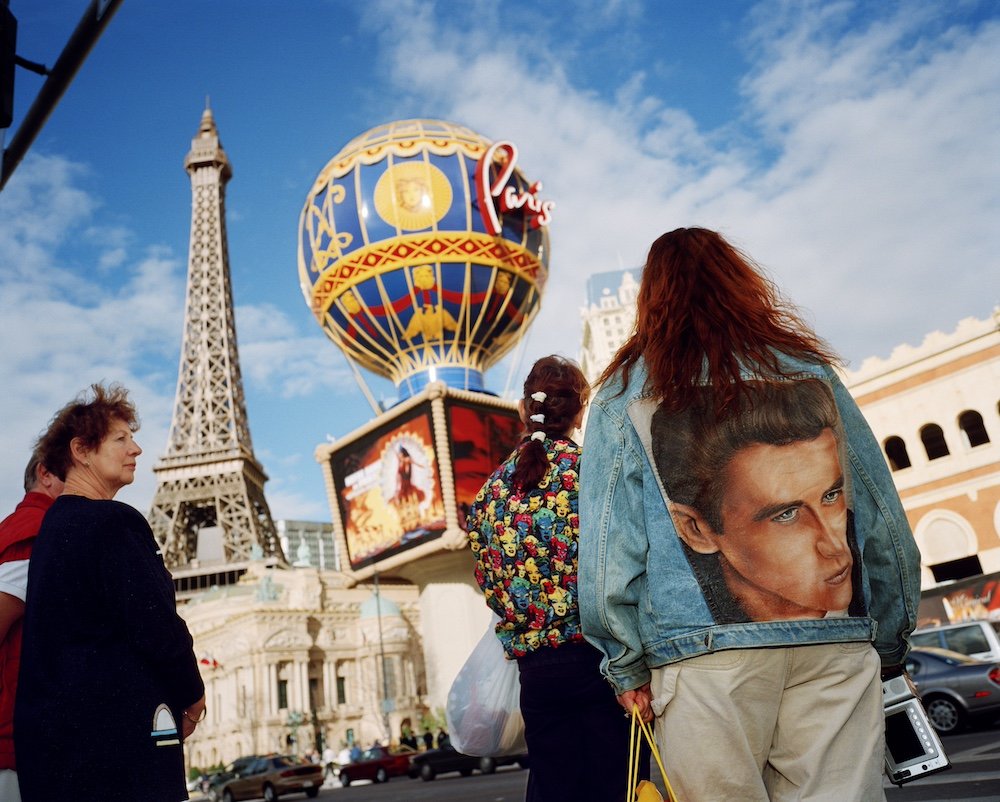
Tourists rather than tourist attractions always fascinated Parr. The Louvre and Parthenon photographs are among many that play out a similar note in the room given over to Parr’s travel pictures, the title taken from his book, Small World. The room ends with another postmodern joke: an American couple – USA is emblazoned on the arm of the man’s jacket – before a view of the Arc de Triomphe, which is not the real thing but Las Vegas’s replica of the Paris landmark. Here the subject turns and seems to snarl back in annoyance at the photographer.
With Parr, though, people are overall observed mostly unawares. There is less evident friction in the images as a result. People are often distracted, oblivious to being pictured. In some, distraction even becomes the joke – the women shown gambling on fruit machines, their backs to an empty pram and a baby standing before one of the machines, as if already bewitched.
Much as Parr’s work might be often linked with a British satirical tradition, and the connection is made again in the narrative introducing this show, the central influence is Garry Winogrand. He too was very concerned with the relationship between photography and comedy, likening the way the photograph could disturb the order of things to the way a pun worked to disturb sense in language. In homage to Winogrand, Parr produced a small book entitled Animals last year, the prompt for a penultimate room in this show: the Animal Kingdom. Winogrand’s book Animals offered a dystopian and bleak vision, often drawing analogies between the creatures caged and confined in zoos and those who came to view them. Focusing on such comical and absurd combinations as a woman covered in pigeons as she takes a photograph, a gorilla absorbed in a cartoon playing on a television set up just outside its cage or a woman’s furs blending uncannily with her lapdog, Parr’s pictures are lighter and less unsettling.
Parr enjoys picturing the comic behaviour of other, often amateur photographers. Photography is just another form of consumerism. The final room of the show with its focus on his attraction to technologies, also including cars and early mobile phones, further brings this out. There are some good photographs here: the comedy of a middle-aged couple’s behaviour at an English beauty spot, with the woman in a car reading the newspaper and ignoring her partner, who stands outside taking a photograph of the view. Among pictures about selfies and selfie sticks, one striking photograph shows a woman in a red dress standing barefoot in the flood waters of Venice to take a selfie in front of St Marks Basilica. The photograph is made by the detail of the watery wavy blue design on the back of her mobile phone.
Parr relishes the laughable absurdities of our behaviour. As an exposé of our greed and excess his images might be said to have a global warning but they are not didactic. Messages and signs are in abundance, but those messages and signs alert us to the comic aspects within what we do and how we are, we that is who come to consume and queue to see this work. We are not separate from the world that we see here, as mad, weird and funny as it appears to be.
Parr’s is a kind of world reportage, not of sites of tragedies, but scenes and places of consumerism, often of opulence and wealth, and frequently gross. There are fracture lines in this depiction, especially in representations of some of the tourists: the plump white guy on a beach in Bali being manicured and pedicured, for example.
Adornment, décor and signage are in abundance in Parr’s photography. One gets the sense looking at these works that everything signifies, but often not as intended, and that is the comedy. Comedy entails a disruption, it takes us out of the day to day and it is often about something being out of place. So an eye for comedy in life, hones in on small or big collisions and contrasts. The woman who is shown sunbathing, right in front of the large caterpillar track of a stationary digger, in Parr’s well-known New Brighton photograph. In a photograph from one of Trump’s first presidential rallies, it is the contrast between a woman seemingly lost in smiling admiration for the speaker and the ridiculous thing on her lap: a boxed toy Trump doll that according to the label even talks.
In Parr’s photographs people tend to be ciphers, caricatural cues to comedy. There is little sense of people’s mystery in these photographs. His image of two young, uniformed women working at the Millionaire Fair in Moscow, promoting luxury air jets, is unusual in showing us the faces of two employees. At last, here are the workers. And here too is a momentary sympathetic interaction. One woman is standing and looks straight back, the other, seated, is less poised and appears more bored and distracted. Both are shown momentarily distinct from the decadence and luxury of the event they are working for. Their look also disrupts the show’s emphasis on spectacles of binge and invites reflection upon other approaches to photography than the quick-fire hit.♦
All images courtesy Jeu de Paume. © Martin Parr / Magnum Photos.
Martin Parr: Global Warning runs at Je de Paume, Paris, until 24 May 2026.
Images:
1-Martin Parr, Benidorm, Spain, 1997
2-Martin Parr, Benidorm, Spain, 1997
3-Martin Parr, Seagaia Ocean Dome, Miyazaki, Japan, 1996
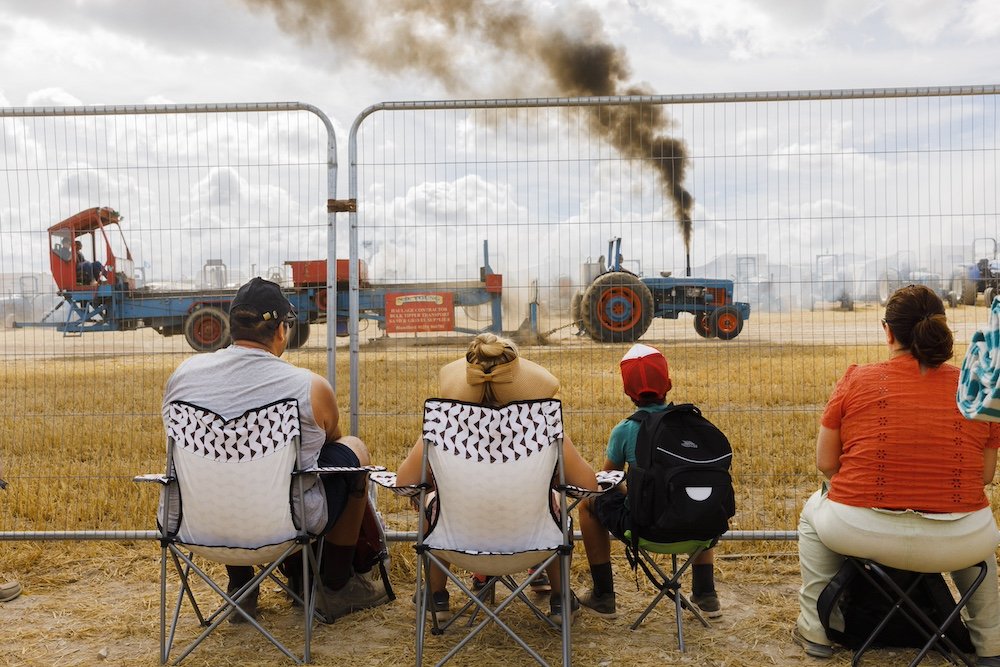
4-Martin Parr, Dorset, England, 2022
5-Martin Parr, Salford, England, 2022
6-Martin Parr, Dubai, United Arab Emirates, 2007
7-Martin Parr, Tokyo, Japan, 1998
8-Martin Parr, Zürich, Switzerland, 1997
9-Martin Parr, Glasgow, Scotland, 1999
10-Martin Parr, Zürich, Switzerland, 1997
11-Martin Parr, Cozumel, Mexico, 2002
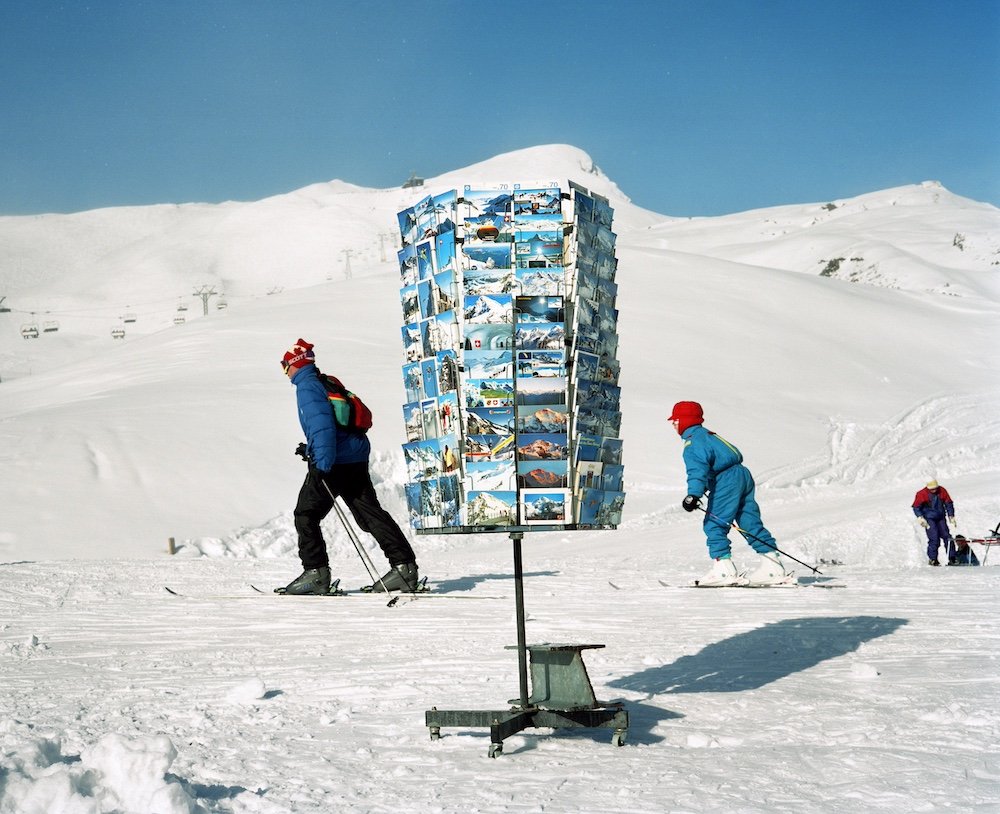
12-Martin Parr, Kleine Scheidegg, Switzerland, 1994
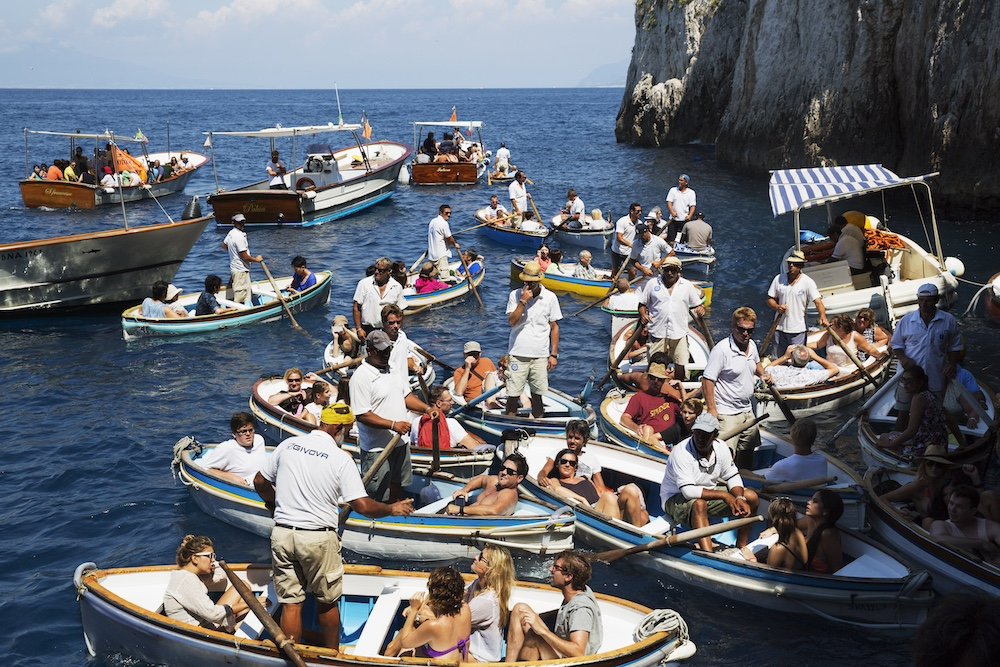
13-Martin Parr, Grotte bleue, Capri, Italy, 2014
14-Martin Parr, Las Vegas, Nevada, United States, 2000
15-Martin Parr, Musée du Louvre, Paris, France, 2012
1000 Words favourites
• Renée Mussai on exhibitions as sites of dialogue, critique and activism
• Roxana Marcoci navigates curatorial practice in the digital age
• Tanvi Mishra reviews Felipe Romero Beltrán’s Dialect
• Discover London’s top five photography galleries
• Tim Clark in conversation with Hayward Gallery’s Ralph Rugoff on Hiroshi Sugimoto
• Academic rigour and essayistic freedom as told by Taous Dahmani
• Shana Lopes reviews Agnieszka Sosnowska’s För
• Valentina Abenavoli discusses photobooks and community
• Michael Grieve considers Ute Mahler and Werner Mahler’s posthumous collaboration with their late family member
• Elisa Medde on Taysir Batniji’s images of glitched video calls from Gaza
Join us on Patreon today and be part of shaping the future of photographic discourse


