





What Cosmopolemos reveals about the state of documentary photography
Published by Loose Joints and currently on view at the Centre de la photographie Genève, Edmund Clark and Crofton Black’s Cosmopolemos turns its attention to the sprawling machinery of American military power, bringing the Pentagon’s photographic archive into dialogue with the financial records that underpin it. The result is something of a landmark for documentary photography, writes Tim Clark, opening up questions that extend far beyond the book itself: how do you picture a system too vast to see, and what happens when images are no longer enough?
Tim Clark | Review | 29 October 2026
Join us on Patreon
How can photography represent systems of power that are too vast, complex and dispersed to be captured by a single image? One of the central problems facing documentary photography today serves as the ambition for Edmund Clark and Crofton Black’s Cosmopolemos. With an exhibition at the Centre de la photographie Genève, Switzerland, alongside a book published by Loose Joints, it is something of an occasion.
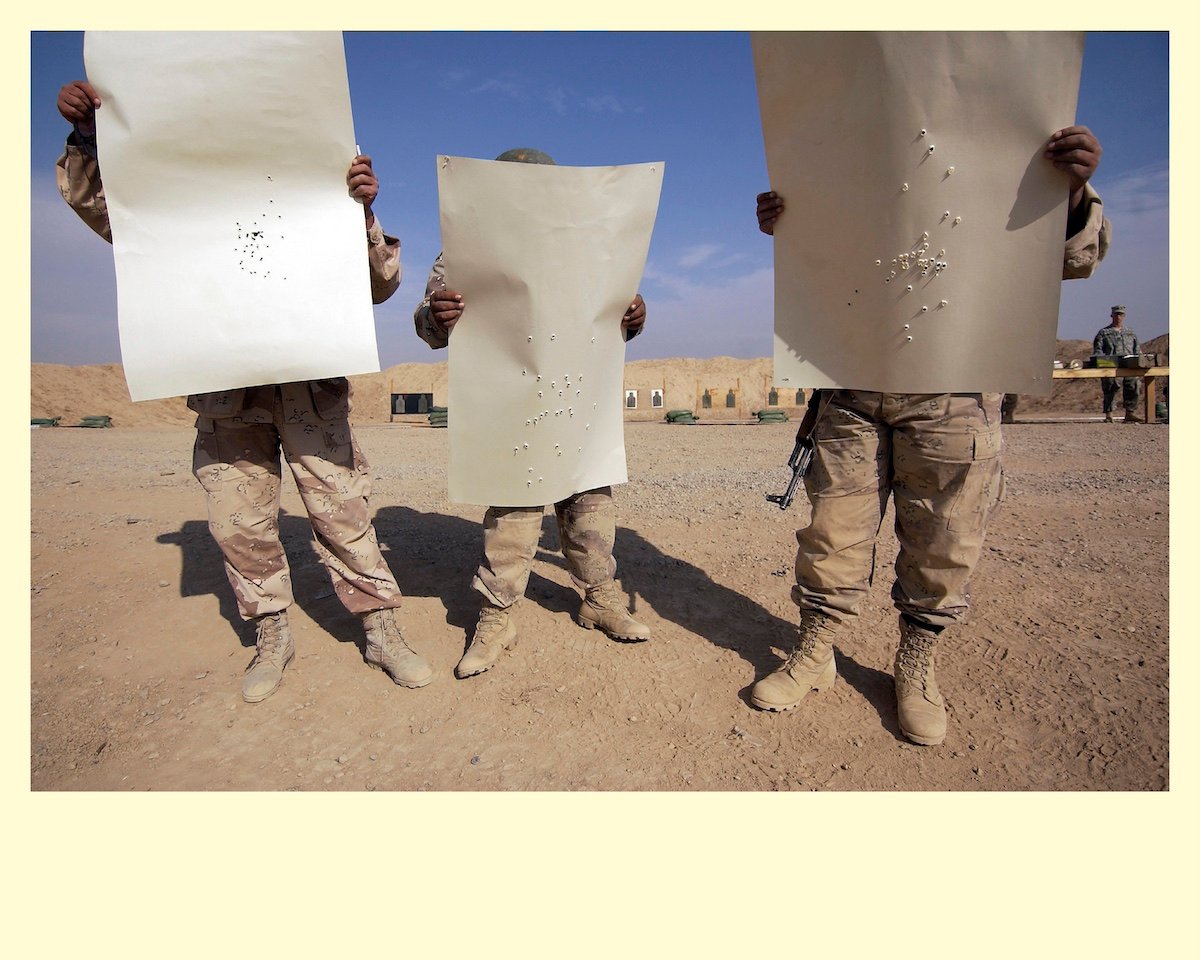
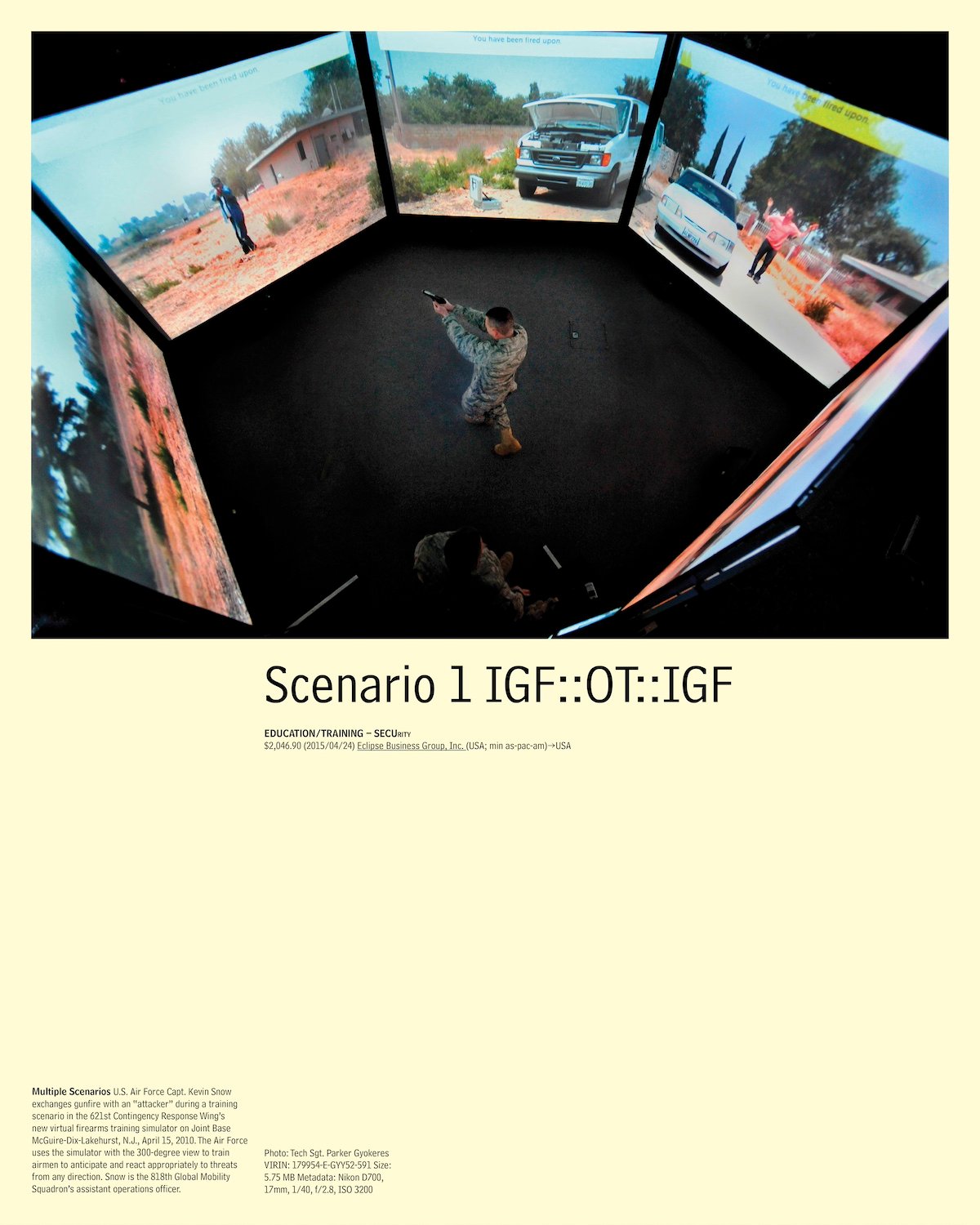
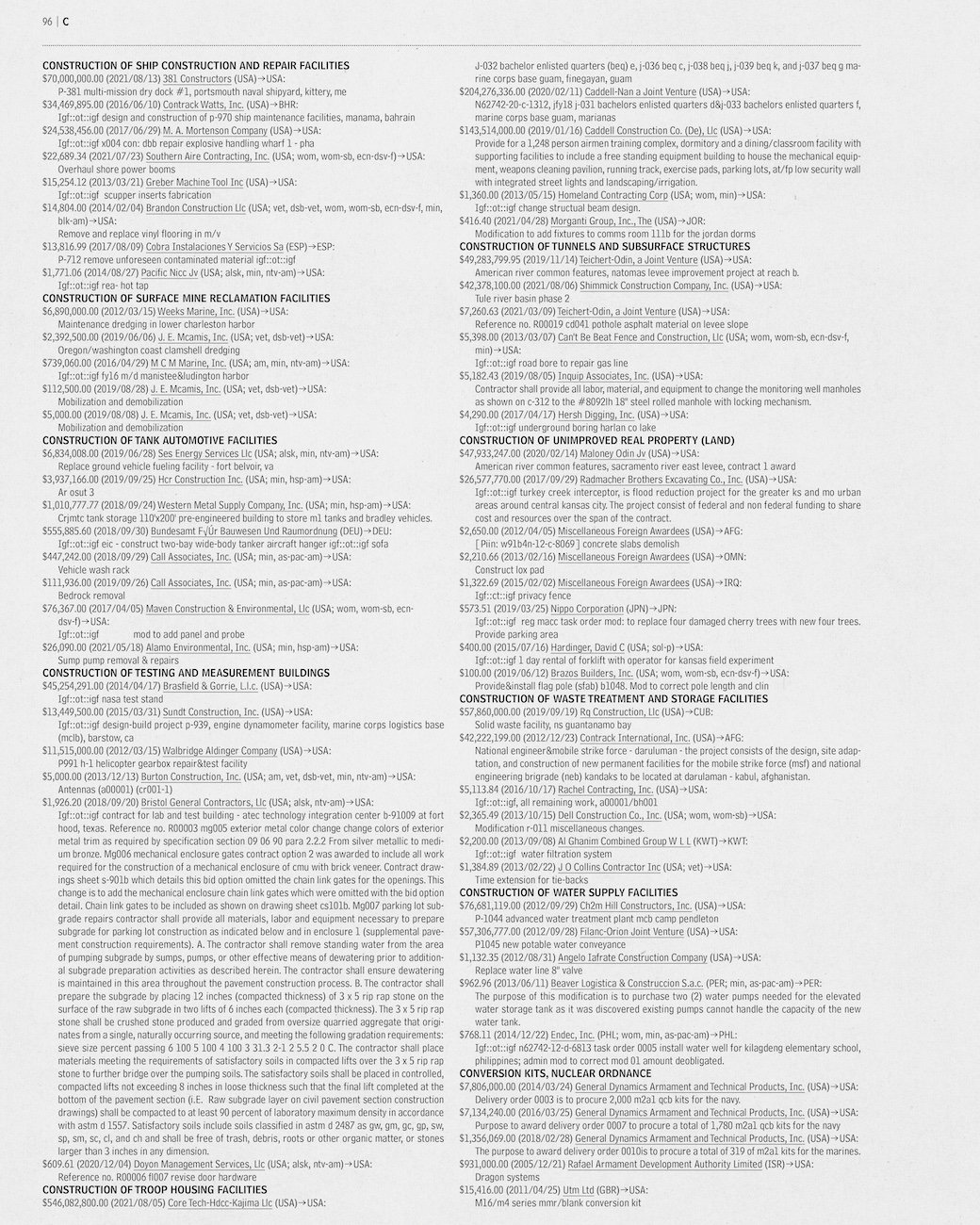
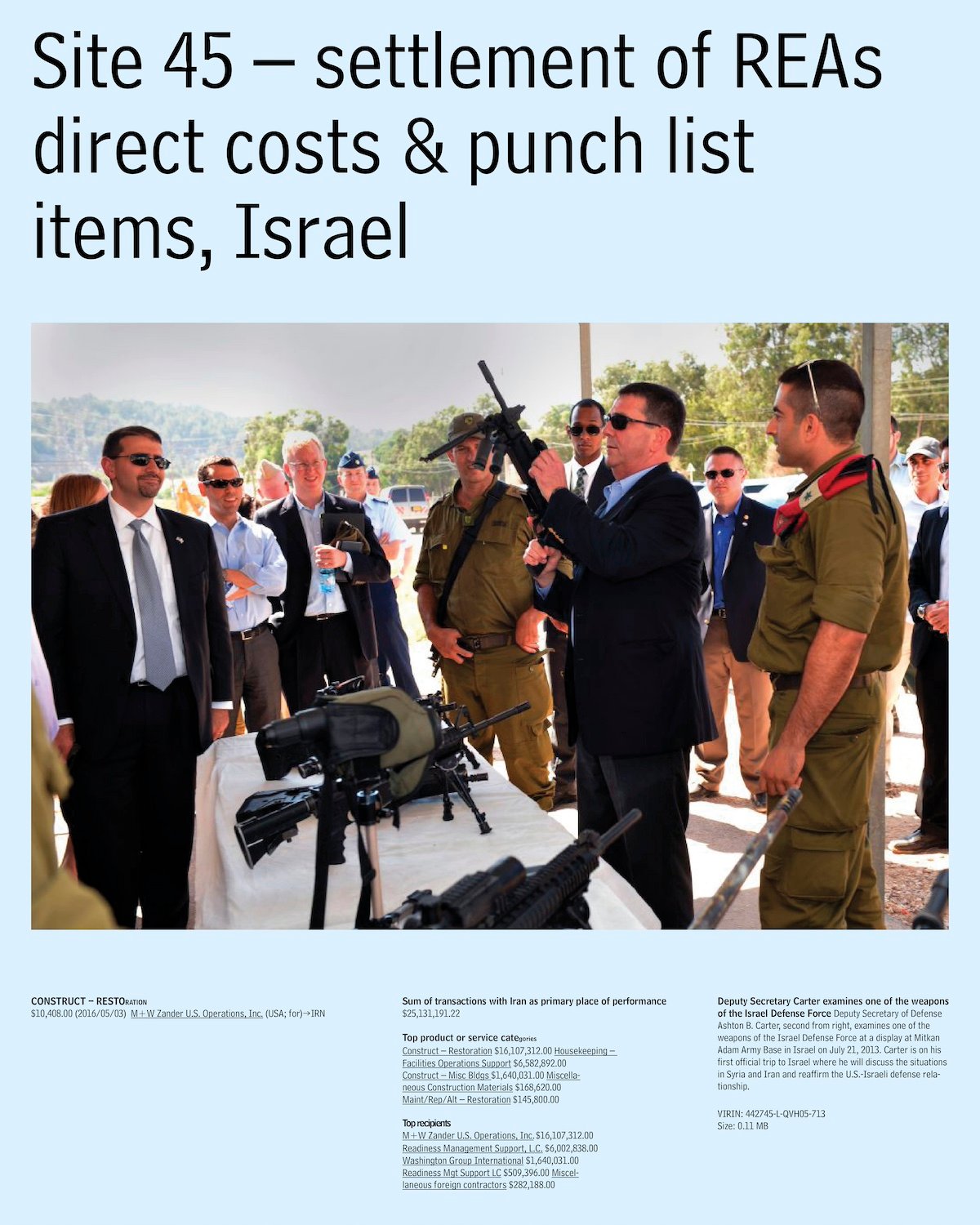
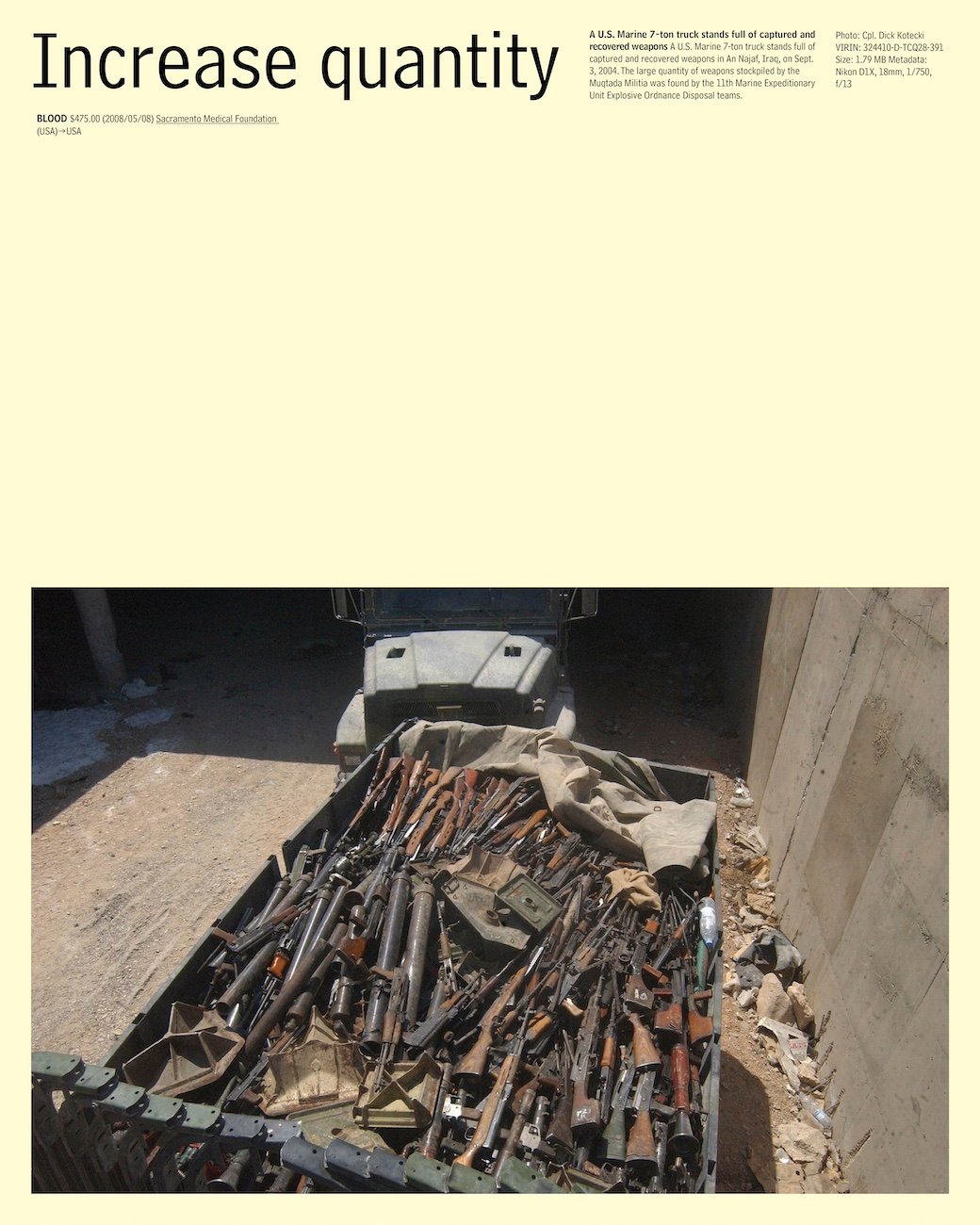
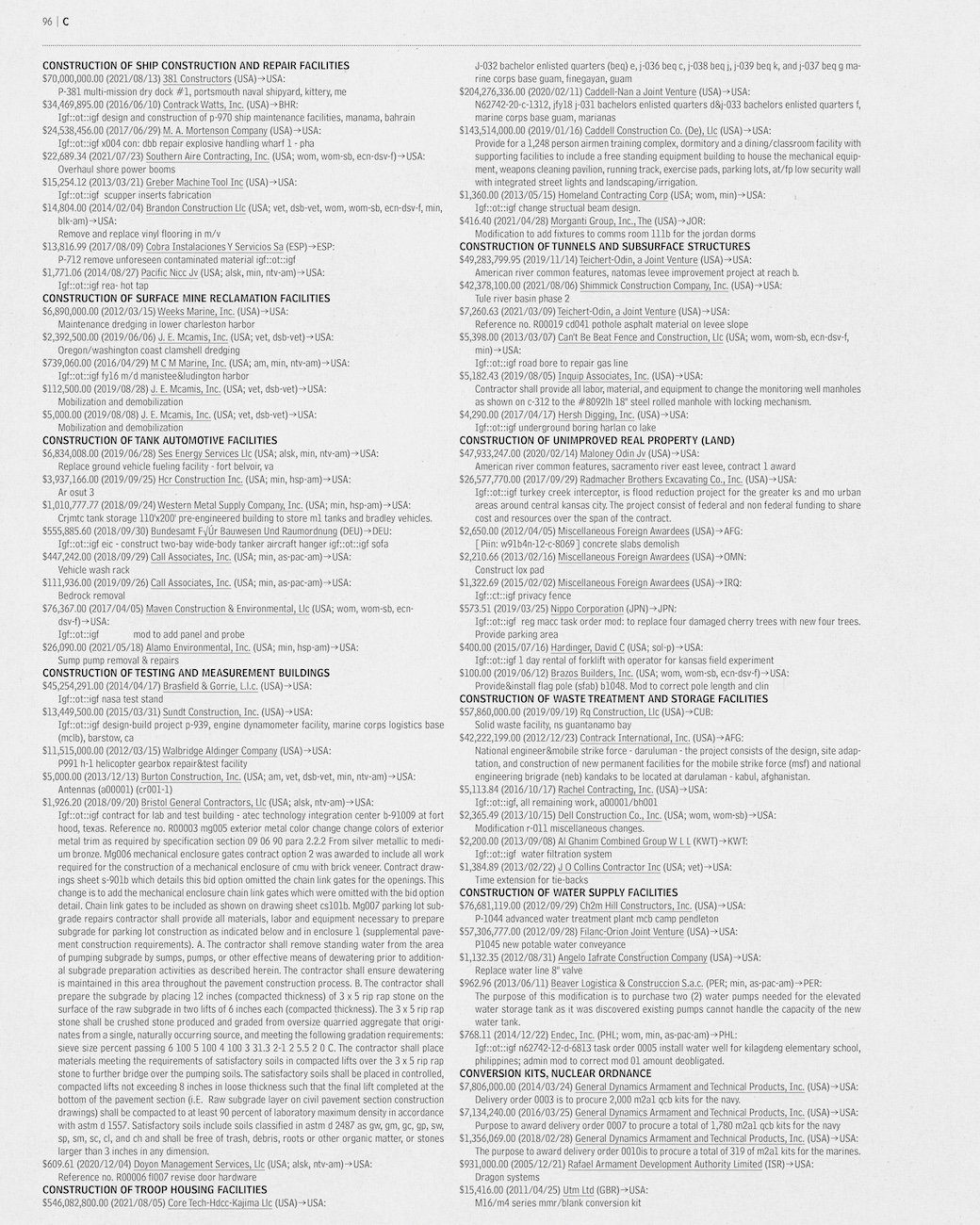
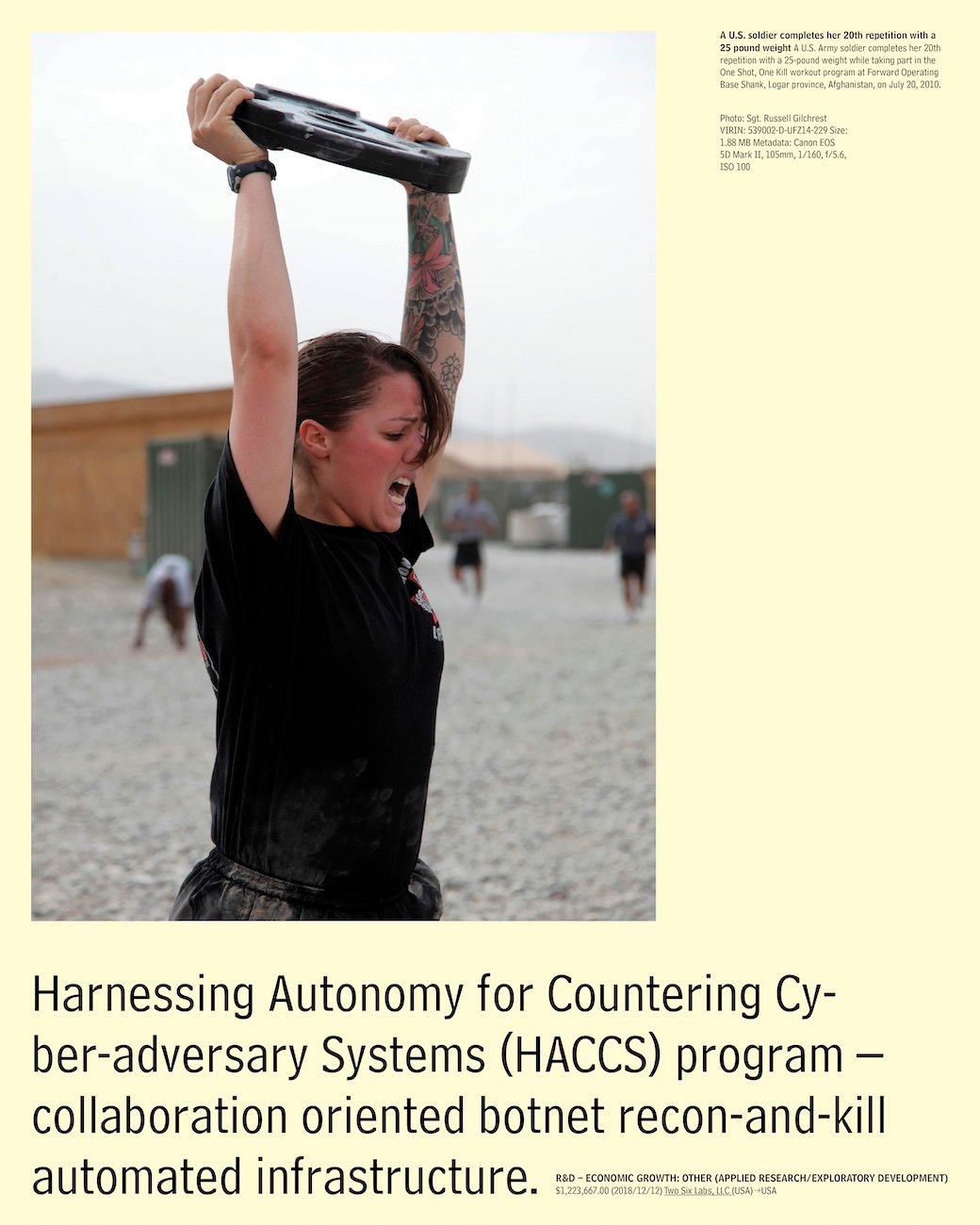
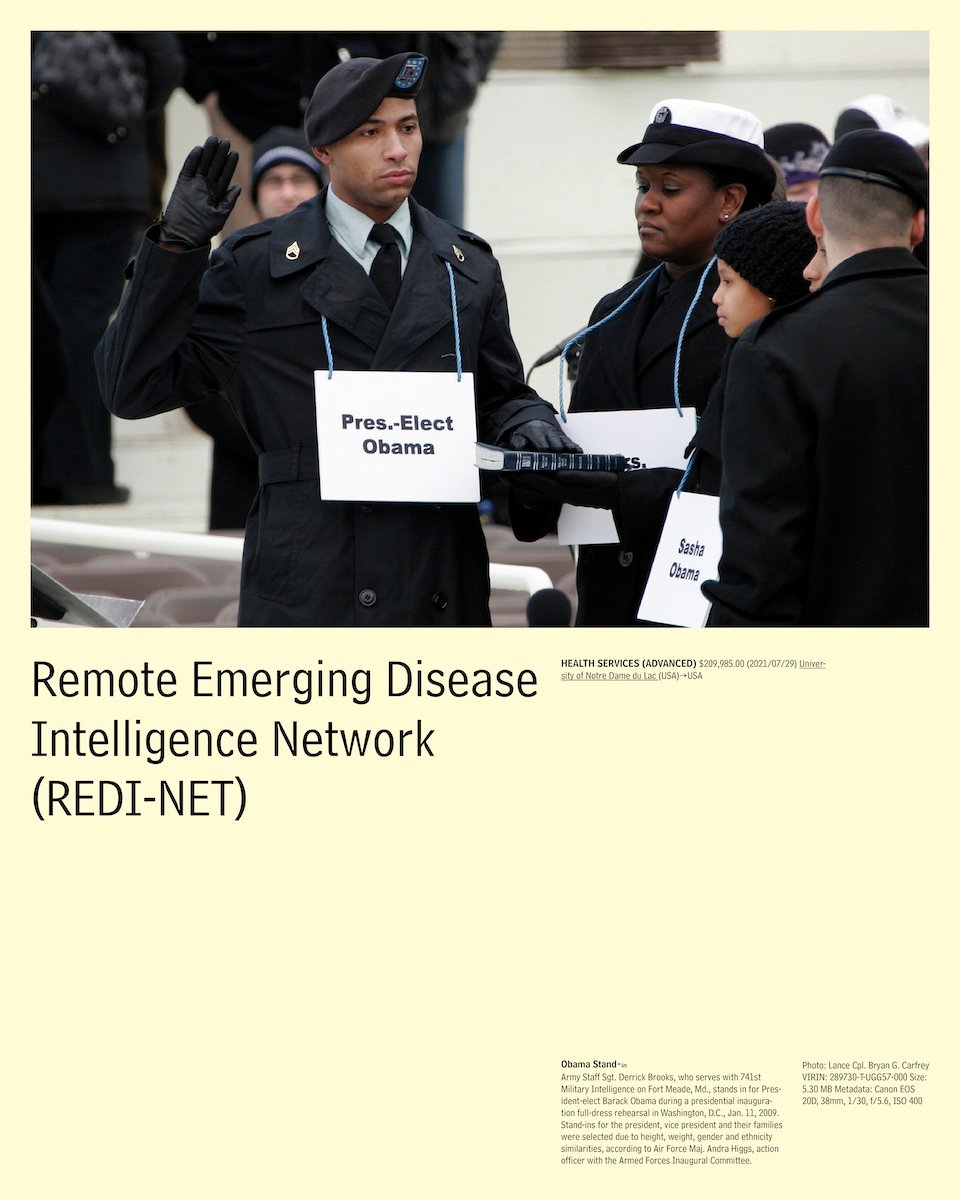
Developed over seven years, the project examines approximately $6.5 trillion of United States Department of Defense contracts issued between the attacks of 11 September 2001 and the withdrawal from Afghanistan in 2021 as part of the so-called “War on Terror”. Rather than photographing conflict directly, Clark and Black combine publicly available military transaction data with appropriated photographs first taken and distributed by the Department of Defense itself. The result is a vastly ambitious, encyclopaedic work that challenges conventional assumptions about what documentary photography is and what photographic evidence can achieve.
At its heart, Cosmopolemos (meaning “the ordered universe of war” from Greek: kósmos order, universe; pólemos war, the personification of war) suggests that at present documentary photography is increasingly concerned not simply with showing events, but with investigating the systems that produce them. It’s a relentless inquiry that feels exciting and urgent, pointed at the contemporary world. Traditional documentary photography has often depended upon the photograph’s apparent ability to provide direct access to reality in which orthodoxy remains preoccupied with images of battlefields, refugees, scarred buildings, or political protest – images that can make distant events visible and emotionally immediate. Yet this model is less preferable when the subject is the military-industrial complex. For there is no single location where it can be photographed, no decisive moment that encapsulates it and no individual image capable of communicating its enormous scale. Fabulous minds, endlessly able to probe systems in which images circulate, Clark and Black therefore turn away from the expectation that documentary photography must produce a definitive image. To invert the assumption, they construct an accumulation of photographs, documents, transactions, and words, taking us on an often fascinating, frequently disturbing path through expanded modes of documentary practice.
This might make us think about the ongoing movement of documentary photography towards research-based and archival practice. Crofton Black’s investigative methodology is obviously particularly important here. Beyond uncovering secrets, the project examines information that is technically public but practically inaccessible because of its scale. The millions of Department of Defense transactions are not hidden; it is that the sheer quantity makes them difficult to comprehend. In a mad-hat endeavour, Black and Clark downloaded and combined years of publicly available government spending records, transforming dispersed administrative information into a coherent body of evidence. In this sense, the documentary photographer becomes less like the traditional photojournalist witnessing an event in favour of something more akin to an investigator, archivist or data researcher.
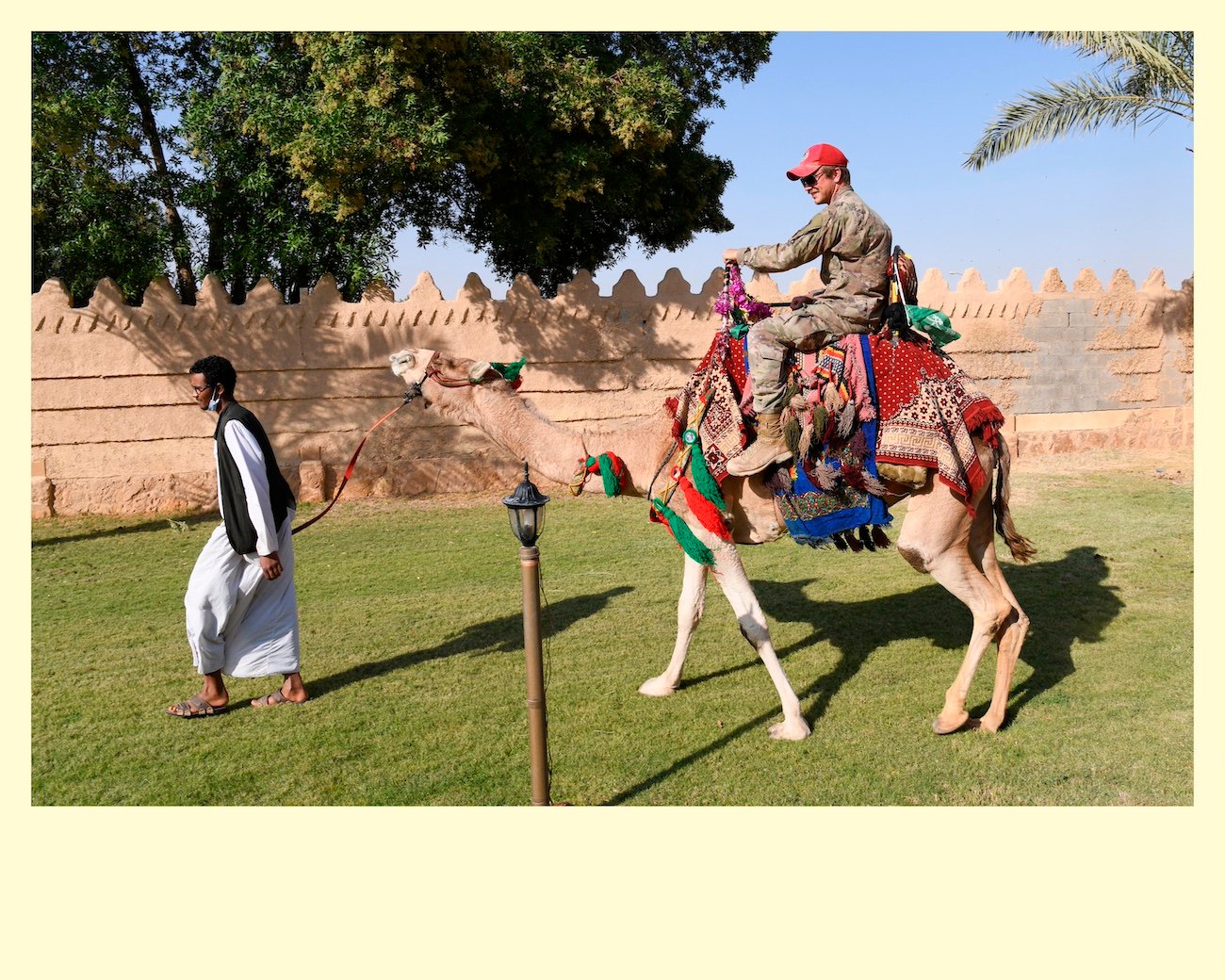
This shift also raises a pertinent question about the truth claims of photography given that the photographs used in Cosmopolemos are not Clark’s own observations of American military activity, but are drawn from the Department of Defense’s archive. What’s crucial here is that these images have already been produced within a system of institutional power. Representing the military as the military intends to represent itself, Clark describes them as images generated to show what the US wants to be seen, indicating that they can be understood as a public relations exercise as much as anything else.
A military photograph may appear informative: it depicts soldiers training, equipment being used, officials meeting, or humanitarian activities taking place. Yet what it does not show is of equal importance. Consider how the book’s introduction notes that images of destroyed hospitals and dismembered civilians are absent from the Department of Defense’s visual archive. As ever, the photograph therefore cannot simply be accepted as transparent evidence insofar as its meaning depends on who produced it, why it was produced, what caption accompanies it, and what has been excluded.
This is one of the most important things Cosmopolemos suggests about documentary photography now: context has become inseparable from the image. In an environment saturated with photographs, simply producing another image may not be enough and any documentary photograph needs to be situated within structures of information, language and power. Clark and Black achieve this by placing military photographs alongside financial transactions and organising the material through a Gazetteer and Glossary to sustain their navigation of a much larger system that transcends autonomous images (the Gazetteer focuses on countries where activities take place; the Glossary on activities linked to certain signs or words).
Ergo the project’s encyclopaedic structure. Clark and Black deliberately revive the printed encyclopaedia, a form that might appear obsolete in an age dominated by Google’s search algorithm and the hyperlink. The alphabetical encyclopaedia historically promised to organise the world into a comprehensible structure. Cosmopolemos, however, uses the form almost ironically, perversely even. The book’s approximately 600 pages and enormous quantity of material physically reproduce the scale and bureaucratic excess of the system being examined. What to make of this? Does assembling more evidence necessarily produce a better understanding of power? Or does the book reproduce the very excess of information that makes the system difficult to understand?
The project’s use of mundane material is also noteworthy. The $6.5 trillion figure is made up of mind-boggling, enormous sums for weapons systems, aircraft and military technology. Yet the database contains everything from oil and nuclear weapons to cleaning services, cookies and other apparently trivial purchases, such as screws and rope, amounting to just a few dollars at a time. This juxtaposition challenges the familiar visual language of war, which tends to privilege spectacular images of explosions, weapons and destruction writ large. Pulling in the opposite direction, Cosmopolemos contemplates war as an administrative and economic system embedded in ordinary life: a form of violence that is supported not only by weapons but by contracts, logistics, infrastructure, maintenance, and – not least – bureaucracy.
In this respect, the project abstains from the “spectacular” image. Contemporary audiences are accustomed to dramatic photographs of conflict, particularly those distributed through news media; routinely powerful, but often producing familiarity and desensitisation in their repetition and clichéd motifs. Further, Clark and Black deliberately avoid relying upon the “technological sublime” – the spectacular presentation of military hardware – to foreground the bureaucratic transaction that becomes an unexpected documentary object. Although a line of financial data may initially appear visually unremarkable, it can reveal the infrastructure underpinning an act of military power just as effectively, if not more so, than a dramatic photograph of a weapon.
Ultimately, Cosmopolemos reveals that the state of documentary photography is one of constant expansion and perpetual uncertainty. Photography remains capable of producing evidence, but its authority can no longer depend upon the idea that the camera simply records any objective reality. Contemporary documentary practice increasingly recognises that images are constructed, circulated and interpreted within systems of political and technological power. The photographer therefore has to investigate not only what an image shows, but who produced it, who controls it, what information surrounds it, and what remains invisible.
However, I wonder whether “expansion” quite captures this new paradigm. Maybe the project does not simply expand documentary photography by adding other research methods. Perhaps it pushes creative boundaries in its challenge to the assumption that photography must remain the primary source of documentary knowledge to begin with. These thoughts certainly press harder when we weigh the project’s division of labour: the photographs carry the idea of a visual record of how the military represents itself, while the financial records provide information related to the economic infrastructure of military activity and the encyclopaedic structure brings these materials into relation. Suffice to say, no single element supplies the complete account. If the documentary meaning of the photograph emerges through its relationship with non-photographic evidence, where does the documentary act actually reside? Is it in the original photograph? In the financial record? In the investigative process that assembles them? Or in the reader’s attempt to interpret the relationships between them?
Cosmopolemos is too sophisticated and clear-eyed to offer easy answers. It relocates documentary authority from the individual image to the process through which evidence is assembled, contextualised and interpreted. In the end, as documentary photography increasingly comes to rely on databases, archival selection and editorial organisation, the more important the authority of the researcher and the structure of the resulting work become. Yet, curiously, the problem of trust does not disappear altogether. It merely moves, and shimmers. After all, who decides which records matter? Which images are selected? Which relationships are made visible? And how does the project’s own editorial structure shape what the reader comes to understand?
The upshot is that Cosmopolemos is less a rejection of documentary photography than an argument for its transformation. Clark and Black retain photography’s evidentiary potential while combining it with investigative journalism, archival research, data analysis, and critical design. Their work suggests that when the subject is a global system such as American military power, no individual photograph can tell the whole story. Documentary photography can instead become a method of assembling fragments and teaching viewers how to read them. In doing so, Cosmopolemos demonstrates that the most important documentary image today may not be the photograph that appears to reveal everything, but the one that makes us aware of how much remains hidden behind what we see.♦
Images: © Edmund Clark & Crofton Black, 2026. Courtesy Loose Joints
Cosmopolemos by Edmund Clark & Crofton Black is published by Loose Joints.
Edmund Clark and Crofton Black: Cosmopolemos runs at Bibliothèque de Genève, Espace Ami-Lullin, Geneva from 29 October 2026 to 20 February 2027.
–
Tim Clark is Editor in Chief at 1000 Words. Also working as an independent curator, he was Artistic Director for Fotografia Europea in Reggio Emilia, Italy, together with Arianna Catania, Walter Guadagnini and Luce Lebart between 2020-26. He teaches at The Institute of Photography, Falmouth University.
1000 Words favourites
• Renée Mussai on exhibitions as sites of dialogue, critique and activism
• Roxana Marcoci navigates curatorial practice in the digital age
• Tanvi Mishra reviews Felipe Romero Beltrán’s Dialect
• Discover London’s top five photography galleries
• Tim Clark in conversation with Hayward Gallery’s Ralph Rugoff on Hiroshi Sugimoto
• Academic rigour and essayistic freedom as told by Taous Dahmani
• Shana Lopes reviews Agnieszka Sosnowska’s För
• Valentina Abenavoli discusses photobooks and community
• Michael Grieve considers Ute Mahler and Werner Mahler’s posthumous collaboration with their late family member
• Elisa Medde on Taysir Batniji’s images of glitched video calls from Gaza
Join us on Patreon today and be part of shaping the future of photographic discourse


