
Japan’s women of the sea: Uraguchi at Huis Marseille
Kusukazu Uraguchi’s decades-long study of the ama, an exclusively female community of fishers and divers from Japan’s Shima region where he was born, is currently on show at Huis Marseille, Amsterdam. In black-and-white photographs that evoke both nostalgia and immediacy, Uraguchi captures the rigour of the ama’s labour and the quiet poetry of their daily lives on the coast. His work moves between anonymity and intimacy, tradition and modernity, and the delicate tension between the photographer’s gaze and the world it reveals, writes Bas Blaasse.
Bas Blaasse | Exhibition review | 29 Jan 2026
Join us on Patreon
Curating a retrospective of a documentary photographer is always walking a fine line. One wants to reveal how a photographer looked and worked, without reducing the people or subjects in the photographs to mere material for the demonstrating hand of an oeuvre. Any instrumental use of images risks undermining the integrity of the documentary genre itself. The larger and more varied the archive, the stronger the temptation to read the work as a story of style and technique rather than as a reflection on the world it depicts. What emerges then is a shift in focus: the photographs begin to speak less about their subjects and more about the person behind the camera.
The retrospective of Kusukazu Uraguchi (1922–1988) at Huis Marseille, Amsterdam, operates precisely within this tension. Shima no Ama, previously shown at Les Rencontres d’Arles, presents 80 black-and-white photographs from the Japanese photographer’s vast archive of tens of thousands of negatives. Guest curator Sonia Voss selected a single thread from that body of work: the ama, an exclusively female community of fishers and divers from the Shima region, where Uraguchi was born. For three decades, beginning in the 1950s, he photographed their work and daily life – deep-sea dives, coastal harvests, portraits, moments of communal gathering and summer festivals. By focusing on this one subject, the exhibition produces an image of an oeuvre wholly directed toward the world it portrays, yet through which Uraguchi’s consistent and distinctive hand is unmistakably felt.
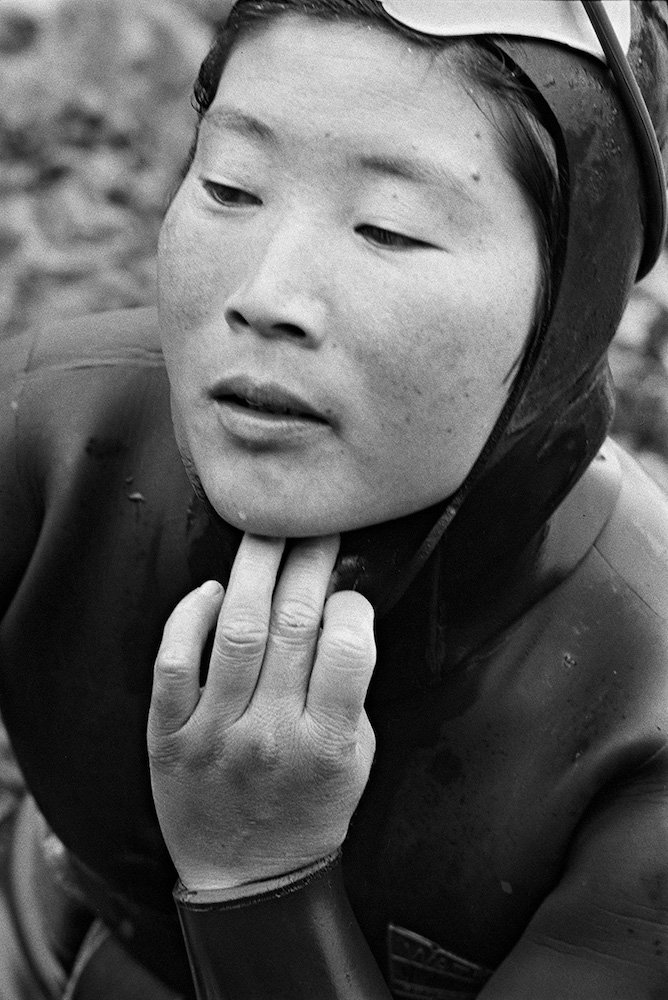
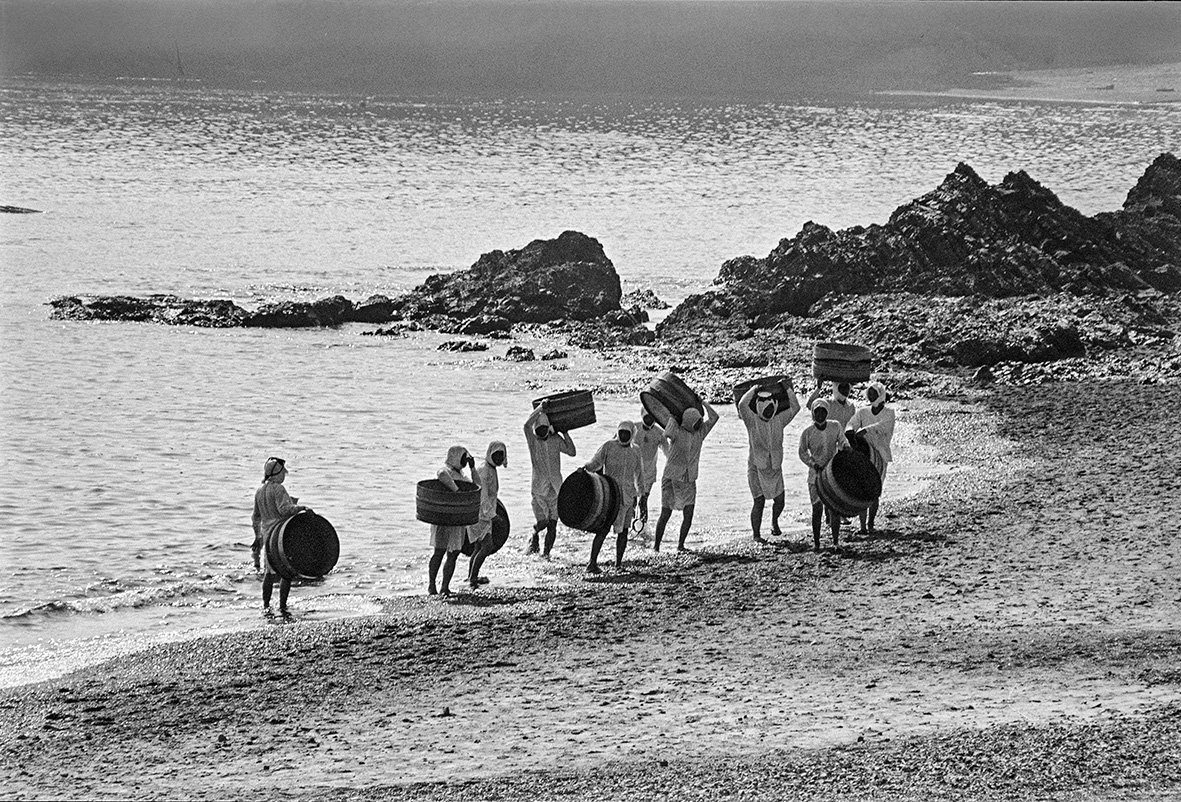
It is easy to be carried away by Uraguchi’s photographs in the stately rooms of Huis Marseille. But what exactly carries you away? Is it the coarse black-and-white grain that lends the images the patina of a bygone era? Uraguchi’s oblique framings and tilted horizons, suggesting an attempt to identify with the turbulence of sea life? Or is it rather the elusiveness itself – the waves, the white figures hauling seaweed and abalone to shore, their relation to the sea and to the camera that accompanied them even in their most intimate moments? Under Uraguchi’s gaze – at once involved and detached – something remains withheld. The faces and bodies of the women at the centre of his work remain partly anonymous. Is that anonymity a failure, or is it what allows the photographs to hold their tension?
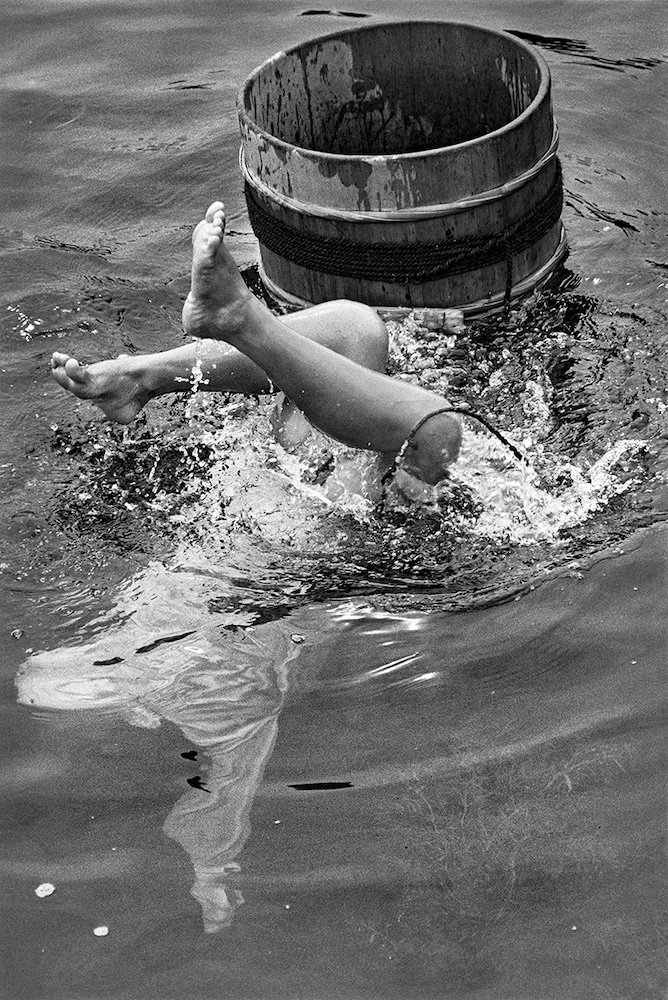
Today, such images almost inevitably evoke a sense of nostalgia: black-and-white photographs from the mid-twentieth century, from a world we – especially in the West – can hardly recognise. They show the physically demanding labour of the ama: swimming, diving, gathering, reading the water and the weather. A tradition that reaches back thousands of years, but is now all but vanished due to waning generational interest and the transformation of the marine ecosystems on which their lives depended. The analogue technique Uraguchi used amplifies this sense of disappearance. His photographs testify to patience and precision, yet they also register the acceleration of modern time. In that tension – between the slowness of the camera and the speed of history – a quiet melancholy resides.
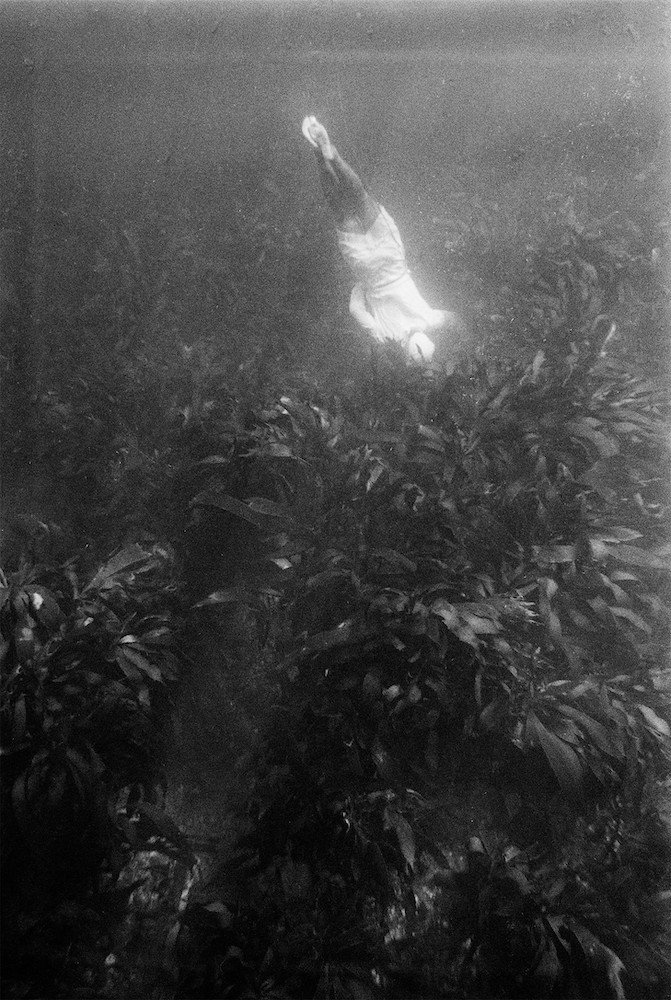
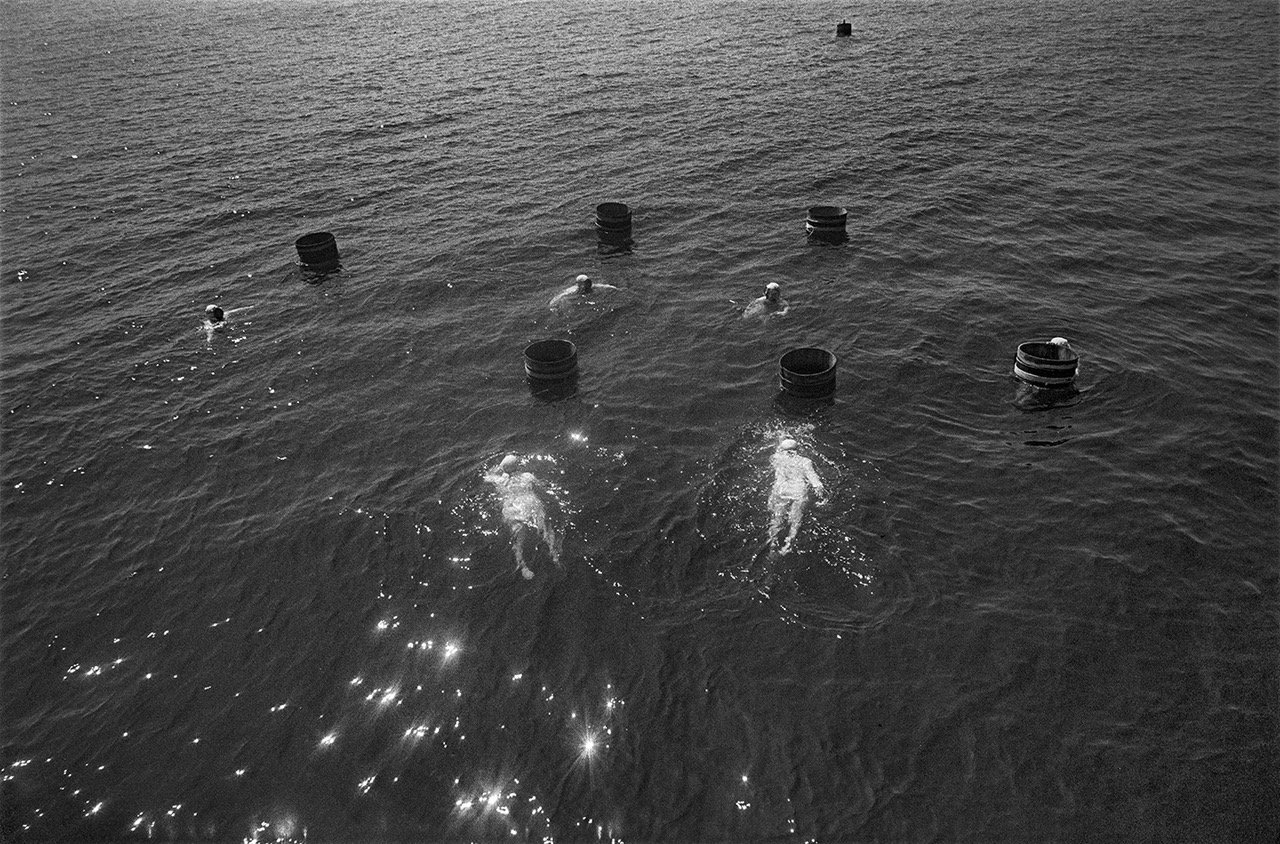
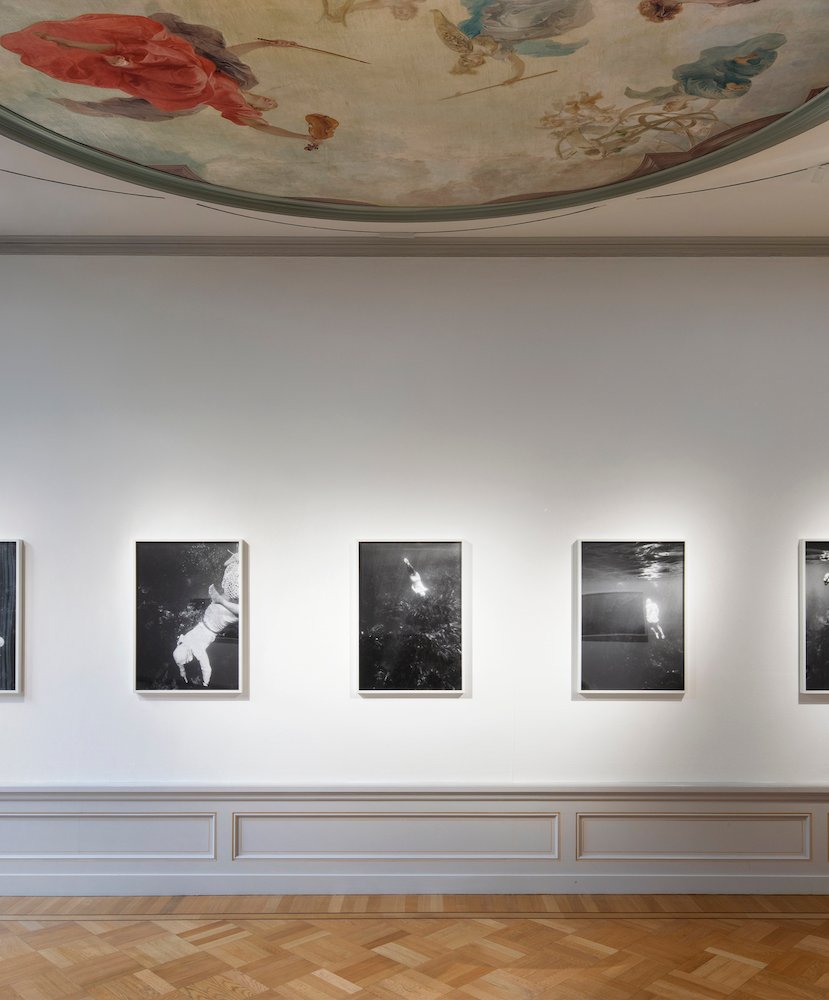
One of the most captivating and arresting rooms features large prints of Uraguchi’s underwater images of diving ama. Their ability to descend to great depths without equipment remains astonishing – a skill passed down from mother to daughter, generation after generation. The monumental prints bring that world momentarily closer, yet also make its distance palpable. These photographs show a tradition losing its ground for existence, captured in images that are at once homage and farewell.
And again, the photographs embody a moment of modernisation. Despite the visible grain revealing the limits of analogue film, these images were made possible by technological innovation: in 1963 Nikon introduced the Nikonos, a waterproof camera designed specifically for underwater photography. Uraguchi acquired one immediately and began, from 1965 onward, to follow the solitary dives of the ama beneath the surface. Still, much remains unseen. It is unlikely that he could truly follow the most experienced divers – the funado, who descended with weights to depths of 30 meters and held their breath for minutes at a time. Their dives took place in darkness that remains beyond the frame, imaginable only in thought. In that invisibility lingers something almost mystical: a fleeting sense of unity between tradition and necessity, sea and body, that surfaces for a moment only to dissolve again.
Uraguchi’s practice is deeply rooted in Japan’s rich amateur photography tradition, which since the 1930s developed its own path through a network of clubs, journals and competitions. Through his involvement with the photography section of Nikakai, Uraguchi followed contemporary trends and intertwined them with his own vision. In his photographs of the ama, the two dominant tendencies of his time – postwar realism and the expressive avant-garde – merge into a supple and dynamic visual language that mirrors the vitality of his subject. In the garden annexe of Huis Marseille, this context is made tangible through a display of spreads from Uraguchi’s books and magazine publications. The differences are striking: the published photographs appear more formal and carefully framed, whereas the exhibition includes images with a freer, almost modernist composition. The contrast is a reminder that our perception of history is always shaped by the – editorial – choices we make.
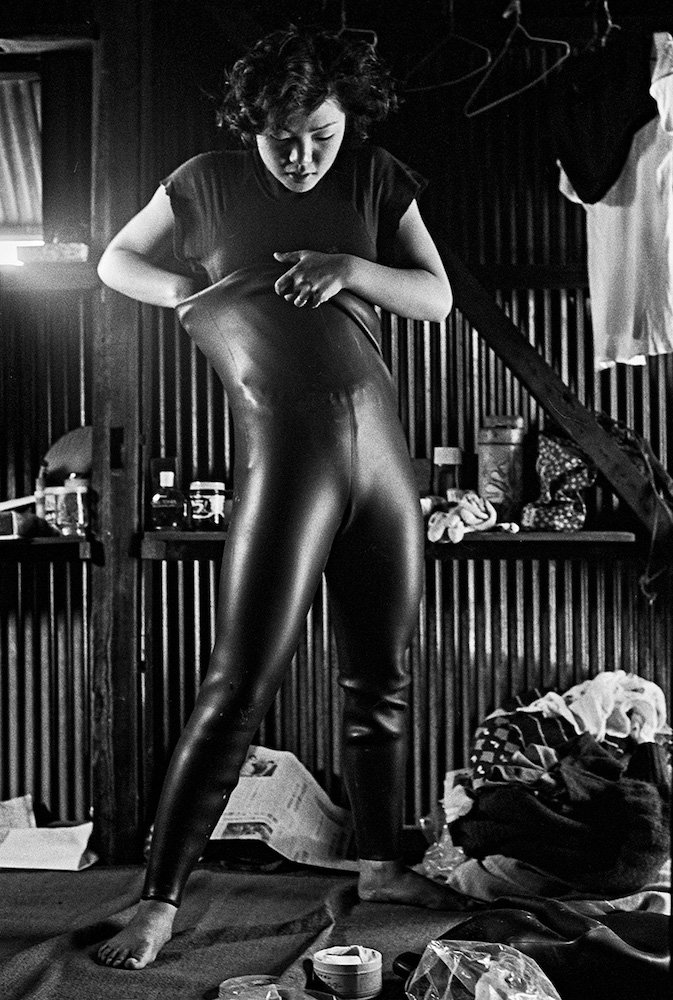
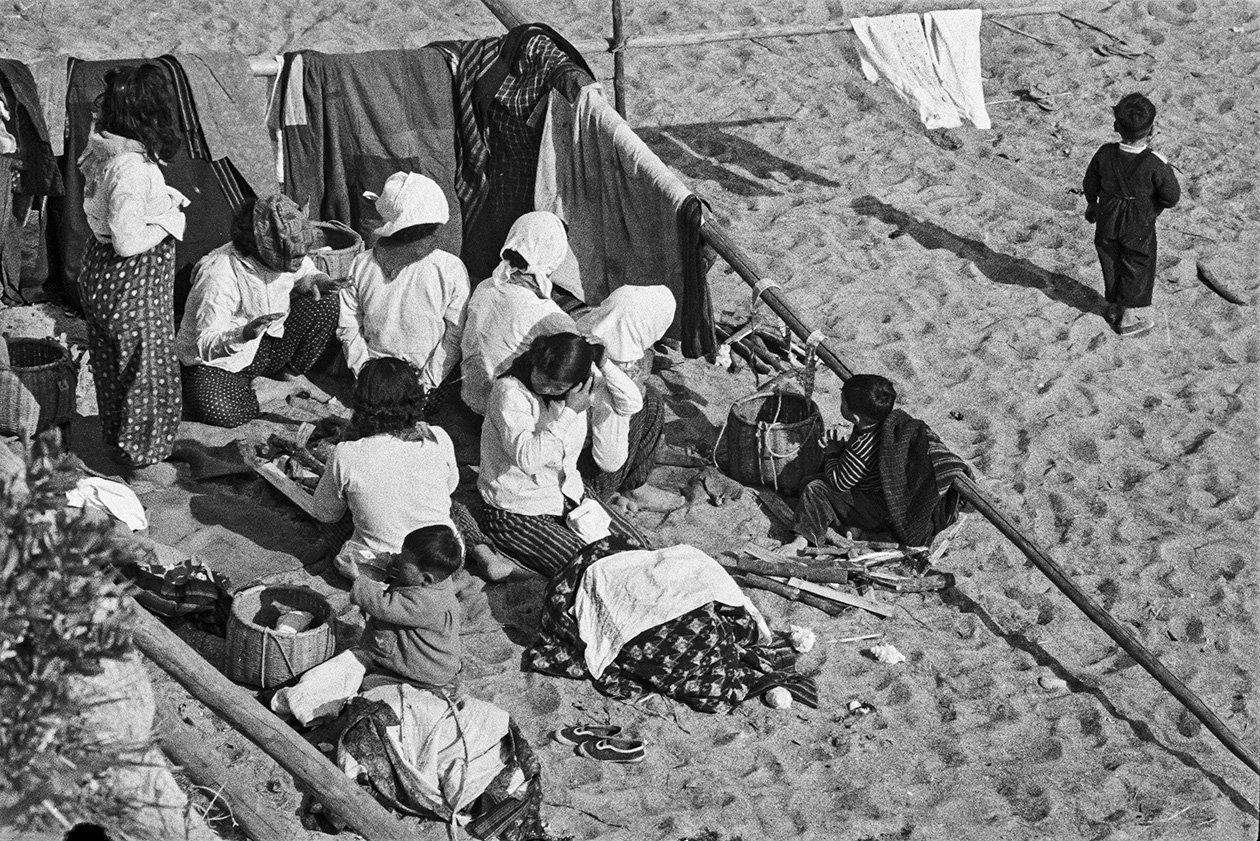
In the museum’s basement, a final series focuses on the amagoya: the beach huts at the heart of ama culture, where the divers change, warm themselves and share stories. The wall text notes that Uraguchi managed to approach this intimate, distinctly female world without disturbing it, lending his photographs an exceptional sense of proximity. Yet one question inevitably arises when viewing his oeuvre: what does it mean, then and now, for a man to devote his entire practice to photographing women? Strikingly, the exhibition not only leaves that question unanswered but unasked. In doing so, it risks sidestepping one of the most urgent dimensions of looking itself: the asymmetry of the gaze – who sees, and who is seen.♦
All images courtesy Uraguchi Estate © Kusukazu Uraguchi
Kusukazu Uraguchi: Shima no Ama runs at Huis Marseille, Museum of Photography, Amsterdam until 8 February 2026.
—
Bas Blaasse is a Brussels-based writer, editor and researcher focusing on photography, contemporary art and visual culture. His work examines how images and artistic practices engage with questions of nature, landscape, and collective experience. Trained in philosophy and in photography, he received the 2023 C/O Berlin Talent Award in Theory.
Images:
1-Kusukazu Uraguchi, Underwater, 1965.
2-Kusukazu Uraguchi, Ama, 1967.
3-Kusukazu Uraguchi, amagoya, Fuseda, Nishinohama Beach, 1977.
4-Kusukazu Uraguchi, Opening day of the abalone season, off Azurihama Beach, Koshika, 1964.
5-Kusukazu Uraguchi, Off Maehama Beach, Wagu, 1980.
6-Kusukazu Uraguchi, Koshika Azurihama Beach, 1980.
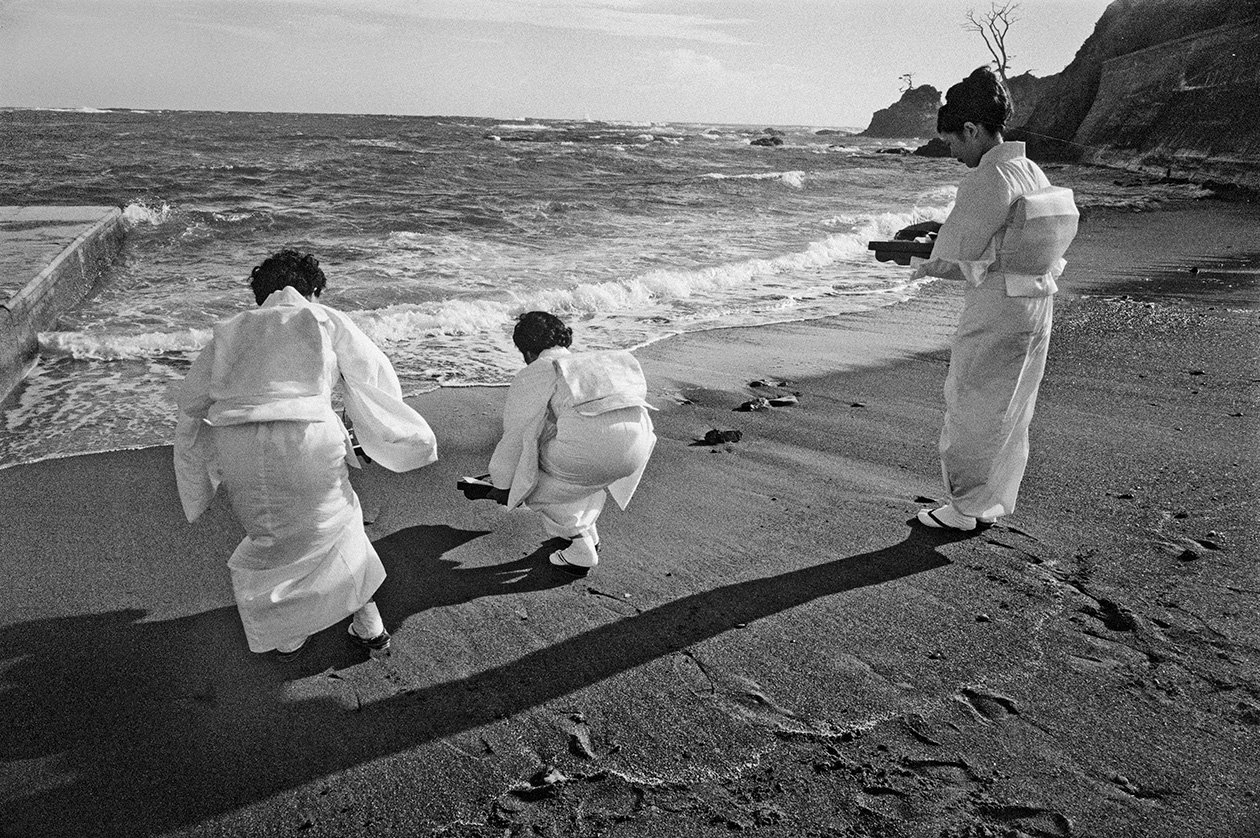
7-Kusukazu Uraguchi, Buddhist prayer, Koshika, 1967.
8-Kusukazu Uraguchi, Wagu Beach, 1957.
9-Installation view of Kusukazu Uraguchi: Shima no Ama, Huis Marseille, Museum of Photography, Amsterdam, 18 October 2025 – 8 February 2026.
1000 Words favourites
• Renée Mussai on exhibitions as sites of dialogue, critique and activism
• Roxana Marcoci navigates curatorial practice in the digital age
• Tanvi Mishra reviews Felipe Romero Beltrán’s Dialect
• Discover London’s top five photography galleries
• Tim Clark in conversation with Hayward Gallery’s Ralph Rugoff on Hiroshi Sugimoto
• Academic rigour and essayistic freedom as told by Taous Dahmani
• Shana Lopes reviews Agnieszka Sosnowska’s För
• Valentina Abenavoli discusses photobooks and community
• Michael Grieve considers Ute Mahler and Werner Mahler’s posthumous collaboration with their late family member
• Elisa Medde on Taysir Batniji’s images of glitched video calls from Gaza
Join us on Patreon today and be part of shaping the future of photographic discourse


