
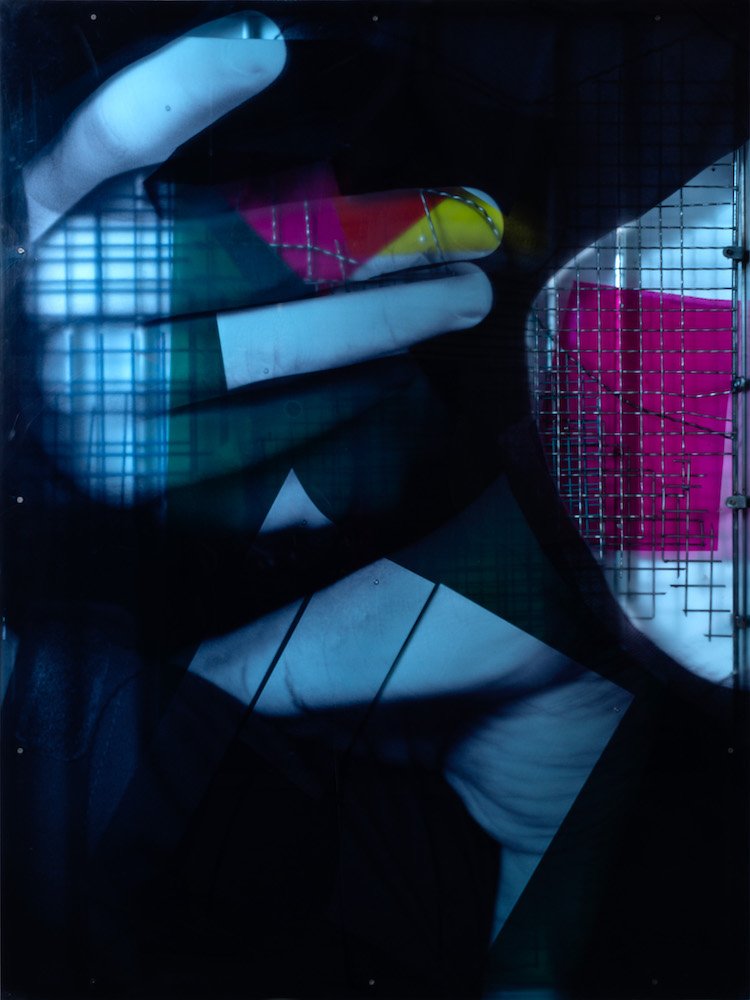
In the web of others: Mohamed Bourouissa
An exhibition at MAST, Bologna, brings together two decades of work by Mohamed Bourouissa, known for granting visibility to lives historically erased from mainstream representation. From Philadelphia’s Black cowboys to staged moments with friends and acquaintances from the French banlieues, Bourouissa explores the codes, postures and poetics of everyday existence. Rica Cerbarano reflects on the question of community itself, on the intricate webs of relationship in which we live and asks what role artistic creation can meaningfully play in society today.
Rica Cerbarano | Exhibition review | 11 Sept 2025
Join us on Patreon
When people ask me – and when I ask myself – what role culture can play in today’s sociopolitical landscape, torn between the resurgence of fascist ideologies, sweeping climate disasters and ongoing conflicts that result in the deaths of thousands of civilians across the world, one of the first words that comes to mind – despite how difficult it is to believe in culture’s tangible impact – is ‘community’. Not in the clichéd sense of “let’s all just get along,” but community as a social body, a network of people who share a way of experiencing reality. A form of collective life that implicates all of us, whether we accept it or not.
We are not only individuals. Or rather, our individuality is not a self-contained existence – it collides daily with the dense web of relationships that shape us: in our everyday lives, through gestures and interpersonal exchanges, and in history – capital-H History – which, depending on our age, gender, economic background, and ethnicity, assigns us a specific place in the social hierarchy.
Community, then, not as an abstract or spiritual idea, but as something plainly, even trivially, political. To recognise that our identity as individuals affects the existence of others, and that each of us – whether we like it or not – is part of a larger group of people, is perhaps one of the most urgent imperatives that art can take on today. To locate, examine, nurture, defend, and celebrate our communities is to begin that work. Recognising ourselves as part of a complex but cohesive organism. Developing political and civic awareness of our role in society, and understanding the forces that fracture, divide and destabilise our communities – and others. Observing them, listening to them, learning how, ultimately, everything is deeply interconnected – for better or for worse. Art must serve to highlight this pressing need.
The art of Mohamed Bourouissa, an Algerian-born artist raised in the Parisian banlieue, sets out to do this. By probing the mechanisms of power that govern society, Bourouissa tackles key contemporary themes: belonging, control, surveillance, migration, invisibility, and exclusion, thereby exposing the latent tensions that surface in both physical and social spaces of everyday life. It is no coincidence that his first major solo exhibition in Italy, at MAST Bologna, and curated by Francesco Zanot, is titled Communautés – in the plural, underscoring the multiplicity of both individual and collective experiences, as well as the diverse perspectives that shape how we interpret reality.
The exhibition retraces two decades of Bourouissa’s career through four pivotal projects focused on the concept of community: Périphérique (2005–08), the series that first brought him to prominence; Horse Day (2013–19); Shoplifters (2014); and Hands, an ongoing, previously unseen series. This is not a sweeping retrospective, but rather a ‘sampling,’ as the curator defines it – a trace or a framework that offers a lens through which to read Bourouissa’s work without overwhelming or disorienting the viewer. A wise move for an Italian audience still largely unfamiliar with artistic practices of this nature. Tracing a symbolic path around the core concept that underpins Bourouissa’s entire practice allows viewers to follow its internal logic and – hopefully – make it their own.
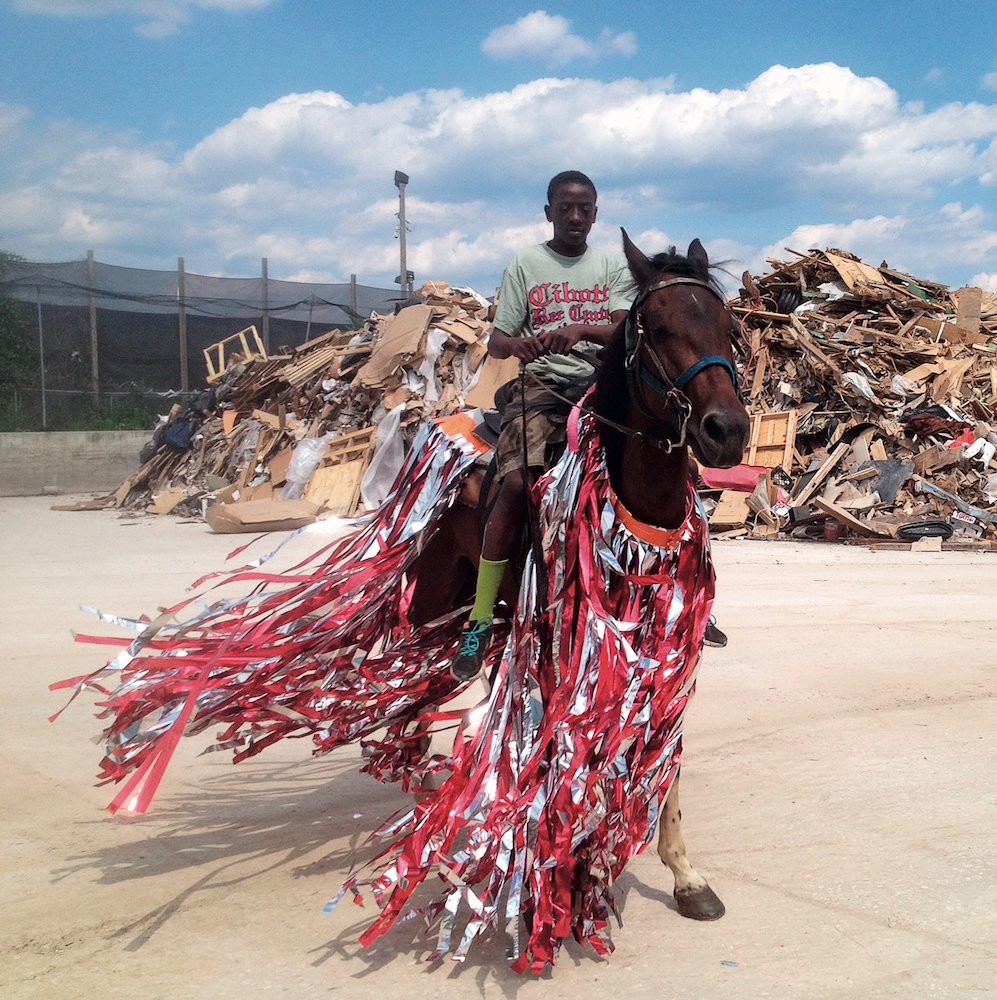
The show opens with a giant wallpaper installation covering the entrance wall: a repeated pattern of a poster created for Horse Day, a powerful effort to deconstruct the figure of the cowboy in American culture – an archetype historically associated with white masculinity, à la John Wayne. Although this is not part of the dominant narrative, the history of the American West is in fact full of people from varied backgrounds: Black, Mexican and Native American. Starting from this historical omission, Bourouissa builds a project that subverts the myth of the American frontier by intervening in the present and elevating his subjects to iconic status.
After discovering the existence of the Fletcher Street Urban Riding Club in Philadelphia through the work of photographer Martha Camarillo, Bourouissa travelled to the U.S. in 2014. Located in the working-class neighbourhood of Strawberry Mansion, the club was founded by African American horsemen and offers a training programme for local youth as well as a shelter for rescued horses. Bourouissa embedded himself in this community to observe its dynamics, document them and construct a visual narrative that would bring their stories into public view – granting visibility to lives historically erased from mainstream representation.
At the heart of the project is a performance-competition organised by the artist, in which local riders and members of the community were invited to create costumes for the horses (some of which are on display at the entrance) and to stage a parade. With its layered and multifaceted nature, Horse Day anchors the entire exhibition and encapsulates Bourouissa’s practice, highlighting the core values that drive it: the significance of process, relationship-building, creative collaboration, and a conscious reflection on observation and representation.
The social gathering created by the artist is exhibited in a two-channel film installation. On one screen, we witness the event itself; on the other, a slower, more intimate behind-the-scenes documentary that captures the collaborative process over several months, during which Philadelphia riders work with invited artists to design the costumes. Balancing between documentary and cinematic aesthetics, the video underscores Bourouissa’s commitment to non-linear storytelling – one that embraces multiple timelines and interpretations that are personal as well as collective.
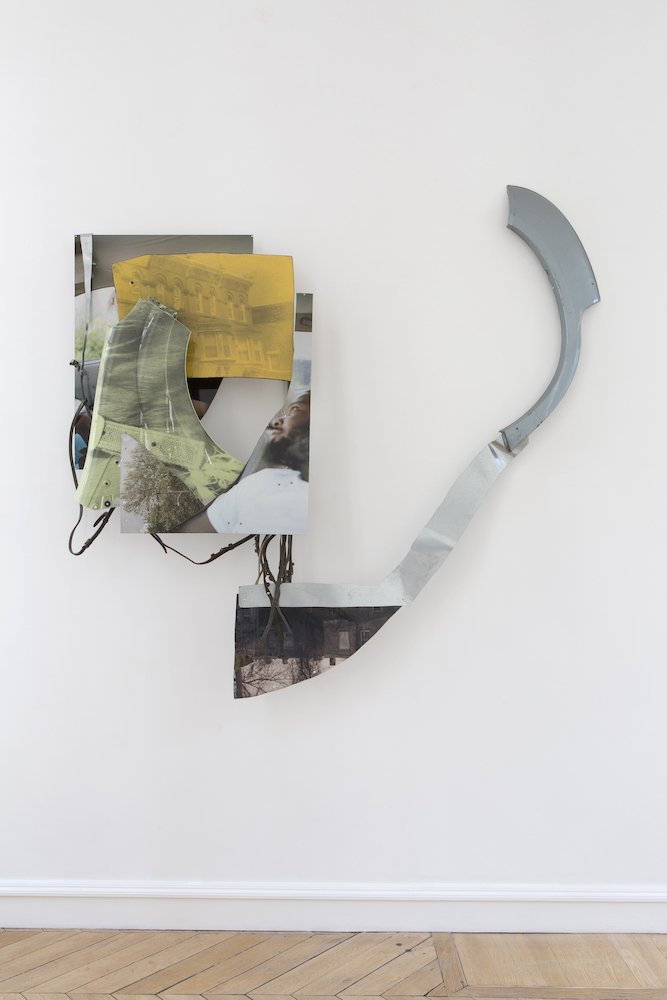
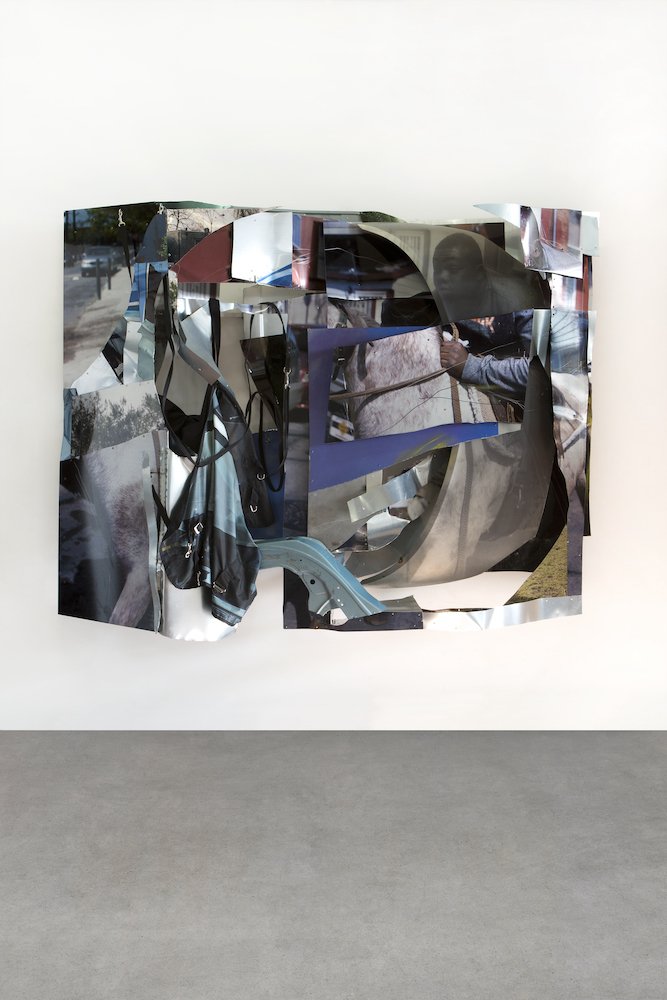
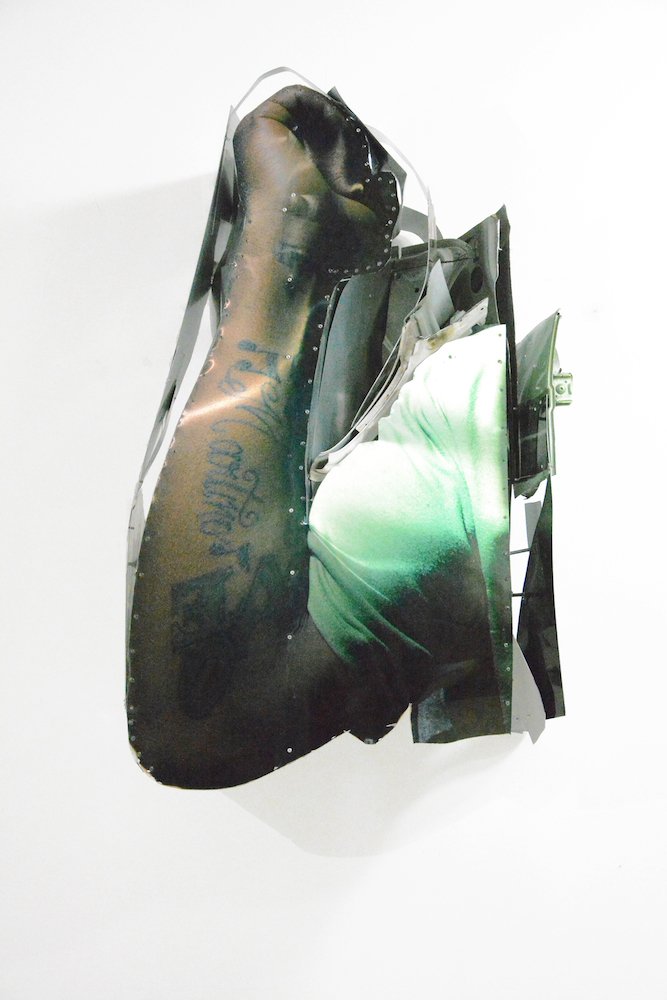
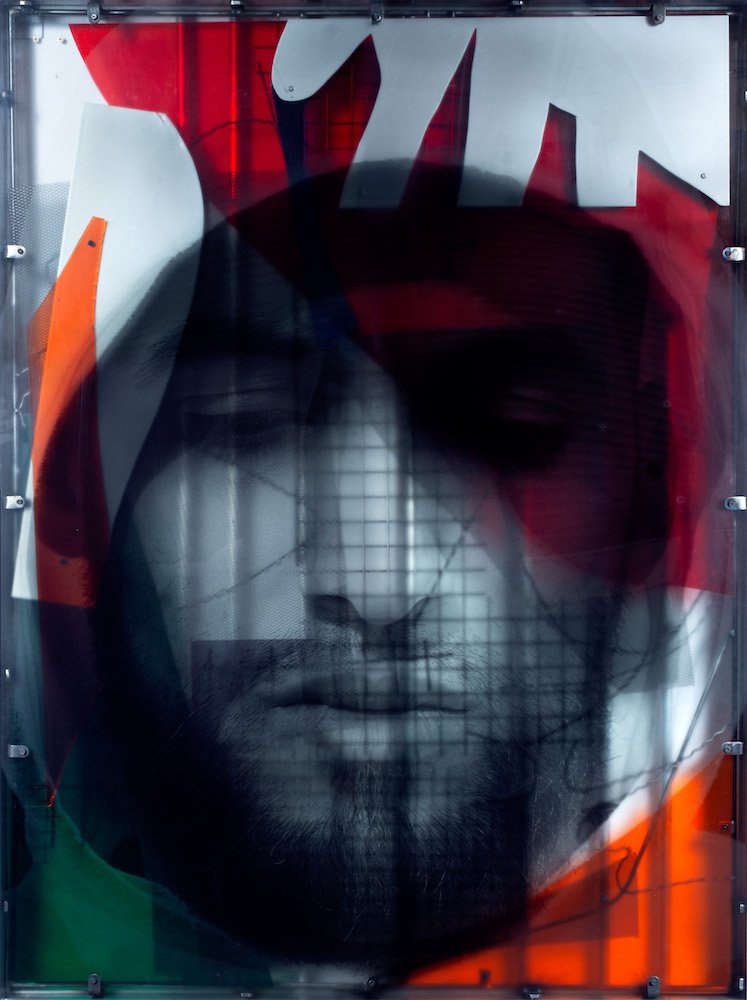
Central to the project are Bourouissa’s photographic sculptures, which dominate the first rooms of MAST: these are images printed on parts of car chassis, creating a striking parallel between the elaborate horse costumes and the customised cars and pickup trucks typical of American suburban culture. These works also evoke the industrial legacy of Philadelphia, situated along the Rust Belt and surrounded by steel plants. Described as ‘oversized documents and sci-fi machines,’ these sculptural images are not only visually compelling and materially assertive – they reposition photography as a three-dimensional object with its own physical presence. At the same time, they emphasise the fragmentation and fluidity of the idea of community: ‘not as a fixed structure but as a shared, shifting space,’ as stated by the artist. They make visible the tensions embedded in human relationships. And these tensions are not abstract – they are palpable. Standing before these sculptures, one feels simultaneously drawn in and repelled, destabilised by objects that are both fractured and complete, where the texture of human skin yields to the glowing surface of metal.
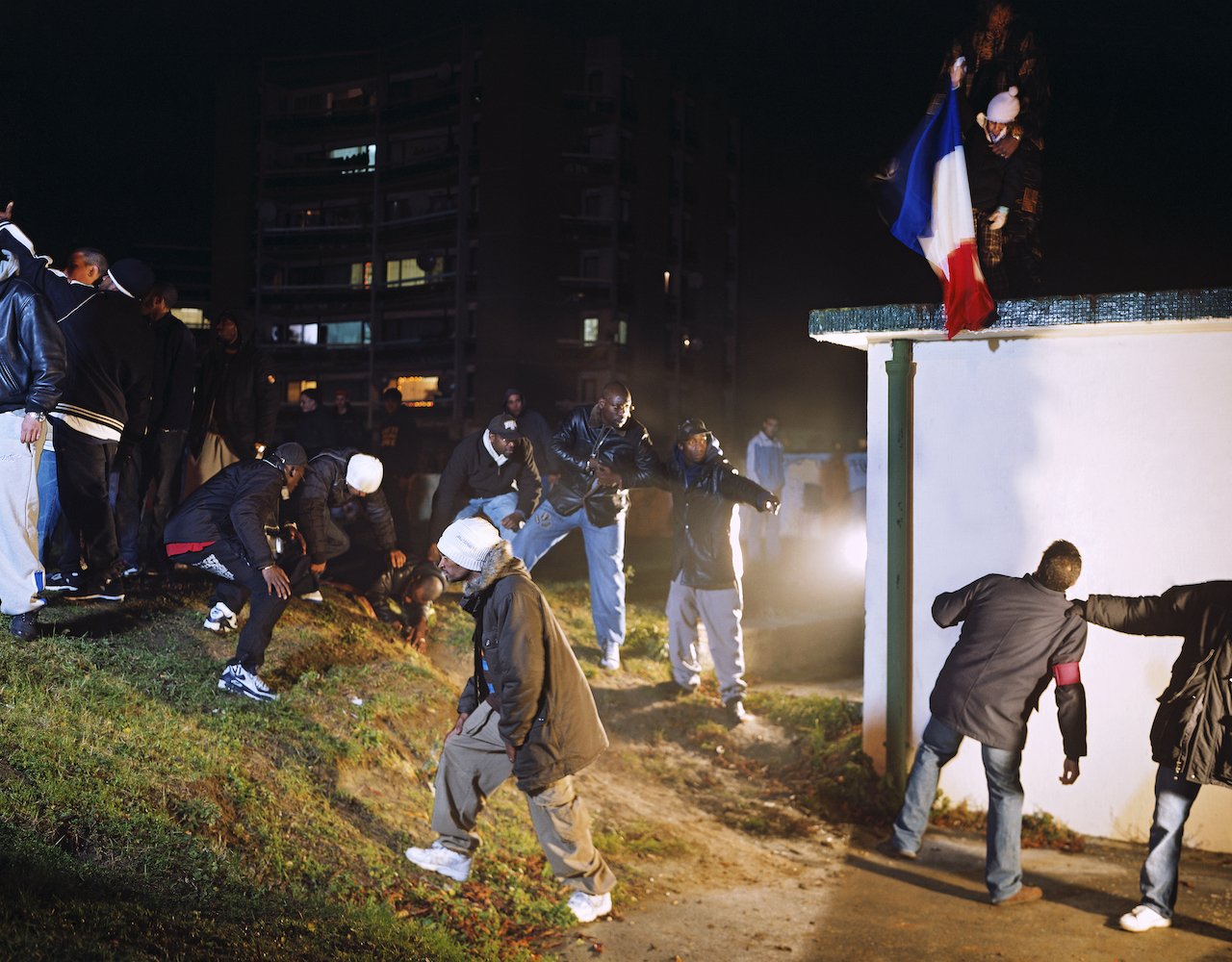
The other three series in the exhibition branch out from Horse Day like pathways, each leading in a different but related direction. Périphérique, created in the wake of the 2005 uprisings in the French banlieues, presents staged tableaux featuring people from Paris’ suburban outskirts, mostly friends, acquaintances and non-professional actors. These photographs build a bridge between documentary photography, media imagery and classical Western painting, using the codes of each to highlight the disconnection between representation and reality when it comes to marginalised communities. The medium to large format prints, clearly reminiscent of Jeff Wall’s compositions, are displayed on walls and on elevated white-painted metal grids – a subtle foreshadowing of the more pronounced grid structures used later.
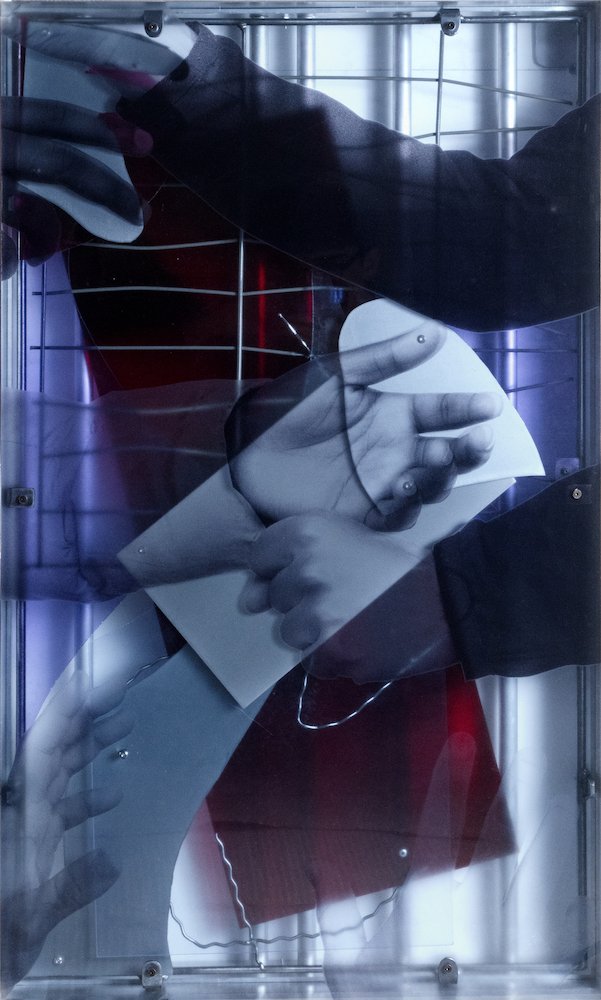
Indeed, the exhibition device of the grid – an emblem of urban architecture, but also a conceptual symbol of separation and control – becomes increasingly dominant. In Shoplifters, the grid structures the entire display: freestanding panels segment the gallery space like modern folding screens. In Hands, the most recent series to be shown, the grid is part of the artwork itself, interacting with the transparency of plexiglass surfaces bearing photographic prints. While in Hands the structural element risks overpowering the still-developing photographic series, in Shoplifters the work asserts itself with undeniable force.
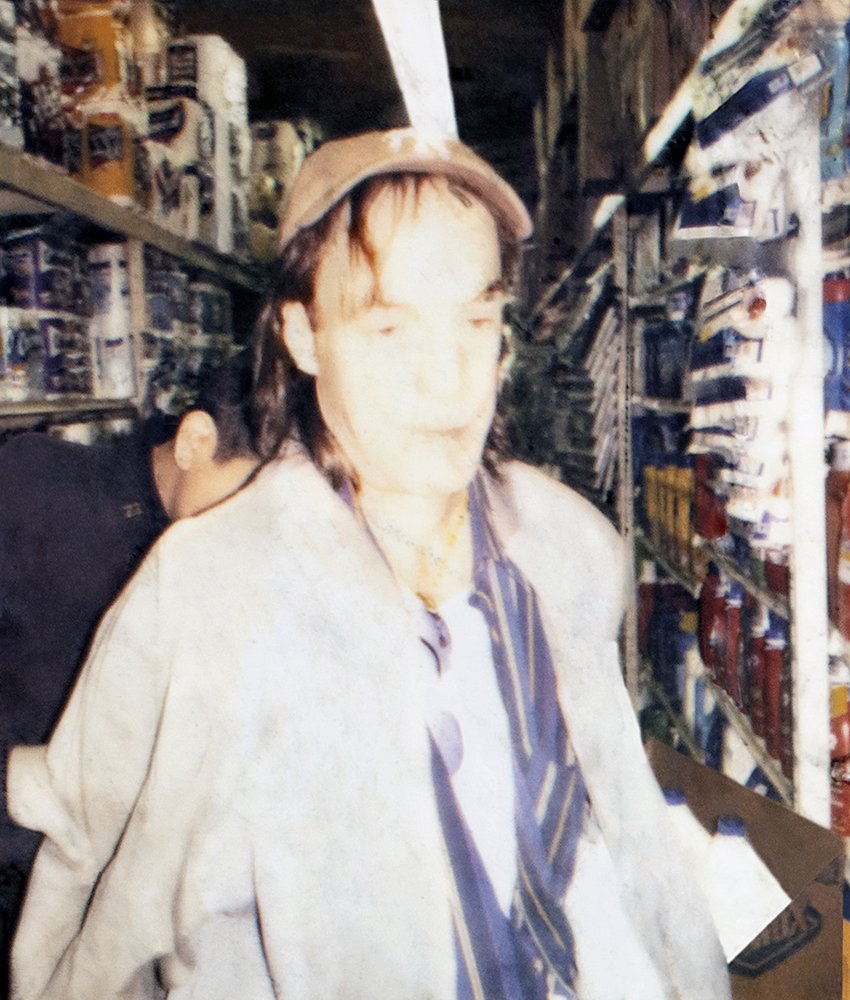
Shoplifters consists of 19 photographs Bourouissa saw at the entrance of a Brooklyn corner store in 2014. Originally shot by the store manager using a Polaroid camera, these portraits depict individuals caught stealing, posed with the pilfered items. Displaying these images is a provocative act: a challenge to photography’s dual role as tool of surveillance and instrument of empowerment. Through appropriation and recontextualisation, Shoplifters strips the images of their original punitive intent and opens a broader consideration of the ethics of representation, questioning how images shape public perception and reinforce stereotypes.
Communautés is, in my view, a promise. A political statement. An invitation to look at ourselves as we look outward – and at the same time, to see beyond our own gaze. It is an invitation to understand ourselves as part of a web of relationships that are shaped by our everyday gestures, and by how we relate to others. It is proof that another way of engaging is possible: by stepping into someone else’s perspective, by meeting them halfway, and by disrupting the frameworks that define us. It is, perhaps, a glimmer of hope. A hope that seems to answer that fateful question: What role can artistic creation assume in today’s society? ♦
All images courtesy the artist and Mennour, Paris. © Mohamed Bourouissa ADAGP
Mohamed Bourouissa. Communautés runs at MAST Bologna until 28 September 2025.
–
Rica Cerbarano is a curator, writer, editor, and project coordinator specialising in photography. She writes regularly for Vogue Italia and Il Giornale dell’Arte, where she is the Co-Editor of the Photography section. She has also contributed to Camera Austria, Over Journal, Hapax Magazine, and Sali & Tabacchi, amongst others. In 2017, Cerbarano co-founded Kublaiklan, a collective that has curated exhibitions at Images Vevey (Switzerland), Gibellina PhotoRoad (Sicily, Italy), Cortona On The Move (Italy) and Photoszene Festival (Cologne, Germany), amongst others. In 2022, she was a member of the Artistic Direction Committee at Photolux Festival (Lucca, Italy), where she curated Seiichi Furuya: Face to Face, 1978 – 1985 and Robin Schwartz: Amelia & the Animals.
Images:
1-Mohamed Bourouissa, Horse Day, 2014; from the Horse Day series
2-Mohamed Bourouissa, Shelby, 2018; from the Horse Day series
3-Mohamed Bourouissa, Alpha Konate; from the Horse Day series
4-Mohamed Bourouissa, Love II, 2019; from the Horse Day series
5-Mohamed Bourouissa, La République, 2006; from the Périphérique series
6-Mohamed Bourouissa, Shoplifters
7-Mohamed Bourouissa, Hands #27
8-Mohamed Bourouissa, Hands #34
9-Mohamed Bourouissa, Hands #37
1000 Words favourites
• Renée Mussai on exhibitions as sites of dialogue, critique and activism
• Roxana Marcoci navigates curatorial practice in the digital age
• Tanvi Mishra reviews Felipe Romero Beltrán’s Dialect
• Discover London’s top five photography galleries
• Tim Clark in conversation with Hayward Gallery’s Ralph Rugoff on Hiroshi Sugimoto
• Academic rigour and essayistic freedom as told by Taous Dahmani
• Shana Lopes reviews Agnieszka Sosnowska’s För
• Valentina Abenavoli discusses photobooks and community
• Michael Grieve considers Ute Mahler and Werner Mahler’s posthumous collaboration with their late family member
• Elisa Medde on Taysir Batniji’s images of glitched video calls from Gaza
Join us on Patreon today and be part of shaping the future of photographic discourse


