
An art of distance: Hervé Guibert’s The Only Face
French writer Hervé Guibert (1955–1991) was the author of twenty-five novels and autobiographical works, but he also took photographs. The Only Face, Guibert’s second and final collection of photographs, was originally published on the occasion of a 1984 solo exhibition at Galerie Agathe Gaillard in Paris and has now been reissued by Magic Hour Press. Presented in its original sequence, this new edition largely comprises images of small private interiors, revealing itself not merely as an exhibition in book form, but as a novel in its own right, one that speaks to community, friendship and the distances that both separate and sustain them, writes Thomas King.
Thomas King | Book review | 27 Nov 2025
Join us on Patreon
‘To liberate every secret, to invent them’ was, for Hervé Guibert, the stake of artistic courage and the measure of friendship. In his roman à clef To The Friend Who Did Not Save My Life (1990), he introduced the character ‘Muzil,’ a thinly disguised Michel Foucault, and used him to recount previously untold stories from his friend and lover’s life. Following the book’s release, he appeared on French national television amid the furore it stirred to defend his disclosures, speaking of what he called a shared “common thanatological destiny” between the two men living with AIDS, which was to tragically end both their lives.
Some months after Foucault’s death, 6 years prior, Le Seul Visage (The Only Face) (1984) formed the basis of Guibert’s exhibition at Galerie Agathe Gaillard in Paris. Now reissued by Magic Hour Press, with images presented in their original sequence, the deceptively modest and slender volume of photographs reveals itself as a Guibertian novel in its own right. Characters move through and recede from its pages, and in its distinct photographic narrative mode, Guibert refuses to ground a community in a stable, constituent body, the very condition that elsewhere attests to the violence that keeps it intelligible.
This can be explained in part by Guibert and Foucault’s ways of considering homosexuality and friendship together against ‘the recognition that we are.’ Of course Foucault devoted much of his life to showing that the very idea of an ‘essential self’ must be abandoned; the task is not to uncover a hidden truth about who we are, but to renounce the search altogether, while Guibert’s ‘homosexuality’ has been described as ‘a quietly revolutionary stance in line with his particular brand of rebelliousness’.
It’s in this spirit that Guibert’s diaries anticipate a novel that will never be written, yet become novelistic through their ‘fictious’ narratives. From the moment Guibert writes ‘I’, any attempt to distinguish between figuration and the real is dismantled. By putting his body ‘at risk’ within narrations, situations, relations, as he writes, he becomes ‘his own character,’ neither seeking to return to nor magnify subjectivity. As the question is posed on the back cover of The Only Face: ‘Isn’t a book with figures and places a novel?’
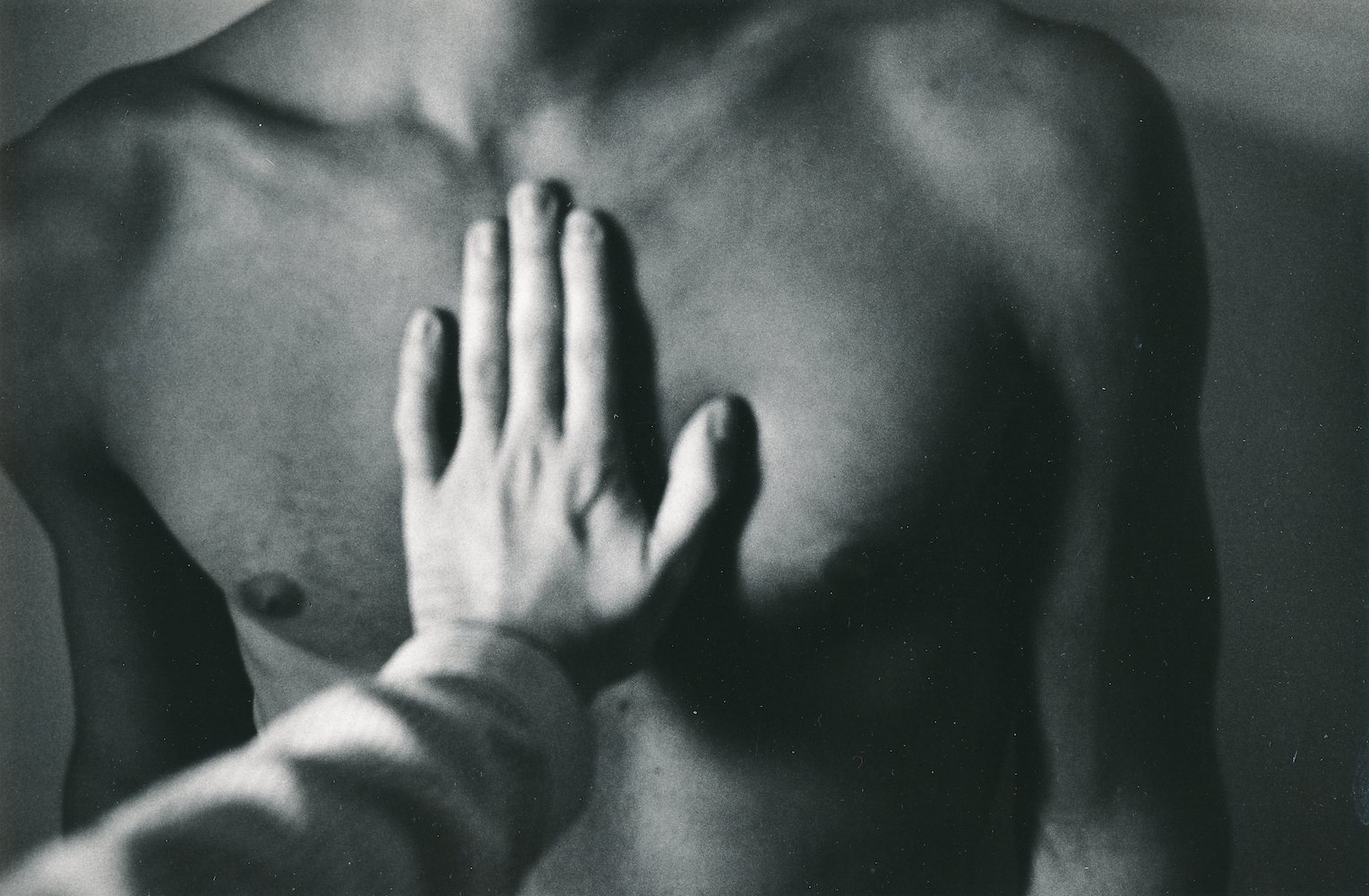
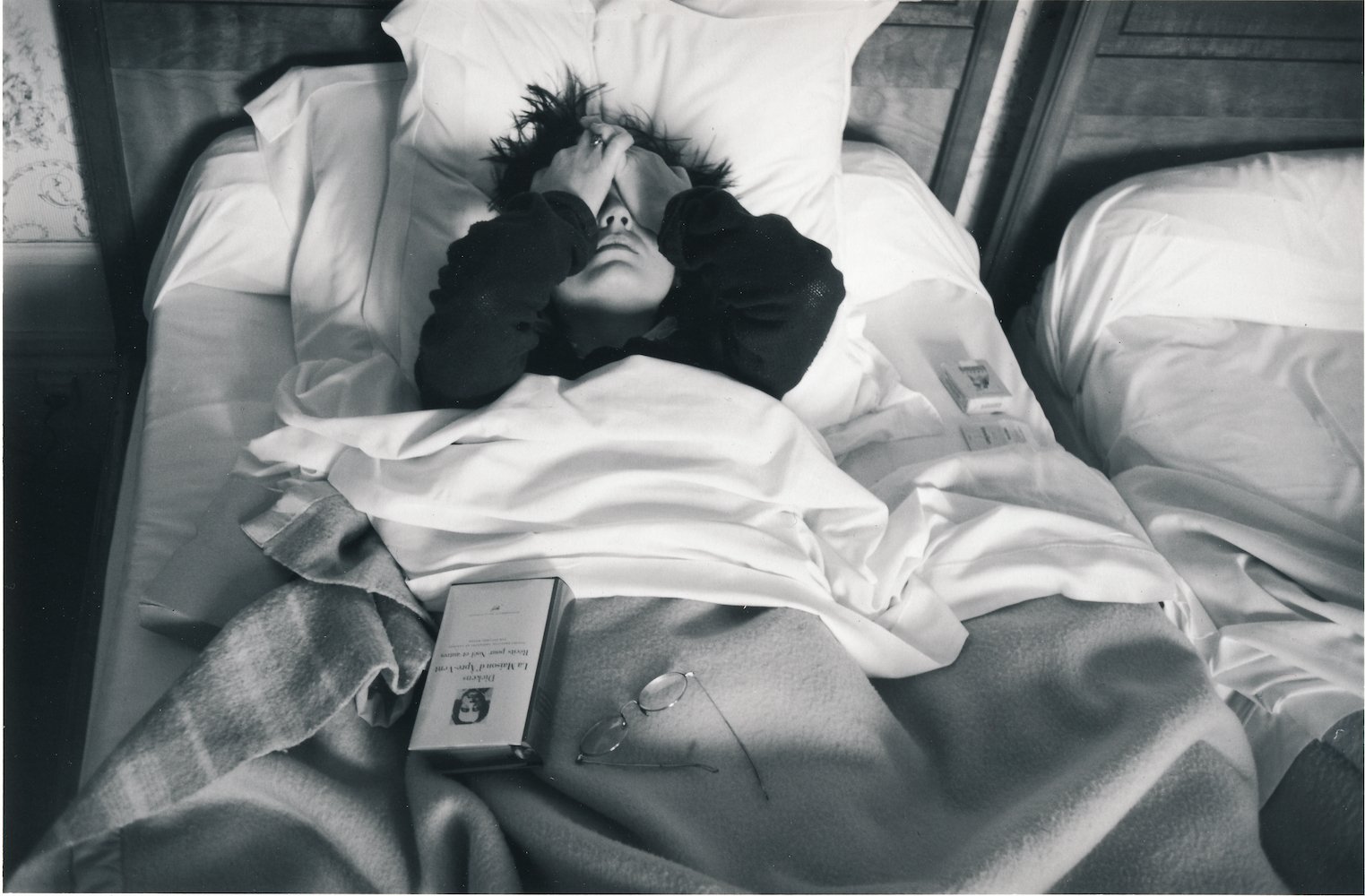
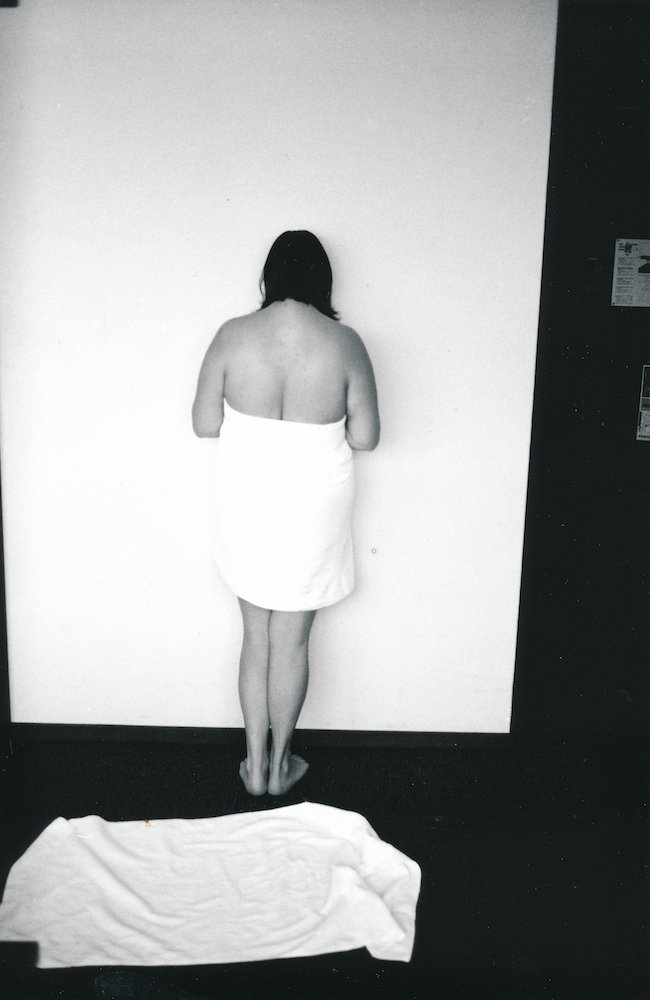
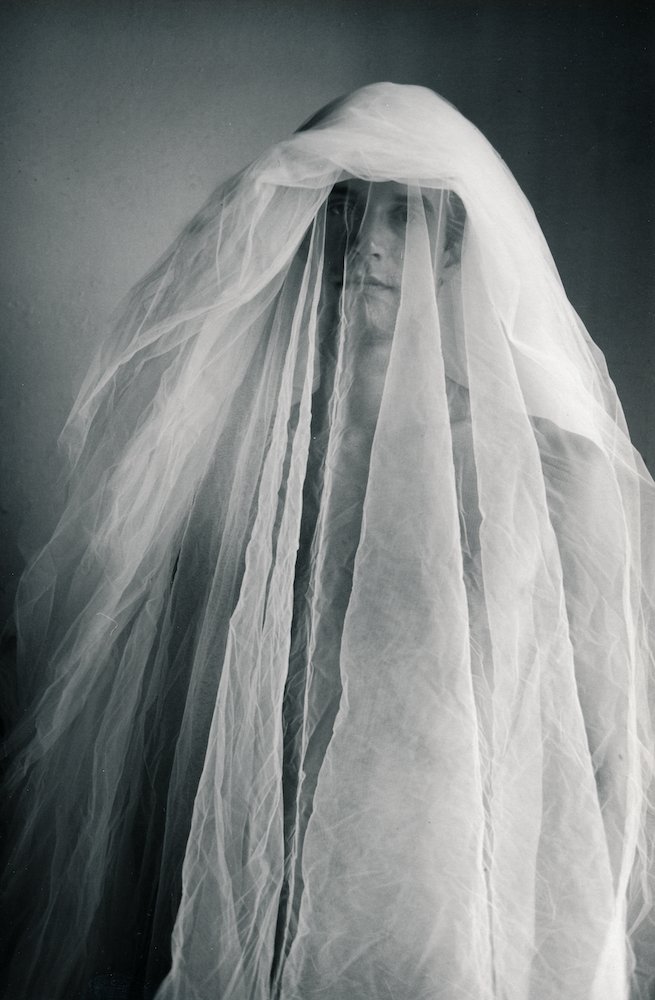
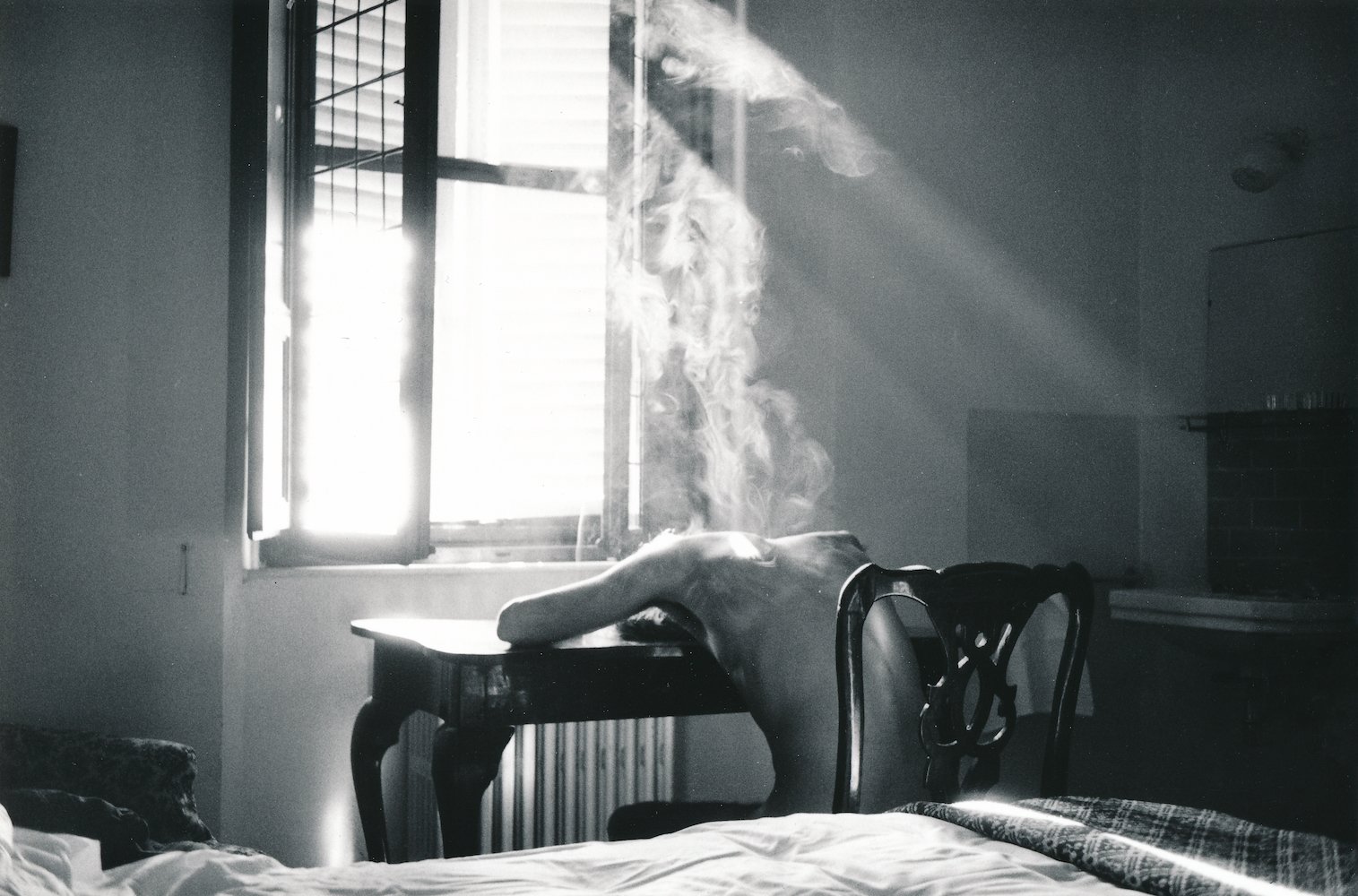
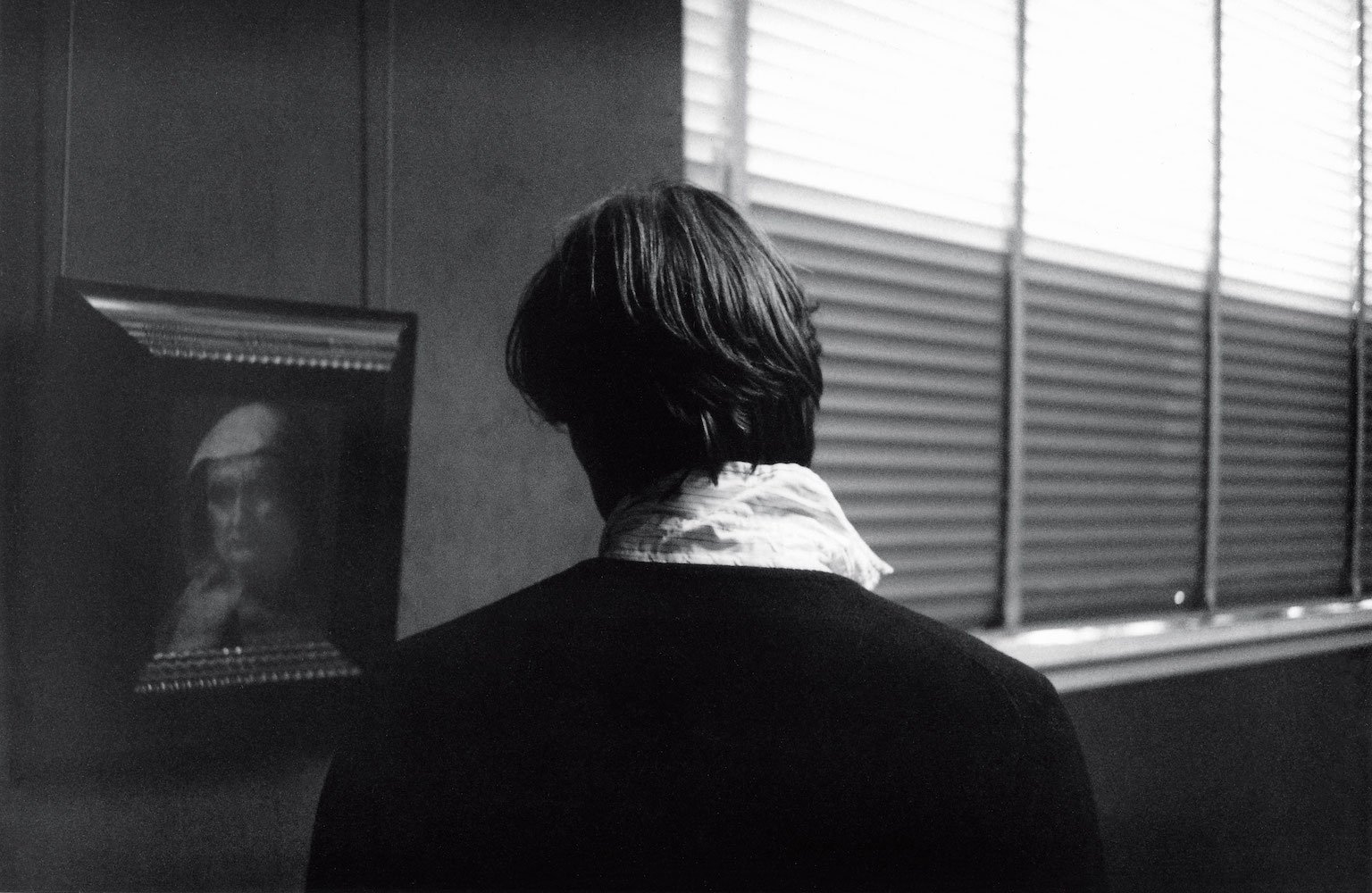
The Only Face begins with bodies withheld, faces averted or obscured, silhouettes held just out of reach in the dimly lit interiors of private rooms. ‘Sienna’ recalls André Masson’s headless figure seated at a desk, slumped forward, bathed in a soft yet piercing beam of light from the open window, a thin plume of mist rising from the body. ‘The Friend,’ the first image, shows only a hand pressed firmly against the centre of a chest, establishing from the outset a tension and ambiguous relationality that resonates throughout. It is an image of distance, an art of distance.
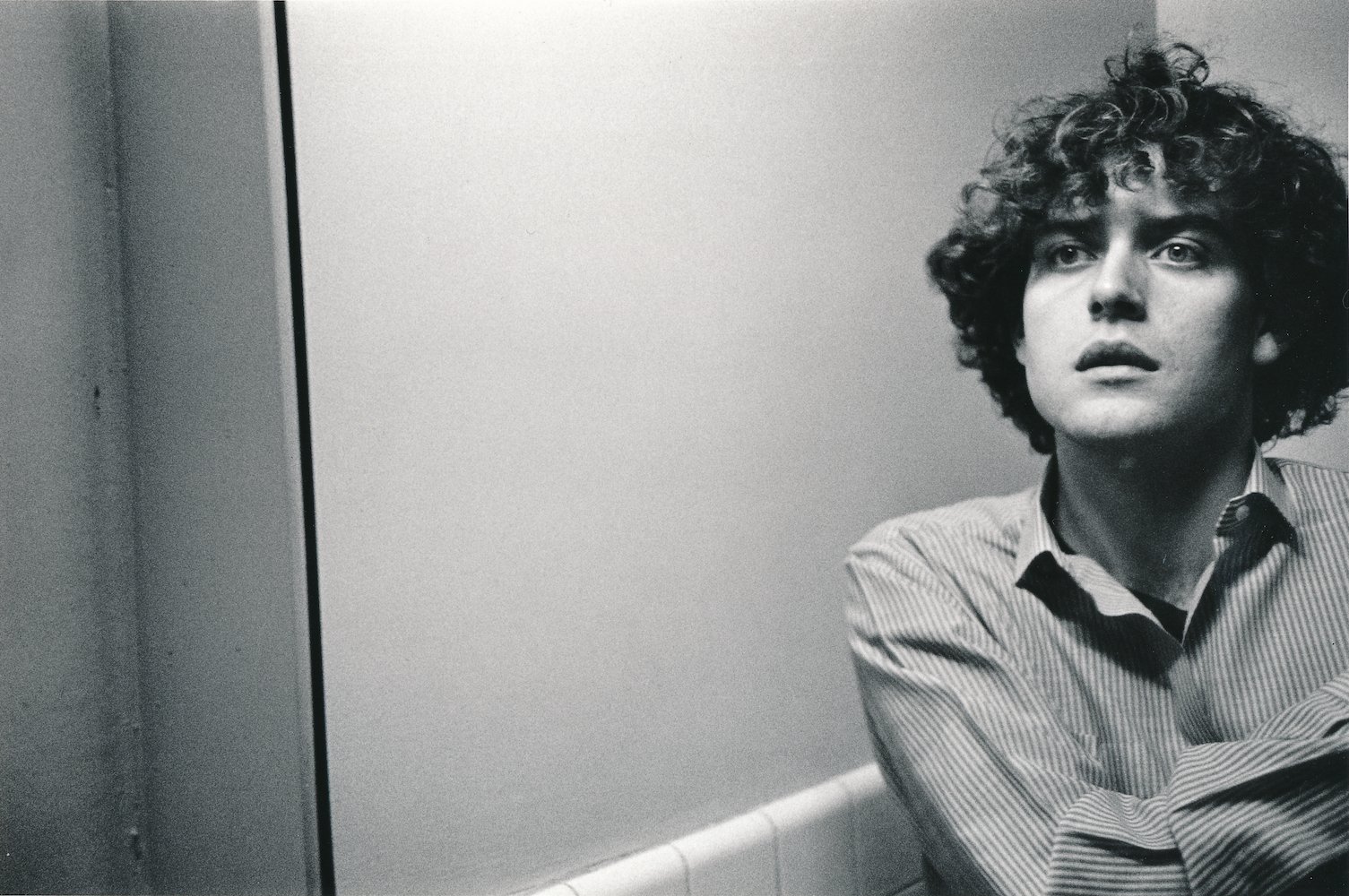
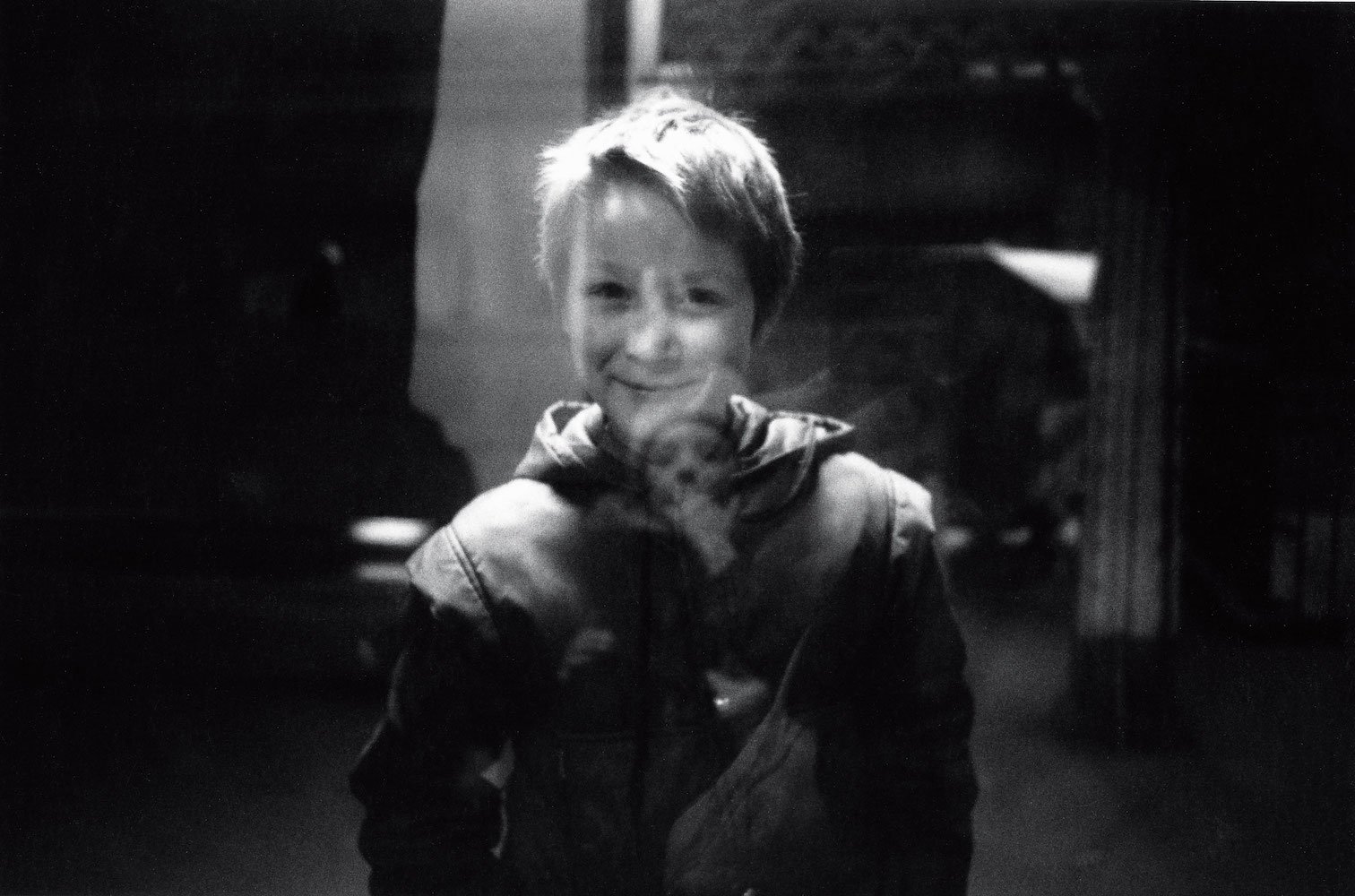
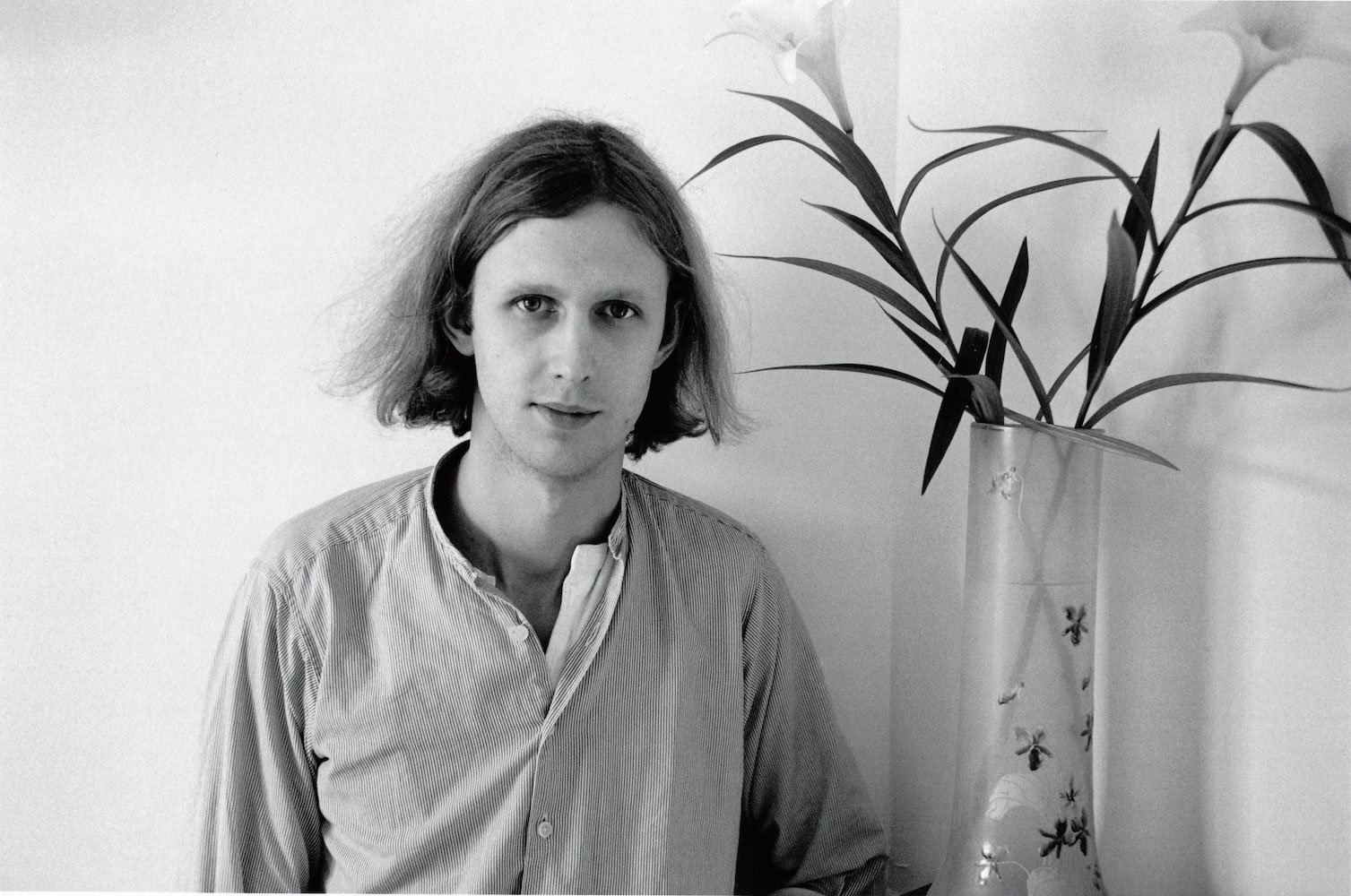
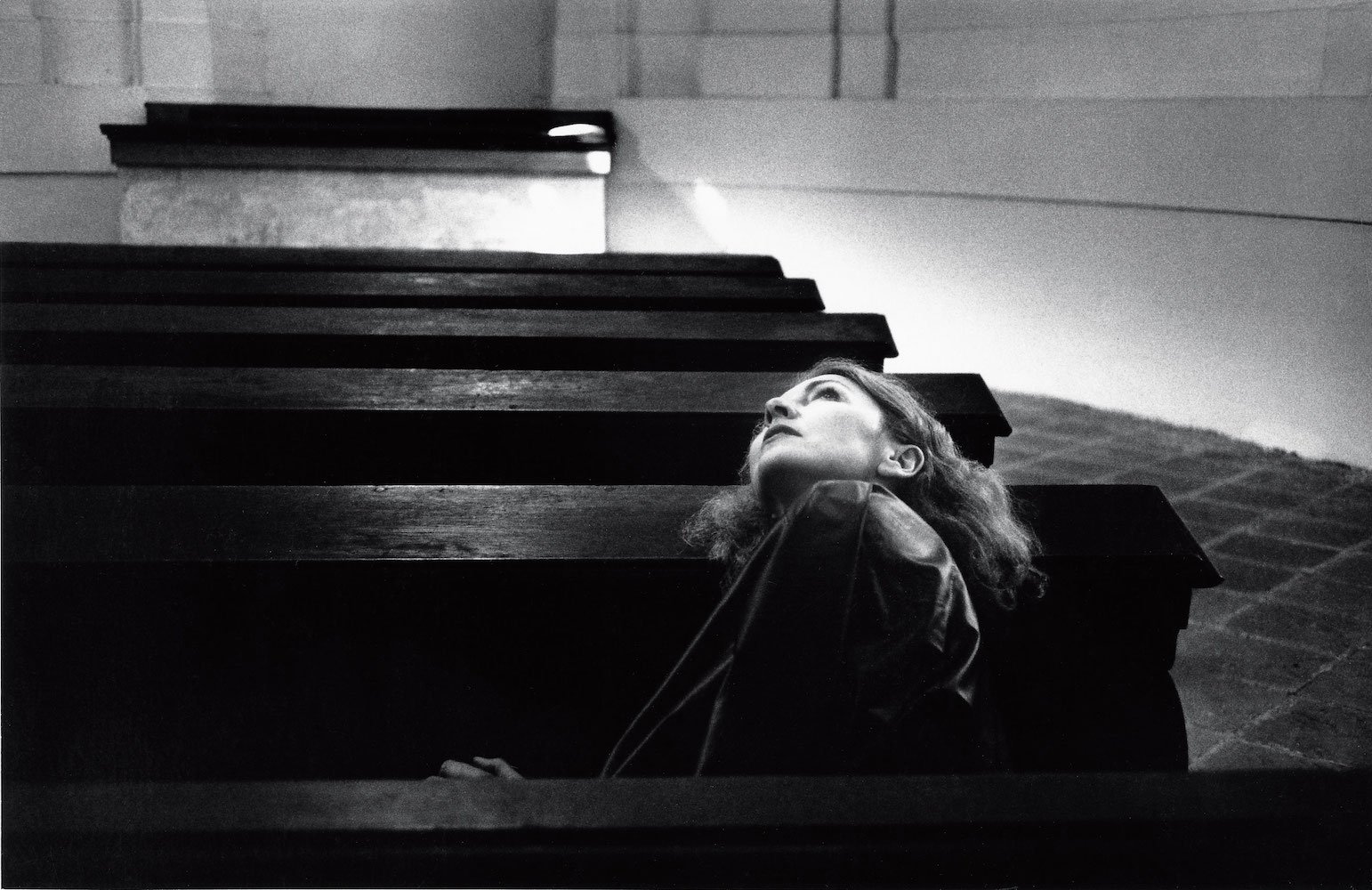
Its rising action takes place through a series of portraits in which the characters ‘appear’ under their first names. Guibert photographs his parents and himself under the title ‘Moi’. French actress Isabelle Adjani, who haunts his writings, also enters the frame at the Jardin des Plantes. His gallerist, Agathe Gaillard, and his friend Thierry Jouno appear. So too does Mathieu Lindon, another soul who ‘shared their time, drugs, ambitions, and writings with the older Foucault,’ and the latter, famously pictured in a yukata in his Paris apartment, the meeting place for such activities.
I look at these images knowing Guibert’s refusal to be labelled a photographer meant, for him, an attention only to the relational: bearing witness, as he writes in the introduction, only to his ‘love’ for these bodies – the way they crash together or fail to, and the impermanence of presence that attends all such intimacies. Brigitte Ollier writes, ‘There was no parade, [Guibert’s] portraits were infused by simplicity, as if he were trying to conjure up, or get rid of, the mysterious link between him and his nearest and dearest.’
This ‘simplicity’ lies in what Guibert later describes as his ‘fractious, careful, and suspicious’ approach to photography, with shooting being a kind of liturgy for him. His attention to the ‘mysterious link’ and his play with narrative and framing to preserve its elusiveness recall the story behind the photograph titled ‘East Berlin.’ Lindon once recalled the outing when the image was made; later, having read Guibert’s account, Lindon told Foucault, ‘It hadn’t happened like that.’ Foucault replied: ‘Only false things happen to him.’
And yet, through the artifice of ‘falseness,’ friendship is conceived not as the affirmation of an interior ‘I,’, but its dislocation. Friendship, it has been argued, does not arise from recognising sameness or identity between subjects, but from exposure to internal dispossession, a desubjectification where the self no longer fully coincides with itself. It involves recognising one another only alongside an awareness of their finitude, the ongoing possibility of betrayal and irreconcilable strangeness; it is ‘precisely not recognising the self in the Other and not sharing common ground,’ that gives friendship its ‘particular queer, and thus activist, valence,’ writes Tom Roach. That is to say, Guibert’s portraits dwell in the nothingness at the heart of relationality. And friendship renders this nothingness (which is not the obliteration of difference, rather the opposite) tangible as proximity, and as an awareness of the singular, incommunicable death that eludes possession. There is a subtle, revealing power in these photographs, especially when they are seen as reflecting Guibert’s evolving concept of friendship – which recalls Patrick Ffrench’s musing that ‘The friend speaks to the friend already from beyond the grave, if the friend speaks to the friend at all… .’
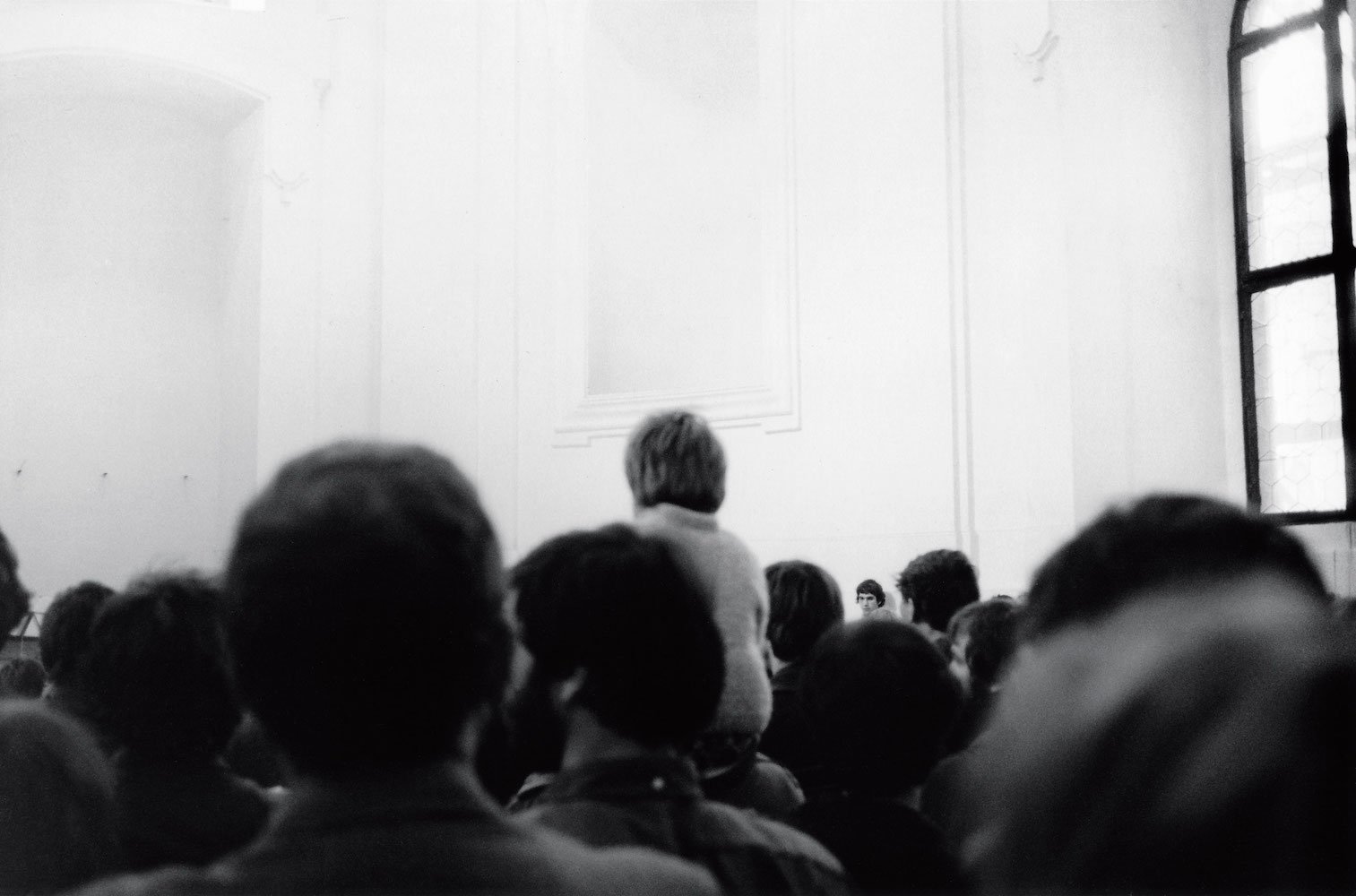
What fascinates the young Guibert, though, is not the inventory of mortality that photography could provide, but what remains beyond its reach in the intervals, the silences and the margins. Of note is his preference for tight angles, paintings, windows; the light that enters at the side, the slanted shapes, the objects suspended as if condemned to an eternal foreground. Even the emptiest spaces seem quietly inhabited. All is relentlessly methodical.
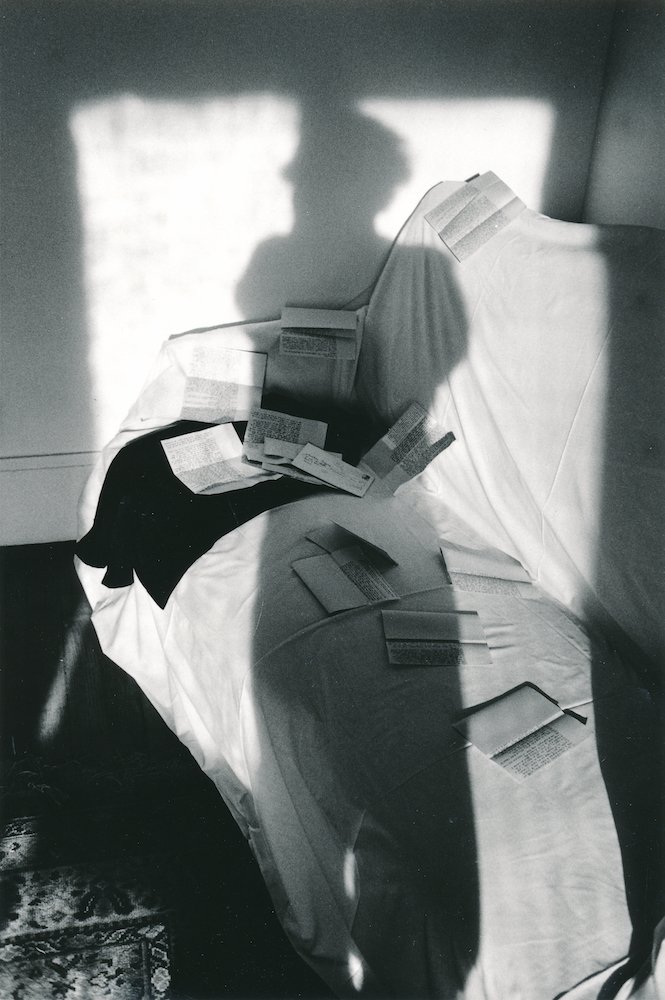
These thoughts press harder with the images that follow, where his beloved bodies, no longer his characters, remain only as the image of absence. A pair of photographs titled ‘Writing’ shows a desk strewn with handwritten letters; the other, a figure turned away, seen from above. ‘Reading,’ taken from beneath the desk, draws depth from minimal means, with a book just about visible in the distance. The same sense of absence animates ‘Interior’ and ‘Cannes Festival,’ where one is replaced by a scattering of belongings – a blazer, a camera, a taxidermy owl, marbles in another. The titles are again sober and the images austere.
Writing in Narcissus in Bloom: An Alternative History of the Selfie, Mattie Colquhoun says, ‘Guibert loses himself in this fractal representation of atemporal non-selves, becoming alongside the objects in his possession. He makes himself hidden, emancipating from the gaze of self and other.’ As such The Only Face reminds us that community and friendship, absent among those who are there, are both an actuality and a potentiality. They are, what Maurice Blanchot describes: ‘an existence shattered through and through, composing itself only as it decomposes itself constantly, violently, and in silence.’ ♦
All images courtesy the Hervé Guibert Archive and Magic Hour Press.
© Hervé Guibert
—
Thomas King is Editorial Assistant at 1000 Words and currently undertaking an MA in Literary Studies (Critical Theory) at Goldsmiths, University of London.
1000 Words favourites
• Renée Mussai on exhibitions as sites of dialogue, critique and activism
• Roxana Marcoci navigates curatorial practice in the digital age
• Tanvi Mishra reviews Felipe Romero Beltrán’s Dialect
• Discover London’s top five photography galleries
• Tim Clark in conversation with Hayward Gallery’s Ralph Rugoff on Hiroshi Sugimoto
• Academic rigour and essayistic freedom as told by Taous Dahmani
• Shana Lopes reviews Agnieszka Sosnowska’s För
• Valentina Abenavoli discusses photobooks and community
• Michael Grieve considers Ute Mahler and Werner Mahler’s posthumous collaboration with their late family member
• Elisa Medde on Taysir Batniji’s images of glitched video calls from Gaza
Join us on Patreon today and be part of shaping the future of photographic discourse


