
The many lives of an image: a conversation with Keisha Scarville
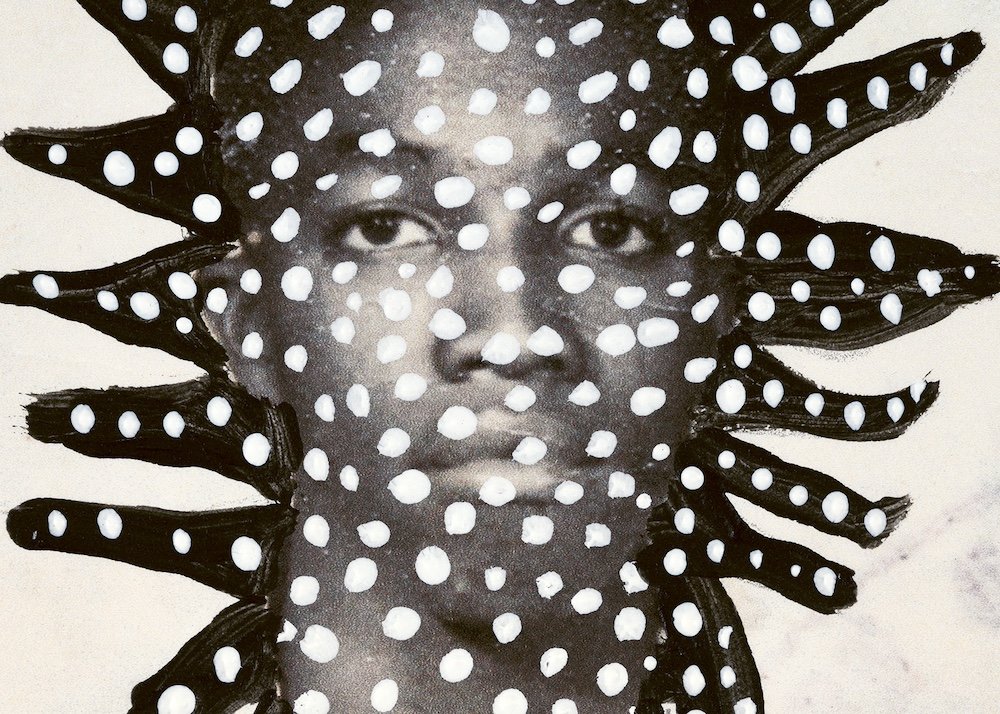
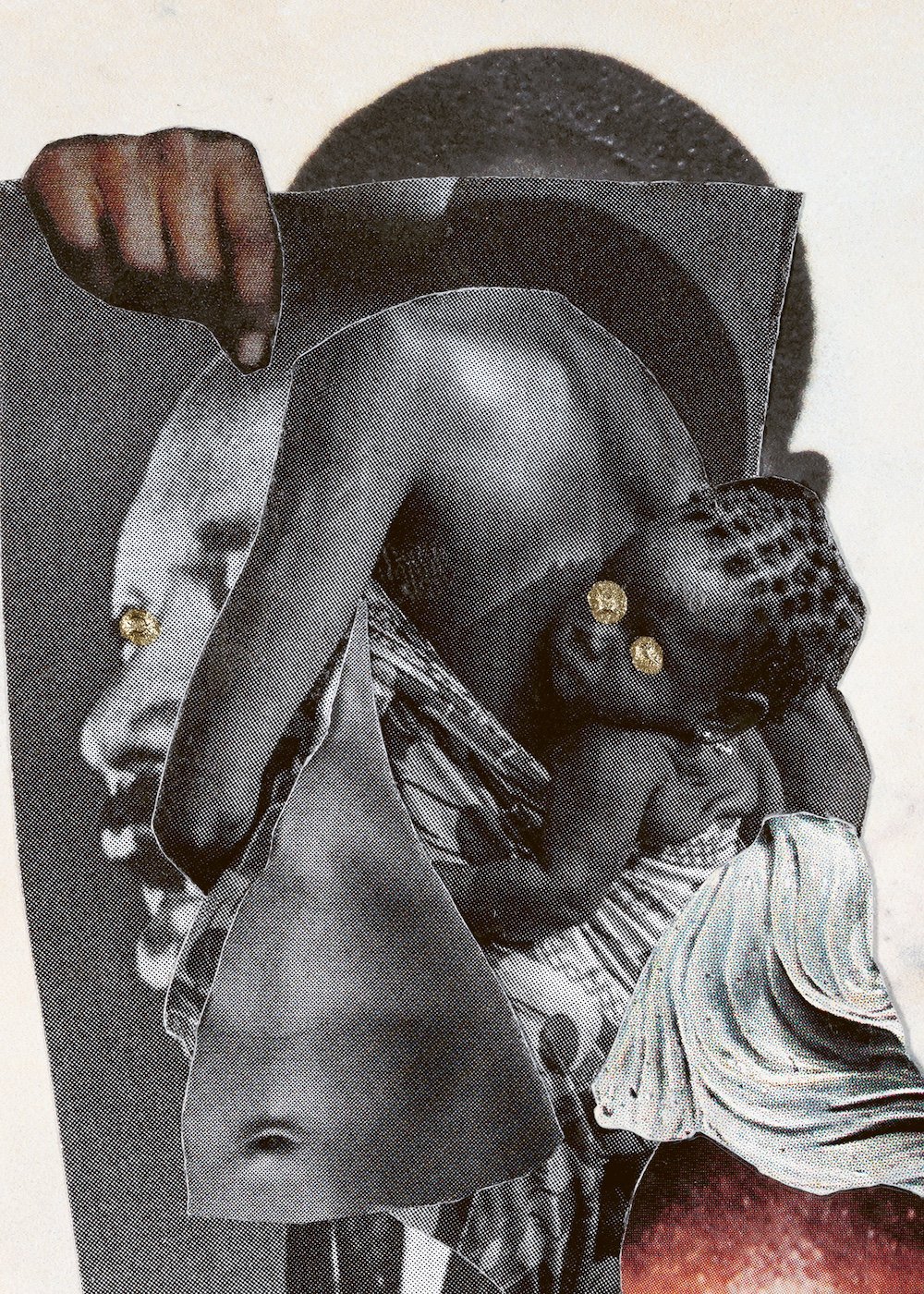
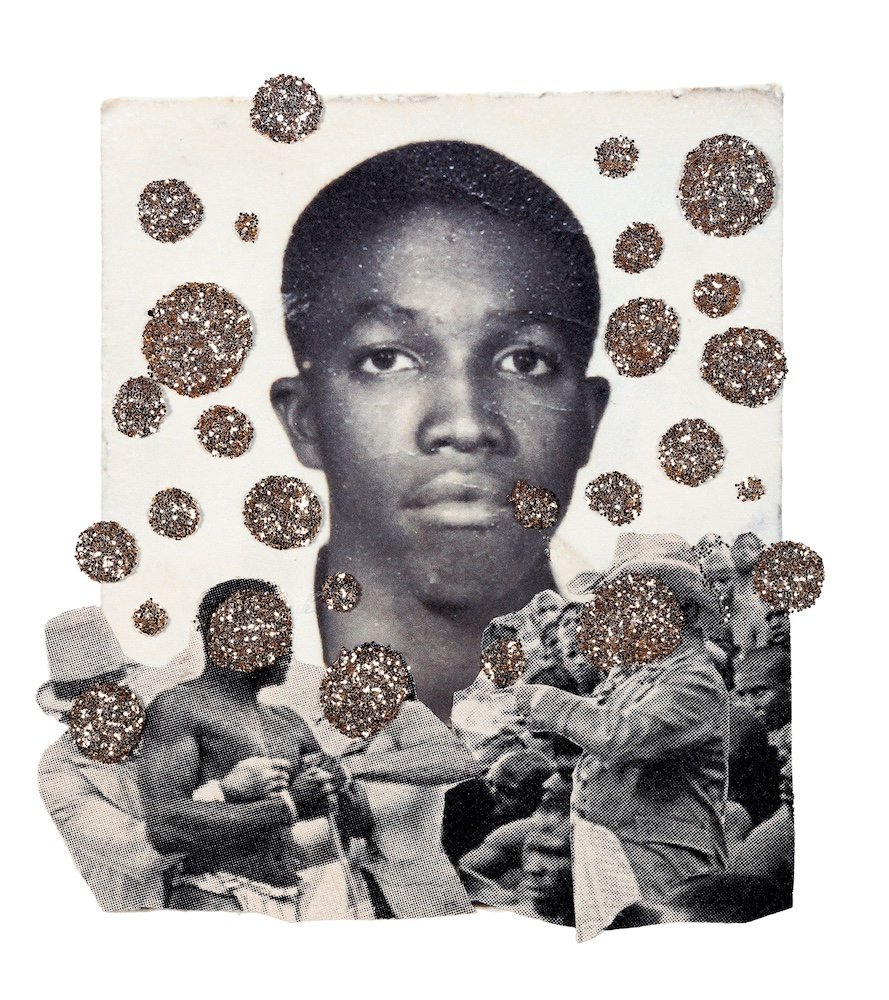
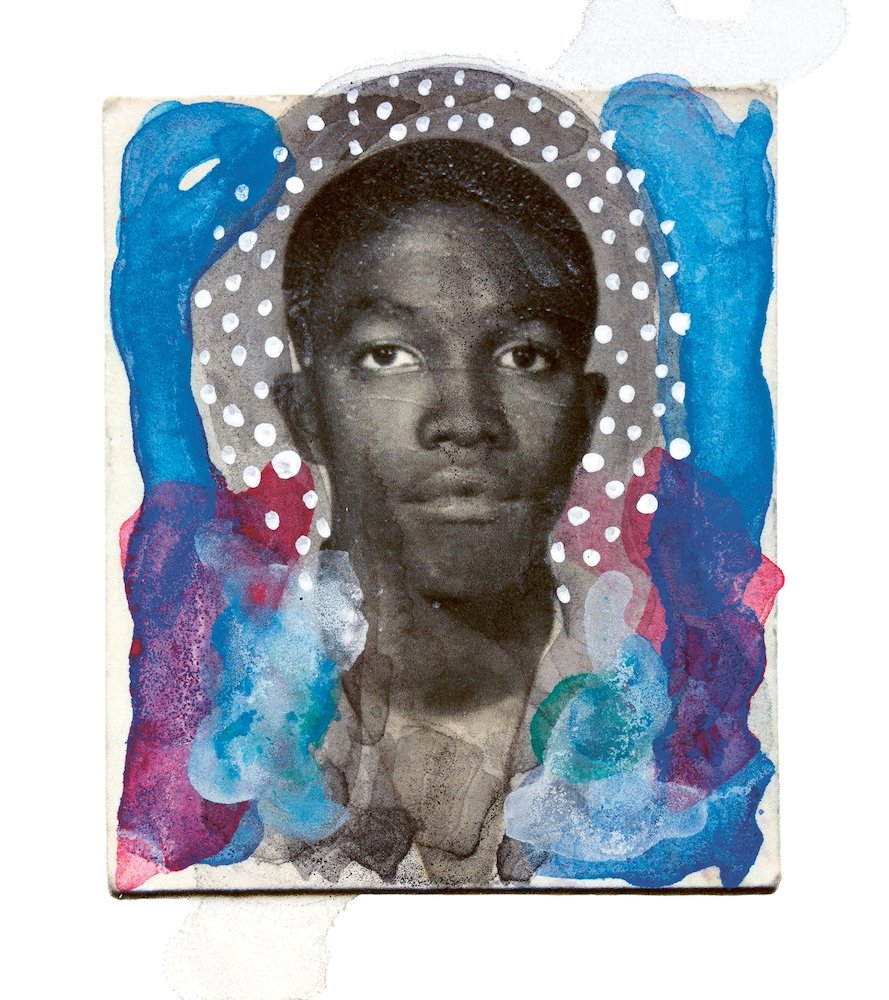
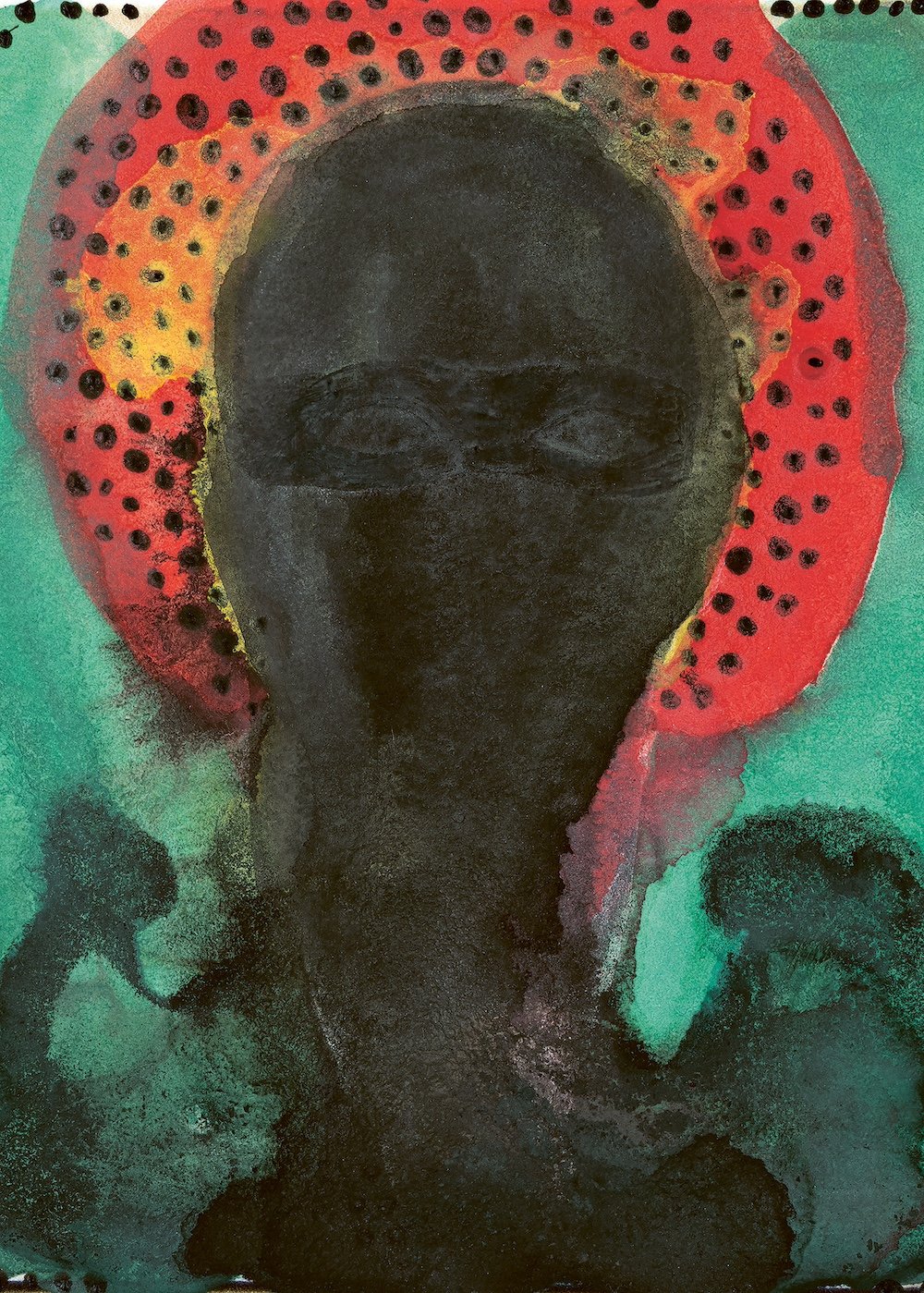
Since 2012, Keisha Scarville has reworked her father’s first passport photograph more than 300 times, using paint, beads, gold leaf, glitter, and found imagery. Published by MACK, her new book, Passports, brings this evolving body of work together with archival photographs, transcripts of conversations between Scarville and her father, and a new text by Tina Campt. In this conversation, Lou Mensah speaks with Scarville about bureaucratic images, inherited histories and the shifting meanings of photography.
Keisha Scarville | Interview | 22 October 2026
Join us on Patreon
Lou Mensah: Congratulations on such a beautiful body of work. I enjoyed Passports in a single sitting, and its impact was immediate, both visually and emotionally. What has it been like to see the work brought together as a book?
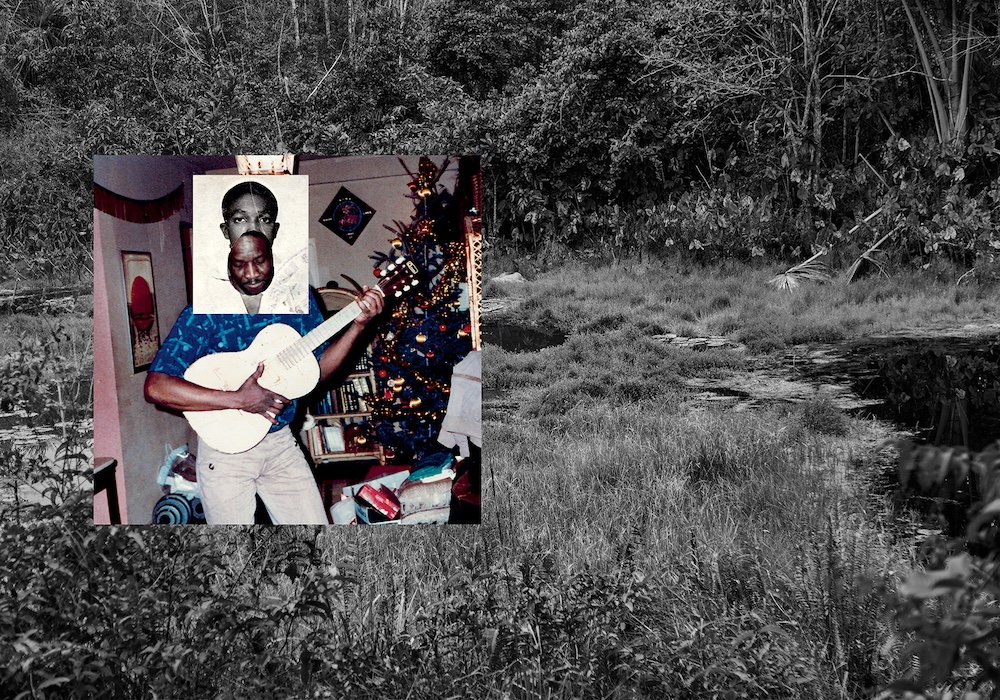
Keisha Scarville: It has been so wonderful to have Passports in the world in this form. A book creates a different kind of encounter with images. You can hold the work, revisit it, and experience it through sequencing and proximity. For me, a book is also a form of world-building. It creates a space where disparate images, memories, conversations, and histories can coexist. Bringing this work into book form enabled me to visualise and build out components of the project I hadn’t previously had the opportunity to share. In addition to the passport pieces, I included archival images of my father, photographs of landscapes in both Guyana and New York City, excerpts from our conversations, and images I made of my father and various locations in Guyana. The book feels like a particular moment of gathering, a chance to step back and see the many parts of the project in relation to one another.
LM: You’ve returned to the same passport photograph more than 300 times since 2012. How did your process develop over those years, and how did you listen to what the image was saying to you each time you returned to it?
KS: I did not set out to make more than 300 works from the same photograph in the beginning. The project grew out of a conversation with my dad about his relationship to America after having been in the country for over four decades. It initially sparked a desire in me to examine what it means to become American. My dad and I began having weekly conversations where I asked him about his decision to migrate to America and what he experienced in the transition. My father gifted me his first passport photo, made when he was 16 years old in Guyana. I chose to utilise that image as the space to unfold this idea. Our conversations shifted my understanding of the photograph and what it contained, informing how I sought to reimagine it. The project became so much more. I began to engage not only with visualising my father’s story but also with speculations about who he could have become.
Over time, working with his passport image became a kind of ritual. I found myself returning to it, almost daily. Eventually, the return became the practice. At times I would just sit and look at the image in silence. Each time I approached the photograph, I uncovered something different, or more specifically, something else asked to be activated. I became interested in challenging the notion that an image possesses a single, fixed meaning. A passport photograph is intended to be closed, serving to identify and establish an individual through a standardised image. It is small, singular and seemingly uncomplicated. But through repetition, I wanted to challenge that certainty. The work became a way to ask how an image meant to be fixed can begin to speak back. How can something that appears singular become multiplicity? How can an image that appears quiet begin to generate conversations, memories, questions, and possibilities?
This connects deeply to Tina Campt’s writing in Listening to Images and to her proposition that we might tap into the sonic vocabulary of images. For me, returning to this photograph became a form of listening. Each iteration let me hear something different – not necessarily because the photograph itself changed, but because my encounter with it changed.
LM: The works are layered with beads, hair, glitter, and gold leaf. They awaken a kind of sensory curiosity. How did you choose the materials, and what do they carry for you?
KS: My material choices developed over a period of deep looking and deep listening. I believe materials carry their own individual properties, histories and associations. The ideas, narratives or questions I am exploring in the moment usually lead to the materials I use. Initially, collage offered me a language of disordering and repurposing that I was immediately drawn to and often returned to. I found that collage interrupted the photograph’s aesthetic authority, gave me a way to reconstitute the body, and inject narrative and latent histories. Over time, incorporating additional materials became essential. Paint, particularly watercolour, introduced a sense of liquidity that countered the fixed nature of the photographic image. The materiality of various media also became important because I wanted the surface to have a sense of aliveness. Beads, hair, glitter and other materials create surfaces that resist flatness. There was something about their physical presence that required me to slow down and look differently.
Ultimately, the materials are prompted by the stories my father shared with me and by my desire to push against the formal and deceptively banal space of a governmental ID photograph. I wanted to take this small bureaucratic object and open it up – to give it texture, instability, intimacy, and possibility.
LM: How has making this work changed the way you understand your father’s experience, and your own sense of home and belonging?
KS: In some respects, the process has been deeply illuminating, while in others, it has introduced greater complexity. Working through and learning more about my father’s story has forced me to bring a more critical lens to my own ideas about belonging and to how I place myself within particular landscapes and histories. Listening to him has not necessarily provided definitive answers. It has brought some clarity to how I understand my father, but it has also produced more questions for me: What does it mean to belong? Do I see myself as American because I was born in America? How does Guyana live inside me?
My father’s decision to immigrate to America has shaped my own sense of place and home. As a first-generation individual, I have always occupied this space between landscapes. Guyana and New York are not just where I’m from; they are places that exist through memory, family, inheritance, movement, and imagination. I’ve become increasingly aware that what informs my father’s sense of belonging and what informs my own are not the same, even though they are inextricably connected. His sense of belonging was made through movement and migration. Mine began at birth, but it has remained a constant question due to my upbringing and overall political consciousness when it comes to being a Black woman in America. Belonging is more than one’s citizenship status; it is also the protection, recognition and care that citizenship is supposed to provide, which is often denied or withheld from many people. Beyond that, one’s sense of self, community and ability to find safety all contribute to belonging.
I inherited a history of movement without necessarily experiencing it the same way my father did. Our conversations have helped me see the distance between those experiences while also understanding how deeply connected they are. Deep down, I believe my father still questions his sense of belonging in America.
LM: In her essay, Tina Campt recalls seeing the images and thinking, “I know this young man.” That sense of recognition seems to be shared by many of us who are children of immigrants. The book marks an important moment in the project. How has bringing Passports into book form changed what feels possible for the project moving forward?
KS: I am deeply moved by how many people relate to this project. I think that is all one can hope for – that other people understand and find an opening to relatability and curiosity in the work that one does.
The book has definitely opened up a new avenue for the project. While I am still making new pieces, the book has given me a way to see the project as a larger, broader world. I had primarily understood the passport pieces through their accumulation and repetition. However, making the book gave me the opportunity to place those works into conversation with other forms of imagery and with my father’s voice. That has made me think more expansively about what the project can contain and how the different parts of it can speak to one another. It has also made me more aware of how much remains unresolved. I’m interested in continuing to follow those questions without knowing exactly where they will lead. In that sense, the book is a kind of threshold. It gathers what I have made so far, but it also gives me a new place from which to continue looking, listening and making.
LM: Passports arrives at a time when immigrants in America are so often reduced to documents and statistics. Has the project helped you process what’s happening around you, or perhaps offer a measure of respite from it?
KS: This reduction of the body is part of what initially drew me to my father’s passport photograph. It is an image created for a bureaucratic system, where the individual is distilled into a standardised representation used to identify, categorise and regulate them, or to confer legal status. I have become increasingly invested in understanding the history of citizenship in America and of state documents, particularly bureaucratic images and how they neutralise and place the body. A passport photograph appears to be an objective representation, but it carries enormous institutional authority. The dichotomy of the passport photo being a seemingly fixed image that is part of our ability to move across borders, but it also enforces subjecthood and reveals a fragility of citizenship.
I am also thinking about the precarity and persecution of the undocumented individual – those who exist outside of the system and how they become imaged and criminalised. Instead of accepting the passport photograph as a complete representation of my father, I keep returning to it and asking what has been left outside of the frame. Who is this person beyond the document? What histories, relationships, memories, and experiences cannot be contained within that small photograph? Working on this project has led me to a deeper engagement. The work gives me a way to process what I see and experience without simplifying it. It allows me to remain with the complexity of the questions of state power – to think through them materially, visually, and through conversation with my father. The work is a way of staying present with it while insisting on the fullness of the individual behind the document.
LM: After spending so many years with Passports, what are you curious about now? Is there something you’re drawn to or exploring that you might not have noticed before making this work?
KS: So much has come up over the course of working on this project. I’m embracing an openness to repetition, sustained looking and letting a project reveal itself over time. Passports has taught me that returning to the same image or question does not necessarily mean repeating yourself. The longer I stay with something, the more complicated it can become.
I’m increasingly curious about what exists beyond the document – what happens in the space between the image that identifies the person who is actually living the life. I believe Passports presaged my current interests in archives. It has strongly influenced my thinking about archives not as simply a collection of things from the past, but as something that continues to shape the present and flood the future. I’m interested in the temporal disruption: what happens when disparate materials come together and are allowed to contradict, complicate or speak to one another. I am still working on Passports. The work continues, and I’ve committed myself to doing this project until it comes to an end. Right now, that moment hasn’t come yet.
All images courtesy of MACK and the artist.
Passports (2026) by Keisha Scarville is published by MACK.
–
Keisha Scarville is an artist whose work is held in the collections of the Smithsonian American Art Museum and Yale University Art Gallery. She has exhibited at the International Center of Photography, the Studio Museum in Harlem and the Brooklyn Museum. Her first book, lick of tongue, rub of finger, on soft wound (MACK, 2023), was shortlisted for the First PhotoBook Award at the 2023 Paris Photo–Aperture PhotoBook Awards.
Lou Mensah is a photographer and writer whose work centres Black and disabled artists and explores art’s role in social change. She is the founder of Shade Media and a visiting lecturer at Central Saint Martins.
Images: Keisha Scarville, from Passports (MACK, 2026). Courtesy of MACK and the artist.
1000 Words favourites
• Renée Mussai on exhibitions as sites of dialogue, critique and activism
• Roxana Marcoci navigates curatorial practice in the digital age
• Tanvi Mishra reviews Felipe Romero Beltrán’s Dialect
• Discover London’s top five photography galleries
• Tim Clark in conversation with Hayward Gallery’s Ralph Rugoff on Hiroshi Sugimoto
• Academic rigour and essayistic freedom as told by Taous Dahmani
• Shana Lopes reviews Agnieszka Sosnowska’s För
• Valentina Abenavoli discusses photobooks and community
• Michael Grieve considers Ute Mahler and Werner Mahler’s posthumous collaboration with their late family member
• Elisa Medde on Taysir Batniji’s images of glitched video calls from Gaza
Join us on Patreon today and be part of shaping the future of photographic discourse


