

Can doubt be a way of looking?
Unpublished journals, teaching notes and unseen visual material form the basis of a new publication from MACK on the work of Larry Sultan. Spanning the documentary experiments of Evidence through to his intimate explorations of family and self, Water Over Thunder: Selected Writings reveals an artist negotiating meaning through uncertainty. Rather than serving as an adjunct to the images, the writings and photographs position Sultan’s reflections at the centre of both his practice and a broader understanding of photography itself, writes Rica Cerbarano.
Rica Cerbarano | Book review | 15 April 2026
Join us on Patreon
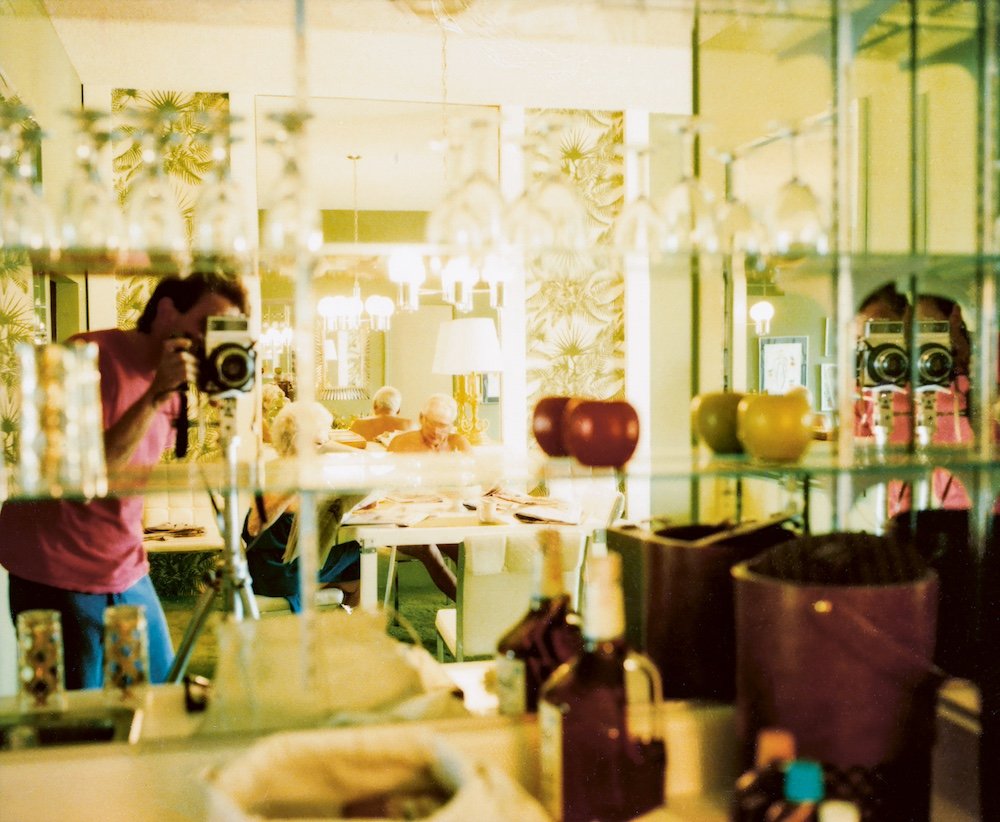
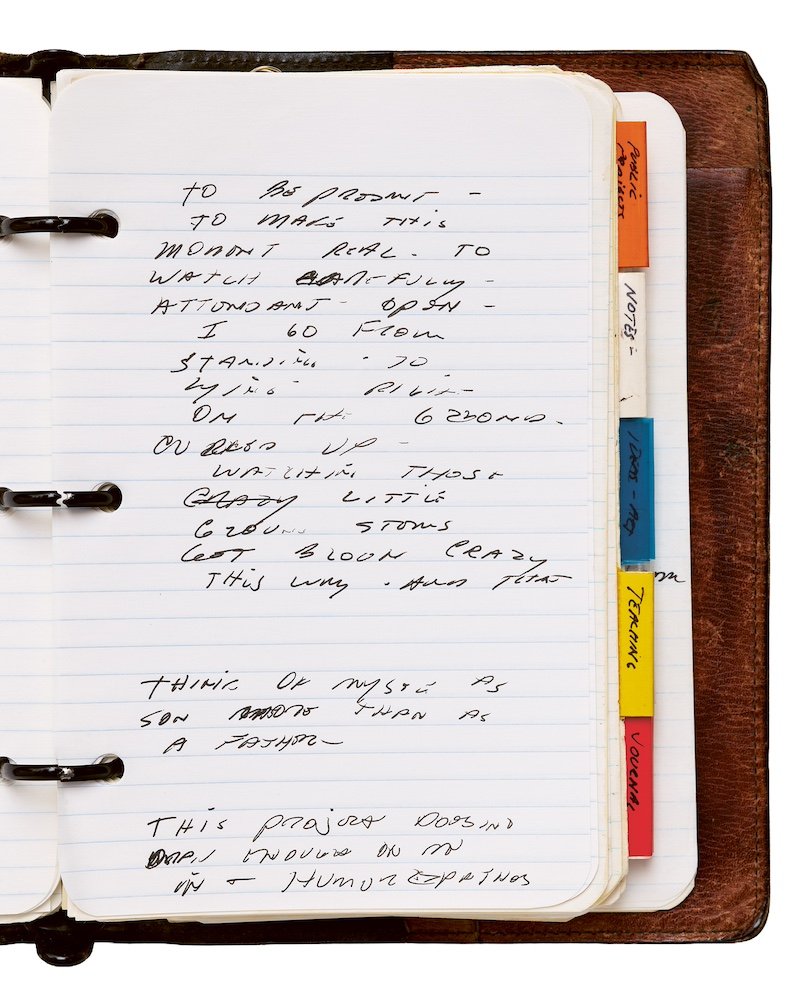
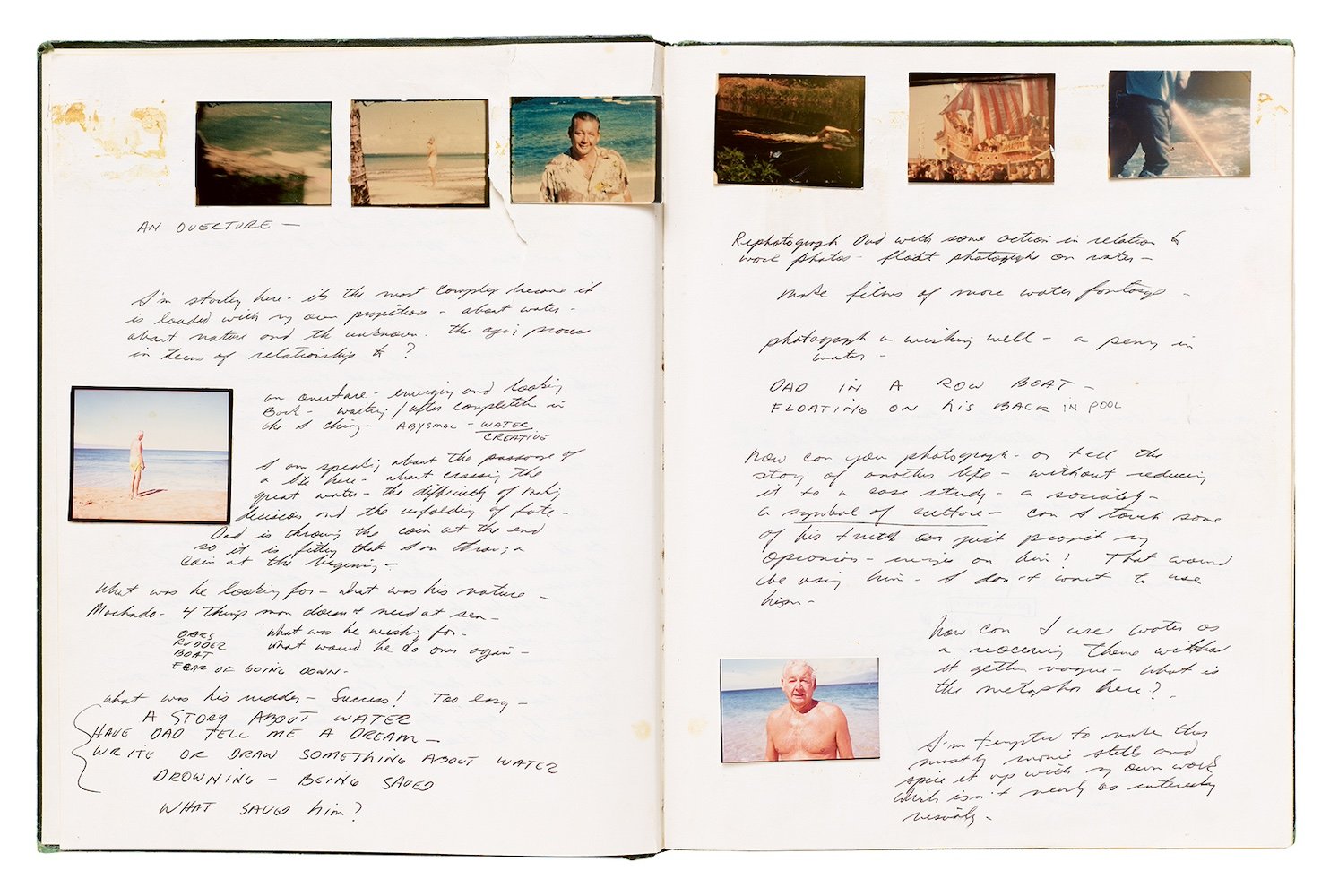
I wish every photographer I admire would publish a book like Water Over Thunder. This new publication by MACK brings together previously unpublished written work by Larry Sultan: journal entries, shooting notes, short stories, dreams, and teaching assignments. Page after page, numerous reflections on the meaning of artistic and photographic practice unfold, accompanied by unseen visual ephemera, like contact sheets, notebooks, handmade maquettes, and unpublished photographs.
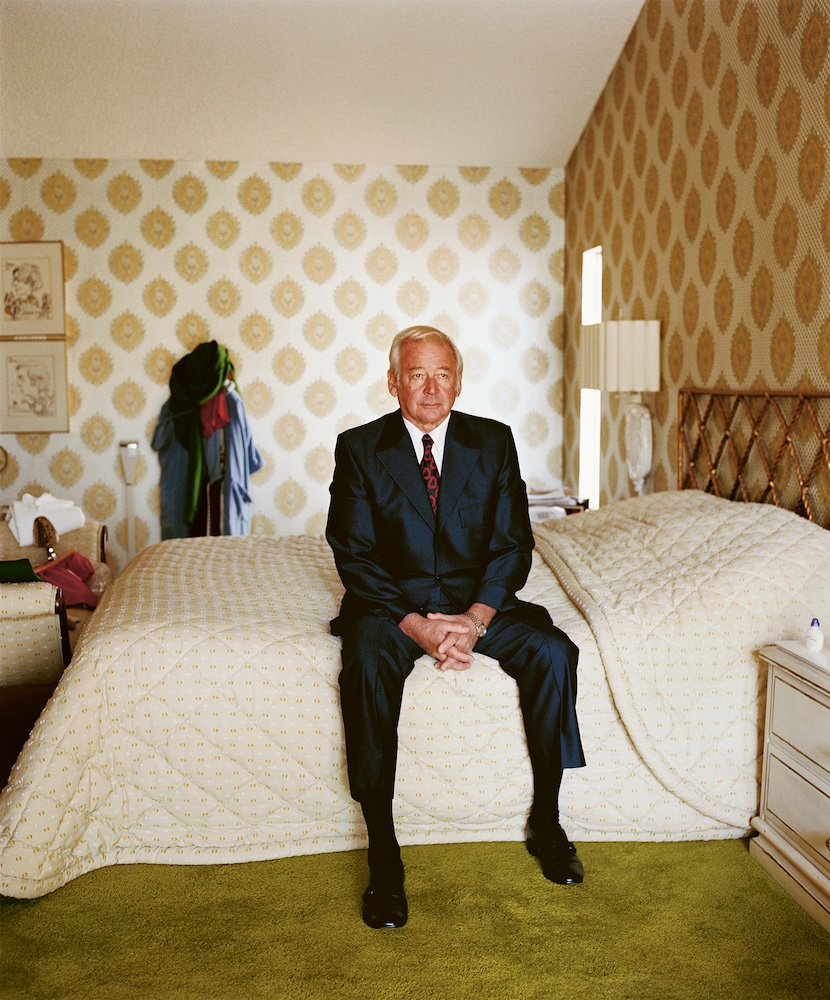
Designed in a small-to-medium format, the book feels as if you are holding someone’s life in your hands – especially the life of someone you have long appreciated. It is precious, delicate, fragile. A secret diary that is no longer secret or an intrusion into private thoughts that become public. A bit like what happened to the photographs Sultan made of his parents over a decade, later gathered in the celebrated project Pictures from Home.
But when I say I wish every photographer I love would publish a book like this, it is not mere flattery. The truth is that the pages of this volume contain important thoughts on how photography can be understood, inevitably intertwined with the author’s personal life. Through them, one gains a deeper understanding of an artistic practice, beyond the image of success that an art career often projects.
Like a personal notebook, Water Over Thunder unveils the life of the writer/photographer, revealing the evolution of his artistic thinking – his attempts, experiments, uncertainties, and positions. A subtle sense of melancholy emerges from the writings: the awareness of being just one among many, yet still feeling a strong urgency to communicate his message.
Known primarily for projects such as Evidence and the aforementioned Pictures from Home, Sultan was in fact much more than that. He helped redefine the concept of photography, shifting attention toward how meaning is created through context, and toward the image as a cultural product. As his typewritten texts reveal, this sensitivity developed from a very young age, in opposition to an elitist and formalist school system. Growing up in Los Angeles, he recalls how streets filled with billboards constituted his first artistic experience, revealing an early interest in advertising in public space – an interest he would later explore in collaboration with Mike Mandel, even before Evidence.
The two began working together in 1973 while they were graduate students at the San Francisco Art Institute. Both had moved to the Bay Area from the contrasting environment of the San Fernando Valley – a landscape defined by car culture, sprawling development and franchise architecture. United by an oppositional stance toward the ‘established bohemian tradition that seemed to permeate graduate school,’ they began to collaborate. As Sultan later recalled, they both collected postcards and photographed billboard sites. And it was precisely billboards that became the first medium with which they experimented.
This early experience eventually led to Evidence, which, as anyone working with photography today knows, became a cult book for its use of documentary photographs removed from their original context – ‘a very simple Duchampian strategy,’ as Sultan describes it in his writings.
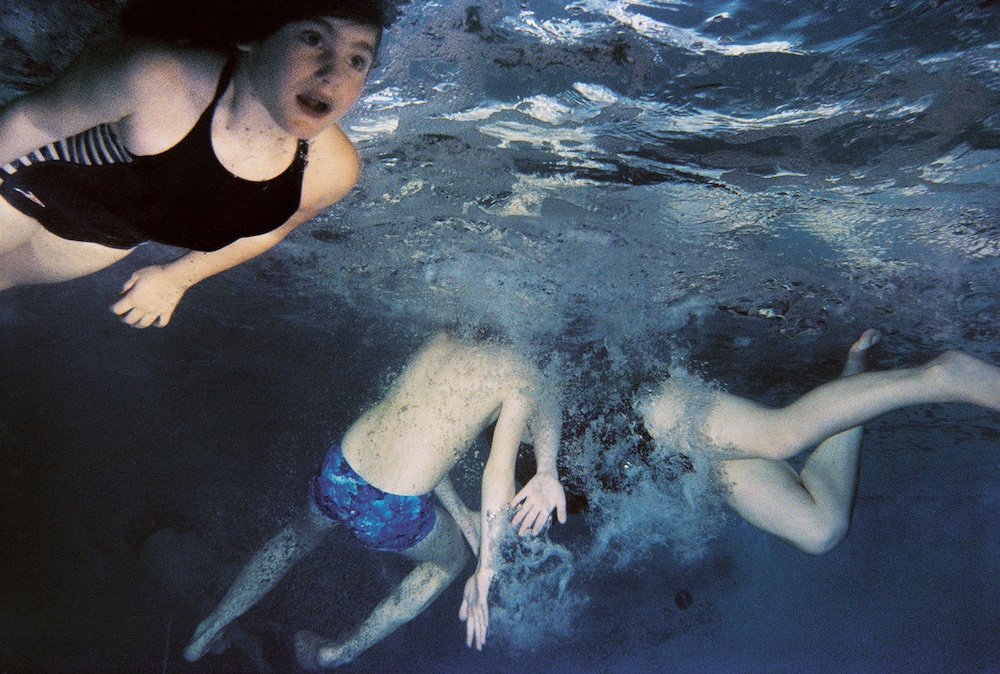
But at a certain point something shifted. Sultan became interested in making pictures that were ‘excessively physical, sensual and painterly,’ driven almost by an irrational obsession with the element of water and leading to the project Swimmers, a touchstone in the progress towards a more documentary-conventional way of photographing. The motif of the eater would recur throughout his life, particularly in relation to his family and, above all, to his father, whom he always describes with remarkable clarity and deep tenderness. For example, there is a moment when he recalls something his father once said while they were swimming: ‘You know, some days I just want to reach down, dive down to the bottom, lie there on the bottom and watch all the fish.’ This attention to water also surfaces in the title itself, which derives from an early draft of Pictures from Home, in which Sultan writes about the process of beginning a new artistic project – an emotional turbulence that finds clarity only through writing.
Reading through the pages, it is clear that photography has always been a way for Sultan to bring out the ‘play between the ordinary and the surreal or the extraordinary’: but after Swimmers, he felt the need to create images that feel physically and bodily present, close to himself, yet at the same time universal in their use of visual codes so deeply internalised that they appear almost harmless, naïve – and precisely for that reason, problematic and challenging. Or simply put, interesting.
The book explores the conceptual background of Sultan’s major series, highlighting the key moments in his creative journey – the steps that shaped the direction of his later work. From the first tensions in his relationship with Mandel, which eventually led to the end of their collaboration, to the discovery of family home movies that proved crucial for the genesis of Pictures from Home. It then moves to his work The Valley, a visual documentation of porn film sets, that instead proved to be an investigation of suburbia iconography and the standardisation of middle-class domestic environments. Finally, the book presents the reflections behind Homeland, a body of work with remarkable aesthetic power, yet also deeply political in its simplicity, where Sultan once again forcefully stages the photographic frame.
This exploration unfolds relentlessly through Sultan’s simple, direct – at times fragmented – writing: a form of self-questioning about one’s identity and artistic practice, a constant doubting of the paths taken or yet to be taken, and a desire to share what has been learned along the way.
Water Over Thunder confirms Larry Sultan’s passion for writing that had already surfaced earlier – first in 1992 with Pictures from Home, and later in 2004 with The Valley. These texts, together with a handful of other essays, inspired Liv Constable-Maxwell, editor at MACK, to approach the Estate of Larry Sultan with the idea of publishing a collection of his writings. After an initial visit to Sultan’s archive, Constable-Maxwell quickly realised that the sheer volume and diversity of unpublished material offered a rare opportunity to gain an intimate, behind-the-scenes view of Sultan’s creative process, both as an acclaimed artist and as an influential art professor. It is this lesser-known side of Sultan that emerges toward the end of the book: his career as a teacher, which began in 1978 at the San Francisco Art Institute and continued until 2009 at the California College of the Arts. Within the archive, pages upon pages of lecture transcripts were uncovered, revealing how candidly he shared his doubts and uncertainties about his own work with students, with a disarming openness.
One might dismiss the book by saying that, in a few words, it simply reveals the artist’s vulnerability. I believe, instead, that it shows something more fundamental: his humanity. The fragmented, discontinuous side of a person searching for answers – someone who found in photography a way to mediate with the world. First with others, with society; then with his family, with his father; and finally with himself. Indeed, reading his own words, all of his work after Pictures from Home seems to be an unceasing journey backward toward childhood, an attempt to reconnect with what once was. A search for himself in the furrows of his parents’ ageing skin, in the water sliding over synthetic swimsuits, in the backdrop of porn actors’ naked bodies, and finally in those nameless places on the edges of the city – empty fields behind shopping malls and rough stretches along the river. After all, isn’t that the fate of all of us: to look back into childhood in search of ourselves, trying to understand who we are and why we are such a way?♦
All images courtesy MACK. © The Estate of Larry Sultan.
Water Over Thunder: Selected Writings (2026) by Larry Sultan is published by MACK.
–
Rica Cerbarano is a curator, writer, editor, and project coordinator specialising in photography. She writes regularly for Vogue Italia and Il Giornale dell’Arte, where she is the Co-Editor of the Photography section. She has also contributed to Camera Austria, Over Journal, Hapax Magazine, and Sali & Tabacchi, amongst others. In 2017, Cerbarano co-founded Kublaiklan, a collective that has curated exhibitions at Images Vevey (Switzerland), Gibellina PhotoRoad (Sicily, Italy), Cortona On The Move (Italy), and Photoszene Festival (Cologne, Germany), amongst others. In 2022, she was a member of the Artistic Direction Committee at Photolux Festival (Lucca, Italy), where she curated Seiichi Furuya: Face to Face, 1978 – 1985 and Robin Schwartz: Amelia & the Animals.
Images:
1-Larry Sultan, Pictures from Home, 1983-92, proof print
2-Larry Sultan, Journal entry, mid-1990s
3-Larry Sultan, Dad on Bed, 1984, Pictures from Home
4-Larry Sultan, Untitled #1, 1978–82
5-Larry Sultan, Pictures from Home, maquette, early 1980s
6-Larry Sultan, Topanga Skyline Drive #1, 1999, The Valley
1000 Words favourites
• Renée Mussai on exhibitions as sites of dialogue, critique and activism
• Roxana Marcoci navigates curatorial practice in the digital age
• Tanvi Mishra reviews Felipe Romero Beltrán’s Dialect
• Discover London’s top five photography galleries
• Tim Clark in conversation with Hayward Gallery’s Ralph Rugoff on Hiroshi Sugimoto
• Academic rigour and essayistic freedom as told by Taous Dahmani
• Shana Lopes reviews Agnieszka Sosnowska’s För
• Valentina Abenavoli discusses photobooks and community
• Michael Grieve considers Ute Mahler and Werner Mahler’s posthumous collaboration with their late family member
• Elisa Medde on Taysir Batniji’s images of glitched video calls from Gaza
Join us on Patreon today and be part of shaping the future of photographic discourse


