
Stories found in passing: Kalpesh Lathigra’s first solo show in India
In his first solo show in India, recently on display at Dilip Piramal Art Gallery, photographer Kalpesh Lathigra turns the camera inward and outward, tracing ancestral trajectories and imagined possibilities through three bodies of work that blur documentary observation with introspective fiction. Set against the shifting urban fabric of Mumbai and framed by curator Veeranganakumari Solanki’s divisions of ‘what if’, ‘what was’ and ‘what might have been,’ The Lives We Dream in Passing meditates on migration and belonging, questioning how images shape memory as much as they record it, Zahra Amiruddin writes.
Zahra Amiruddin | Exhibition review | 19 March 2026
Join us on Patreon
Moving across the city of Mumbai is a constant act of observation. The familiar isn’t always guaranteed, as the city packs and unpacks itself multiple times a day. So, you must be in tune to its corners, and sudden surprises. A footpath under construction, the vegetable cart’s newest location, the galli (narrow lane) that’s turned into a one-way ‘only for today,’ the flower seller who has changed his street corner. Nothing is stagnant in this city – not even its memory. For British-born photographer, Kalpesh Lathigra, it took three years of roaming through Mumbai for him to piece together a path to his ancestral trajectories.
In his first solo show in India titled The Lives We Dream in Passing, the London based photographer traces his grandfather’s voyage from Gujarat to Mumbai before making the eventual journey to Nairobi and London. Through three bodies of work: Memoire Temporelle, The Indian Photo Studio and Junagadh, visitors follow Lathigra’s introspections of home in a gallery space that sits by Mumbai’s shoreline and subsequent iconic skyline. Primarily a photojournalist in the beginning of his career, Lathigra now takes on a different role of the storyteller – often blurring the lines between fact and fiction.
As you enter the gallery, the soft and subtle light invites you into the photographer’s memory and faces gaze back at you through floating frames. Some curious, some self-assured, and others from a time long gone. You’re led into three distinctive styles of imagery, an aspect brought-forth by the exhibition curator, Veeranganakumari Solanki, who has clearly divided Lathigria’s meditations by ‘what if?’, ‘what was?’ and ‘what might have been?’.
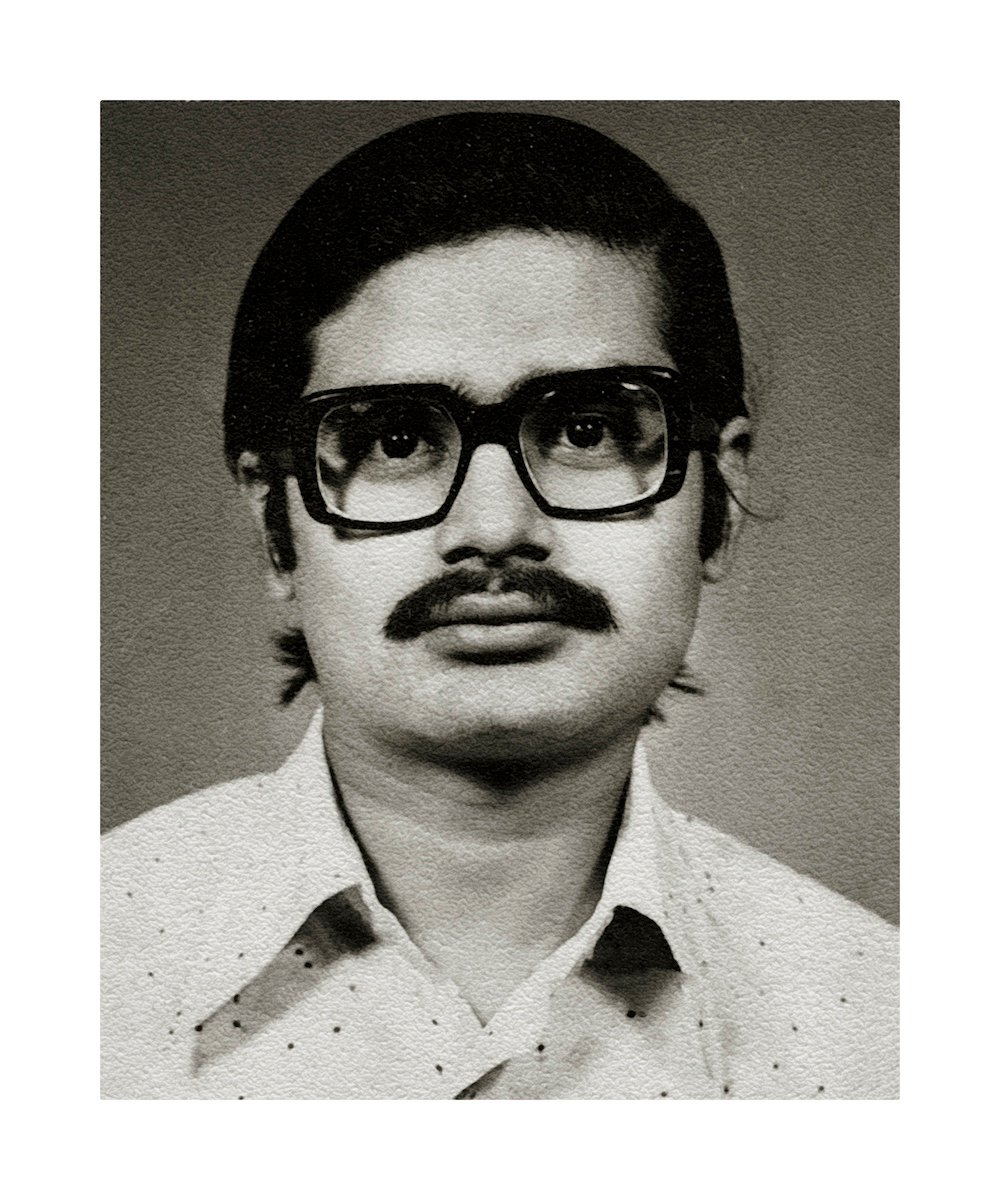
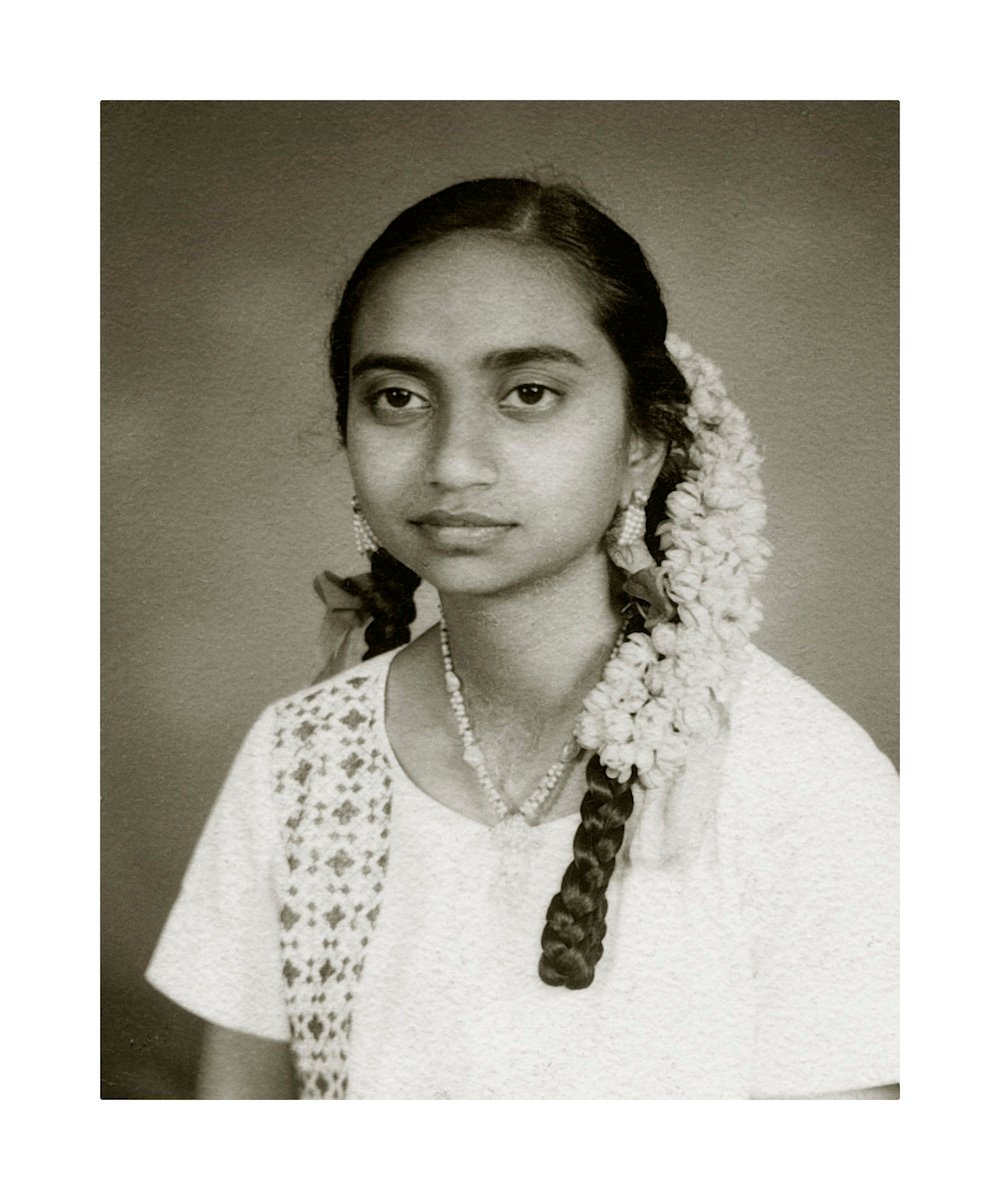
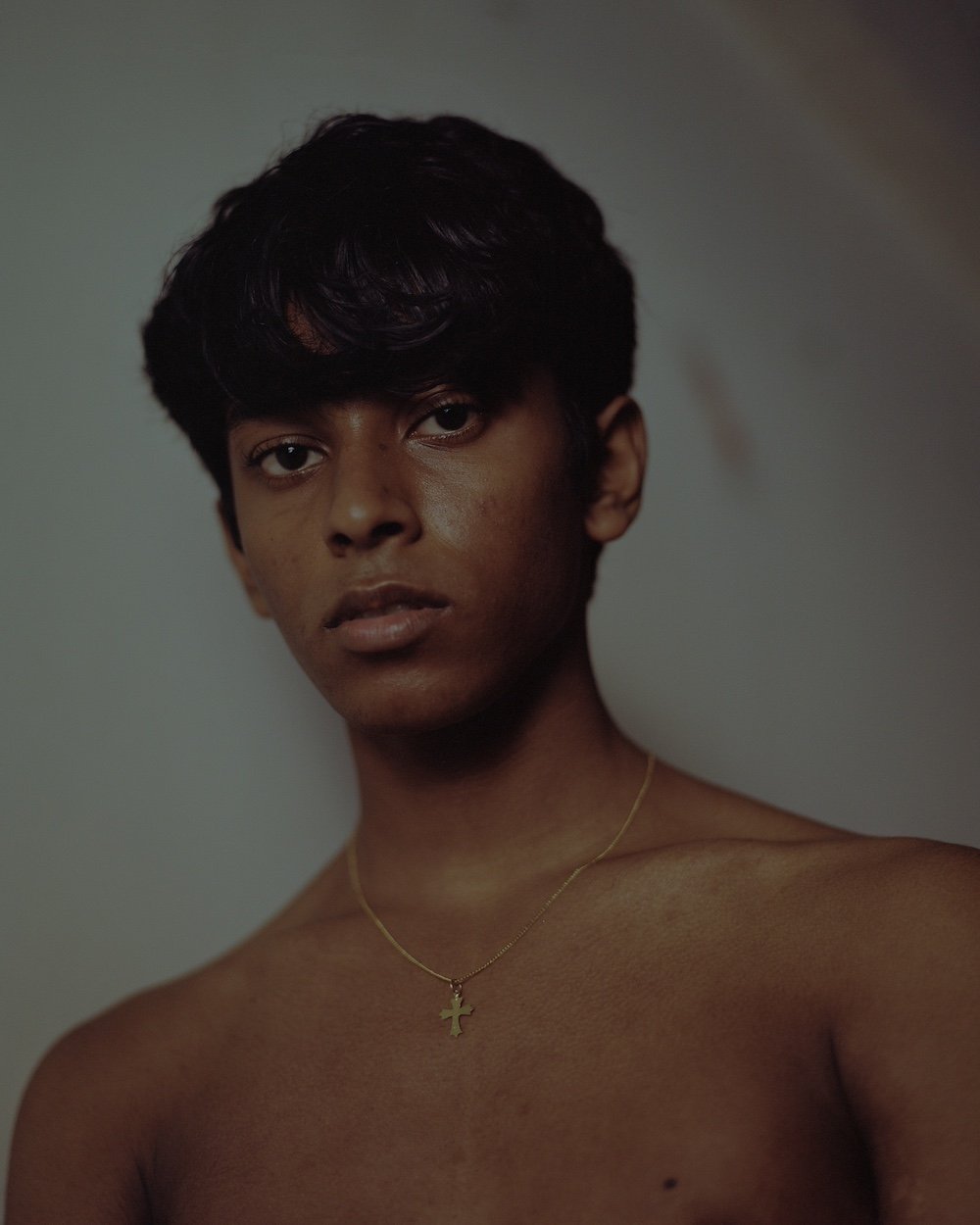
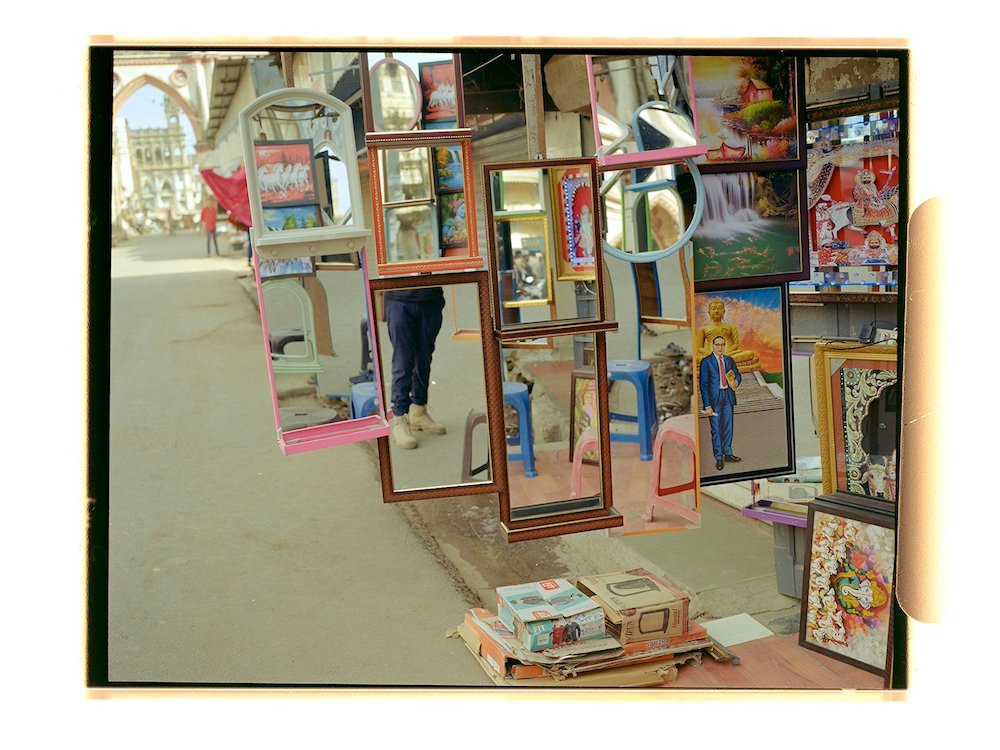
In the first wall of the show, Memoire Temporelle explores a potential life that might have unravelled had his grandfather stayed in Mumbai. In The Indian Photo Studio we’re confronted with large black-and-white portraits of unknown people, enlarged from passport-sized photographs Lathigra bought at a flea market in Mumbai. On further examination, they share the photographer’s cultural lineage of being Gujaratis. We then walk across a literal passageway through time and arrive at Lathigra’s father’s hometown, Junagadh. Here, we follow the photographer’s invisible shadow as he observes and records through the lens of an NRI (Non-Resident Indian) – making him belong and distant, all at once.
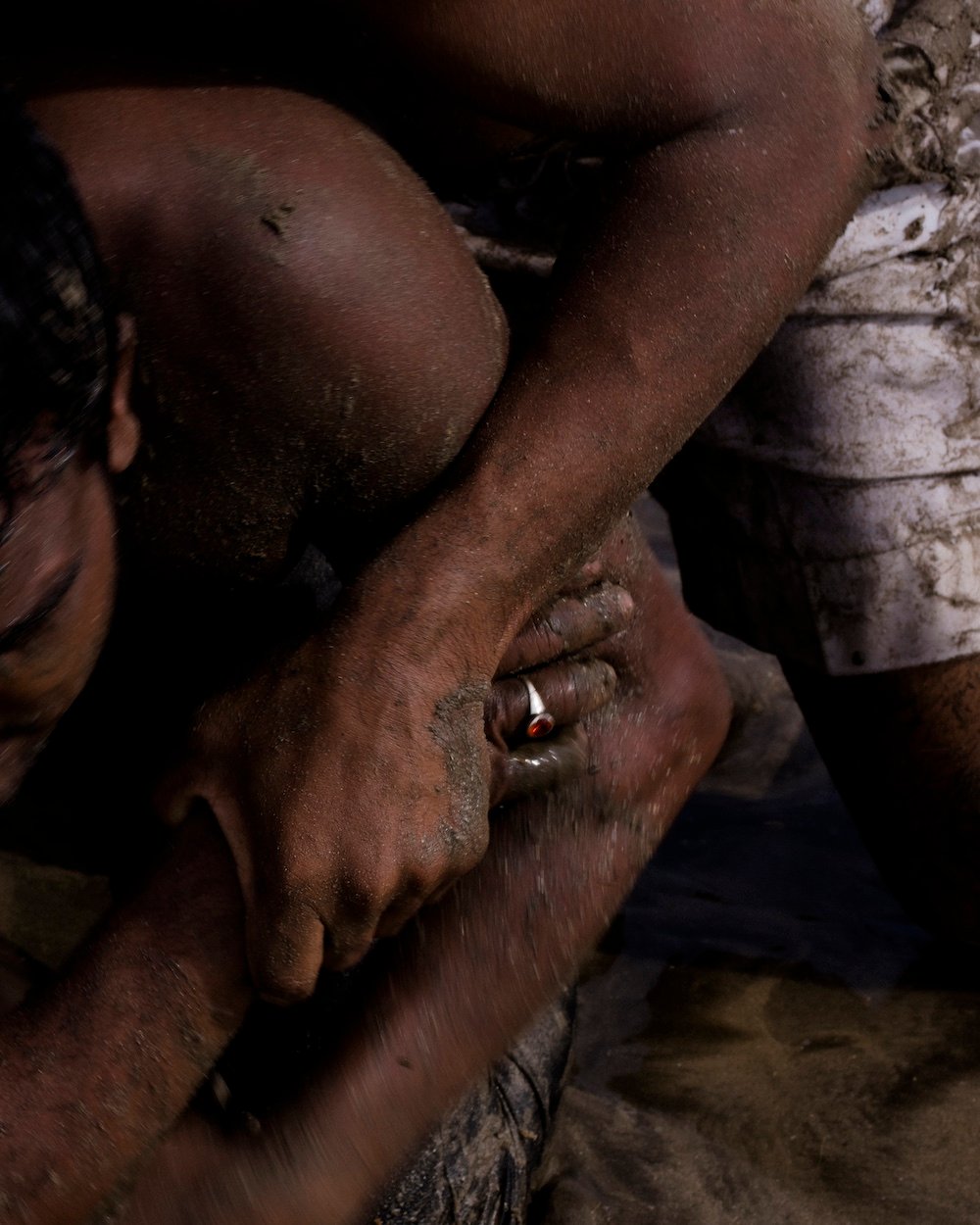
In fact, it was Lathigra’s friendship with Mumbai-based photographer Prarthana Singh and her partner Ankur Tewari that grounded him in his gaze. They often posed questions to the image-maker that made him introspect on his ways of seeing, and its purpose within the larger narrative. Having grown up at a time when photojournalism was equivalent to the Western ideas of exoticising the Indian landscape, the hardest part was unlearning the style of documentation to which he had become accustomed. The physical confrontation of identity, positionality and piecing together memories that weren’t his own, nudged a style of photography in Memoire Temporelle where we’re closing in on his frames to form deliberately tight compositions.
“This body of work was a way to challenge my trained photojournalistic eye that was leaning towards the ‘popular’ composition. Hence, I took-on the performative act of stepping into the frame, and [subverting] my gaze,” says Lathigra. Interestingly, the people in the imagery are cast, and look into the camera like they’re furthering the photographer’s fictional life in Mumbai had he grown up here. Solanki mentions how one of the images of a young boy was included in the edit primarily because Lathigra saw similarities between himself and the model when he was younger. With these personal anecdotes only known to him, the photographer romanticises what could have been, without romanticising the idea of home and belonging. “It’s where the title of the show emerges from, The Lives We Dream in Passing…” says Solanki.
You can’t help but notice the edgy fashion-esque flair with which Lathigra photographs his muses. They don’t shy away from the lens and almost appear as if entwined with one another through limbs and everyday objects – protagonists in various chapters of the artist’s daydreams. They could quite easily trace back to the people in Indian Photo Studio that Lathigra chanced upon while looking for a poster of the cult-classic Bollywood film, Sholay. “Some visitors commented on how this could be read as part of Lathigra’s archive, but in fact it’s the anti-archive because it’s a box of found photographs of people we don’t know,” elucidates Solanki. The assumption is that the images were part of a date collection cycle, with the names and professions of each individual written in Gujarati and translated by the curator’s father. As she writes in the exhibition note, they are part of a forthcoming book, set with a series of short stories written by the artist where the images find a way to disperse the archive again.
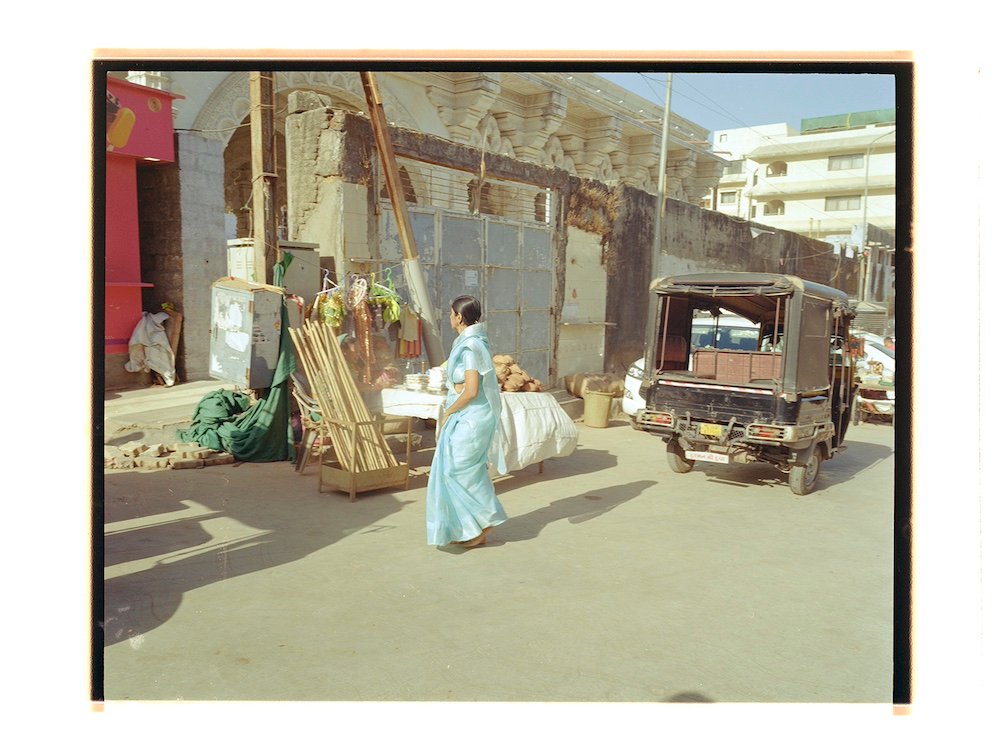
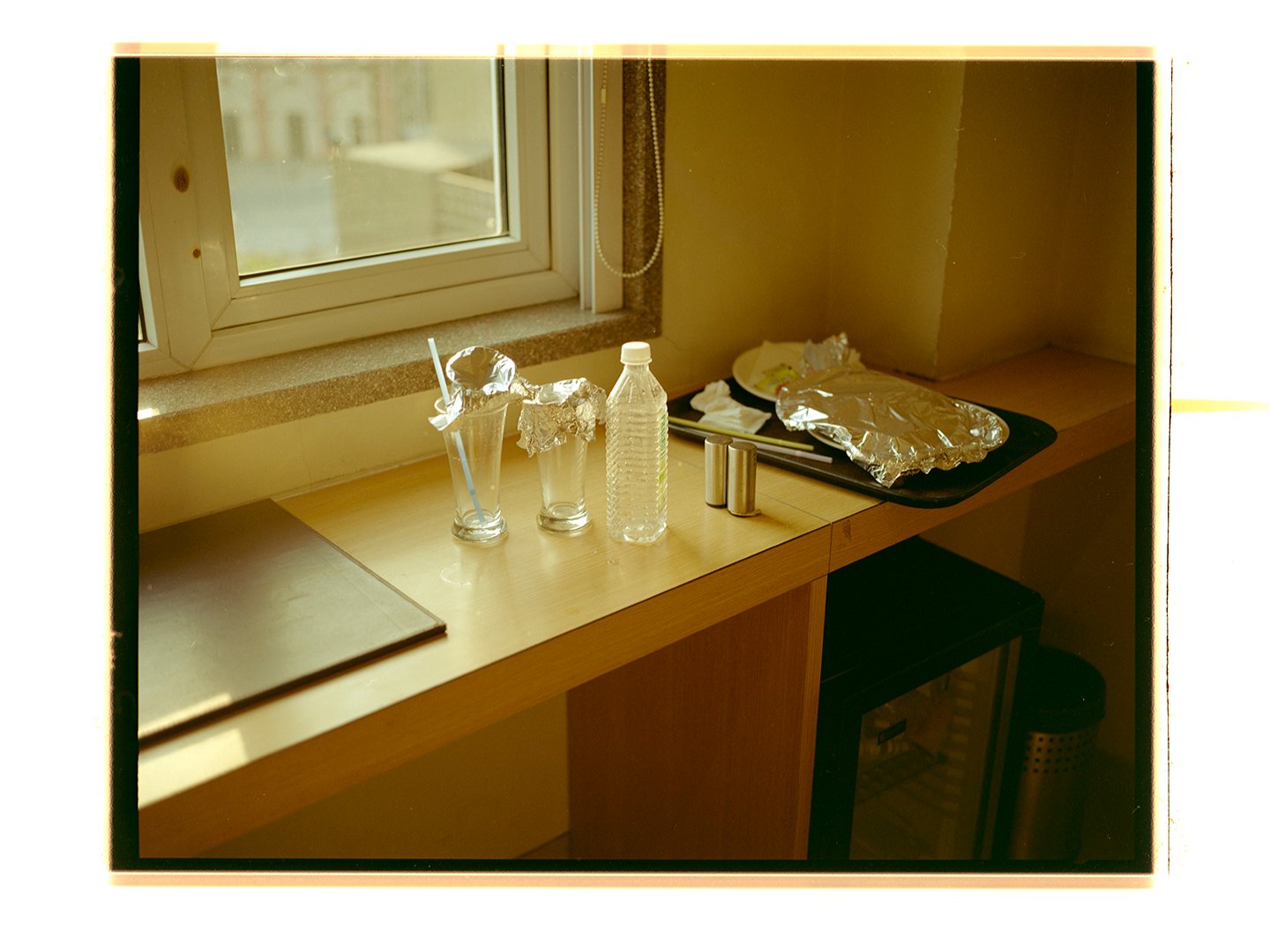
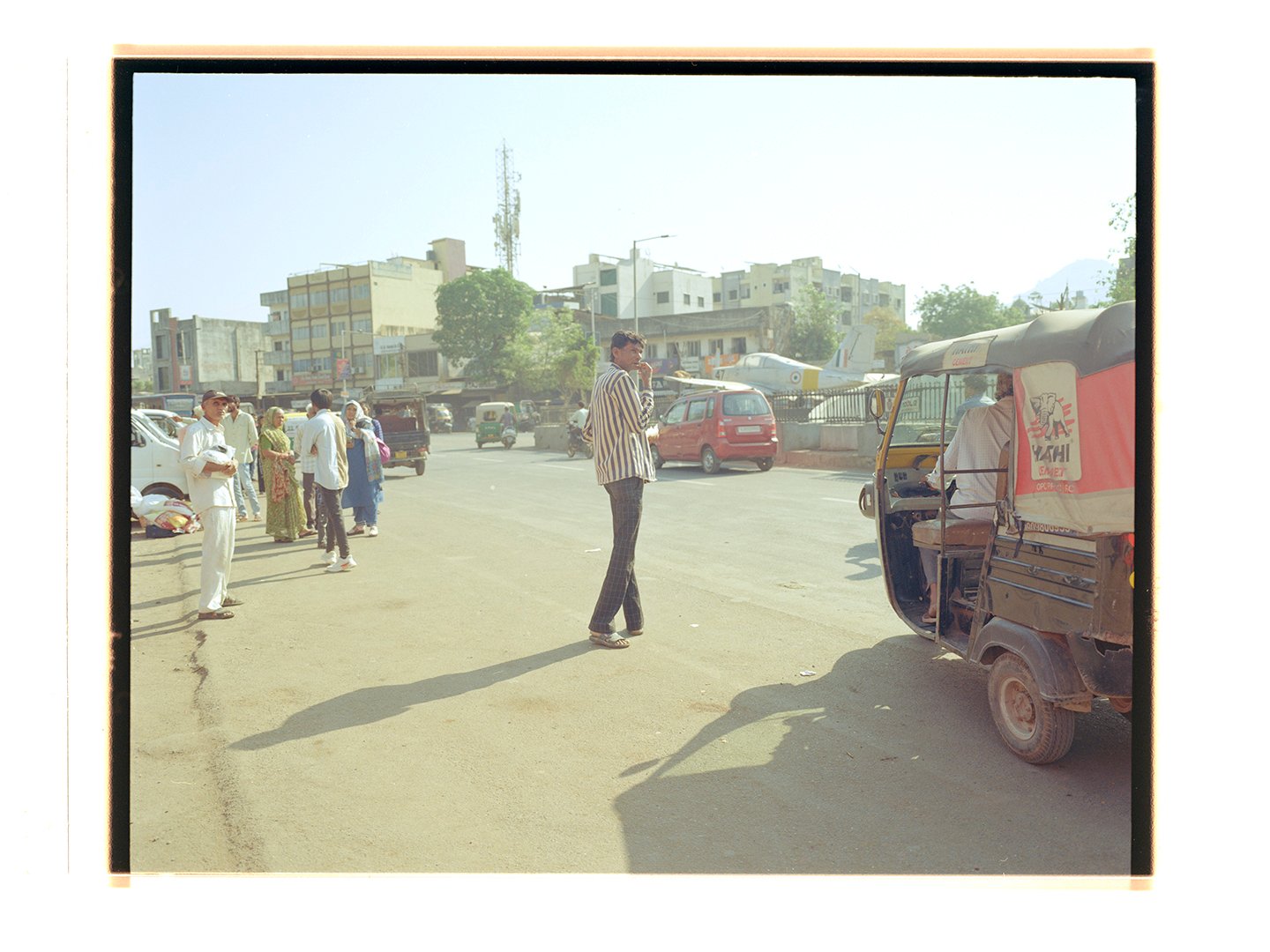
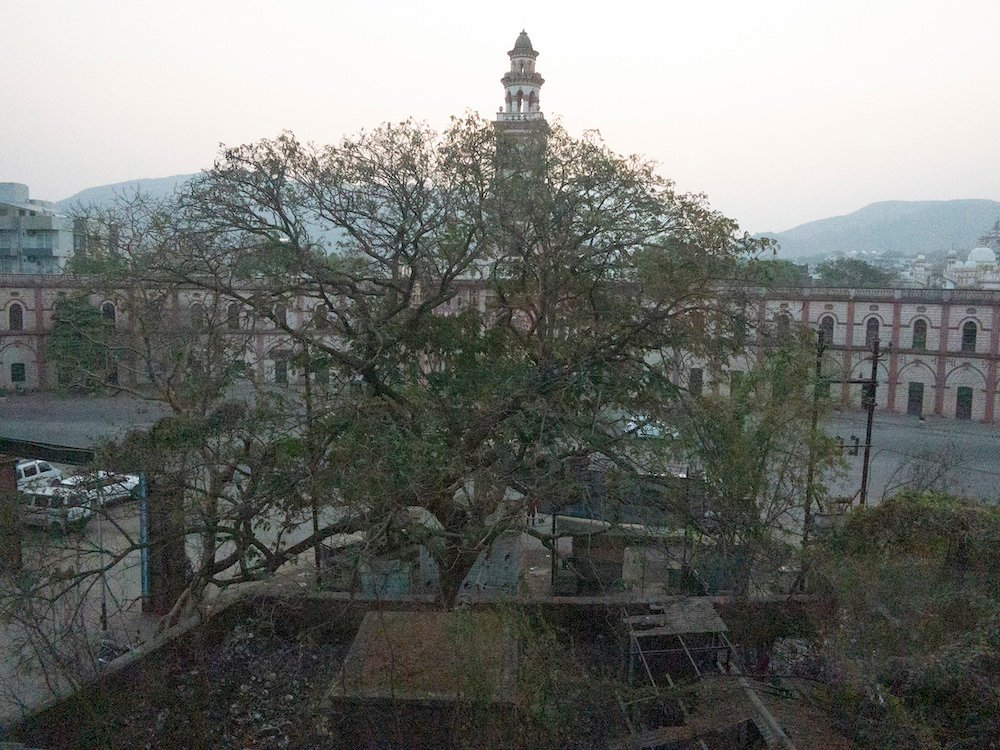
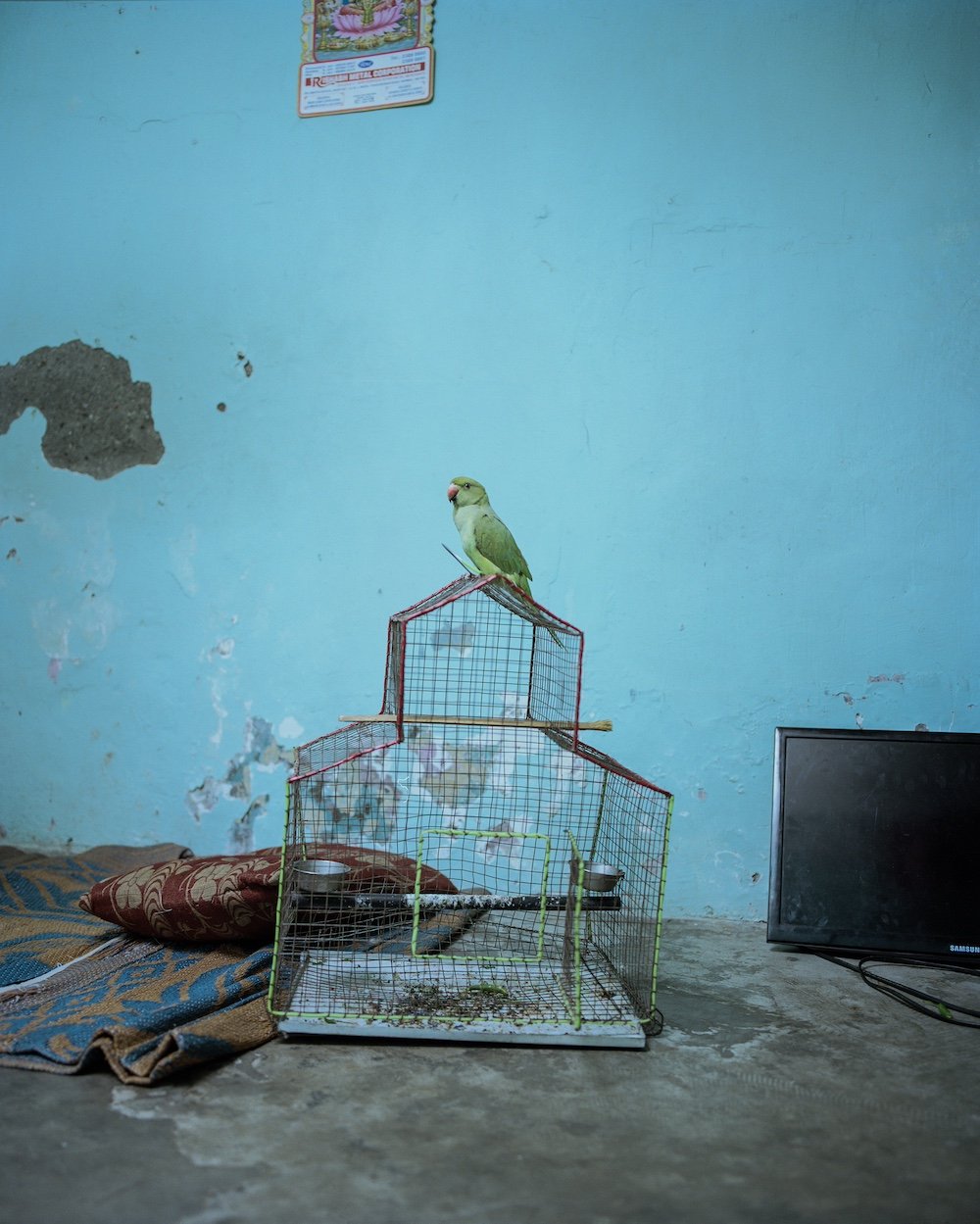
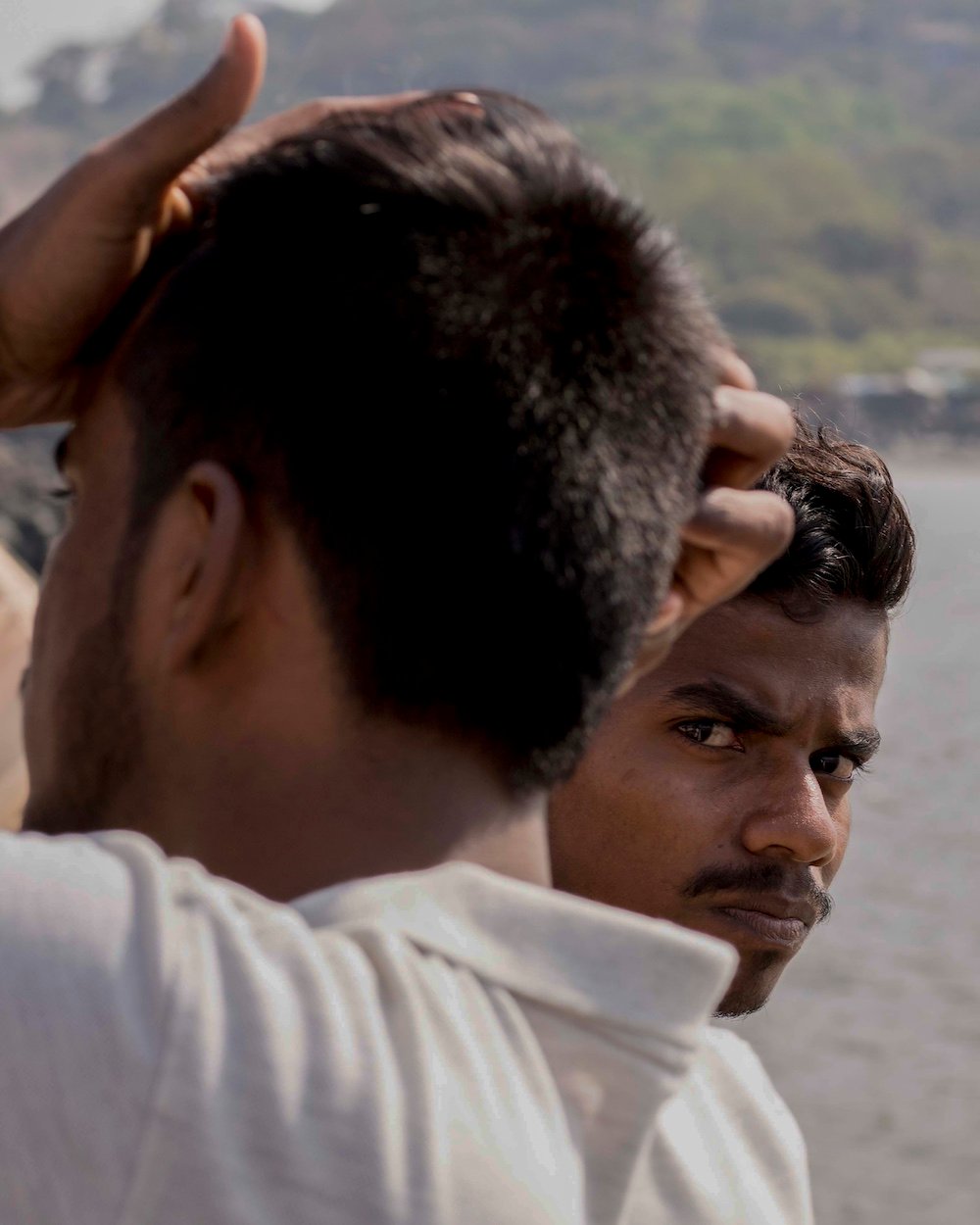
This work acts as a link in the curation, seamlessly tying together two moments in time. The fact that these people were serendipitously Gujarati too, allowed an entry point into Lathigra’s own lineage. In seemingly ordinary sequences of people walking across streets, boys waiting for a train and a woman in a sky-blue saree caught mid-motion, we’re given snapshots of the town of Junagadh in the state of Gujarat that we’re discovering along with the photographer. “Of course I like the images, but they are banal. They’re not elevated to a point of exoticisation, and this is extremely deliberate,” explains the artist. It’s noteworthy that a lot of the imagery is shot from the windows of his hotel room there, which serves as a safe space of transition; a place that’s your own, but still not quite. The style of documentation was his way of moving back to his earlier work, yet that also led him to contemplate on Joachim Brohm’s Ohio, which was made as a broader reflection on the concept of place. In an image of a car that slightly juts out from the display wall, I wonder about the placement of the photograph that sits in between here and there – again a considered part of the curation.
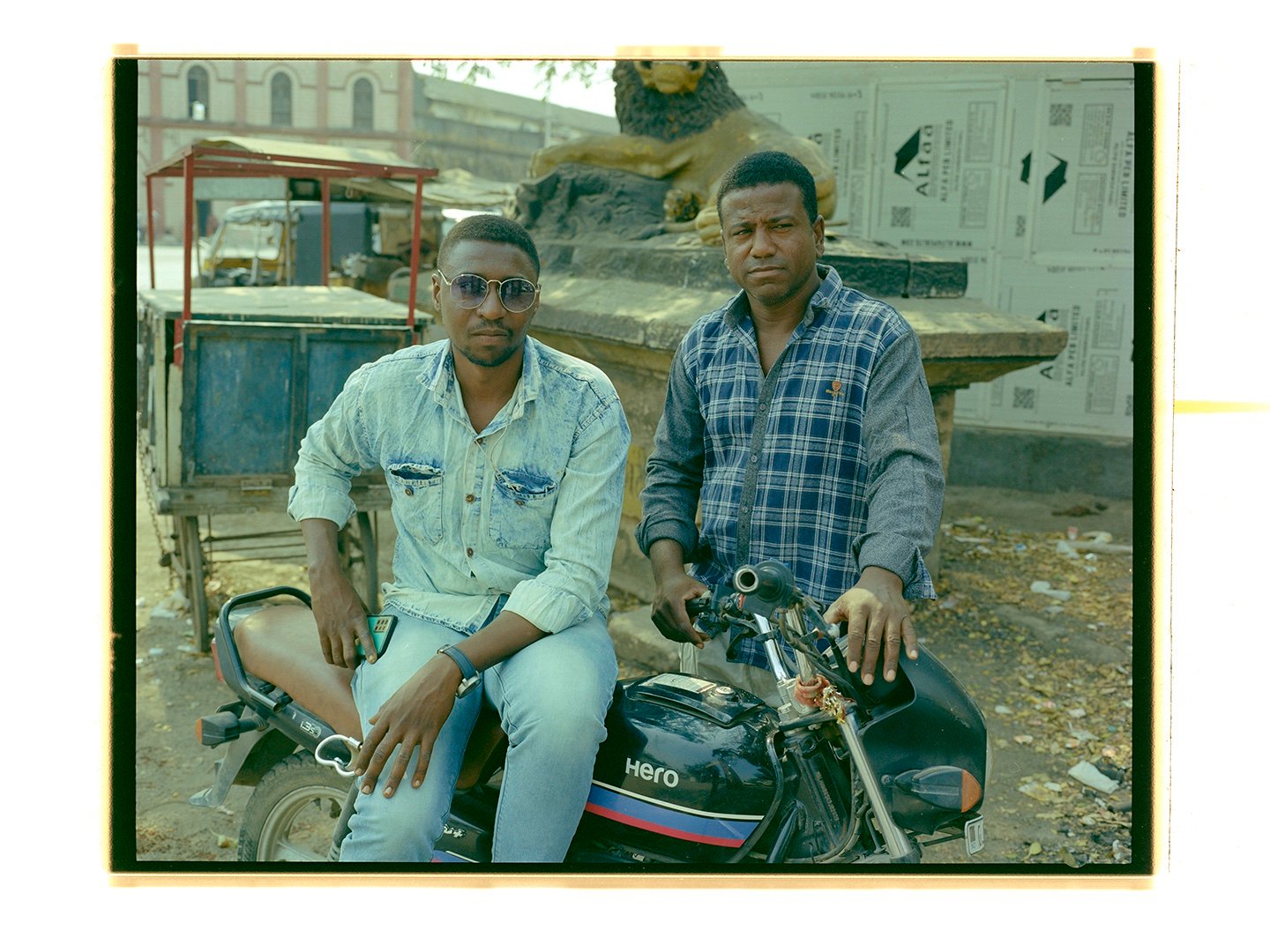
As my eye moves across the series, I notice a portrait of two men from the Siddi community, a tribal group of African ancestry predominantly settled in the Indian states of Gujarat, Maharashtra and Karnataka since as early as the 9th century. Solanki mentions that this image was an important thread that tied to Lathigra’s own notions of home, belonging and migration. Since the Siddis have been a part of India’s history for more than one thousand years, there is certainly no sense of non-belonging, which is quite the contrary for Lathigra whose grandfather found home in both, India as well as Africa. It made him realise that while lineage might be inherited, it doesn’t necessarily make a place home, and vice versa. It’s a thought that I ponder upon as I watch my city whizzing past in one of Lathigra’s large vinyl prints, almost serving as a bookend for the photographer’s musings which tenderly feel like – I have arrived, observed, recorded, but now I have left.♦
All images courtesy thee artist Dilip Piramal Art Gallery. © Kalpesh Lathigra
Kalpesh Lathigra: The Lives We Dream in Passing ran at The Dilip Piramal Art Gallery, NCPA Mumbai, India, 12 February – 6 March 2026.
—
Zahra Amiruddin is a writer, photographer and educator. Her essays have been published by 1000 Words, The Alkazi Foundation for the Arts, Vogue, The Hindu, Art India, and Scroll. Her main areas of interest include ethnographic studies, astronomy, family histories, critical writing, and personal narratives. She is part of 8:30, a photography collective of nine women working with the visual medium across India.
1000 Words favourites
• Renée Mussai on exhibitions as sites of dialogue, critique and activism
• Roxana Marcoci navigates curatorial practice in the digital age
• Tanvi Mishra reviews Felipe Romero Beltrán’s Dialect
• Discover London’s top five photography galleries
• Tim Clark in conversation with Hayward Gallery’s Ralph Rugoff on Hiroshi Sugimoto
• Academic rigour and essayistic freedom as told by Taous Dahmani
• Shana Lopes reviews Agnieszka Sosnowska’s För
• Valentina Abenavoli discusses photobooks and community
• Michael Grieve considers Ute Mahler and Werner Mahler’s posthumous collaboration with their late family member
• Elisa Medde on Taysir Batniji’s images of glitched video calls from Gaza
Join us on Patreon today and be part of shaping the future of photographic discourse


