
10 Must-See Exhibitions: Autumn 2026
A new season of art is underway, and our quarterly guide returns with a selection of the photography exhibitions and events to look out for this autumn. From Carrie Mae Weems and Sanlé Sory to Taryn Simon, Rhiannon Adam and Mikhael Subotzky, this roundup leaps between intimate archives and planetary histories, abandoned houses and imagined moons, family memory, and the fractured landscapes of cities.
1000 Words | Resource | 24 September 2026
Join us on Patreon
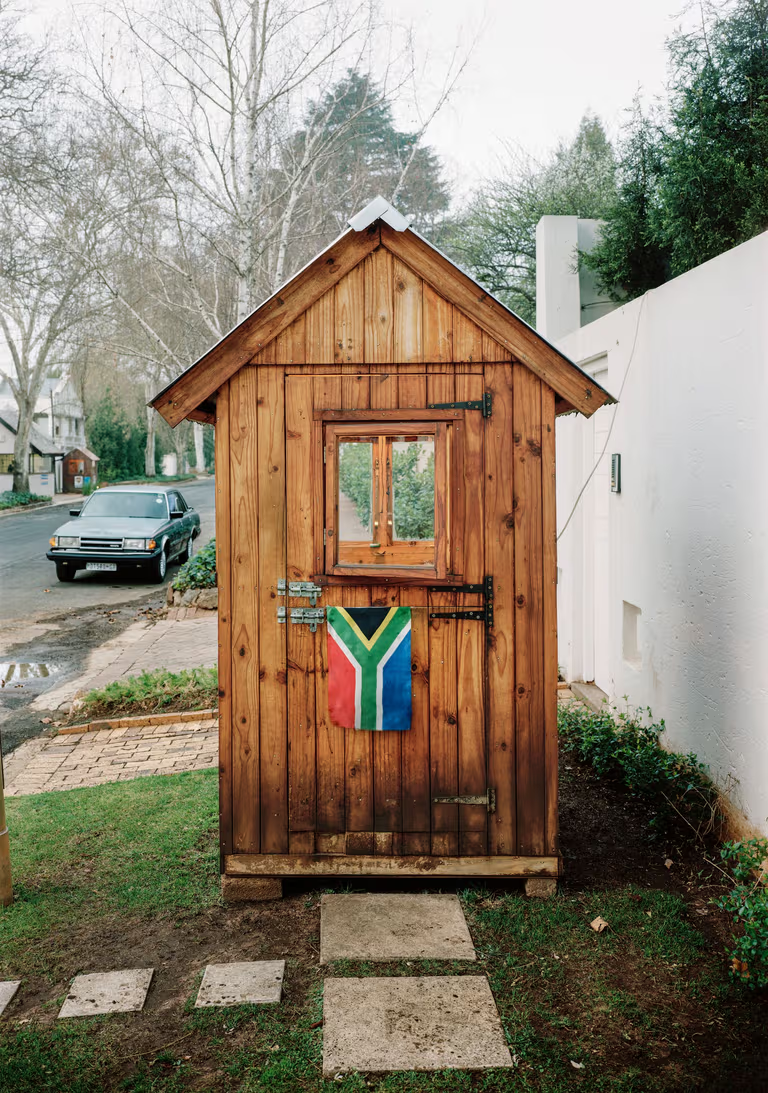
Mikhael Subotzky, A Johannesburg Landscape (or Thirteen Tons Settled to Brick) – Johannesburg, Goodman Gallery
27 August – 31 October
Twenty years after his first exhibition with Goodman Gallery, Mikhael Subotzky returns with A Johannesburg Landscape (or Thirteen Tons Settled to Brick), a layered portrait of the city assembled from photographs, paintings and his distinctive Sticky-tape Transfers. Living and working in Johannesburg since 2008, Subotzky draws on archival maps, mining histories, infrastructure, vegetation, and images from his own photographic archive, bringing different eras and perspectives into the same fractured compositions. At the centre of the exhibition is the ten-panel A Johannesburg Landscape, where fragments of Ponte City, mining imagery and the city’s flora collide in a complex passage through Johannesburg’s past and present. His interest in mapping, movement and exchange continues in An Idea of Africa (2023–26), which inverts the conventional orientation of the continent to trace routes of migration across its surface. The exhibition’s title has a more personal origin: Subotzky’s German-Jewish great-grandfather, unable to remove his assets from Nazi Germany, converted what remained of his wealth into a thirteen-ton steamroller. Shipped to Cape Town and sold there, it helped finance the family’s eventual move to Johannesburg – a remarkable journey of displacement and reinvention that echoes the exhibition’s wider preoccupation with how people, objects and histories move through landscapes.
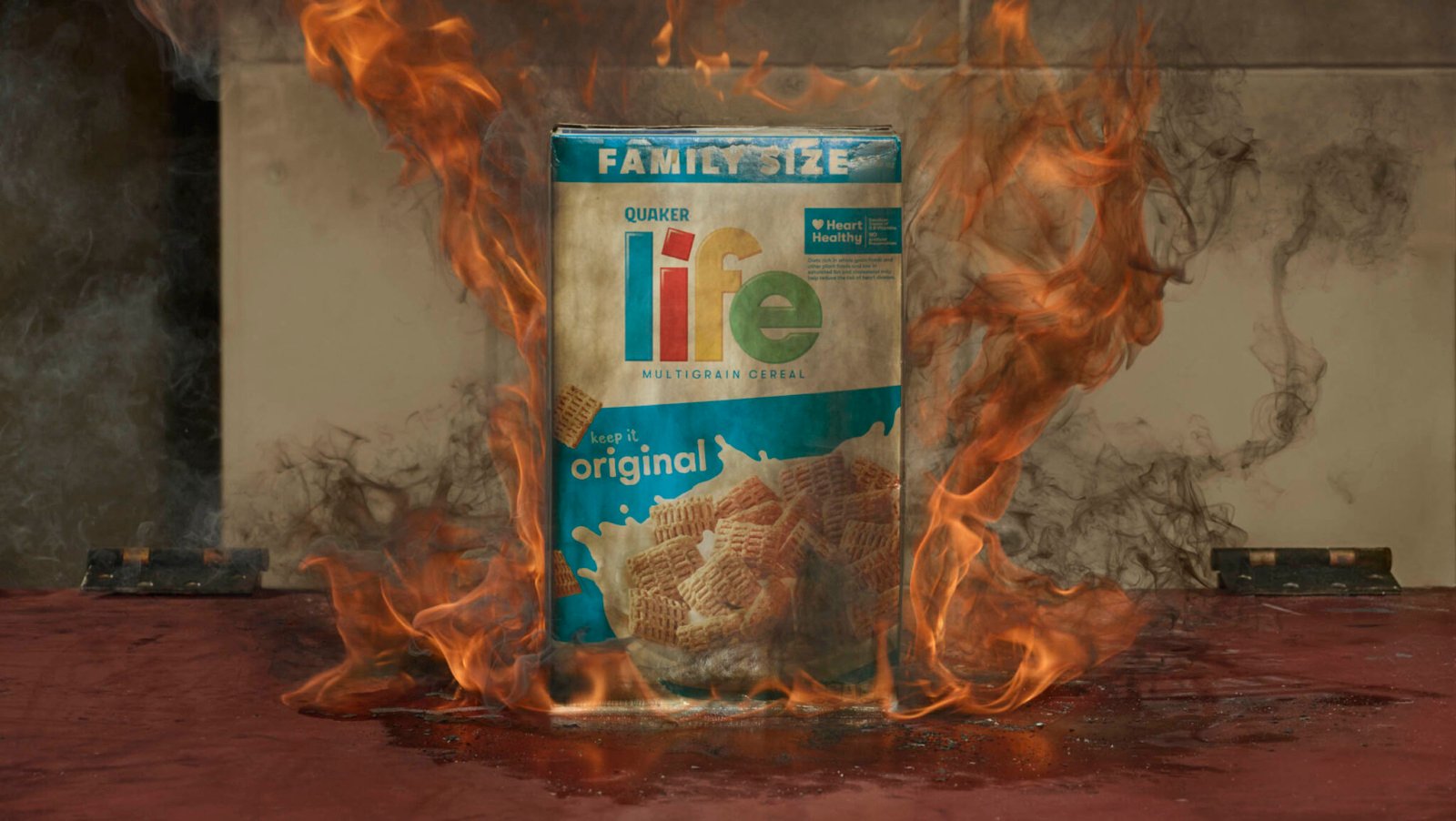
Taryn Simon, Father Country I Do Love You – Guggenheim, New York
18 September – 14 March
Occupying the entire rotunda of Frank Lloyd Wright’s Guggenheim, Father Country I Do Love You is Taryn Simon’s most expansive project to date, nearly a decade in the making and the first monographic exhibition by a photography-based artist to take over the museum’s iconic spiral. At its centre is the life of an unnamed federal agent whose career placed him in proximity to defining political and violent events in recent American history, acting as a middleman who witnessed, gathered and transmitted information without ever possessing the complete picture. Simon reconstructs the reverberations of his work across 42 chapters, combining photography, text, video, and sculpture in a deliberately expansive narrative. The project is equally shaped by the intimate absence of Simon’s own father, who worked for the US government abroad before later running an arcade business, and whose life became increasingly inaccessible following his diagnosis with Alzheimer’s. Presented during the 250th anniversary year of the United States, the exhibition moves between the mechanisms of state power and the fragility of personal memory, asking what can be known about a country – or a parent – when the archive is inevitably partial.
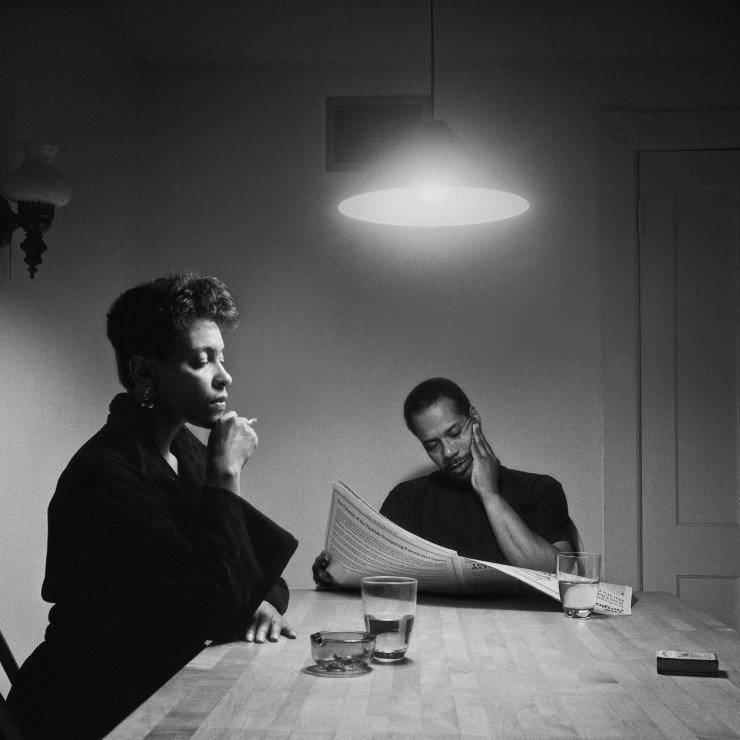
Carrie Mae Weems, The Heart of the Matter – C/O Berlin
12 September – 3 February
Across four decades, Carrie Mae Weems has returned to the domestic interior, the family archive, the plantation, the museum, and the monument as sites where power is rehearsed and memory is authorised. Her great achievement has been to recognise that the politics of representation are inseparable from the intimate conditions through which a life is experienced, remembered and given meaning. In The Heart of the Matter, opened during Berlin Art Week, this sustained interrogation of photography’s complicity in the production of power is given retrospective form. Yet rather than tracing a linear progression through Weems’ career, C/O Berlin organises the exhibition around the idea of the artist as a “creative form”, bringing recurring preoccupations and strategies into dialogue across different periods of her practice. Works including Family Pictures and Stories (1978–84), Kitchen Table Series (1990) and the recent Preach (2024), an immersive meditation on Black worship and spirituality, are brought into conversation, revealing both the continuities and the formal range of Weems’ work.
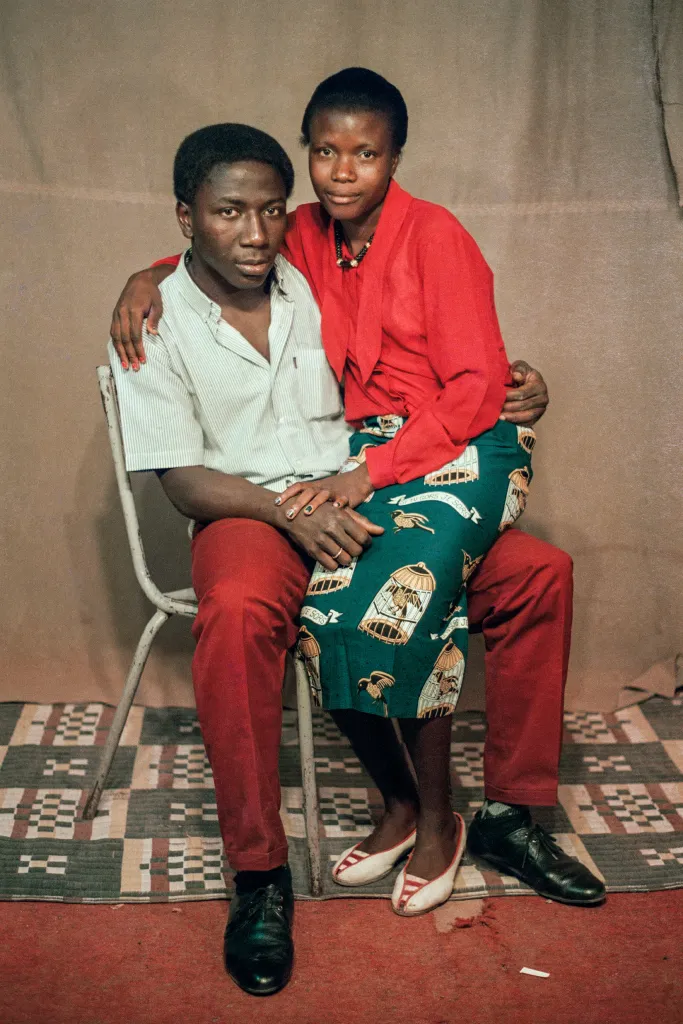
Sanlé Sory, Colour Years – The Photographers’ Gallery, London
14 October – 21 February
Sanlé Sory’s Colour Years turns its attention to the chromatic dimension of a photographic practice more often encountered through its celebrated black-and-white portraits. Born in 1943, Sory began his photographic career in Bobo-Dioulasso in 1960, the year Upper Volta gained independence, establishing the Volta Photo studio in a city that became an important centre of the country’s emerging urban and popular culture. His black-and-white photographs of the following decades documented the musicians, dancers, workers, and young people who inhabited Bobo’s post-independence scene. The colour photographs extend this record into the 1970s and 1980s, capturing the fashions, leisure and everyday life through which a younger generation articulated new forms of identity and modernity. Meticulously restored from negatives in Sory’s archive, the images are presented alongside Volta Jazz record covers featuring the musicians and bands who shaped the city’s popular culture.
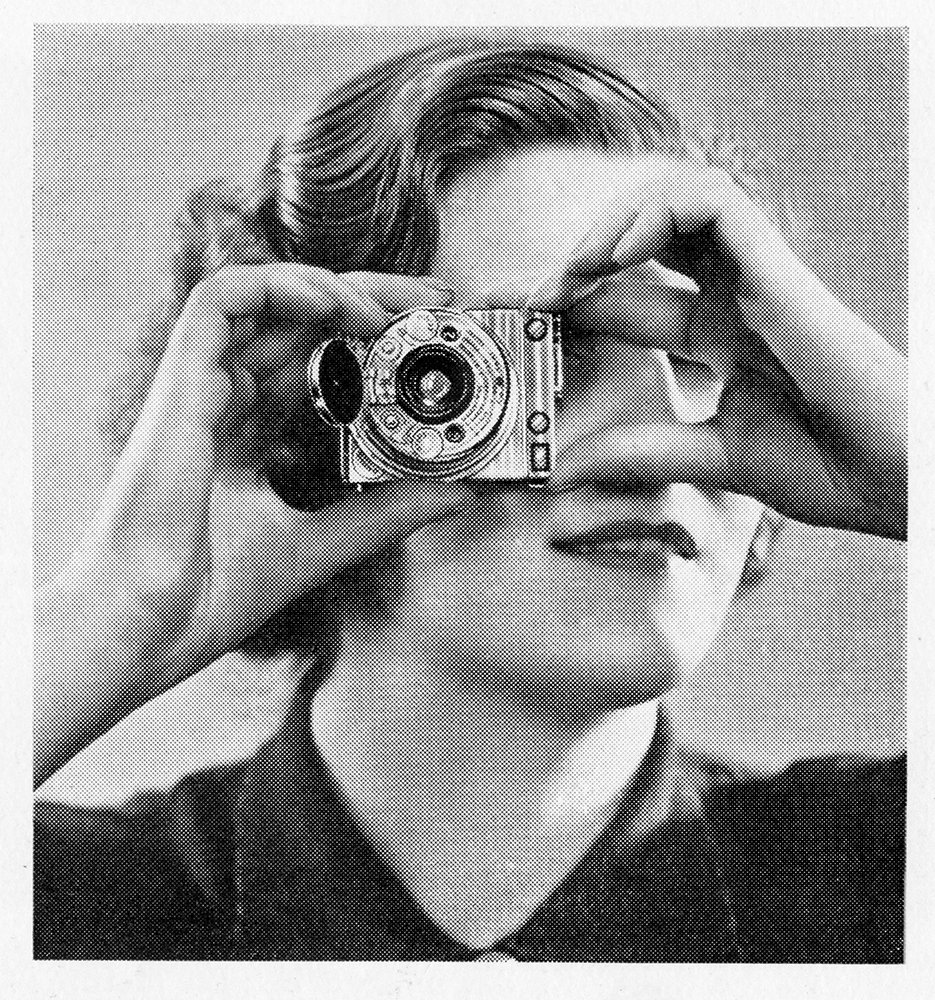
First Times / First Photos – Pavillon Populaire, Montpellier
1 July – 1 November
The newly renovated Pavillon Populaire, in the heart of Montpellier, inaugurates its latest exhibition with a series of photographic firsts. Rather than treating its subject as an encyclopaedia of origins, the exhibition proposes a playful passage through two centuries of photographic innovation. These beginnings, often provisional and exploratory, complicate the mythology of the photographic genius by returning us to the uncertainty of the first gesture. The accompanying publication gives this language of invention a distinctly 19th-century precision: new photographic apparatuses, early French patents for “improvements in the instantaneous photography of moving objects” and accounts of the first and only colour photograph of a nuclear explosion. Yet Édouard Boubat’s deceptively simple observation — “There is no first photo. There are only ‘new’ photos. The light is ‘new’ today” — strips the photographic “first” of its finality. What appears to be an origin becomes instead a recurring condition: an encounter between light, apparatus and the present. “The cult of the new,” artistic director Luce Lebart calls it.
Rhiannon Adam, Rhi-Entry – International Centre for the Image, Dublin
11 September – 23 December
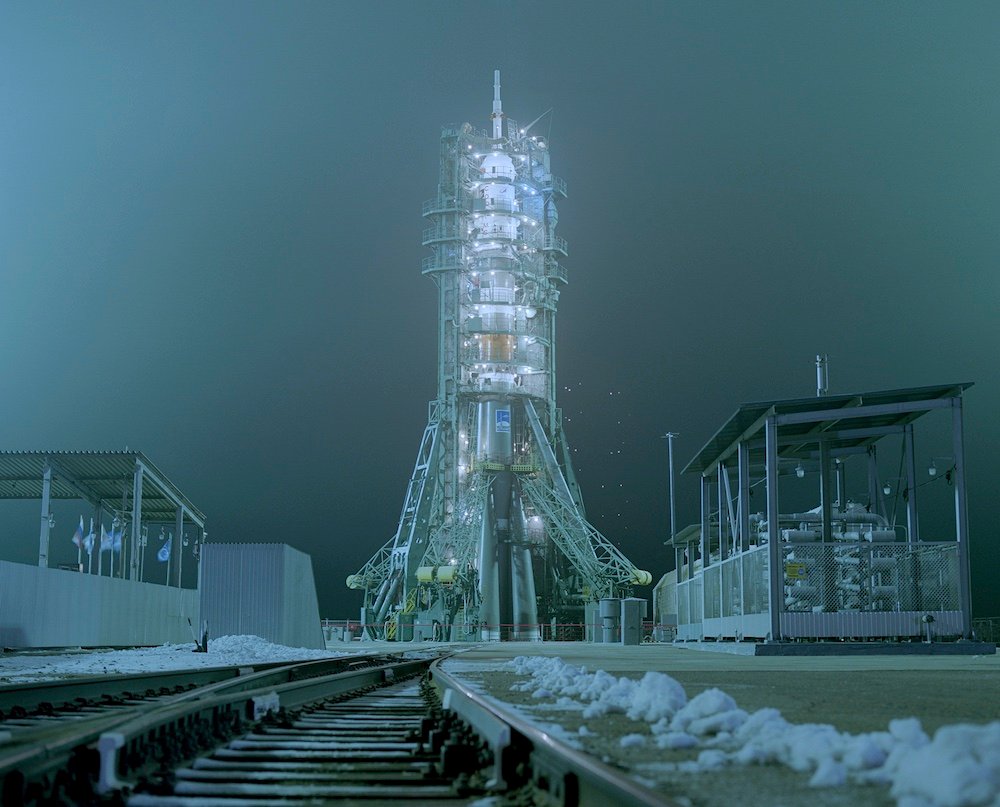
At Dublin’s International Centre for the Image, Rhi-Entry marks the Irish premiere of Rhiannon Adam’s account of a journey that never took place. In 2021, Adam was selected for dearMoon, the proposed civilian lunar mission funded by Japanese entrepreneur Yusaku Maezawa, and was set to become the first openly queer woman to travel beyond the Kármán line. When the project was abruptly cancelled in 2024, it left behind a life reorganised around an anticipated future that had ceased to exist. Adam’s resulting work moves between photographs, archival material and ephemera, unsettling the boundary between documentary evidence and imagined experience. The title’s play on “re-entry” — the return through Earth’s atmosphere — becomes a metaphor for the difficulty of returning to mundane life after investing oneself in an extraordinary future. Presented alongside Lewis Bush’s examination of the historical and ethical foundations of modern rocketry, the exhibition places Adam’s experience within a wider history of who is invited to imagine the future, and who gets to participate in its construction.
Robert Zhao Renhui, Trying to Remember a Tree – Fotografiska, Shanghai
24 July – 6 November
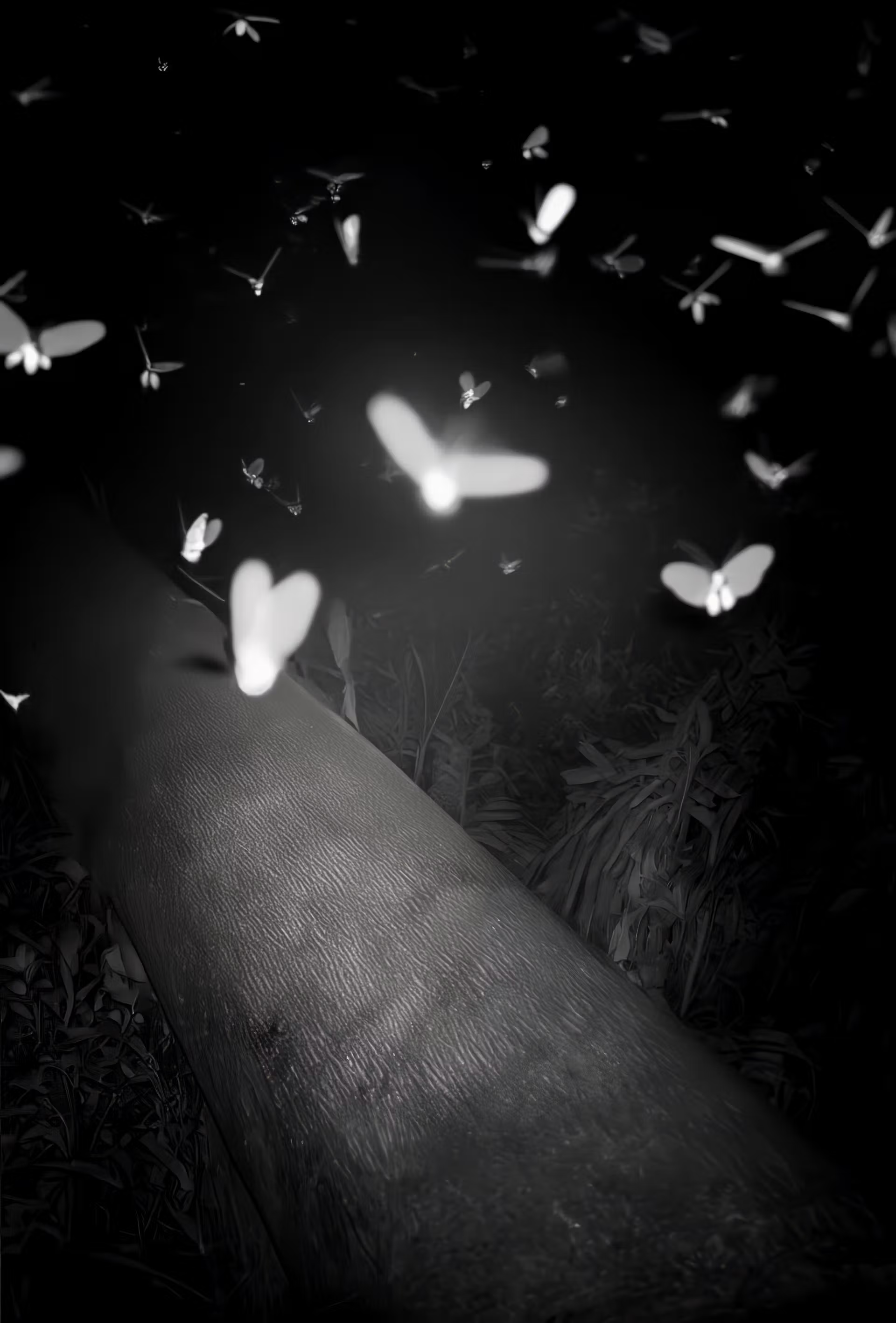
At Fotografiska Shanghai, Trying to Remember a Tree extends Robert Zhao Renhui’s examination of the relationship between human systems and the natural world, taking as its point of departure something easily overlooked within the efficiency of the modern city: a dead tree. The exhibition follows a fallen rain tree beyond the moment at which it would ordinarily cease to be of interest. Across five groups of works, Zhao records 28,017 leaves, sections of the truncated trunk and 24-hour surveillance footage of its gradual decomposition, bringing together photography, moving image and installation in an extended study of disappearance. The project continues the Singaporean artist’s interest in the ways nature is classified, managed and made legible, a concern also embedded in his fictive Institute of Critical Zoologists, through which he adopts the languages of scientific research and archival practice while quietly unsettling their authority. Yet, as Zhao notes, “before we engage with broader discussions of ecosystems or environmental futures, we must first return to a grounded, micro-level act of looking.”
Richard Billingham, Ray’s a Laugh – 30 Years – The Apartment, Images Vevey
5 September – 14 February
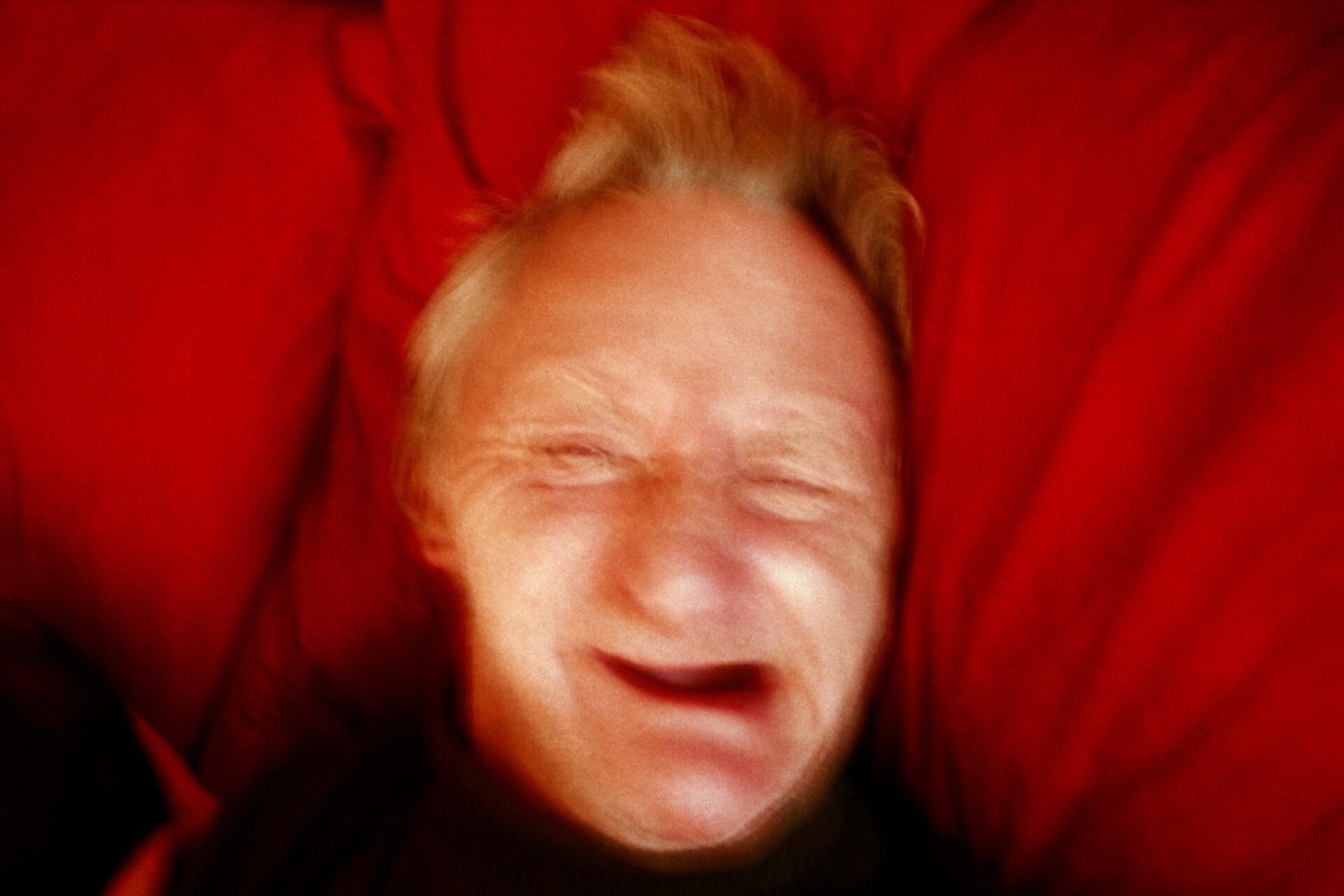
On the second floor of Vevey’s railway station, in former apartments once occupied by railway workers, L’Appartement – Espace Images Vevey marks three decades since the publication of Richard Billingham’s landmark 1996 photobook Ray’s a Laugh. Made in the early 1990s in the council flats of suburban Birmingham, Billingham’s photographs centre on his father Ray, mother Liz and brother Jason, recording a household shaped by Ray’s alcoholism but also by humour, affection and the ordinary rhythms of family life. For the first time, the exhibition reconstructs the domestic world across the two separate homes in which the photographs were made, shifting attention from individual images towards the environment and relationships that bind them. Thirty years on, Ray’s a Laugh remains difficult to situate neatly as either family album or social document. Billingham’s proximity to his subjects makes the photographs deeply personal, while the circumstances they record have come to be read as part of a particular moment in British working-class life. The reconstruction of the two homes returns the work to that intimate tension, asking us to look again at the family before the history it has come to represent.
Tereza Zelenková, Haus – Fiducia Photographic Gallery, Ostrava
10 September – 16 October
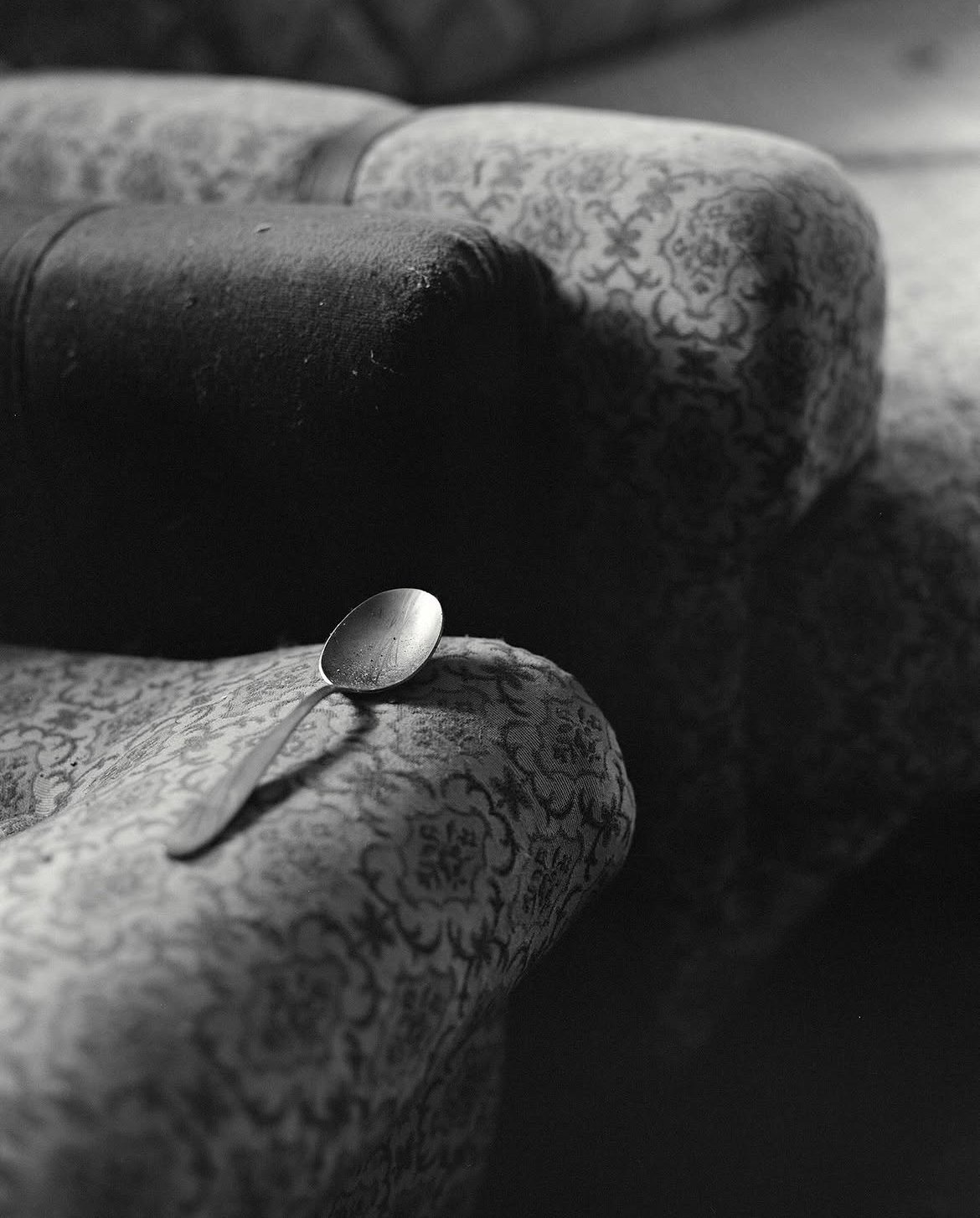
At Fiducia Photographic Gallery in Ostrava, the city where Tereza Zelenková was born, Haus brings a work about absence and slow change back to her native landscape. The series follows the transformation of a single abandoned house in northern Bohemia, photographed over three years from the cottage Zelenková had bought opposite it. Empty since the mid-1990s, the house sits within a former Sudetenland landscape shaped by the disappearance of buildings, communities and memories. Yet Zelenková resists treating it as either historical document or nostalgic ruin. Instead, her medium-format photographs register the minute changes revealed by repeated visits: shifting light, vegetation, weather and decay. Shown alongside objects and found material from the house and its surroundings, the photographs become a quiet meditation on time, solitude and loss, with the building itself serving as a measure of what remains – and what disappears.
Nadav Kander, The Edge of Things – FOAM, Amsterdam
18 September – 31 January
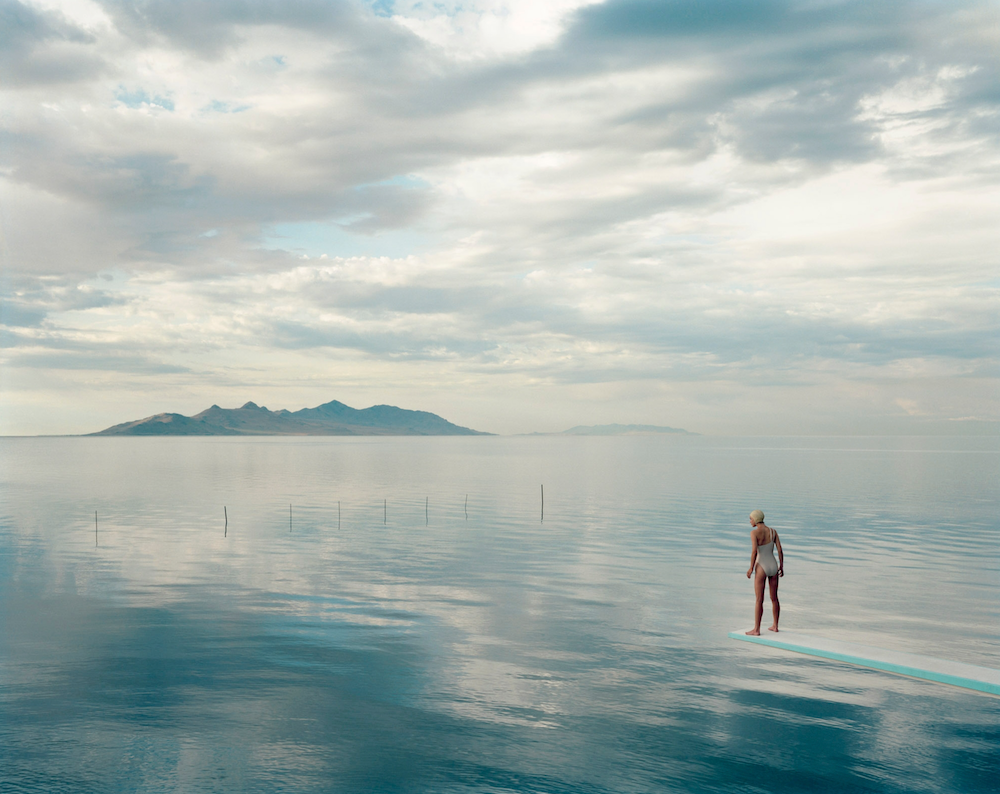
Eclectic in subject and scale, Nadav Kander’s photography ranges from portraits of David Lynch and Barack Obama to the industrial banks of China’s Yangtze River and the shifting shores of the Thames. Yet beneath this variety runs a persistent interest in what places and people conceal as much as what they reveal. Kander is drawn to subjects already laden with political, industrial or personal history, but his photographs rarely make that history immediately legible. Instead, they create a tension between the visible image and everything that lies behind it, asking us to look for what a photograph cannot quite disclose. It is this ambiguity that comes to the fore in his latest exhibition at FOAM, curated by David Campany, with whom Kander has explored these questions in conversation.♦
-1000 Words
Images:
1-Mikhael Subotzky, Wendy House 8, Mikhael Subotzky, 2009. Courtesy Goodman Gallery.
2-Taryn Simon, One little room on fire, 2026. © Taryn Simon
3-Carrie Mae Weems, Untitled (Man Reading Newspaper), 1990 from the Kitchen Table Series © Carrie Mae Weems. Courtesy the artist and Gladstone, New York, Fraenkel Gallery, San Francisco, and Galerie Barbara Thumm, Berlin.
4-Sanlé Sory, Bobo-Dioulasso, Burkina Faso © Sanlé Sory 2026. Courtesy Tezeta
5-From Holding the Camera (2015–19) © Alberto Vieceli
6-Rhiannon Adam, Baikonur Rocket Soyuz Pre-Flight, from the Rhi-Entry series, 2025. © Rhiannon Adam.
7-Robert Zhao Renhui, The Centre of All Things © Robert Zhao Renhui. Courtesy the artist and Fotografiska Shanghai
8-Richard Billingham, Ray’s a Laugh – 30 years © Richard Billingham. Courtesy of the artist and Anthony Wilkinson Gallery
9-Tereza Zelenkova, © Tereza Zelenkova. Courtesy the artist.
10-Nadav Kander, Diver, Salt Lake, Utah, USA, 1997 (from the series God’s Country) © Nadav Kander. Courtesy Howard Greenberg and Flowers Gallery.
1000 Words favourites
• Renée Mussai on exhibitions as sites of dialogue, critique and activism
• Roxana Marcoci navigates curatorial practice in the digital age
• Tanvi Mishra reviews Felipe Romero Beltrán’s Dialect
• Discover London’s top five photography galleries
• Tim Clark in conversation with Hayward Gallery’s Ralph Rugoff on Hiroshi Sugimoto
• Academic rigour and essayistic freedom as told by Taous Dahmani
• Shana Lopes reviews Agnieszka Sosnowska’s För
• Valentina Abenavoli discusses photobooks and community
• Michael Grieve considers Ute Mahler and Werner Mahler’s posthumous collaboration with their late family member
• Elisa Medde on Taysir Batniji’s images of glitched video calls from Gaza
Join us on Patreon today and be part of shaping the future of photographic discourse


