10 Must-See Exhibitions: Winter 2026

Our quarterly guide to the global art calendar is back with must-see exhibitions for Winter 2026, taking in galleries and museums from Vienna to San Francisco.


1000 Words | Resource | 8 Jan 2026
Join us on Patreon

Guido Guidi, A Casa / Guest appearance John Gossage – Large Glass Gallery, London
28 November – 28 February

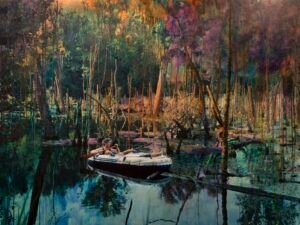
One of Italy’s finest and most legendary photographers, Guido Guidi marks his seventh exhibition at the innovative, silk-sleek Large Glass Gallery on Caledonian Road, this one turning toward his home in Ronta as its subject. Photographer and bookmaker John Gossage, a longtime companion in Guidi’s roaming practice, has shared countless journeys with him over the decades, and for A Casa created a delicate suite of six small books, each filled with photographs made during visits to Guidi’s place. Speaking with Bartolomeo Sala, Guidi reflected on how Dutch landscape painting – ‘neither dramatic nor concerned with great, heroic deeds’ – had set the tone for his school of photographers. Certainly, that understated sensibility comes to the fore in images where tools lie in the corners of the frames, the spaces are rustic and wooden, and the rooms seem to belong to the humble interiors painted by those Dutch masters.

Lisette Model, Retrospective – The Albertina Museum, Vienna
30 October – 22 February

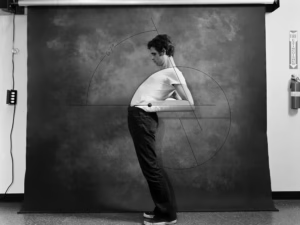
The Albertina Museum looks back to the photographs of Lisette Model (1901–1983) whose uncompromising vision reshaped 20th-century portraiture. Though born into a Viennese Jewish household, Model made her name far from Vienna yet remains unmistakably marked by the city. While her legacy is often framed in American terms, the exhibition’s lead curator, Walter Moser, suggests that a deeper story begins in the cultural voltage of her birthplace. She certainly grew up in a milieu alive with artistic agitation, where Expressionist painters once pushed the human figure toward distortion and emotional extremity. Perhaps, in her own way, Model used the camera to probe the same intensity. It was this instinct that caught the eye of Harper’s Bazaar and MoMA New York which recognised in her images a startling directness – a way of revealing character through gesture, posture, and the unexpected drama of ordinary life – and soon began publishing or exhibiting her works.

Philip Montgomery, American Cycles – Deichtorhallen, The House of Photography, Hamburg
28 November – 10 May

Spanning more than 100 works created between 2014 and the present, Phillip Montgomery’s photography offers a compelling portrait of a decade defined by ongoing political turbulence and the intensifying crises of our era. The House of Photography at Deichtorhallen Hamburg – one of Europe’s largest centres for contemporary art and photography, and set on the waterfront – hosts Montgomery’s first major institutional solo exhibition, bringing together an expansive vision of America from coast to coast. Alongside his celebrated projects for The New York Times Magazine and The New Yorker, it unveils, for the first time, previously unseen photographs and Montgomery’s most recent independent work. Far from fleeting snapshots, Montgomery’s images are carefully composed, often illuminated with dramatic contrast or flash. Their sense of ‘timeless urgency’ perhaps reaffirms that documentary photography, as Montgomery practices it, still matters deeply in an age of ubiquitous images.

Paul Mpagi Sepuya, Focus. Desire. – Fotomuseum Winterthur, Switzerland
28 February – 14 June

 In 2024, Taous Dahmani wrote for 1000 Words that ‘Sepuya skilfully navigates the frame, either concealing or unveiling fragments of his undressed body, and thus, his identity,’ drawing from a rich history of queer imagery – from the kouros figures of Ancient Greece to Rotimi Fani-Kayode’s Snap Shot (1987) and Caravaggio’s ephebes.. Promising to be a thoughtful and considered show, Sepuya’s latest exhibition brings together the artist’s now firmly established and impressive oeuvre with the curatorial vision of Fotomuseum Winterthur, marking his first major solo exhibition in Switzerland. Taking shape across three distinct spaces – Studio, Archive and Dark Room – each carries literal and metaphorical significance, staging a dialogue between early and recent works. The exhibition highlights the evolution of the US-American artist’s practice while continually questioning the acts of looking and the power structures they reinforce.

Lebohang Kganye, Le Sale ka Kgotso – Fotografiska, Berlin
12 September – 25 January

In Sesotho, ‘Le Sale ka Kgotso’ is the parting wish offered at the doorway, a gentle hope that peace will remain with the one who stays behind. But a slight shift of breath, ‘le sale le kgotso,’ calls forth an entirely different presence, that of the tokoloshe, the capricious and feared spirit of Xhosa and Zulu legend. In this slippage, language falters, revealing its own instability – an uncertainty that Lebohang Kganye draws into focus as she turns Fotografiska Berlin into something closer to a lived-in interior. The museum’s rooms soften into the contours of a home shaped by memory, where language, personal history and the lingering marks of architecture overlap and echo through one another. Working across photography, sculpture and installation, Kganye reshapes family stories and folklore into spaces meant not for resolution. Instead of offering the promise of reconstruction, her work reveals the breaks, absences and unresolved tensions that continue to haunt the idea of home.

Batia Suter and Zoe A. Keller, The Eranos Archives. Laboratory of the Anarchetype – Bibliothéque de Genève, Espace Ami-Lullin, Geneva
20 February – 9 May

A new exhibition from the Centre de la photographie Genève presents approximately 3,000 archetypal images assembled by the Dutch scholar Olga Fröbe-Kapteyn, founder of the Eranos conferences, which later developed into a lasting intellectual forum. The collection, now housed at the Warburg Institute, was formed between the mid-1930s and early 1940s, when Fröbe-Kapteyn, initially at the request of Carl Jung, undertook extensive research travels through European and American libraries to gather symbolic material. Shown alongside photographs and various materials of industrially manufactured objects from the same period (from artist Batia Suter’s own collection), the figures of the Eranos Archive shed any claim to timeless universality and are read as contingent forms, their meanings refracted through the economic pressures, ideological currents and material conditions of a rapidly transforming interwar world. Long unseen by the public, the archive is now accessible and acquires new critical resonance.

Seriously. – Sprüth Magers, London
21 November – 31 January

Humour finds its resonance in unexpected corners in Seriously., a group exhibition curated by Nana Bahlmann, featuring over 100 ‘conceptual’ photographs, prints and select films from the 1960s to the present. Revealing a shared willingness to flirt with absurdity, playfulness and critique, the exhibition frames the experimental possibilities of slapstick and wit – from masquerade and role-play to the staging of seemingly inexplicable scenarios – through the works of artists such as John Baldessari, Cindy Sherman, Thomas Demand, and others. Part of the exhibition meditates on the artist’s role and the fluidity of identity; the other explores the body in dialogue with objects and landscapes, where incisive satire and subtle mimicry reframe the ordinary and ask us to reconsider what we take for granted in images, representation and everyday life.

Early Gaze: Unseen Photography from the 19th Century – Fotomuseum, Antwerp
24 October – 1 March

A new exhibition at FOMU promises a rare glimpse into the first 60 years of Belgian photography, including previously unseen photographs, prints and archival material from the 19th century – many of which have never been publicly exhibited. This includes original cameras, along with extensive information on early photographic techniques, its technological birth and the debates surrounding the medium. The exhibition also confronts the darker side of Belgium’s 19th-century ambitions, including photographs taken in colonial contexts, such as those associated with the 1897 World’s Fair at Cinquantenaire Park in Brussels. Highlights range from the pioneering work of Belgium’s first female amateur photographer, Louise Le Ghait, to early crime scene photographs by the well-known Ghent portraitist Charles D’Hoy. A packed, assertive show illustrates that, from its very start, photography was not a neutral registration of reality but a powerful instrument that helped shape the story of the ruling class.

Alejandro Cartagena, Ground Rules – SFMOMA, San Francisco
22 November – 19 April

SFMOMA presents the first major retrospective of the celebrated photographer Alejandro Cartagena, including work from his seminal large-scale project Identidad Nuevo León (2005) where he portrayed hundreds of people from 25 municipalities, through to his latest video series We Are Things (2025). A meticulous researcher and, in a sense, an urban archaeologist, Cartagena has described how his walks through various landscapes, in ‘an attempt to understand Mexico,’ become inseparable from the photographs themselves, while also reflecting that ‘you’re never from here, yet you’re here.’ On display are more than 20 of his series, including documentary images, collages, vernacular photographs, and AI-generated videos, revealing the richness and diversity of Cartagena’s practice. Ground Rules coincides with the release of a fully bilingual (English/Spanish) monograph of the same title, published by Aperture, which compiles, contextualises and reflects on this comprehensive study.

Felicity Hammond, V4: Repository / Variations – Stills, Edinburgh
7 November – 26 February

V4: Repository is the culmination of Felicity Hammond’s Variations, a project exploring the overlaps between geological mining, data mining and the ways image-making engages with machine learning. This final chapter follows Model Collapse at The Photographers’ Gallery, London; Rigged at QUAD, Derby, presented during FORMAT International Photography Festival; and Content Aware, originally experienced as a public installation during Photoworks Weekender, Brighton, 2024. In many ways, a truly unique project – something that could only hsve emerged in our time, in the advent of artificial intelligence, and thus engaging the politics of surveillance, data extraction and the exploitation of land, resources and labour. If the fourth and final variation considers how hidden processes of extraction are stored, then Stills provides a fitting venue: as it approaches its 50th anniversary, the institution, in its own words, turns attention toward its archive.♦

–1000 Words

Images:

1-Guido Guidi, Ronta, 2023

2-Lisette Model, Lower East Side, New York City, 1940-1947. Courtesy baudoin lebon, Paris and Keitelman Gallery, Brussels

3-Philip Montgomery, George Floyd Memorial II, Minneapolis, June 2020; from the series American Mirror

4-Paul Mpagi Sepuya, Darkroom Mirror (_2070386), 2017

5-Lebohang Kganye, Beneath the Deep

6-Batia Suter & Zoe A. Keller, The Eranos Archive. Laboratory of the Anarchetypal, 2023-ongoing

7-Helen Chadwick, In the Kitchen (Washing Machine), 1977 © Helen Chadwick. Courtesy Richard Saltoun Gallery, London, Rome and New York and Sprüth Magers

8-Fernand Khnopff, Portrait of Marguerite Khnopff, ca. 1890. Courtesy FOMU

9-Alejandro Cartagena, Carpooler #8, 2011

10-Felicity Hammond, V4: Repository; from the series Variations, 2025


1000 Words favourites

• Renée Mussai on exhibitions as sites of dialogue, critique and activism

• Roxana Marcoci navigates curatorial practice in the digital age

• Tanvi Mishra reviews Felipe Romero Beltrán’s Dialect

• Discover London’s top five photography galleries

• Tim Clark in conversation with Hayward Gallery’s Ralph Rugoff on Hiroshi Sugimoto

• Academic rigour and essayistic freedom as told by Taous Dahmani

• Shana Lopes reviews Agnieszka Sosnowska’s För

• Valentina Abenavoli discusses photobooks and community

• Michael Grieve considers Ute Mahler and Werner Mahler’s posthumous collaboration with their late family member 

• Elisa Medde on Taysir Batniji’s images of glitched video calls from Gaza


Join us on Patreon today and be part of shaping the future of photographic discourse


1000 Words archive

15 Years, 15 Picks

Selected by Lucy Soutter

Marking 15 years of 1000 Words, Lucy Soutter takes us on a journey through our archive, offering a selection of features based on her own affinities across the magazine’s history. Capturing the richness of an archive and its ability to generate multiple routes through the material contained within, Soutter’s eclectic picks, as she writes, ‘celebrate the sweep of 1000 Words in embracing a range of 21st century photographic practices.’


Lucy Soutter | Archive highlights | 26 Sept 2024 | In association with MPB

I once spent a week time travelling to the 1960s. I was half-way through a PhD on photography in first-generation Conceptual Art when my supervisor sent me to the library to immerse myself in period art magazines – including Artforum for the avant-garde side of things, and Art in America for a mainstream view. She told me not to worry about reading every article (though I made some useful discoveries) but to skim every single page in chronological order, to immerse myself in the general culture of the time through the pictures, letters pages, ads, layout, etc. My week-long flashback to the decade of my birth gave me untold insights into the aesthetics, politics and general mood of the period. Magazines are traditionally classed as “ephemera,” cultural forms with fleeting significance, important primarily in the moment they are produced. That very topicality makes them an ideal form for studying the conscious and unconscious preoccupations of the time, whether the past or the near-present.

This assignment, to look back over 15 years of 1000 Words (particularly the last 12, as archived on the website) has taken me on a journey through my own past: exhibitions visited, books read, and articles shared in the classroom with students, as well as many important things I missed. At the same time, the exercise clarified trends that have emerged from the flow of visual and written materials. My selections are eclectic to celebrate the sweep of 1000 Words in embracing a range of 21st century photographic practices. I also want to draw attention to the ambition of the editorial teams over the years, led by Tim Clark, in extending the discussion of contemporary photography into new terrain. Although the pieces in this online magazine are short, they are bold in mobilising concepts from an array of academic and pop cultural contexts. The magazine has often been the first to publish emerging artists and writers, many of whom are now familiar names. Tracing the expansion of the field through evolving configurations of genres and presentation formats, it has also played a key role in promoting a broader range of practitioners.

Part of the richness of an archive is its capacity to generate multiple different routes through the material. This set of selections, loosely chronological, are based on my own affinities. I hope that they will invite you to dip in, whether to revisit familiar selections or make fresh discoveries.

1. Esther Teichmann, Drinking Air, and Mythologies
Interview by Brad Feuerhelm
Issue 14, 2012

When I started teaching at art schools in the early 2000s, the UK photography scene was dominated by documentary approaches. Contemporary photography is now so much more eclectic that it is hard to believe that a practice such as Esther Teichmann’s needed to take a stand against this orthodoxy to embrace symbolist themes, painterly gestures and mixed media installation. The images in this portfolio combine with the text to offer a rich field of possibility. Teichmann’s distinctive voice, her embrace of poetics, and the generosity of her approach are all evident in this interview. 1000 Words has provided a platform for a number of artists emerging in parallel expressive modes, including Tereza Zelenkova (28) and Joanna Piotrowska (30).

2. Daisuke Yokota, Back Yard
Essay by Peggy Sue Amison
Issue 15, 2012

‘There is a revolution going on in the work of emerging photographer Daisuke Yokota, a revolution that links the past with the future of Japanese photography.’ In a few deft paragraphs, Peggy Sue Amison provides several different points of entry for viewers seduced by Yokata’s evocative, mysterious images. She sketches in Yokata’s context in relation to the grainy, blurry aesthetic of the Provoke movement and describes how the photographer updates Japanese zine culture with collaborations and a participatory approach. Amison illuminates how his use of experimental processes such as solarisation and rephotographing combine with banal architecture, natural forms and faceless figures to create work that is distinctly Japanese and distinctly contemporary. As with Gordon Macdonald’s essay on Thomas Sauvin’s Beijing Silvermine project (15) or Sergio Valenzuela-Escobedo’s framing of Nadège Mazars’ Mama Coca (38) this concise piece provides essential context for interested readers to pursue further research into an important international practice.

3. Sara-Lena Maierhofer, Dear Clark, A Portrait of a Con Man
Interview by Natasha Christia
Issue 16, 2013

I confess that I was late to the photobook scene. It had been heating up for the first decade of the 2000s before I realised that this was not just a fad or nerdy subculture (though it has its fads and nerdy aspects) and that I needed to pay attention to it. 1000 Words was one of my go-to destinations for reading about new releases. I was so impressed by Natasha Christia’s interview with the author/artist/maker of Dear Clark that I ordered the book and looked with new eyes at its skilful combination of obsessive research, idiosyncratic reenactment and seductive, self-referential layout. As I have learned more about this aspect of contemporary photography culture, I have come to appreciate the extent to which the book reviewers for 1000 Words (variously photographers, writers, book-makers, curators and editors themselves) have contributed both to defining the photobook as a form with its own unique concerns, and to creating a canon-in-progress of its plural possibilities.

4. Julian Stallabrass, Memory of Fire: Images of War and the War of Images
Book Review by James McArdle
Issue 16, 2013

In 2008 – five years into a war that had seen the US, UK and allies invade and occupy Iraq – Julian Stallabrass curated the Brighton Photo Biennial as a searing critique of the uses of photography as a tool of pro-war propaganda, exploring the ways photographers past and present can work against the conventions of the genre to provoke other forms of understanding. How can war photography serve as a lesson or a warning rather than just pulling us into its quasi-pornographic thrall? James McArdle draws some of the key issues out of Stallabrass’ 2013 anthology of projects, essays, and interviews related to the festival, pointing to artists including Trevor Paglen, Adam Broomberg & Oliver Chanarin, and Coco Fusco, and writers including Sarah James and Stefaan Decostere.

5. Duane Michals, Storyteller: The Photographs of Duane Michals
Essay by Aaron Schuman
Issue 18, 2014

In this feature on Duane Michals, Aaron Schuman traces the historical roots of staged, narrative photography far beyond Cindy Sherman’s Untitled Film Stills to Victorian tableau photography. Schuman argues convincingly that in Michals’ hands the genre does not merely advance photography as an art form, but also grapples with aspects of experience that transcend ordinary vision. Although it may be difficult to identify the direct impact of Michals on contemporary photographers whose work, like his, is filmic (like Jeff Wall), fictive (like Gregory Crewdson) or constructed (like Matt Lipps), Schuman points out that the sophisticated use of series and sequence by photographers such as Paul Graham and Alec Soth owes a debt to Michals’ storytelling capabilities. (The final image in this portfolio, Michals’ This photograph is my proof is my all-time favourite image + text work).

6. Laura El-Tantawy, In the Shadow of the Pyramids
Book Review by Gerry Badger Issue 19, 2015
Matthew Connors, Fire in Cairo
Book Review by Max Houghton
Issue 20, 2015

It is difficult for a magazine, which in its previous format, only came out a couple of times a year to respond to current events or political crises like the Arab Spring, especially when photographic projects, like novels, sometimes take years to come to fruition*. Gerry Badger’s 2015 review of Laura El-Tantawy’s book In the Shadow of the Pyramids describes the artist’s response to the events in Tahir Square in 2011 in the context of her own life inside and outside Egypt. In response to this blend of document and personal archive, Badger provides a personal meditation on how we create photographic narratives out of the messy flow of life. Max Houghton’s review of Matthew Connors’ Fire in Cairo in the following issue is a more wrought, imagistic essay, a perfect fit for Connor’s disorienting, back-to-front combination of surreal images and fragmented fiction. Together, these two reviews open a space to consider how we see, remember and understand protest and its aftermath.

7. Saul Leiter Retrospective
Essay by Francis Hodgson
Issue 21, 2016

One of the important tasks of the critic is to return to older works and read them afresh in light of current developments. Events may be fixed in the past, but their importance for us shifts in significant ways that need to be acknowledged and articulated. This review illuminates one of the things we take for granted about contemporary photography – that most of it is in colour – and reminds us that it was not always so. Roving across Leiter’s street photography, fashion work and painterly ambitions, Hodgson’s essay and selection of images offer a celebration of Leiter’s glowing Kodachrome aesthetic and illuminate its contemporary appeal. 

8. Richard Mosse, Incoming
Essay by Duncan Wooldridge
Issue 25, 2017

1000 Words has provided a constructive platform for encountering 21st century social documentary photographers who use strategies from contemporary art. Photographers like Lisa Barnard (25), Salvatore Vitale (26) and Gideon Mendel (36) offer projects that are rigorously researched, visually and technically innovative, and presented in layered, imaginative forms designed to jolt us out of familiar understandings of social situations. Such work can be highly controversial. This essay by Duncan Wooldridge provides a response to a flurry of topical online debates (by writers including Daniel C. Blight, Lewis Bush and JM Colberg) around Richard Mosse’s exhibition at the Barbican Centre, London and book Incoming from 2017, and its controversial use of military-grade thermal imaging technology to create eerie, spectacular video and still imagery of migrants from the Middle East and Global South. Fiercely analytical and ethically engaged, Woodridge frames the project in the philosophy of Judith Butler and Giorgio Agamben, while keeping an eye on the economic and institutional dilemmas of being a (materially successful) political artist.

9. Lebohang Kganye, Dipina tsa Kganya
Interview with Sarah Allen
Issue 34, 2021

For centuries, self-portraiture has provided artists with a way to explore their own identity and self-presentation. A new generation of artist photographers including Arpita Shah (27) Kalen Na’il Roach (32) and Sheida Soleimani (38) are turning to archival imagery, family albums and strategies of montage to counter dominant colonial (and frequently racist) histories with imaginative autonarratives. In this interview with Sarah Allen, Lebohang Kganye (Deutsche Börse Photography Foundation Prize 2024 winner) explores the complexities of figuring her own identity within post-apartheid South Africa, and how the interweaving of family photography and performance gives her scope to recuperate personal, familial and tribal memory within the context of an exhibition in a Bristol slave owner’s 18th century home.

10. Curator Conversations #11: Alona Pardo Features, 2020

At their best, exhibitions can define practices and the ways they are understood, bringing new ideas into focus. To make this work happen, curators must embody various qualities: administrative, collaborative, critical and visionary. In her contribution to the Curator Conversations feature series, subsequently drawn together into a book, Alona Pardo discusses the layers of consideration that went into the exhibitions she curated at the Barbican before leaving to be Head of the Arts Council Collection. Her drive to facilitate spaces for creative discussion rather than promote her own point of view have led to a series of highly influential exhibitions including Masculinities: Liberation through Photography of 2020 and RE/SISTERS of 2023.

11. Stanley Wolukau-Wanambwa, One Wall a Web
Book Review by Taous R. Dahmani
Issue 30, 2019

Photographers are more likely than other kinds of artmakers to also be writers of non-fiction, fiction and/or criticism. This can sharpen the edges of the language they use in their work. In this review, Taous R. Dahmani looks at artist/writer/editor Stanley Wolukau-Wanambwa’s award-winning book One Wall a Web and describes the associative force of his filmic juxtapositions of text and image. Dahmani seeks precedents for his pointed appropriations in the scrapbooks of historical African Americans seeking to reclaim their own representation. On a related note, Dahmani’s response to questions provided by the 1000 Words feature series and book Writer Conversations (edited by myself and Duncan Wooldridge) convey a vivid sense that research and writing around photography are urgent and thrilling. She includes an inspiring list of classic and recent texts related to photography that made me want to run away on an extended reading retreat.

12. Cao Fei, Blueprints
Essay by Sergio Valenzuela-Escobedo Issue 34, 2021

While the cultures of contemporary art and photography share certain structures, there are ongoing disparities in their economic and cultural currency (one reason why many lens-based practitioners insist on being called “artists” rather than “photographers”). It is sometimes difficult for outsiders to decipher the coded language used to place a practice in one camp or the other, especially when some move fluidly between contexts. Sergio Valenzuela-Escobedo’s account of Cao Fei’s 2021 Deutsche Börse Photography Foundation Prize win provides a window into the world of a high-flying international artist, represented by mega-gallery Sprüth Magers and whose astonishingly polished, high-tech, multimedia work is more likely to be seen at Serpentine Gallery or the Venice Biennale than in a dedicated photography gallery. Escobedo’s essay explores the work’s push and pull between ironic simulation and fantastical techno-utopianism. The Chinese State’s role as a geopolitical and industrial superpower is never far out of the frame, but Fei’s relationship to it remains strategically ambiguous. As a productive counterpoint, this issue also features Fergus Heron’s exhibition review of Noémie Goudal’s Post Atlantica (34), a body of photographic and moving image installation work that sits firmly within a contemporary art sphere while also asking rich and probing questions about how photographs operate as documents, images and phantasms. For those interested in the representational politics of The Deusche Börse Photography Foundation Prize, the most prominent international art photography award, see Tim Clark’s impassioned 2020 editorial, ‘False signals and white regimes: an award in need of decolonisation.’

13. Laia Abril, On Rape: And Institutional Failure
Book Review by Jilke Golbach
Issue 36, 2022

1000 Words has devoted a significant number of its features to female experience and points of view, including the delirious layered portrait constructions of Dragana Jurišić (22), the intimate portraits of Yukuza women by Chloé Jafé (29) and Carmen Winant’s powerful lexicon of found images around abortion (43). Laia Abril’s On Rape is the middle piece of her trilogy of books On Misogyny, following On Abortion (2016) and leading towards On Mass Hysteria. Bodily harm, trauma, silence, guilt and victim-shaming weave through Jilke Golbach’s review, framing Abril’s investigative project with its evocative, visceral images in relation to the persistence of rape and its impacts in the contemporary world.

14. After the End of History: British Working Class Photography 1989–2024 Exhibition Review by Lillian Wilkie Issue 42, 2024

In photography, as in the rest of society, one of the anxieties about globalisation is that it will erode local cultures. At the same time, we live with the paradox that it is often in relation to each other’s intersectional differences that our own distinctive cultures come into focus. An important strand of 1000 Words essays and reviews has explored work by photographers from the UK and Ireland, well-known ones (like Brian Griffin, 20) and those deserving greater attention (Vanessa Winship, 16), those exploring private relationships (Matthew Finn, 25), those who record distinctive local places and material culture (Café Royal Books, 41), and those who explore the performance of Britishness (Simon Roberts, 27). In this review, Lillian Wilkie dives into Johnny Pitts’ unruly travelling exhibition of British photography since the fall of the Berlin Wall, her vivid language looping around the rich mix of photography to ask, as the exhibition does, how we might reimagine the cultural and creative force of the British working class after Thatcherism.

15. London City Guide
Tim Clark with Thomas King
Features, 2024

When I ask photography students to read magazines, it is to improve their knowledge of recent practices and debates, and to introduce them to the key figures, communities, activities, institutions and markets that make up the contemporary network. The intermittent city guides, festival highlights, annual photobook roundups and even obituaries provided by 1000 Words provide different angles on a scene that is growing, multifaceted and increasingly interconnected. The London City Guide sets the stage by providing an instructive analysis of the current crisis in UK arts and education funding before introducing a handful of the leading institutions, including the V&A, The Photographers’ Gallery and Autograph, as well as Flowers Gallery as a sample of a large commercial gallery, and Large Glass as an example of a smaller gallery making interesting propositions about photography within contemporary art. These features provide a vital way to trace flows of influence in the UK and internationally. They also fulfil one of the original key functions of art criticism: providing a pleasurable vicarious experience of things we may not be able to see in person. ♦


An artist, critic and art historian, Lucy Soutter is Reader in Photography at the University of Westminster where she is Course Leader of the Expanded Photography MA. She is author of
Why Art Photography? (2018) and co-editor with Duncan Wooldridge of Writer Conversations (2023) and The Routledge Companion to Global Photographies (2024).


1000 Words favourites

• Renée Mussai on exhibitions as sites of dialogue, critique and activism

• Roxana Marcoci navigates curatorial practice in the digital age

• Tanvi Mishra reviews Felipe Romero Beltrán’s Dialect

• Discover London’s top five photography galleries

• Tim Clark in conversation with Hayward Gallery’s Ralph Rugoff on Hiroshi Sugimoto

• Academic rigour and essayistic freedom as told by Taous Dahmani

• Shana Lopes reviews Agnieszka Sosnowska’s För

• Valentina Abenavoli discusses photobooks and community

• Michael Grieve considers Ute Mahler and Werner Mahler’s posthumous collaboration with their late family member 

• Elisa Medde on Taysir Batniji’s images of glitched video calls from Gaza