10 Must-See Exhibitions: Autumn 2025

Our quarterly guide to the global art calendar is back with must-see exhibitions for Autumn 2025, taking in galleries, museums, festivals, and project spaces from Milan to Beijing.


1000 Words | Resource | 7 Oct 2025
Join us on Patreon

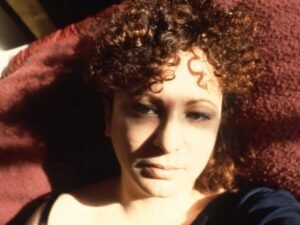
Nan Goldin, This Will Not End Well – Pirelli HangarBicocca, Milan
11 October – 15 February

At Milan’s Pirelli HangarBicocca is the most comprehensive presentation of Nan Goldin’s slideshows to date, billed as her debut solo exhibition as a filmmaker. As with its previous presentation in Berlin, Goldin’s works are housed within structures designed by architect Hala Wardé, a longtime collaborator of the artist. In what she calls a ‘village,’ Goldin’s hallmark themes; intimacy and connection, the everyday alongside wild parties, and the tension between autonomy and dependency, are brought to life and into conflict in a way that mirrors the complexity and instability of the lives she chronicles. The show also features two works making their European museum debut alongside a newly commissioned sound installation.

Poulomi Basu, Phantasmagoria – Fotomuseum Winterthur, Switzerland
25 October – 15 February

Phantasmagoria, the title of Poulomi Basu’s first major solo exhibition at Fotomuseum Winterthur, draws on the ghostly spectacle of 18th-century lantern shows – those early cinematic illusions that conjured spirits, staged the supernatural and flirted with resurrection. This legacy of apparitions and imagined worlds threads Basu’s own transmedia universe, where photography, virtual reality, film, and performance collide. For over a decade, Basu has immersed herself in the lives of some of the world’s most marginalised women and through this prolonged, often deeply personal engagement, her documentary mode meets ecofeminist myth, and the real slips, hauntingly, into the fantastical.

Richard Avedon, In The American West – Fondation Cartier Bresson, Paris
30 April – 12 October

To mark 40 years since the publication of In the American West, Fondation Henri Cartier-Bresson has taken a bold look back at Richard Avedon’s iconic portrait series. Shot over five years and spanning more than 1,000 sitters from miners to performers to salesmen Avedon’s stark, white-backdropped images strip away frontier mythology to reveal the raw human drama of the American West. The exhibition assembles over 100 master prints from the original book, presenting the complete photographic series for the first time in Europe, and features previously unpublished archival materials that document its formation and imprint. Abrams has reissued the long out-of-print book, returning a classic to shelves.

Lisa Barnard & Isadora Romero, After Nature Photography Prize 25 – C/O Berlin
27 September – 28 January

C/O Berlin announces the winners of the After Nature Photography Prize 25: Lisa Barnard and Isadora Romero. Accompanied by a dedicated publication from Hartmann Books, a double exhibition of Barnard’s and Romero’s work is on view at C/O Berlin before travelling to the Open Space of the Crespo Foundation in Frankfurt in spring 2026.

Barnard’s project, You Only Look Once, takes inspiration from Thomas Nagel’s essay What Is It Like to Be a Bat?, investigating how emerging technologies – from animal echolocation to driverless vehicles, lithium mining, and nuclear test sites – reshape human sensory experience and ecological awareness. Notes on How to Build a Forest is described as ‘a decolonial reflection on our relationship to the world,’ in which Romero examines the colonial framing of tropical rainforests, combining classical documentary photography, organic materials, and experimental development processes to propose a more thriving relationship between environment and inhabitants.

I Still Dream of Lost Vocabularies – Autograph, London
10 October – 21 March

Autograph hosts a major group exhibition curated by Bindi Vora that interrogates the photograph as a site of mutability, a site to be fragmented, sutured and recharged through the idioms of collage and photomontage. Probing the politics of representation and its limits, the participating artists complicate the ‘constructed’ image, questioning whether it can bear the weight of contested narratives where language falters. With over 90 works by 12 contemporary artists, the participating artists turn to collage and summon its long history of political dissent to splinter the photograph’s presumed coherence and loosen the knots between image and the political.

Alice Poyzer, Other Joys – Serchia Gallery, Bristol
30 October – 30 November

Tucked into a Victorian house on the hillside in Cotham, Bristol, Serchia Gallery is a not-for-profit space run by Christine Marie Serchia. Other Joys, introduces the work of young British photographer Alice Poyzer, who recently received the British Journal of Photography’s Female in Focus Award, among other accolades. Poyzer, in her own words, describes the project as “an ongoing body of work that highlights my special interests as a woman with autism, through portraits and constructed imagery.” The resulting black-and-white photographs linger on butterflies, animal shows, and pieces of taxidermy; precise images that gently affirm self-acceptance and open a window onto Poyzer’s way of moving through the world.

Sam Contis, Moving Landscape – The Art Gallery of Western Australia
31 May – 9 November

AGWA hosts the first Australian solo exhibition of acclaimed US photographer Sam Contis, presenting over 85 works in dialogue with the histories of photography and film, and broadly with narratives of gender, place‑making and belonging. Bringing together the series Deep Springs, Overpass and Cross Country, Moving Landscape follows Contis’ exploration of how bodies and landscapes shape one another, from the deserts of the American West to the footpaths of rural England and the cross-country trails of Pennsylvania. It is a welcome selection of works, rhythmically composed, yet carrying us on a complex journey through terrain, through time and through ourselves.

Hoda Afshar, Performing the Invisible – Musée du quai Branly – Jacques Chirac
30 September – 25 January 

Hoda Afshar’s research into the history of gazes and her visual experiments with the image converge at the Musée du quai Branly – Jacques Chirac, which presents her first major exhibition in France. The show brings two chapters of her practice into conversation: Speak the Wind (2015–20) and The Fold (2023–25). The latter draws from archival materials uncovered during Afshar’s own research at the museum, confronting orientalist and colonial photographic legacies. Meanwhile, Speak the Wind journeys to Iran’s southern coast, exploring the beliefs and stories tied to the winds that shape life on the islands of the Strait of Hormuz. Through photographs, videos, sound, and printed mirrors, a bridged path emerges between the two where invisible narratives begin to take form.

Chow and Lin, Even If It Looks Like Grass – Bounded Space, Beijing
6 September – 8 October

Artist duo Chow and Lin’s first solo exhibition in Beijing brings together previously shown works that investigate the systems of wheat and data centres across 10,000 years of human history, alongside new pieces created for this multi-room installation, incorporating AI models, food security research and immersive sensory experiences. The Beijing-based husband-and-wife duo, long active on the international stage for their engagement with global policy and research, continue their inquiry into how statistical, mathematical, and computational methods map the world’s vulnerabilities – a chance to see works from 8 projects across Chow and Lin’s 15-year art journey.

New Photography 2025, Lines of Belonging – MoMA, New York
14 September – 17 January

True to its name and marking its 40th anniversary, the New Photography programme brings together 13 international artists and collectives from Johannesburg, Kathmandu, New Orleans, and Mexico City, each presenting distinct bodies of work for the first time. Exploring the tangible and intangible forces that bind communities together, the show “draws out connective threads within, across, and beyond the idea of borders,” says curator, Roxana Marcoci. Highlights include Sandra Blow’s vibrant portraits of LGBTQ+ youth in Mexico City, The Public Life of Women project chronicling Nepali women’s experiences, and Gabrielle Garcia Steib’s installations linking Latin America and the American South, among others.♦

–1000 Words

Images:

1-Nan Goldin, Self-Portrait with Eyes Turned Inward, Boston, 1989

2-Poulomi Basu, from the series Fireflies, 2019

3-Richard Avedon, Annette Gonzales, housewife, and her sister Lydia Ranck, secretary, Santuario de Chimayo, New Mexico, Easter Sunday, 4/6/80. © The Richard Avedon Foundation

4-Isadora Romero & Ailín Blasco, Palms at Mache Chindul, 2024

5-Sheida Soleimani, Magistrate; from the series Flyways, 2024

6-Alice Poyzer, A taxidermy kitten, with additional wings, held in the air; from the series, Other Joys

7-Sam Contis, Clover 2019

8-Hoda Afshar, Untitled #2, 2015-20

9-Chow and Lin, Even If It Looks Like Grass, 2024. Courtesy the artists and Bounded Space

10-Prasiit Sthapit, Saloni and friends (2013); from Change of Course, 2012-18


1000 Words favourites

• Renée Mussai on exhibitions as sites of dialogue, critique and activism

• Roxana Marcoci navigates curatorial practice in the digital age

• Tanvi Mishra reviews Felipe Romero Beltrán’s Dialect

• Discover London’s top five photography galleries

• Tim Clark in conversation with Hayward Gallery’s Ralph Rugoff on Hiroshi Sugimoto

• Academic rigour and essayistic freedom as told by Taous Dahmani

• Shana Lopes reviews Agnieszka Sosnowska’s För

• Valentina Abenavoli discusses photobooks and community

• Michael Grieve considers Ute Mahler and Werner Mahler’s posthumous collaboration with their late family member 

• Elisa Medde on Taysir Batniji’s images of glitched video calls from Gaza


Join us on Patreon today and be part of shaping the future of photographic discourse


Photobook Conversations #9 | Raymond Meeks: “I’ve found it overwhelming to take in all the possibilities for a work of art, especially a book”

Photobook Conversations is edited by Ana Casas Broda (Hydra + Fotografía), Anshika Varma (Offset Projects) and Duncan Wooldridge (Manchester Metropolitan University). Sitting alongside the earlier Writer Conversations (1000 Words, 2023), edited by Lucy Soutter and Duncan Wooldridge, and Curator Conversations (1000 Words, 2021), edited by Tim Clark, it completes the series exploring the ways our understanding and experience of photography is mediated through exhibitions, writing and publishing.


Raymond Meeks | Photobook Conversations #9 | 1 May 2025

Raymond Meeks lives and works in the Hudson Valley, New York, US. His work is represented in numerous private and public collections. He is the sixth laureate of Immersion, a French-American photography commission sponsored by Fondation d’entreprise Hermès. Exhibitions from this commission took place at the International Center of Photography, New York, US, in 2023, and Fondation Henri Cartier-Bresson, Paris, France, in 2024. The Inhabitants, a book made in collaboration with writer George Weld, was published by MACK in 2023.

What were the encounters which started your relationship with photobooks?

I’d begun thinking about the book form when my children were very young and my wife and I were building a small children’s book collection to read and share with my son and daughter. I was drawn to certain illustrators, like Chris van Allsburg and Lisbeth Zwerger, where a tale was heightened by provocative illustrations that contained a balance of description and ambiguity to provoke the imagination, to create suspension and leave room for the viewer’s mind to add dimension to a story. During this time, I was mostly working on advertising commissions and photo essays for magazines… raising a family. But I was also creatively challenged by assembling magazine stories to accompany the writing. The combined interests dovetailed wonderfully and sent me down the eventual path of bookmaking, considering relationships between certain types of images, how pictures activate one another to generate energy and feeling.

My bookmaking practice early on was centred around an immediacy of making. This often meant trips to the hardware store for materials such as tape, adhesives, paint, finishing sprays et cetera, and developing an idea for what I might want the book to look and feel like. In order to visualise this, I would visit one of a few used bookstores in Missoula, Montana, near the small town where I was living at the time, identifying an existing book that reflected and, perhaps, informed one possibility for a book. I would deconstruct and repurpose this book, working within the prescribed confines of the former object, merging my printed pages and pictures with the pre-existing form. These used books bore the influence of a past and, by way of a quantum tethering, provided clues for the book I would eventually construct. Direction could come from the title, graphic design, existing story, page count et cetera. I liked to work intuitively and without concern for accidents or mistakes, as either of these allowed for the possibility of recovery.

I began shifting from considering pictures in terms of their independent potential at a time when I was still heavily under the influence of the “Decisive Moment”, where each picture felt singularly complete. There were very few books that were attempting to construct in the serial manner that John Gossage envisioned with The Pond (1985), where an experience could be constructed within a contained world and was built from one page to the next, leaving space along the way for the viewer to enter and participate. I wasn’t aware of The Pond until many years after its initial release. I think, as a book, it was well ahead of its time and a break from the more traditional monograph, so the impact it had for me was quite profound. I don’t have anything to add here – it’s a nice balance of the personal, the process and the context in which you started to think about books.

How do you like to work with people?

I like to work with friends who already exist in my orbit and share some engagement in a creative process, inviting them into the fold of a collaborative project we can undertake together. There’s something surprising and gratifying in encountering signs of their contribution, suggestions and choices made; a gifted title, an inclusion of text. This said, I tend to keep the work close and not overshare or invite too much feedback, less the edit/sequence begin to feel diluted or focus-grouped. Whilst I’m in the midst of creating and compiling pictures, there’s a charged momentum and building of energy that I’m very protective of. When I’ve been more open to sharing in the past, I’ve noticed the energy and momentum begin to leak, like the releasing of a valve. I’m very careful about where I solicit feedback and try to do so only when I feel mostly resolved and understand whose insights would be especially informative and helpful.

As far back as I can recall, I’ve found it overwhelming to take in all the possibilities for a work of art, especially a book. Deciding that I’ll only make use of whatever enters my field of play, be it materials, equipment, a subject or a collaborator, has served as a tremendous relief. What at first might feel like a limitation whilst working within these constraints usually opens up as an expansive opportunity, assigning importance to encounters that might otherwise feel random, cultivating a practice of paying attention, listening, developing and nurturing curiosity.

I also believe a finished work has the potential to feel more inclusive, accessible and relevant to a larger community whilst considering the influence of those in my trusted circle. That I’m attracting, whether actively or passively, the people and the elements that will contribute towards a final expression of a book or exhibition.

What is the public for a photobook? Who do you think of as your audience?

I tend to consider fellow artists (including writers and musicians) as my audience, for better or worse. There are a handful of artists, in particular, that I like to imagine encountering a book I’m in the process of making, and then try to envision the ways in which the book speaks to them or where it fails to resonate and for what reasons. If the book succeeds, if it evokes feeling for these fellow artists, then I think it will have the capacity to connect with a broader audience on a level that regards their time, intelligence and imagination. Considering these fellow artists as my audience presents a high-water mark, one that invites risk-taking and reaching beyond my comforts or, perhaps, a level I’ve previously achieved. I value our shared book form tremendously, not just as an object, but as a communicative and relational piece that participates in a larger cultural dialogue.

I’ve gone through periods of lamenting the notion of photographers making books that mostly appeal to other book artists. But then I realise it’s no different for poets and their small audience of 10% of readers, the majority of these being fellow poets. Why should it be any different whilst charged with refining a visual language that defies verbal description, forming active relationships and sequences of images that generate ineffable feeling. We love what we love.

How important is it for photobooks to reach other continents?

I think the reception to a book is built into, and emerges organically within, the process. I personally don’t take responsibility for wanting to make a book that spans continents, nor would I assign importance to this. I think of a quote I read by Kiki Smith, where she says: ‘Just do your work. And if the world needs your work, it will come and get you. And if it doesn’t, do your work anyway. You can have fantasies about having control over the world, but I know I can barely control my kitchen sink. That is the grace I am given. Because when one can control things, one is limited to one’s own vision.’ Not all books can span cultures, nor should they necessarily aspire to. A photobook can have immense value without a global audience if it serves a deeply personal, local or culturally specific purpose, grounded in particular histories, communities or aesthetics that make them uniquely powerful in a localised context. On a more personal note, I can make one distinction between artists that work along a horizontal plane and those that I perceive as working the vertical. The vertical plane drills down, narrowing with each rotation. For me, I centre on the personal – an obsession or curiosity, a question – even whilst aspiring for a connection with a broader audience. To the extent I’m willing to take risks and expose myself, to become vulnerable, moment by moment, with evolving clarity and detail, there exists the possibility that the evolving experience will explore and reflect a more common, shared state.

How do you attempt to address sustainability in publishing?

By attempting to make compelling books that have the potential to contribute to the evolution of the medium, to move the book’s viability and existence in a bookstore to other sections in addition to Art & Photography. I think of applying my practice of bookmaking to “how- to” books or those that combine image and text in a less traditional manner. And with each book project, to ask, amongst other questions, what does this book want to become? The imperative in this question, for me, is: how can I approach my curiosity and deliver a book or form with some level of relevance to the current vibe, be it global or local – whilst not overtly addressing the political? How to shape an experience that will, hopefully, begin to reconcile chaos or conflict into an organised form of beauty, however fleeting? More generally, I suppose the lingering concern is what can I offer of singular significance. How can I be of “use”?

What is the place of language and writing in a book of photographs?

I suppose this would depend on the book of photographs. I personally don’t apply rules regarding writing/text with photobooks, except that the writing avoids an effort to clarify the images or to limit their reading, thus eliminating the most meaningful role for the reader – to complete the work. I prefer when writing offers subtle direction without closing down around content or subject, or resolves points of indeterminateness. It’s interesting when writing becomes an alternative to a picture, performing in a similar manner and in serial form. For example, early on in the collaboration with friend and writer George Weld on The Inhabitants (2023), I made a decision to refrain from making portraits of asylum seekers. This shifted how I began interacting with the landscape of northern France, the places of migration and provisional settlements. When choosing to photograph, I was drawn to composing around a conjured presence of refugees, partially summoned by my imagination, partially drawing from clues within the setting. The intent was to allow space for George to summon a voice for the displaced, bringing nuanced complexity and representing the immutable plight of the refugee. George’s vignettes created a voice of displacement with the potential to activate the reader’s imagination to construct a portrait. His portrayals, born of a year of research and fostering compassion, are more potent and expansive than what I might’ve made with a camera.

Who have been the models or templates for your own activities?

The artist James Castle, who found inspiration in the detritus of everyday life, primarily in the materials he collected from his family’s home outside of Boise, Idaho, such as envelopes, packaging, advertisements, and matchbooks. Working mostly with soot, spit and homemade tools, he created a rich, complex style that was informed by the constraints he was born into. Castle was born deaf with limited means of communication. I recall first seeing his small books fashioned out of found materials and recognising how the immediacy of making was paramount and the transformative ways in which material instructs form.

What would make a better photobook ecosystem?

I like to imagine a system where small companies or maybe fashion houses would find value in aligning with a publisher, sponsoring the printing and distribution costs, allowing proceeds from book sales to funnel back to the publisher and the artists, encouraging the commitment to the book form. This system might also allow artists and publishers to take greater risks and empower a wider diversity of voices and makers, as well as contributing to the evolution of the book form.

Further interviews in the Photobook Conversations series can be read here

Click here to order your copy of the book


Images:

1-Raymond Meeks © Simon Bray

2-Raymond Meeks’ work station, Hudson Valley, New York, US

3-Raymond Meeks, winter auction, broadside #3, 2023

4-Raymond Meeks, Erasure; After Nature, 2024


1000 Words favourites

• Renée Mussai on exhibitions as sites of dialogue, critique and activism

• Roxana Marcoci navigates curatorial practice in the digital age

• Tanvi Mishra reviews Felipe Romero Beltrán’s Dialect

• Discover London’s top five photography galleries

• Tim Clark in conversation with Hayward Gallery’s Ralph Rugoff on Hiroshi Sugimoto

• Academic rigour and essayistic freedom as told by Taous Dahmani

• Shana Lopes reviews Agnieszka Sosnowska’s För

• Valentina Abenavoli discusses photobooks and community

• Michael Grieve considers Ute Mahler and Werner Mahler’s posthumous collaboration with their late family member 

• Elisa Medde on Taysir Batniji’s images of glitched video calls from Gaza